Kosten für chemisches Peeling in der Schweiz: Praktischer Leitfaden 2026

Chemical peel cost in Switzerland is tiered, not fixed. Superficial peels are usually quoted in the low hundreds of Swiss francs, medium peels typically land in the mid-to-high hundreds to low thousands, and deep peels climb into several thousand francs depending on physician involvement and anaesthesia.
That is the reality most patients run into after comparing two clinics in Zürich, Geneva, or Basel and finding that the numbers look unrelated. One quote may look affordable because it only covers the peel itself, while another may include consultation, supervision, recovery products, and follow-up.
Why Two Chemical Peel Quotes in Switzerland Rarely Match
Two Swiss clinic quotes can look like they are pricing the same treatment, then turn out to rest on different assumptions. That is the reality most patients run into after comparing practices in Zürich, Geneva, or Basel. Chemical peel cost in Switzerland works better as a service range than as a single number. The final figure depends on peel depth, provider type, city overhead, and whether the clinic folds consultation and aftercare into one invoice.
The quote only makes sense once you know what sits behind it
A superficial peel delivered as a short outpatient visit is not the same service as a medically supervised resurfacing procedure. In Switzerland, patients often pay out of pocket, so the quoted price is usually the price that matters unless a supplementary policy happens to apply. That makes quote structure more important than glossy marketing language.
Practical rule: if two clinics give you two very different prices, assume the treatment plan is different until they prove otherwise.
A clinic in a high-rent city centre, staffed by a senior physician, will often price differently from a smaller practice with lighter overhead. That does not automatically mean the expensive quote is inflated, and it does not mean the cheaper quote is a bargain. It means you need to line up the details first.
For a useful external comparison point, the American Society of Plastic Surgeons reports an average cost of $1,829 for skin resurfacing procedures such as chemical peels, which shows how headline averages can be pulled upward by deeper resurfacing cases rather than routine maintenance peels (ASPS chemical peel cost page).
Peel Depth and the Swiss Price Bands
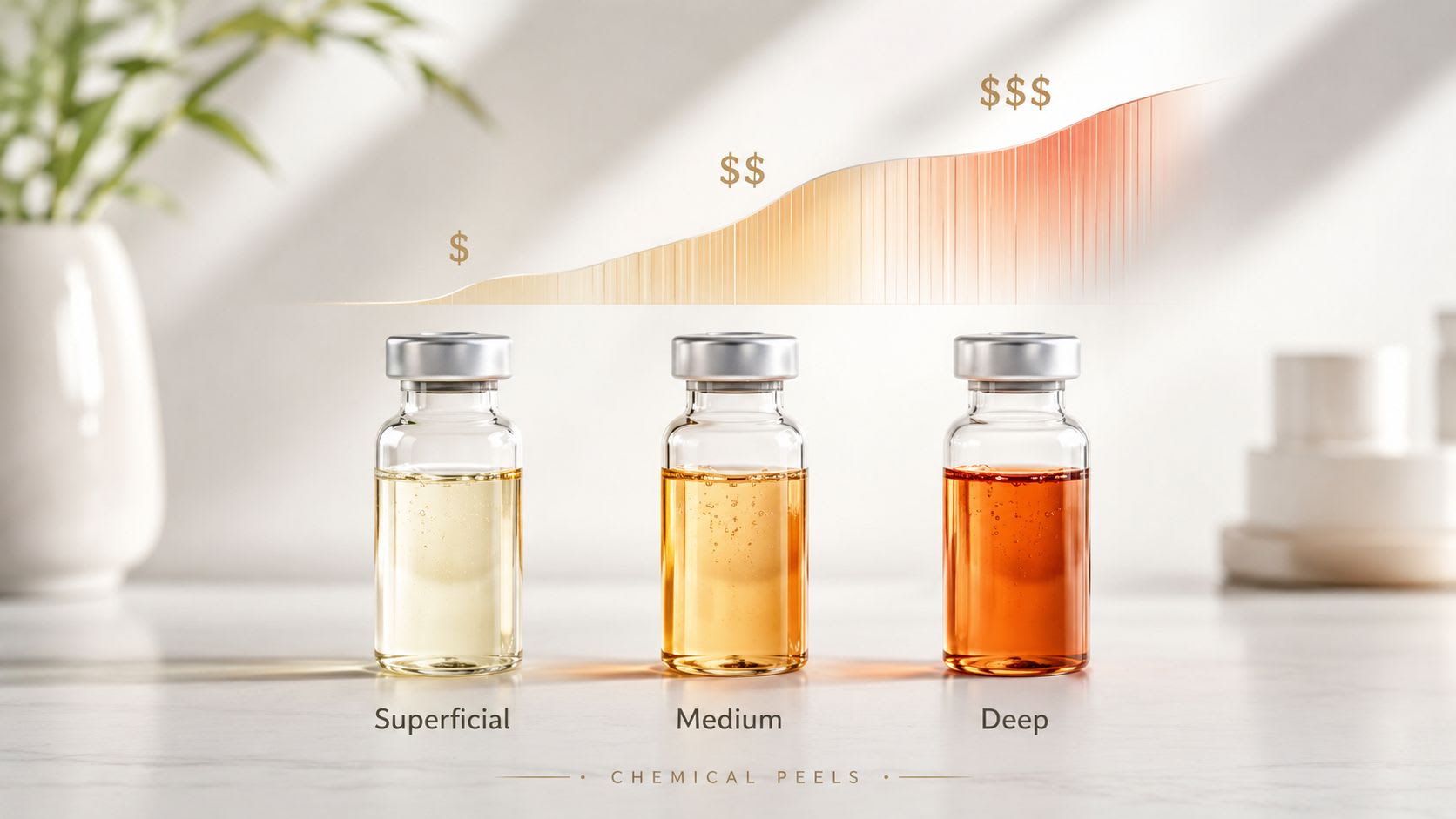
Depth is the main pricing lever. It changes the active agents, the amount of supervision, the recovery burden, and the clinic setup needed to do the treatment properly. The more aggressive the peel, the more the bill reflects medical time, not just the product on the skin.
Superficial, medium, and deep peels sit in very different economic lanes
Superficial peels are the maintenance tier. Market guides place them around $75–$300 per session in one benchmark set, while another guide lists light peels around $150–$300 (Thervo chemical peel cost guide, SpasRated chemical peel cost guide). In Swiss terms, that usually translates into the low hundreds of francs for a repeatable treatment aimed at glow, texture, and mild congestion.
Medium peels move into a different class. Published guides commonly place them around $150–$600, while another pricing summary puts them at $300–$1,500 (Thervo chemical peel cost guide, SpasRated chemical peel cost guide). This is the band where pigmentation, acne scarring, and more visible photoageing usually push patients to accept a bigger bill in exchange for a stronger result.
Deep peels sit at the expensive end of the market. Benchmark sources place them around $400–$1,800 or more in one comparison, and $1,500–$6,000 in another, with some guides citing $1,000–$3,000+ for deep, physician-led resurfacing (Thervo chemical peel cost guide, SpasRated chemical peel cost guide). That spread reflects anaesthesia, stronger agents such as phenol, and more intensive recovery planning. For a practical treatment overview, BeautyGuide's chemical peels treatment page is useful when you want to match the peel type to the result you want. A separate example of how clinics present depth-based peels can also be seen in ProMD Health Ashburn Med Spa peels, where the menu is organised around intensity rather than a single headline price.
A deep peel is not expensive by accident. The clinic is carrying more medical risk, more supervision, and more recovery infrastructure.
Matching the tier to the goal matters more than chasing the lowest number
If the goal is a basic refresh, paying deep-peel money makes no sense. If the goal is significant photoageing or stubborn texture change, a superficial peel is too limited to justify repeated sessions. That is the pricing truth Swiss patients should use, not the fiction of one universal quote.
What Actually Moves a Swiss Quote
Four levers move a Swiss peel quote more than any brochure language does. Provider credentials, city location, anaesthesia, and aftercare intensity are the main ones. Once you can spot those four, you can usually tell why one clinic quote sits above another.
Credentials and city overhead both matter
A FMH-recognised dermatologist will usually charge differently from a general practitioner offering aesthetic services, and differently again from a trained aesthetic provider in a med-spa setting. That's not just branding. It changes who is making the peel decision, who is supervising it, and how much medical risk the clinic is prepared to absorb.
Location matters too. Zurich, Geneva, and Basel tend to carry heavier clinic overhead than smaller or less central markets, so the same treatment can be priced higher before the first acid is even mixed. In practice, rent, staffing structure, and patient expectations all feed into the quote.
Anaesthesia and aftercare can add more than patients expect
Medium and deep peels often need stronger supervision, and deeper cases may require anaesthesia or more formal recovery support. That is where a quote can jump quickly. If the clinic is offering monitored recovery, the price should reflect that, and a cheap deep-peel quote should trigger questions immediately.
Aftercare is another frequent cost driver. Some clinics include post-peel skincare and follow-up, while others bill those items separately. A quote that looks lower on paper can end up more expensive once you add the extras.
| Cost driver | Effect on quote | What to ask the clinic |
|---|---|---|
| Provider credentials | Senior medical oversight usually raises the price | Who performs the peel, and who supervises it? |
| Clinic city | Higher overhead in major cities pushes pricing up | Is this quote from a city-centre practice or a smaller local clinic? |
| Anaesthesia or sedation | Deepens the medical component and adds cost | Is any anaesthesia included, and if so, who provides it? |
| Aftercare intensity | Products and follow-up can add separate charges | What post-peel products and reviews are included in the quote? |
What Is Usually Included in the Price
Patients often ask about price as if a peel were a single line item. It rarely is. A proper Swiss quote should separate the consultation, the treatment itself, the medical oversight, and the follow-up pathway. If those parts are blended into one number, you are guessing instead of comparing.
A fair quote tells you what you're paying for before the skin is touched
A bundled superficial peel price can be legitimate if the clinic is transparent. A component-based quote can be just as fair for a more complex peel. The issue is opacity, not format.
A quote should normally make clear whether it includes:
- Initial consultation and skin analysis. This should show whether the peel depth fits your skin and concern.
- The peel procedure itself. The quoted treatment should specify the depth or solution type.
- Physician supervision. If a doctor is needed, the bill should say so.
- Post-peel skincare. Some clinics provide calming products and barrier support, others bill them separately.
- Follow-up review. Deeper peels may need check-ins, especially if healing is slower than expected.
Ask for the itemised version first. If the clinic refuses to explain the components, the quote is not ready for comparison.
Clear itemisation prevents misunderstandings later, especially when consultation time, medical oversight, and procedural complexity are mixed into one presentation that looks simple on the surface. The same billing logic comes up in audit defense strategies for dermatologists, and it translates well to cosmetic quoting even though the setting is different.
Superficial and deep peels are often priced differently for a reason
Superficial peels are often quoted as a single session price because the workflow is straightforward. Medium and deep peels tend to break out more line items because the medical steps are broader and the aftercare matters more. Neither model is wrong. The fair test is whether you can see what is included before booking.
A lower number can hide a sparse package. A higher number can be justified if it covers the doctor's time, post-treatment products, and a proper review. In a Swiss clinic quote, those details matter more than the headline figure.
Budgeting, Financing, and Realistic Out-of-Pocket Planning
In Switzerland, chemical peels are usually self-pay because they're considered cosmetic. That means your budgeting starts with the assumption that basic health insurance won't pick up the bill, and any supplementary involvement would be the exception rather than the norm. For most patients, the practical question is not whether the treatment is covered. It's how to manage the full out-of-pocket cost without surprises.
Decide whether you are buying one treatment or a plan
A single light peel can be a maintenance decision. A series of light peels is a maintenance strategy. A medium peel is often a bigger one-time spend, but it may reduce the need for repeated sessions if your goal is pigment or texture improvement.
That is why the “cheap” option is not always the lower-cost option over time. If a lighter peel only lasts a short period of effect, the actual cost can rise once you repeat it. On the other hand, deep peels carry heavier upfront pricing and more recovery burden, so they only make sense when the skin issue justifies that level of intervention.
Make financing part of the clinic comparison
Many Swiss clinics offer practical payment options such as instalments, third-party medical financing, or package pricing for a treatment series. Some also include aftercare kits as part of a broader bundle. Those details should be compared alongside the treatment depth, not after the fact.
If you want to keep your own budget visible, track expenses with Fintrack while you collect quotes. It's a simple way to separate the quote from the add-ons and decide whether you're comparing true totals or just sticker prices.
The right budget is the one that still looks sensible after consultation, aftercare, and follow-up are added in.
Chemical Peels Versus Other Rejuvenation Options
Chemical peels sit in a crowded part of aesthetic medicine. Swiss patients often compare them with microneedling, fractional laser resurfacing, IPL photofacials, and home regimens built around retinoids or acids. The practical comparison is simple, which option gives the most useful change for the downtime and spend you can accept.
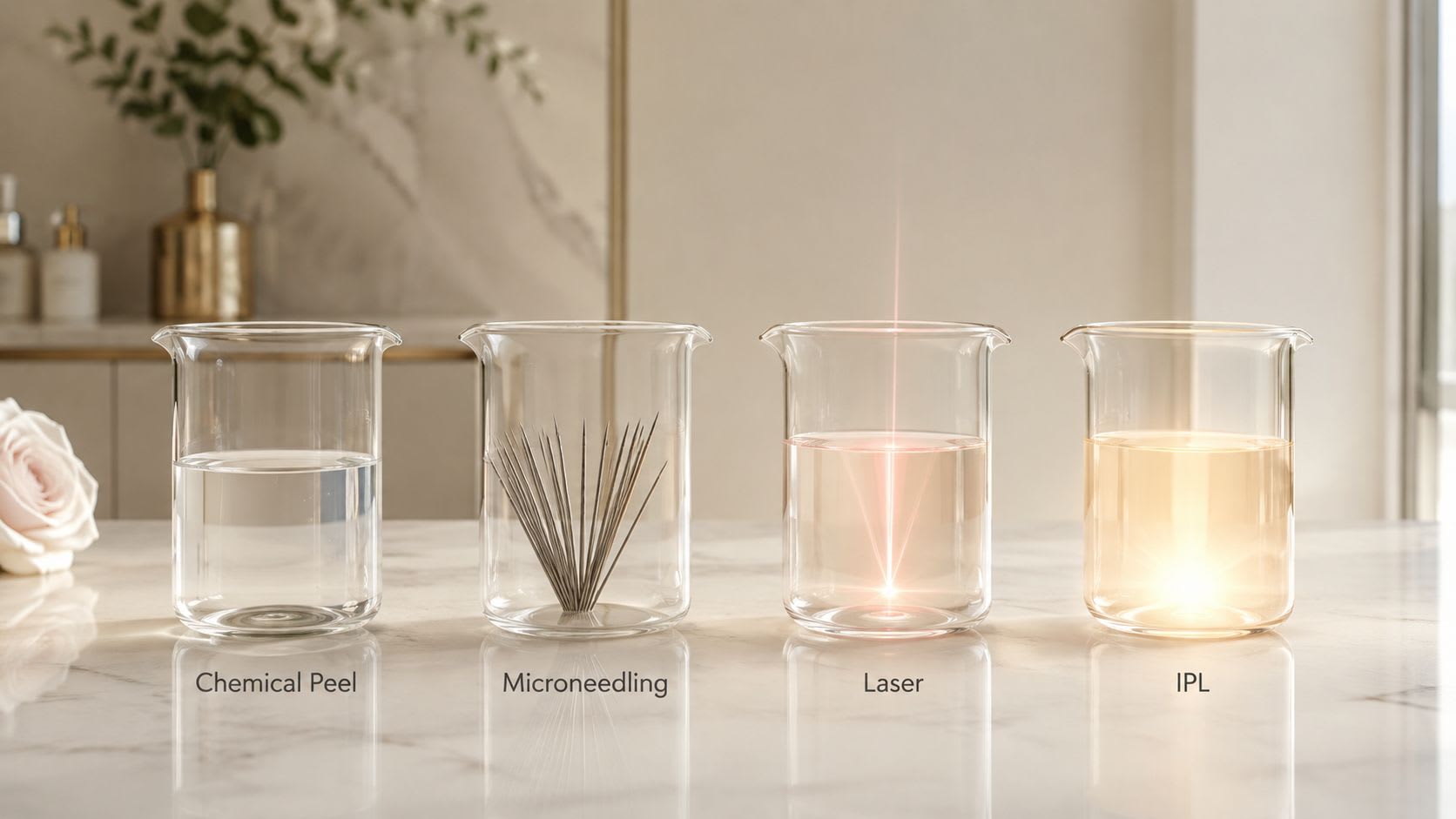
Cost-per-result is the lens that matters
A series of superficial peels is a sensible maintenance plan when the goal is brightness, minor congestion, or regular resurfacing. They are usually easier to schedule, easier to recover from, and easier to repeat than heavier device-based treatments. That makes them attractive to patients who want consistency rather than a dramatic intervention.
Medium peels sit closer to fractional non-ablative laser when the issue is pigmentation or acne scarring. The decision often comes down to skin type, tolerance for downtime, and how the clinic frames the expected result. One modality is not automatically superior. One may still be more efficient for your skin and your schedule.
Deep phenol peels are the most invasive option in this group, and they belong in a very different conversation. They are not comparable to a home acid routine or an IPL session. They are a medical resurfacing decision for people with more significant photoageing who are willing to accept a larger procedure burden.
Home care is not a substitute, but it can change the equation
At-home retinoid or acid regimens can support texture maintenance, but they do not replace an in-clinic peel when a deeper correction is needed. For some patients, the right plan is mixed. A clinic may recommend a peel as the main procedure, then pair it with a home routine to extend the benefit and reduce how often you need treatment.
For a broader treatment map, BeautyGuide's treatments overview places peels alongside other Swiss aesthetic options without forcing you into a single procedure too early. That is the right mindset for most patients, because combination planning is often more realistic than betting everything on one modality.
Questions to Ask a Verified Swiss Clinic
A good quote becomes useful only after the consultation answers are clear. If you're comparing clinics in Zurich, Geneva, Basel, Lausanne, Bern, Lucerne, Lugano, or Zug, use the same checklist every time so the numbers stay comparable.
Ask about the person, the peel, and the bill
- Who is performing the peel? Confirm whether it's an FMH dermatologist, another physician, or a delegated provider.
- What depth is being proposed? Make the clinic name the peel category and explain why it fits your skin.
- Which acid or combination is planned? Don't accept vague labels if the treatment can be specified more clearly.
- What's included in the quoted price? Ask about consultation, supervision, products, and follow-up.
- What is sold separately? Post-peel creams, anaesthesia, or extra reviews should be named upfront.
- How are complications handled? You want a clear answer on review timing and escalation if healing is slower than expected.
- What downtime should I expect socially and professionally? The clinic should answer in practical terms, not marketing language.
If you want to keep the clinic search focused, BeautyGuide's verified clinic directory is built for comparing qualified Swiss providers without turning the process into guesswork. Use it to shortlist a few practices, then compare their quotes line by line with the same questions.
If a clinic can't explain the quote in plain language, it probably isn't ready for your booking.
Bring two or three quotes into the consultation process, compare them against the same checklist, and choose the provider that is transparent about depth, supervision, aftercare, and recovery. Then visit BeautyGuide to shortlist Swiss clinics, compare peels by city, and move from a confusing price range to a clear treatment decision.
Dieser Artikel dient nur zu Informationszwecken und ersetzt keine professionelle medizinische Beratung.