
Ein Suchlauf nach „nasolabialfalten filler zürich“ erfolgt meist an einem konkreten Entscheidungspunkt. Die Falte vom Nasenflügel zum Mundwinkel zeichnet sich deutlicher ab, allgemeine Erklärungen helfen nicht mehr weiter, und die eigentliche Aufgabe besteht nun darin, Anbieter in Zürich anhand von Kriterien zu vergleichen, die das Ergebnis und die Passgenauigkeit beeinflussen.
Clinic websites make that harder than it should be. Some present nasolabial fold filler as a straightforward injectable appointment. Others treat it as one part of a wider facial assessment that may also include cheek volume, skin quality, or lower-face balance. A clinic can therefore look less focused on this one indication while still offering the more careful evaluation.
That distinction matters because “who offers filler” and “who is the right clinic for this concern” are different questions.
A more useful comparison starts with clinic type. An injectable-focused practice may suit readers who want a narrow treatment menu and clear booking logic. A dermatology centre may be stronger for patients who also want skin diagnosis or adjacent medical assessment. A plastic surgery practice may frame nasolabial folds within broader structural ageing changes rather than as an isolated line treatment. Transparency matters too. Some clinics publish enough detail to estimate fit before contact, while others reserve practical information for the consultation.
For readers still comparing treatment basics, this overview of Dermal Filler Behandlungen in Zürich helps place nasolabial fold correction in the wider filler category without reducing every clinic to the same model.
The shortlist below is built to support comparison, not just naming options. The goal is to sort Zürich clinics by specialisation, transparency, and treatment scope so you can judge which consultation is worth booking first.
1. Beauty2Go Klinik – Zürich
Beauty2Go stands out less because of a single treatment philosophy and more because of how clearly the clinic can be evaluated before first contact. For a decision-stage search like nasolabialfalten filler zürich, that matters. Many aesthetic pages still force you into a consultation before you can judge whether the clinic even matches your budget, language needs, or booking preferences.
The Beauty2Go Klinik Zürich profile is useful because it surfaces service focus, practical booking information, and pricing guidance in one place. That's a stronger starting position than the usual Swiss clinic page that gives broad marketing claims but few operational details.
Why it ranks first for comparison value
Beauty2Go is especially relevant for readers who want a filler-led anti-aging clinic rather than a broad medical centre. If your main concern is smile-line correction and adjacent injectable treatments, a focused presentation helps you compare quickly without guessing whether fillers are central to the practice or just one option among many.
Its other advantage is platform context. BeautyGuide presents clinics inside an independent Swiss directory model that verifies medical credentials through MedReg and identifies specialist qualifications where applicable. That doesn't replace your own consultation, but it improves the quality of your first shortlist.
Practical rule: A clinic profile is most helpful when it reduces uncertainty before consultation. Transparent service scope and booking details often tell you more than polished branding.
A reader comparing Zurich options can use Beauty2Go as a baseline on three fronts:
- Transparency before contact: Pricing guidance and direct booking details help you assess practicality before committing.
- Treatment focus: The profile centres filler-based facial rejuvenation rather than burying it inside a broad menu.
- Swiss discovery context: You can compare this listing against other vetted Swiss clinics without restarting your research each time.
Where caution still matters
An online profile can only summarise. It won't tell you whether your fold should be injected directly, whether cheek support matters more, or whether no filler is the right answer. That clinical reasoning still has to happen in person.
BeautyGuide's own Swiss dermal filler treatment guide is useful here because it frames filler as a medical treatment with indications, risks, recovery, and consultation points, not just a cosmetic purchase. That makes Beauty2Go a strong first-stop option for organised comparison, especially if you want clear practical information before booking.
2. Smoothline
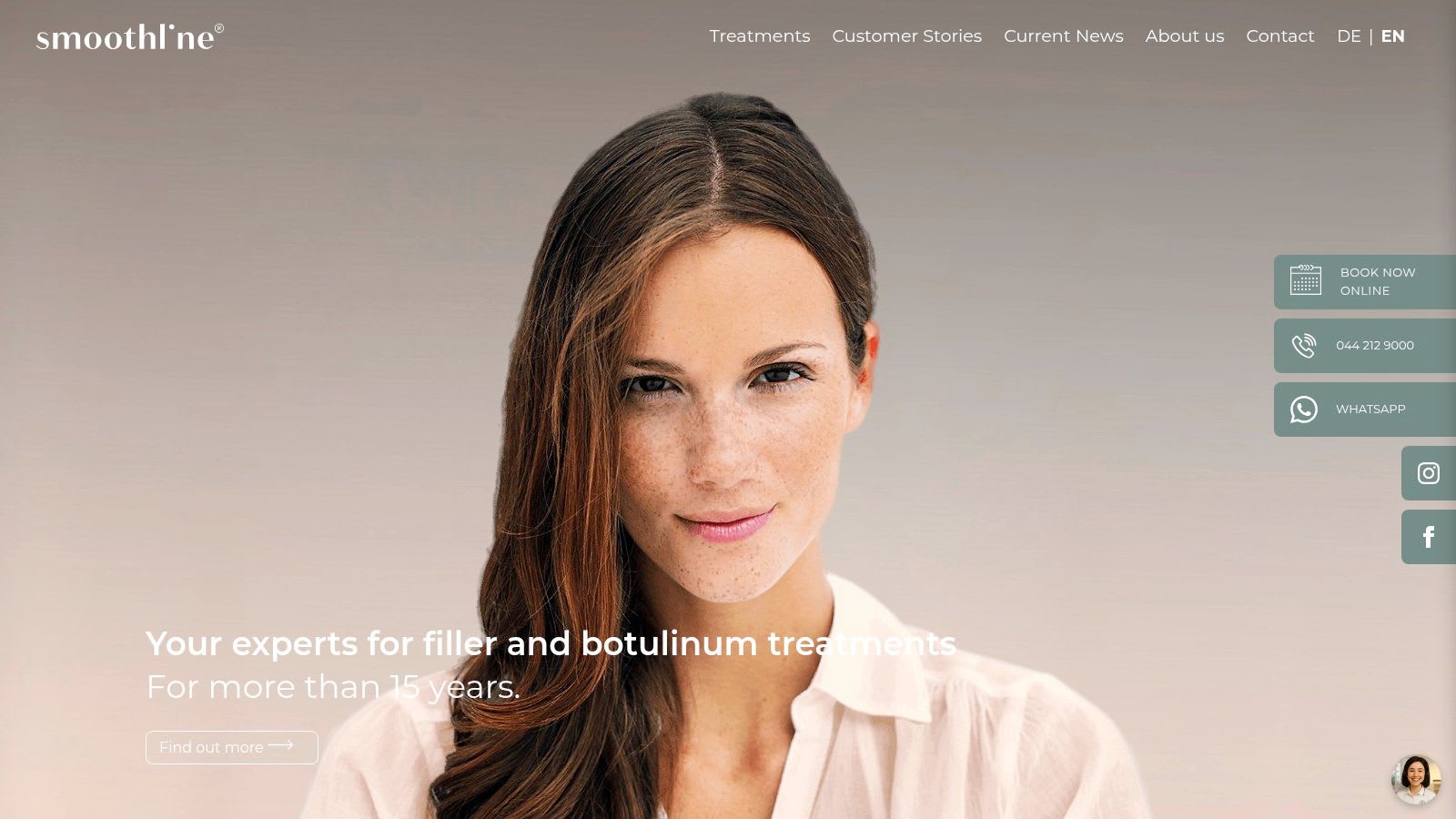
Smoothline is the clearest example in Zurich of the injectable-specialist model. If you prefer a clinic that has built its identity around hyaluronic acid fillers and botulinum toxin rather than a full dermatology or surgery setting, this is the most obvious match in the shortlist.
Its public information is unusually concrete. Smoothline explicitly lists nasolabial folds on its treatment page and presents treatment as a fast office procedure, noting that visible improvement is usually seen after 2 to 3 days and the maximum effect develops after 5 to 6 weeks on its Zurich treatment page (Smoothline nasolabial folds treatment details).
What Smoothline does well
The clinic is strong on practical expectation-setting. It also states that hyaluronic-acid filler results for this area typically last 9 to 12 months, with longer-lasting outcomes not uncommon, and notes the use of fine needles or blunt microcannulas to reduce tissue trauma on the same treatment page. For patients comparing Zurich clinics, that kind of operational detail is more helpful than generic promises of “natural” results.
Smoothline also publishes a price for “nasolabial folds (both sides)”, which is rare enough in Zurich to be a meaningful differentiator. Published pricing won't replace an examination, but it makes budgeting more realistic.
A simple way to read Smoothline is this:
- Best fit: Patients who want an injectable-focused clinic with public pricing and clear procedural information.
- Less ideal: Patients who want one provider to combine filler planning with broader dermatology or surgical escalation.
- Main advantage: Low-friction comparison, because the clinic explains what it does without forcing a consultation first.
For adjacent wrinkle concerns, readers often compare smile-line treatment with upper-face injectables. BeautyGuide's Botox treatment guide for Switzerland helps clarify where muscle-relaxing treatment belongs and where volumising treatment is the true issue.
3. Hautzentrum Zürich
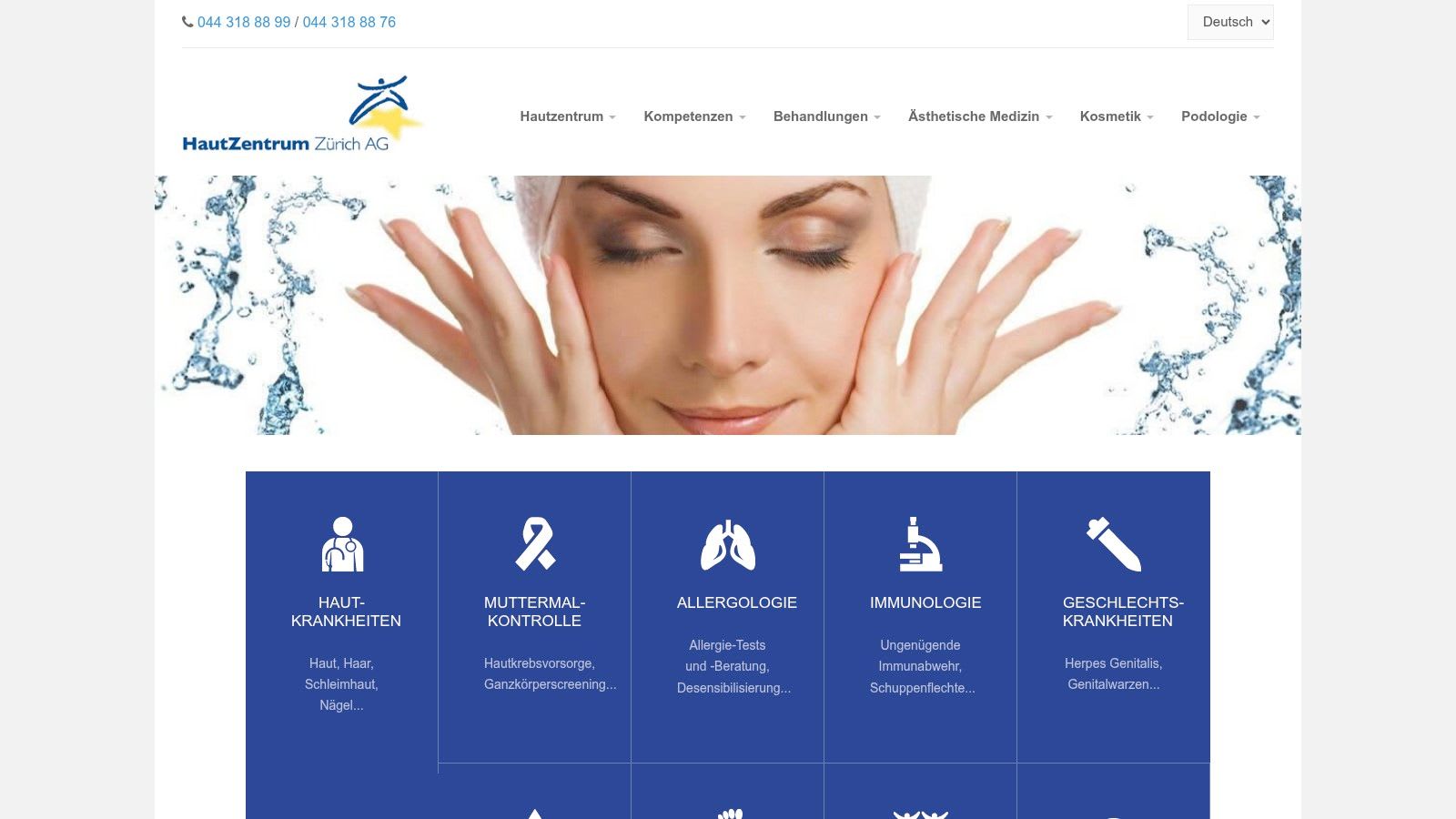
Hautzentrum Zürich represents a different category entirely. It isn't mainly an injector boutique. It's a dermatology-led centre with a broader treatment toolbox, and that changes how a nasolabial fold consultation is likely to be approached.
That distinction matters because Zurich clinic content often underserves the key planning question. Patients frequently need to know whether the fold should be filled directly at all, or whether restoring mid-face volume first would produce the better result. Existing local content often focuses on duration, price, and smoothing, while giving limited guidance on comparative decision-making or anatomy-based patient selection (Swiss market gap around nasolabial versus mid-face planning).
Why dermatology context can help
A centre like Hautzentrum Zürich is valuable when the fold is only part of the picture. If skin quality, facial descent, or deeper structural ageing are involved, a dermatology-led assessment can widen the conversation beyond simple line filling.
The clinic also offers more than one injectable class, including hyaluronic acid options and biostimulator-style approaches. That broader menu matters for patients with more pronounced folds or those who want a plan that addresses tissue support rather than immediate volume alone.
Many disappointing nasolabial fold outcomes don't come from poor injection technique. They come from treating the wrong anatomical problem.
That doesn't mean a broader clinic is always better. The trade-off is usually less price transparency online and a heavier reliance on consultation-based planning. If you already know you want a straightforward HA filler treatment, a specialist injector may feel more efficient. If you're unsure whether volume loss, skin quality, or facial descent is driving the fold, Hautzentrum's model becomes more compelling.
BeautyGuide's article on why medical supervision matters in aesthetic treatments is especially relevant for this kind of choice because the question isn't just who injects, but who assesses.
4. Klinik Tiefenbrunnen
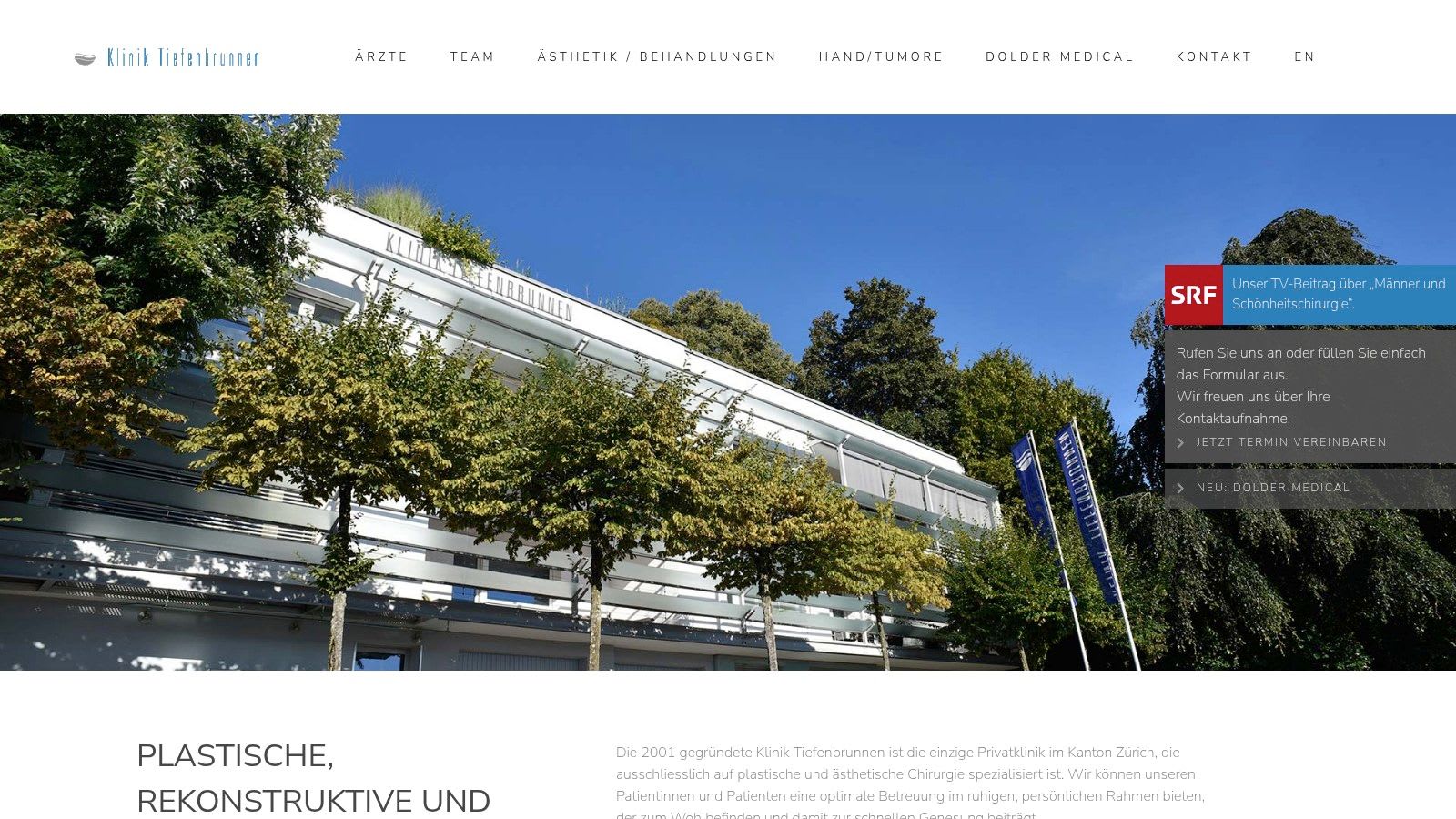
A common Zurich consultation starts the same way. A patient books for nasolabial fold filler, then the assessment shows the fold is only one visible part of a broader change in cheek support, lower-face weight, or facial descent. Klinik Tiefenbrunnen is relevant for that type of case because its model does not separate injectable care from surgical assessment too early.
That positioning makes it different from a pure injector clinic and different from a dermatology-first centre. The practical question here is not only whether the clinic offers hyaluronic acid filler, but whether it frames the fold as an isolated line or as part of overall facial structure. Klinik Tiefenbrunnen appears to lean toward the second approach.
Where Klinik Tiefenbrunnen fits in this comparison
In a structured shortlist, this clinic belongs in the category of practices that combine non-surgical treatment with surgical expertise in the same setting. For readers comparing Zurich providers, that matters because clinic type often predicts consultation style. A dedicated injector clinic may optimise for efficiency and treatment-specific detail. A mixed surgical and non-surgical practice is more likely to assess whether filler is proportionate to the problem being treated.
Its published positioning suggests a focus on resorbable fillers for deeper folds and volume support, especially where mid-face changes contribute to the crease. That gives readers a useful comparison point. The clinic seems less focused on simple menu-style pricing and more focused on treatment planning across a wider rejuvenation spectrum.
A reader can assess Klinik Tiefenbrunnen on three objective criteria:
- Specialisation: Broad facial rejuvenation model rather than a filler-only identity.
- Transparency: More limited online treatment detail than highly focused injector clinics.
- Treatment scope: Non-surgical filler options with surgical expertise available in the same practice.
This model suits patients who want one consultation to answer a larger question. Is filler enough, or is filler only a partial correction?
That distinction affects decision quality. Patients comparing clinics only by area price often miss the more important variable, which is whether the provider is evaluating the cause of the fold or merely responding to the requested treatment. Klinik Tiefenbrunnen is stronger on that evaluative side than on simplified online comparison.
The trade-off is clear. Readers who already want a straightforward HA treatment with detailed upfront web information may find a more injector-focused clinic easier to compare. Readers who want a clinic to place nasolabial filler within a broader structural plan may find Tiefenbrunnen more aligned with that goal.
As noted earlier in the article, published evidence supports filler as a valid option for nasolabial folds and also highlights the usual short-term adverse effects that should be discussed during consultation. In a clinic like Tiefenbrunnen, the useful takeaway is not just that filler can work. It is that a good result depends on choosing the right indication, not only the right product.
5. SKINIC Zürich
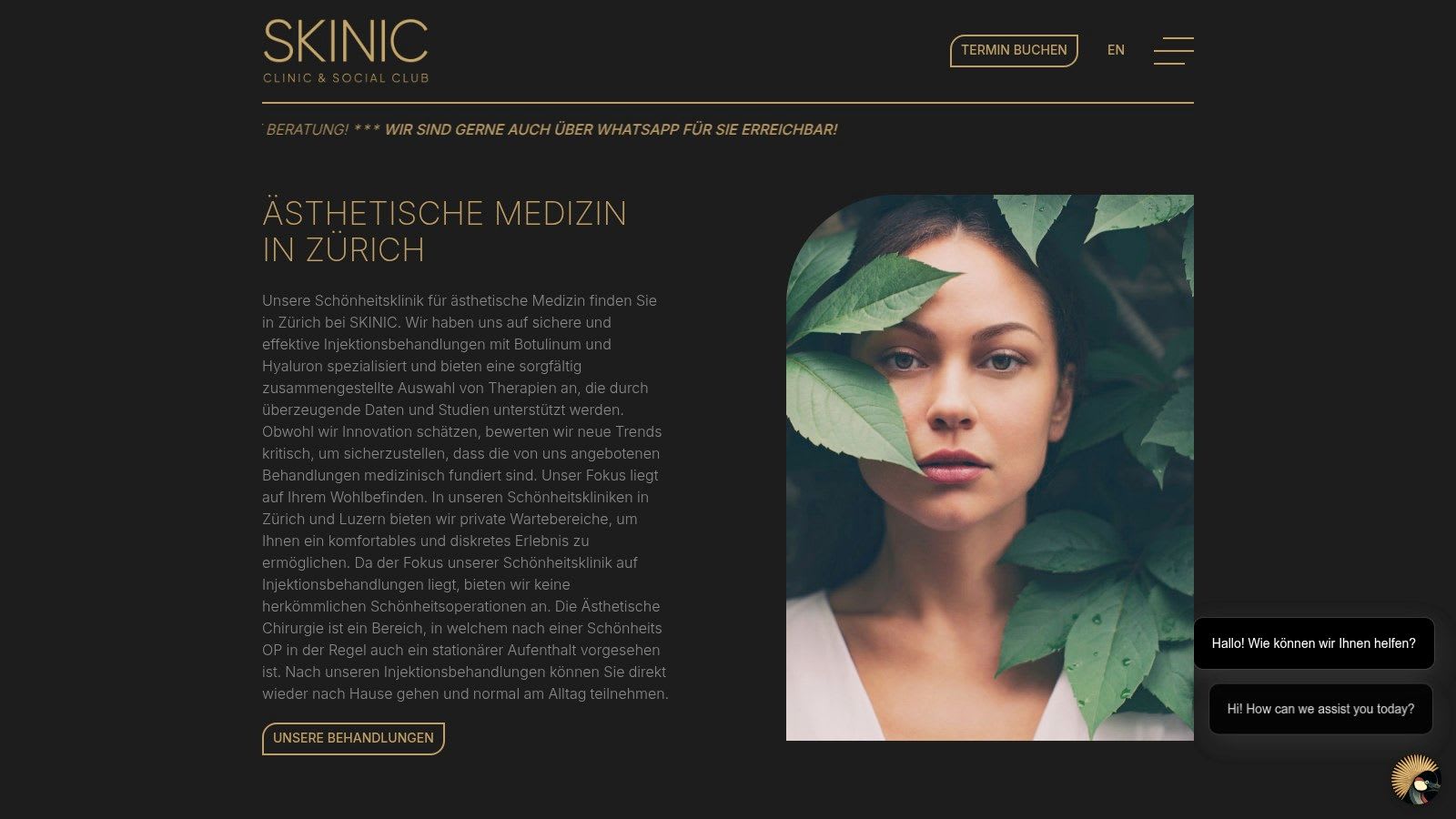
SKINIC Zürich is particularly relevant for expats and international patients because it offers a dedicated English-language treatment page for nasolabial lines. That may sound like a minor feature, but in Zurich it can materially change how well a patient understands indications, expected longevity, and follow-up planning before the first visit.
The clinic's educational approach is its main differentiator. Rather than relying only on aesthetic language, it explains that longevity in this area is often in the 9 to 12 month range and discusses factors that influence how pronounced the fold becomes.
Why the English-language detail matters
In Swiss aesthetic medicine, language accessibility often shapes decision quality more than people expect. If a patient misunderstands whether the goal is direct filling, support, or broader rejuvenation, the consultation starts from the wrong premise.
SKINIC reduces that problem by speaking directly to people who may not be comfortable comparing German-language clinic pages. That makes it a practical shortlist option for readers who want to understand the treatment logic before booking.
A clinic doesn't need to publish every product detail online. It does need to explain what problem it thinks it is treating.
Another useful lens is treatment planning over time. Patients often focus on the first appointment, but repeatability matters in fillers. Clinics that explain expected duration help patients budget and plan maintenance more realistically, even when they don't publish exact area-based prices online.
One limitation remains. The site is informative, but consultation is still necessary to understand product choice, volume, and whether the fold should be treated directly or indirectly. For an English-speaking patient, though, SKINIC lowers the information barrier more effectively than many local competitors.
6. Plastische Chirurgie Zürich
Plastische Chirurgie Zürich is best understood as the holistic facial-planning option on this list. It offers hyaluronic acid fillers for wrinkle treatment and facial contouring, but its bigger value is conceptual. The practice frames injectables within facial harmony, not as isolated line correction.
That matters because overfilling the nasolabial area is often a planning problem before it becomes a technical one. A surgeon-led practice is more likely to ask whether cheek support, contour balance, or overall lower-face ageing is making the fold look worse.
When a plastic surgery context is useful
Not every patient needs a surgical practice for filler. But some patients benefit from a surgeon's perspective precisely because they're trying to avoid a narrow fix.
This setting tends to suit people who want subtle results and a conservative plan, especially if they're unsure whether injectables alone will remain the right approach over time. Surgical expertise on-site doesn't mean surgery is being pushed. It means future options can be discussed within the same anatomical framework.
Three reasons someone might prefer this model:
- Facial analysis: The fold is evaluated as part of facial support and contour, not just surface depth.
- Conservative correction: Practices with surgical expertise often emphasise restraint in areas prone to overfilling.
- Continuity of planning: If treatment goals evolve later, the clinic can discuss non-surgical and operative routes without referral elsewhere.
The downside is straightforward. Websites in this category often publish less granular detail than injectable specialists. If you want a quick yes-or-no answer on pricing or exact product choice before booking, this type of clinic can feel less transparent online.
7. Bellevue Esthetics – Dr. med. Martin Zoppelt
Bellevue Esthetics sits in the physician-led boutique category. That's different from both the larger centre model and the high-volume injector model. For some patients, direct access to the treating doctor is the deciding factor because they want the assessment and the procedure to stay in one pair of hands.
The practice offers a dedicated page on nasolabial fold treatment with hyaluronic acid fillers, which already puts it ahead of many clinics that mention fillers only in broad terms. A focused procedure page usually signals that the clinic sees this concern frequently enough to explain its own indications and approach.
Why a doctor-led boutique practice appeals
A smaller physician-led setting often suits patients who value continuity and a more contained treatment environment. If your priority is to discuss facial anatomy, product choice, and expected effect directly with the treating doctor, this model can feel more accountable than a large clinic structure.
Bellevue's central location is also practical for Zurich patients who want easy access for consultation and review appointments. In aesthetic medicine, convenience isn't trivial. It affects whether patients return for follow-up, reassessment, or staged treatment.
The trade-off is familiar:
- Advantage: Direct physician involvement from consultation to treatment.
- Limitation: Less public pricing and often less extensive online media than larger competitors.
- Best fit: Patients who prioritise doctor continuity over maximum website transparency.
Zurich clinics increasingly use digital booking infrastructure, and one Swiss privacy policy example notes the use of localsearch.ch scheduling so patients can view available appointments and book independently (Swiss digital booking setup for aesthetic appointments). That matters here because boutique practices can be excellent clinically, but their practical usability often depends on whether booking and follow-up are frictionless.
Zurich Nasolabial Fold Filler: 7-Clinic Comparison
A Zurich patient comparing nasolabial fold filler clinics usually sees the same service label repeated across websites. The more useful question is narrower: what kind of clinic is offering it, how clearly it explains price and scope, and whether it treats the fold as an isolated line or part of a broader facial assessment.
That distinction makes this shortlist easier to use. Some entries operate like focused injectable providers. Others sit inside dermatology or plastic surgery settings with a wider diagnostic and treatment range. Transparency also varies. A few clinics publish pricing or booking information upfront, while others require consultation before giving a full cost picture.
| Clinic | Clinic model and treatment approach | Pricing and process transparency | Expected outcomes and durability | Best fit | Key strengths for comparison |
|---|---|---|---|---|---|
| Beauty2Go Klinik – Zürich | Focused aesthetic clinic offering standard filler treatment after consultation | Service categories and booking options are public. Final treatment cost depends on assessment | HA-based correction for nasolabial folds, with duration varying by product and patient factors | Patients who want a fast first comparison and visible booking structure | Clear service presentation, accessible process, central Zurich location |
| Smoothline | Injectable specialist with a narrow focus on filler and related treatments | Published pricing for nasolabial fold filler and online booking available | Conservative correction aimed at natural-looking results, with the consistency that often comes from a specialist injector model | Patients who prioritise clear prices and a clinic centred on injectables | Specialist scope, visible price list, strong treatment-specific orientation |
| Hautzentrum Zürich | Dermatology-led clinic with access to HA filler and biostimulator options | Consultation needed before final treatment plan and pricing | Individualized correction. Added dermatology scope may help when folds overlap with skin quality or ageing concerns | Patients with more pronounced folds, skin-texture concerns, or a need for broader medical assessment | Dermatology supervision, wider injectable toolkit, stronger diagnostic range |
| Klinik Tiefenbrunnen | Multidisciplinary setting with non-surgical treatment and surgical backup | Consultation-based pricing and treatment planning | Midface volume treatment and deeper-fold correction within a safety-conscious clinical framework | Patients who want non-surgical options in a practice that can also assess surgical alternatives | On-site surgical capability, broader case selection, explicit safety orientation |
| SKINIC Zürich | Standard injectable practice with strong patient education and accessible treatment information | Exact pricing requires consultation, but treatment explanations are relatively clear | Typical HA-based correction, with public discussion of likely treatment duration and expectations | International patients and expats who value English-language information before booking | Clear English resources, expectation-setting, useful pre-consultation education |
| Plastische Chirurgie Zürich | Surgeon-led practice assessing the fold within wider facial structure and ageing patterns | Consultation required before pricing and treatment plan | Natural-looking correction designed to avoid overfilling, often with attention to cheek and midface support | Patients who prefer plastic-surgery oversight and a broader structural assessment | Surgical expertise, facial-balance perspective, longer-range planning |
| Bellevue Esthetics – Dr. med. Martin Zoppelt | Physician-led boutique practice offering focused filler treatment | Consultation required for pricing | Targeted nasolabial correction under direct physician care, with standard HA durability depending on product and anatomy | Patients who want continuity with the treating doctor in a smaller practice setting | Direct doctor involvement, focused treatment pages, convenient central location |
Two comparison filters matter most here.
First, specialization. Smoothline and Beauty2Go are easier to assess quickly because their offer is narrower and more visible online. Hautzentrum Zürich, Klinik Tiefenbrunnen, and Plastische Chirurgie Zürich ask a different question. They frame the fold within dermatology, structural facial ageing, or surgical decision-making, which can be more useful when the line is secondary to cheek volume loss or tissue descent.
Second, transparency. Published prices and online booking reduce friction for routine cases. Consultation-only pricing is not automatically a weakness, but it shifts more of the evaluation burden onto the patient. In practical terms, that means asking whether the clinic explains product choice, injection scope, and whether treatment may extend beyond the fold itself.
Used this way, the table is less a ranking than a decision framework. It helps separate clinics by operating model, information clarity, and treatment breadth before you spend time on consultations.
Your Next Step: The Professional Consultation
You narrow the list to two Zurich clinics, then notice they are solving slightly different problems. One presents nasolabial filler as a focused injectable procedure with clear online pricing. The other treats the fold as one sign of broader facial ageing and withholds pricing until after assessment. That is usually the real decision point.
The seven-clinic comparison is most useful as a sorting tool. It separates providers by operating model, scope of evaluation, and level of price transparency. That matters because a visible fold can result from different underlying patterns, including local volume loss, midface support changes, skin quality, or tissue descent. A clinic that specializes in injections may suit a straightforward refill case. A dermatology or plastic surgery setting may be more informative when the fold is part of a larger structural change.
Treatment philosophy also deserves explicit attention. Zurich providers do not all frame correction in the same way. Some focus on classic hyaluronic acid filler for immediate volume replacement. Others also market collagen-stimulating options, including Praxis AVORYA in Zollikon, which presents regenerative treatment for wrinkles and deep nasolabial folds through Praxis AVORYA biostimulator treatment in the Zurich area. That distinction affects expectations. Immediate correction and gradual biostimulation differ in onset, repeat-treatment planning, and how results are assessed over time.
As noted earlier, published clinical research supports the broader point that hyaluronic acid treatment for nasolabial folds can produce visible improvement over months, and that outcomes can vary by product. For a patient comparing clinics, the practical implication is straightforward. Ask not only whether filler is offered, but which product class is proposed, why that product was chosen for your anatomy, and how the clinic defines a realistic endpoint.
A strong consultation should clarify four things: whether the fold should be injected directly, whether cheek or midface support should be addressed first, which filler or biostimulator category is being recommended, and what trade-offs come with that plan. Bring photos if they help show progression. Ask for the expected duration in your case rather than a headline figure taken from marketing copy.
If you want a neutral Swiss platform to continue your search, BeautyGuide helps you compare aesthetic clinics by city, treatment, and verified medical credentials. It is a practical way to refine a shortlist for nasolabialfalten filler zürich without relying only on clinic websites.
Explore More
Dieser Artikel dient nur zu Informationszwecken und ersetzt keine professionelle medizinische Beratung.