
Hair thinning often starts unnoticed. You notice more strands in the shower drain, a wider parting, or a scalp that shows a little more under office lights, then you begin searching for PRP Haarausfall Schweiz because you want something medical, but you do not want to rush into surgery or commit to daily routines without knowing what they can realistically do.
For many people in Switzerland, PRP sounds appealing because it uses your own blood and is offered by dermatology and aesthetic clinics in cities such as Zurich, Basel, Bern, St. Gallen, and Lausanne. The harder question is not whether the treatment sounds modern, but whether it fits your stage of hair loss, your budget, and the way Swiss clinics deliver it.
Understanding PRP Treatment for Hair Loss in Switzerland
A patient in Zurich may first hear about PRP after noticing that temple hair has become finer over a few months. A patient in St. Gallen may reach the same point after seeing more hair on the pillow and wanting to avoid guessing between shampoos, supplements, and online claims. In both cases, PRP, platelet-rich plasma, is usually explained as a treatment that takes a sample of the patient's blood, processes it to concentrate the platelets, and then injects that material into the scalp.
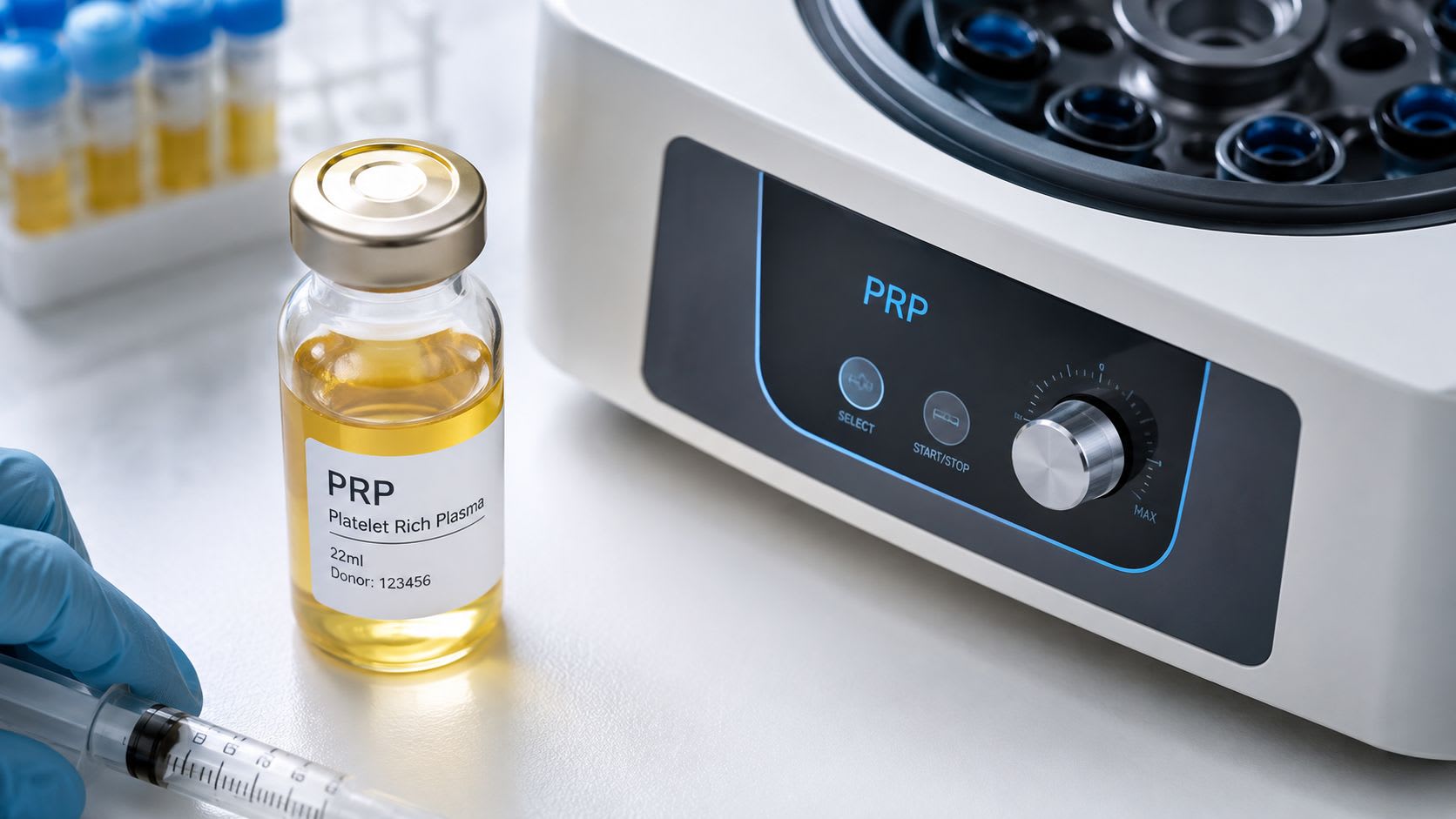
What PRP is trying to do
The basic idea is simple. Platelets contain biological signals that may support tissue repair, and clinics use that logic to try to stimulate weakened hair follicles in areas of thinning. PRP is therefore not a cosmetic cover-up, it is a biologic injection treatment that aims to support follicles that are still present, but not performing well.
That is also why the treatment is often misunderstood. It is not a one-time cure, and it is not equally suitable for every form of hair loss. A person with active, early thinning may be a better candidate than someone with long-standing bald areas where follicles are already absent.
Practical rule: if the scalp has already lost most active follicles, PRP has far less to work with.
Why Swiss patients ask about it
Swiss clinics often position PRP as part of a broader hair-loss discussion rather than a miracle solution. That makes sense, because the key decision is usually about whether the treatment can add enough value to justify time, cost, and repeat sessions. For patients who want to stay within Swiss medical standards and avoid exaggerated promises, that is a more useful starting point than marketing language.
Some readers also confuse PRP with a hair transplant. Those are different treatments. PRP does not move hair follicles from one area to another, it tries to support the follicles already on the scalp. That distinction matters when you are trying to decide whether the problem is early thinning, progressing hereditary loss, or a situation where surgery may eventually be more appropriate.
How PRP Works and the Swiss Treatment Protocol
PRP works through a sequence of small steps rather than a single visible effect. Blood is drawn first. The sample is then processed to concentrate the platelets, and the prepared plasma is injected into the thinning areas of the scalp so the platelets can release signals close to the follicular structures.
The technical details matter more than many patients expect. A Thieme review states that PRP for alopecia is generally prepared at 1.5 to 4 times physiologic platelet levels, and that injection at about 2 to 3 mm deep, from subdermal to deep dermal tissue, is considered sufficient to target follicular structures while limiting injury to the follicle. The same review advises that PRP should not be mixed with local anaesthetics, because that may reduce efficacy, and it supports a maintenance approach of monthly treatment for 3 to 4 months, then repeat sessions every 3 to 6 months. Thieme review on PRP technique and maintenance
A treatment session in Switzerland usually follows a practical clinic routine. The blood draw comes first, then the blood is prepared, and then the scalp is injected in the planned areas. Many patients notice that the process feels more like a short medical procedure than a cosmetic appointment, because the aim is to work on the biology of the follicle, not to cover the hair loss.
Swiss clinics also differ in how they structure the course, but the logic stays similar. St. Gallen Cantonal Hospital describes a protocol that is usually repeated three times at intervals of 3 to 4 weeks, which fits the broader maintenance approach used in clinic practice. St. Gallen Cantonal Hospital PRP hair-growth treatment
The planned sequence matters because hair changes slowly. One session may be part of the process, but it rarely matches the pace of follicular response on its own. Clinics therefore treat PRP as a course of care, not as a one-time fix.
For patients comparing PRP Haarausfall Schweiz options, the question is often whether the treatment fits the rest of their care plan. If hair loss is still early, PRP may sit alongside medical therapy. If the hairline is already far advanced, a transplant may be the more realistic option. A Swiss clinic explanation of PRP microneedling also shows how some providers combine techniques to support scalp treatment planning, while still keeping the procedure within a medical setting. PRP microneedling in clinic context
Before booking, Swiss patients should also check who is providing the treatment. A clinic can describe PRP clearly, but that does not replace medical credentials. In practice, the safer approach is to confirm the doctor's registration through MedReg or FMH, then ask how the clinic handles blood preparation, injection depth, and follow-up visits.
Clinical Evidence and Who Benefits Most from PRP
The evidence base is mixed, and Swiss readers should know that from the start. A Swiss dermatology review on PRP for androgenetic alopecia summarised a systematic review of 12 randomised clinical studies, where 10 reported positive effects, while in the broader evidence set 6 studies reported positive results and 4 reported negative results. The same review also noted that some experts considered PRP monotherapy ineffective for male androgenetic alopecia, which is why the Swiss discussion has historically been cautious rather than definitive. Swiss dermatology review on PRP evidence
Who is most likely to respond
Swiss clinic sources consistently point to early-stage androgenetic alopecia as the most promising setting. That means genetically or hormonally driven hair loss while the follicles are still active, not completely gone. One Zurich clinic states that PRP shows particularly good results in men and women with genetic hair loss in the early stages, and another Swiss clinic says ideal candidates are patients losing more than 100 hairs per day or already showing bald or thinned areas on the scalp. Aesthetics Pallas hair loss treatment
The practical implication is straightforward. A patient with visible thinning but still present follicles may have more to gain than a patient with long-standing advanced loss. In other words, PRP tends to fit situations where the scalp still has something to rescue.
A good consultation does not start with selling PRP. It starts with asking whether the follicles are still active enough for the treatment to matter.
Where expectations need to stay realistic
PRP is also not equally predictable from one person to another. Some patients respond, others do not, and clinic literature notes uncertainty around stage of loss and combination use with other treatments. That is why a careful consultation matters. If a provider speaks as though every patient will improve in the same way, that is a warning sign.
The useful takeaway is not that PRP is useless. It is that the treatment sits in a middle zone, where it can be reasonable for selected patients, but it does not replace diagnostic judgement.
PRP Versus Alternative Hair Loss Treatments in Switzerland
PRP makes most sense when you compare it with the other realistic options, not when you judge it in isolation. In Swiss treatment planning, patients usually weigh topical minoxidil, finasteride, PRP, and later-stage hair transplant. The decision depends on how active the hair loss is, whether follicles are still present, and whether the patient wants a medical, procedural, or surgical path.
A Swiss-German clinical source notes that PRP outcomes may depend on the stage of hair loss and that some patients may be non-responders, while also pointing out uncertainty about combination use with minoxidil, finasteride, and microneedling. It also notes that the broader evidence suggests a relatively favourable safety profile, with mostly transient redness, swelling, pain, or bruising and a quick return to normal activity. That makes PRP easier to recover from than surgical options, but it does not automatically make it the better value. Clinical review on PRP in alopecia
| Treatment | Best For | Typical Timeline | Key Considerations |
|---|---|---|---|
| PRP | Early thinning with active follicles | Repeated sessions, then maintenance | Works best when hair loss is not too advanced, outcomes vary |
| Minoxidil | Patients who want a medical first step | Ongoing use | Often part of long-term management, needs consistency |
| Finasteride | Suitable men with androgen-related loss | Ongoing use | Prescription-based, consultation is important |
| Hair transplant | More advanced loss with areas needing redistribution | Surgical recovery period | Moves follicles, but does not stop future thinning on its own |
PRP is often a sensible add-on when a patient already uses medical therapy and wants another layer of support. It is less persuasive when hair loss is advanced and the likely gain is small relative to cost. That is where some people are better served by focusing first on medical treatment, or by discussing whether transplant planning belongs on the table.
Hair transplant specialist in clinic context
Your Complete PRP Treatment Journey in Switzerland
A careful consultation should feel clinical, not sales-driven. The provider should look at the pattern of thinning, ask how long the hair loss has been happening, and explain whether the follicles still appear active enough for PRP to be worth considering. In Switzerland, that conversation should also include whether you need medical therapy first, whether PRP is only an add-on, and what result would count as a realistic improvement for you.
What the treatment day usually looks like
On the day itself, the appointment usually follows a simple sequence. Blood is drawn, the sample is prepared, and the scalp is injected in the planned areas. Patients generally return to normal activities quickly, although the scalp may feel tender, look red, or show mild swelling or bruising for a short time.
The early treatment series is where most clinics do the essential work. St. Gallen Cantonal Hospital describes a standard course repeated three times at intervals of 3 to 4 weeks, and the Thieme review supports a maintenance rhythm after the initial phase. That means PRP should be planned like a schedule, not a spontaneous cosmetic session.
What to expect afterwards
Aftercare is usually simple. Patients are commonly advised to treat the scalp gently and avoid unnecessary irritation right after treatment. If a clinic suggests a dramatically complex recovery process, that deserves a second look, because PRP is generally considered a low-downtime procedure.
The main point is patience. Hair changes slowly, so a session today does not translate into visible improvement tomorrow. A good Swiss provider will say that upfront rather than implying instant density.
For readers comparing PRP Haarausfall Schweiz clinics, provider quality becomes obvious. Clinicians who explain the sequence clearly and give a sensible follow-up plan are usually more trustworthy than those who rush straight to payment.
PRP Treatment Costs and Pricing in Swiss Clinics
A patient may hear one clinic quote a modest session price, while another speaks in terms of a full treatment series. In Switzerland, PRP for hair loss is generally a self-pay treatment rather than an insured benefit, so the key question is usually the cost of the whole course, not a single appointment. The University Hospital Zurich states that one PRP session for hair loss costs about CHF 500 and is usually not reimbursed by health insurance, while SRF reported typical total treatment costs of around CHF 3,000. That pricing pattern fits a treatment that is planned in stages, similar to a medical program rather than a one-time cosmetic visit. University Hospital Zurich PRP hair loss information
What Swiss clinics charge
Swiss clinic listings usually quote prices per session. Examples include Dermanence in Zurich at CHF 390 for a single hair session, Skinmed at CHF 500 per treatment, and the prevention-centre St. Gallen at CHF 500 per session. These figures show that the market commonly talks in session-based pricing rather than package language. Dermanence PRP for hair loss
St. Gallen Cantonal Hospital gives a starting price of CHF 450 and says the treatment is usually repeated three times. That helps patients compare the likely entry cost with the expected treatment rhythm, instead of focusing on one isolated visit. This kind of pricing clarity is useful because it shows how the clinic thinks about the full course, not just the first injection.
Why prices differ
Several practical factors shape the quote you receive. Clinic location matters, provider expertise matters, and the way the PRP is prepared matters too. A central Zurich practice may quote differently from a regional clinic in St. Gallen or Lucerne, even when both use the same broad treatment concept.
The safer way to budget is to ask for the price of the initial series, not just one visit. A single number can look manageable while the full course is much more relevant to the decision. That is especially important if you are comparing PRP with a medical regimen or with hair transplant planning, where the financial logic is very different. For readers comparing providers, a neutral directory such as the clinic finder for blood tests can help you compare practical options alongside the clinician's medical background. BeautyGuide also lists Swiss clinics with verified credentials, including specialist profiles and locations, which helps if you are comparing providers in Zurich, Geneva, Basel, or elsewhere in Switzerland. One example is the Clinique du Cheveu listing on BeautyGuide, where you can review how a clinic presents its hair-loss services.
Choosing a Qualified PRP Clinic in Switzerland
A good PRP clinic should be able to explain the treatment without hiding behind vague language. In Switzerland, that means checking whether the provider is listed in MedReg, and whether the treating doctor is FMH-listed in dermatology or plastic surgery when appropriate. Those checks are basic, not optional, because the person injecting your scalp should be medically accountable.
What to verify before booking
Start with the clinician, not the brochure. Ask who will perform the treatment, how they prepare the PRP, what concentration method they use, and how deep they inject. If the clinic cannot answer those questions clearly, that tells you more than a polished website does.
For a broader clinic search, a neutral directory such as clinic finder for blood tests can be useful when you want to compare practical options alongside the clinician's medical background. BeautyGuide also lists Swiss clinics with verified credentials, including specialist profiles and locations, which helps if you are comparing providers in Zurich, Geneva, Basel, or elsewhere in Switzerland. One example is Clinique du Cheveu, where you can review how a clinic presents its hair-loss services.
Red flags to watch for
A clinic that promises guaranteed regrowth is overreaching. So is a provider who recommends PRP for advanced loss without discussing whether minoxidil, finasteride, or transplant planning would be more realistic.
Use these questions in consultation:
- Who performs the injections? Ask whether a physician or another medical professional is responsible.
- How is the PRP prepared? The answer should cover the concentration method and handling of the sample.
- What stage of hair loss do you think I have? A serious clinic should explain why you are, or are not, a candidate.
- What result would count as success for me? The answer should be specific enough to measure, but not exaggerated.
The goal is not to find a clinic that says yes to everything. It is to find one that can say no when PRP is not the right fit.
Making Your Decision and Next Steps
The decision comes down to four things. First, how early your hair loss is. Second, whether you want a procedural add-on or a medical-first strategy. Third, whether you can commit to repeat sessions and maintenance. Fourth, whether the clinic gives you an honest assessment instead of a sales pitch.
For some people, PRP is a sensible choice in Switzerland because the follicles are still active and the treatment can complement other care. For others, it is too early to know, or too late for PRP to change much. That is why a qualified consultation matters more than browsing before-and-after photos.
Start by shortlisting clinics in your city or canton, then compare how they explain candidacy, pricing, and follow-up. Bring your questions about MedReg, FMH status, session planning, and alternatives. If a clinic cannot answer those calmly, keep looking.
BeautyGuide helps Swiss readers compare qualified aesthetic and medical clinics with a clear, neutral view of credentials, services, and locations. If you are weighing PRP Haarausfall Schweiz against other hair-loss options, visit BeautyGuide to continue your search with a practical clinic overview and more treatment guidance.
This article is for informational purposes only and does not replace professional medical advice.