
How do you identify the right surgeon when every search for beste schönheitschirurgen schweiz returns polished websites, selective testimonials, and “top doctor” lists? In Switzerland, that question matters because aesthetic medicine is both highly developed and highly competitive. The country has stood out internationally for procedure volume, and Swiss surgeons performed 53,300 beauty operations annually in 2015, equal to 644 surgical interventions per 100,000 inhabitants, according to reporting on ISAPS data and Swiss market context by 20 Minuten. A high-use market gives patients choice, but it also makes superficial ranking articles less useful.
That is why “best” is usually the wrong starting point. The better question is which surgeon is best for your anatomy, your treatment goals, your tolerance for downtime, and the level of medical support you may need. A patient considering rhinoplasty, facelift surgery, breast surgery, body contouring, or a hybrid plan that combines surgery with injectables needs a framework, not a popularity contest.
Swiss patients also operate within a specific regulatory culture. Verified physician registration, recognised specialist status, and clear clinic infrastructure are more important than branding. FMH recognition and MedReg verification are not marketing extras. They are part of a basic safety filter. The same applies to communication. A technically strong consultation can still be the wrong fit if the surgeon does not explain risks, alternatives, and likely trade-offs in language you understand.
This guide approaches beste schönheitschirurgen schweiz as an analyst would. It focuses on verifiable criteria, not hype. It also reflects how patients increasingly judge credibility online, including the role of reviews and reputation signals, a topic explored in understanding social proof and its impact. Below, the clinics and platforms are not presented as absolute winners. They are presented as useful examples of different care models in Swiss aesthetic medicine, so you can compare them against your own needs.
1. BeautyGuide
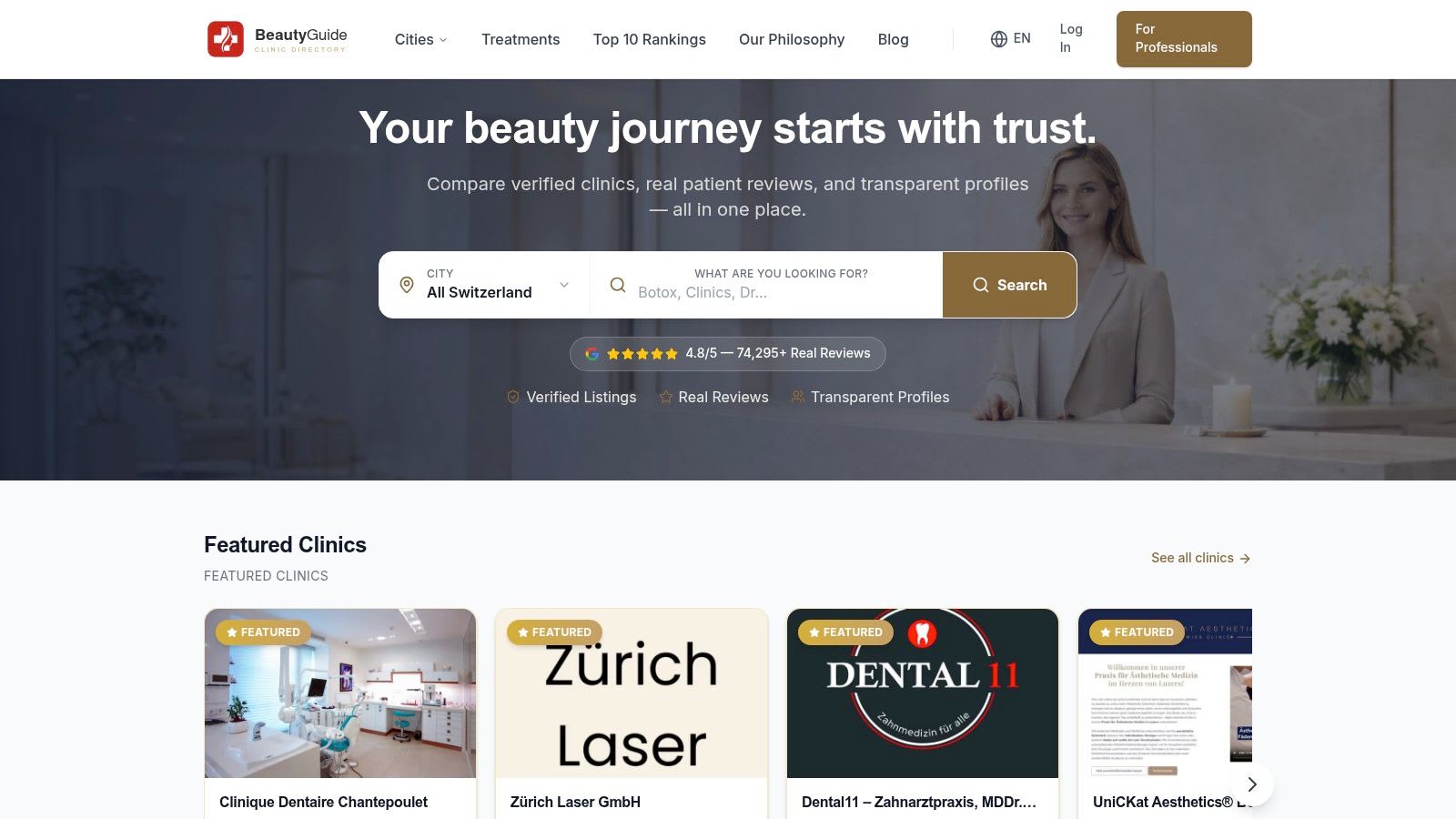
Website: BeautyGuide.ch
How do you narrow a long list of Swiss aesthetic clinics before you book a single consultation? A directory can be useful at that stage, provided it helps you screen providers by verifiable criteria rather than by branding alone.
BeautyGuide is most relevant at the research stage. It aggregates clinics and physicians across cities and treatment categories, which gives patients a way to compare options before they commit to one practice. In a Swiss market with a large number of specialists listed under plastic, reconstructive and aesthetic surgery, the practical problem is not access to information. It is filtering that information well. Comparis discusses that broader physician directory context in Switzerland.
Why it stands out
The platform is useful because it supports the first checks a careful patient should make.
- Credential-based filtering: BeautyGuide states that it checks physicians through MedReg and identifies FMH-recognised specialists where relevant.
- Location comparison across Switzerland: Patients can review providers in Zürich, Geneva, Basel, Lausanne, Bern, Lucerne, Lugano, Zug and other cities.
- Range beyond surgery: Listings cover surgical procedures as well as injectables, laser treatments, skin therapies, body contouring, hair restoration, and anti-aging medicine.
- Profile details that affect decision quality: Language, specialties, clinic location, and service mix help patients build a realistic shortlist.
This changes the order of research. A better starting point is to screen for verified clinicians first, then compare consultation style, procedural focus, logistical fit, and whether the clinic environment matches the level of support you may need. Patients who want to review options directly can use the directory of aesthetic clinics in Switzerland.
Where it helps most
BeautyGuide is particularly useful for patients comparing providers across cantons. Regional concentration differs, so the nearest clinic is not always the strongest match for your procedure, language needs, or follow-up expectations.
It also helps patients who are still deciding between surgery and a non-surgical route. That matters because a good search process should leave room for the conclusion that surgery is not the right first step.
A third group is easy to overlook: expats and multilingual patients. Consultation quality depends partly on whether risks, trade-offs, and post-operative instructions are explained in a language the patient fully understands.
A directory does not replace medical judgment. It improves the shortlist that reaches the consultation room.
Limits to keep in mind
BeautyGuide is a screening tool, not a clinical recommendation. It can point you toward qualified options, but it cannot establish candidacy for rhinoplasty, blepharoplasty, breast surgery, facelift procedures, or laser treatment. It also cannot standardise pricing, because fees vary by surgeon, anaesthesia plan, clinic infrastructure, and the complexity of the procedure.
Used properly, though, it serves a clear purpose. For readers searching beste schönheitschirurgen schweiz, BeautyGuide is less a verdict on who is "best" and more a method for finding the surgeon or clinic that fits your case, with credentials and comparison placed ahead of marketing.
2. Laclinic Montreux
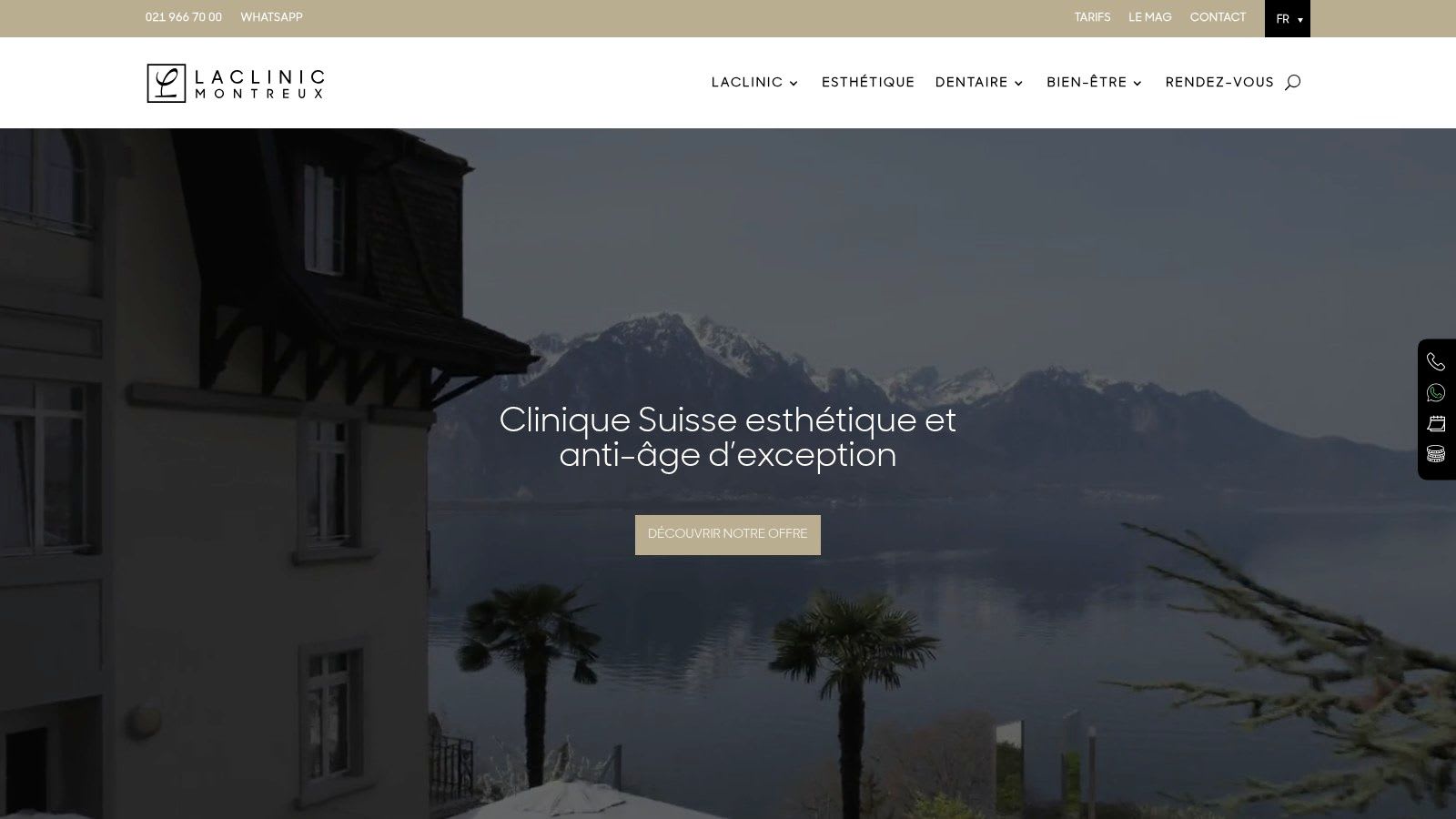
Website: Laclinic Montreux
What can a premium private clinic tell you about choosing a surgeon, beyond brand recognition? Laclinic Montreux is useful as a case study because it highlights a question many patients miss at the shortlist stage: do you want a single-operation provider, or a clinic built around long-term aesthetic management?
The clinic is closely associated with Dr Michel E. Pfulg. Swiss reporting has referenced his international visibility, including a Tatler ranking, which helps explain why Laclinic appears frequently in high-end searches. For patient decision-making, though, visibility is only a starting point. The more relevant checks are verifiable credentials in MedReg, FMH-recognised specialist training, and whether the surgeon's routine case mix matches the procedure you are considering.
That distinction matters because Laclinic presents a particular care model. It combines cosmetic surgery with aesthetic medicine and a private-clinic setting shaped around discretion, continuity, and hospitality. For some patients, that structure is practical. Someone planning facial surgery may prefer skin preparation, surgery, and follow-up aesthetic maintenance to be coordinated within one organisation rather than split across separate practices.
A multidisciplinary clinic can also change the consultation itself.
Instead of discussing surgery in isolation, the conversation may include whether a less invasive option is proportionate, whether treatment should be staged, and how post-operative maintenance fits into the plan. That can improve planning, but it also requires discipline from the patient. A broader menu of services is useful only if the recommendation stays tied to medical judgment rather than expanding into treatments that are optional.
Several features stand out when assessing fit:
- Integrated planning: Surgical and non-surgical options can be reviewed within the same clinical setting.
- Private-clinic experience: Patients who value discretion, accommodation, and a boutique environment may see this as an advantage.
- International orientation: The model is likely to suit patients who need multilingual communication or travel from outside the region.
- Credential check remains central: The key screen is still the operating surgeon's listing in MedReg and FMH-recognised specialty status.
Laclinic may suit patients seeking a curated, high-contact experience around facial rejuvenation or other aesthetic procedures that involve more than one treatment decision. It may suit other patients less well. Someone who wants a hospital-based environment, a narrower surgical pathway, or simpler price comparison may find another clinic model easier to assess.
Cost transparency is another practical point. As with many premium Swiss clinics, pricing is usually individualised after consultation rather than published in a standardised way online. Patients should therefore use the first appointment to ask for a written breakdown of surgeon fees, anaesthesia, facility costs, aftercare, and the revision policy.
For readers searching beste schönheitschirurgen schweiz, Laclinic is best viewed as one example of the Swiss luxury multidisciplinary model. The clinic may be a strong match if you want surgeon-led care supported by adjacent aesthetic services. The right conclusion, however, still depends on credentials you can verify, a treatment plan you can scrutinise, and a clinic format that fits your medical needs rather than its reputation alone.
3. clinic utoquai
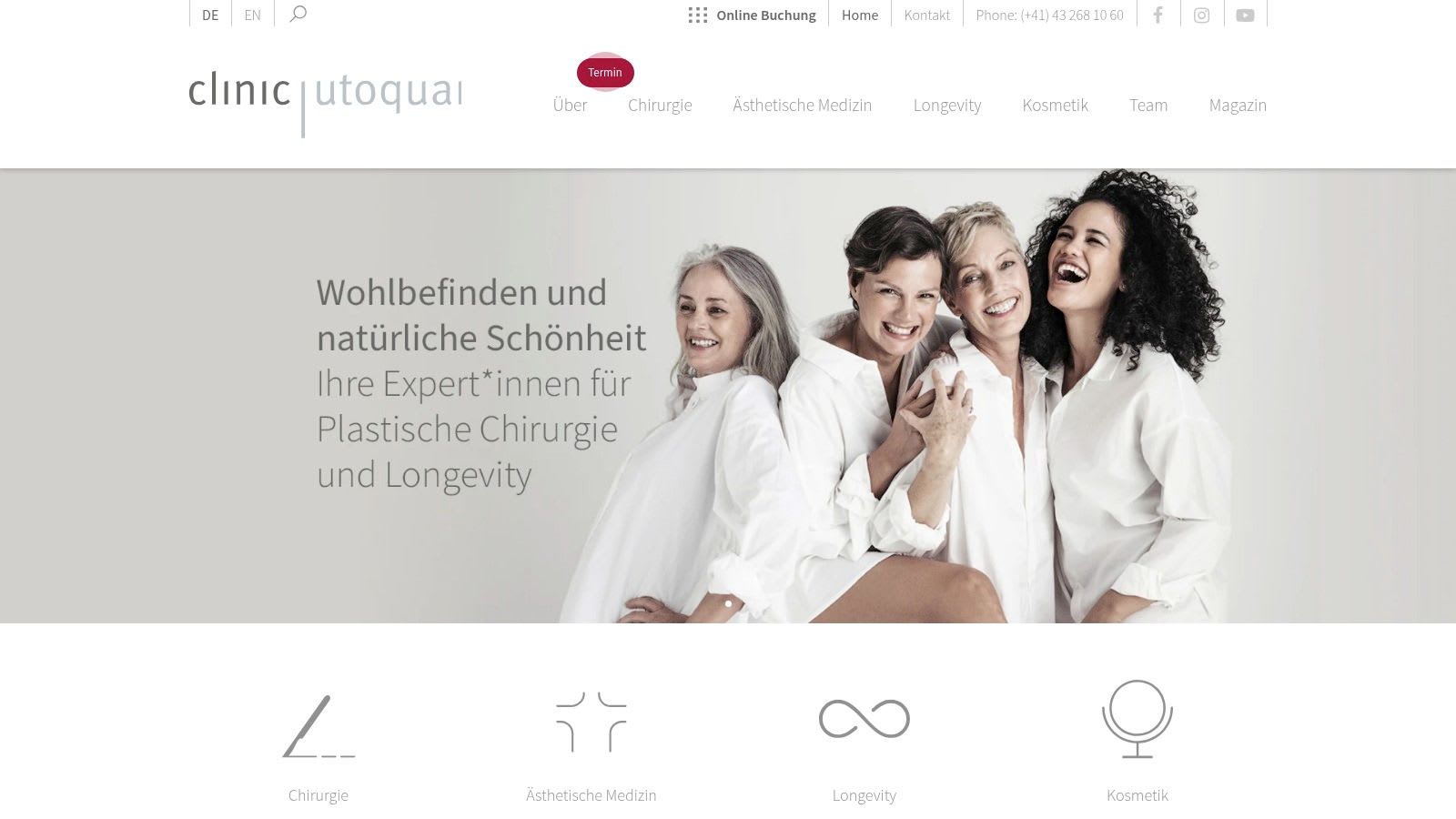
Website: clinic utoquai
What should a patient make of a clinic that offers surgery, injectables, skin treatments, and age-management services under one roof? For anyone searching beste schönheitschirurgen schweiz, the useful question is not whether that model looks prestigious. It is whether the structure helps you reach a better treatment decision.
clinic utoquai is a good case study because it reflects a broad private-practice model seen in Zürich. The clinic presents aesthetic surgery alongside minimally invasive and non-surgical services. That setup can be helpful when a patient’s stated request and their medically proportionate option are not the same thing.
The commercial logic behind this model is clear. Analysts at Data Bridge Market Research describe Swiss medical aesthetics as a growing market shaped in part by demand for less invasive procedures and shorter recovery in their Switzerland medical aesthetics market report. For patients, the practical implication is straightforward. A consultation should test whether the clinic uses that breadth to filter patients carefully, or to offer more billable options.
That distinction matters. A person asking about a facelift may need a more limited procedure, staged treatment, or no operation at all. A patient considering body contouring may also need an honest discussion about skin laxity, scar trade-offs, and whether a non-surgical plan would produce only marginal change.
Used well, a mixed clinic model improves comparison across treatment pathways. Used poorly, it can blur the line between medically justified care and menu-style upselling.
A few features make clinic utoquai worth examining closely:
- Wide treatment scope: The clinic combines facial, breast, and body surgery with non-surgical aesthetic medicine.
- One-site care pathway: Assessment, procedure planning, and follow-up may be easier to coordinate than in a fragmented referral chain.
- Urban patient fit: A multilingual private clinic in central Zürich may suit local professionals, expats, and cross-border patients who want care in one location.
The stronger reason to shortlist a clinic like this is fit, not ranking language. Patients with mixed concerns often need a surgeon who can explain why one intervention is appropriate and another is not. That is also where independent verification becomes more important. Before booking, check the operating physician in MedReg, confirm FMH-recognised specialty credentials, and ask who will perform each element of treatment rather than assuming the consultation doctor handles the full pathway personally.
It also helps to do some homework before the first appointment. Readers can explore treatment options on BeautyGuide to clarify terminology and typical procedure categories before speaking with a clinic, but the consultation itself should still focus on evidence, candidacy, and operator qualifications.
Two questions often reveal the quality of the clinic’s decision process. First, under what circumstances would the surgeon advise against surgery? Second, if surgery is recommended, why is it superior to injectables, devices, or watchful waiting in your specific case?
clinic utoquai may suit patients who want several treatment routes assessed in one place. It may suit others less well, especially those who prefer a narrower surgical setting or more standardised public pricing. The useful takeaway is not that broader always means better. It means clinic format should be judged by how clearly it supports a verifiable, proportionate treatment recommendation.
4. Plastic Surgery Pyramide (Klinik Pyramide am See)
Website: Klinik Pyramide am See
What if the main question is not who is "best," but which clinic can identify what needs treatment?
Klinik Pyramide am See is useful to examine through that lens. Its relevance comes from the combination of plastic surgery and dermatology within the same setting. For patients with facial ageing, scarring, pigmentation changes, or mixed cosmetic and reconstructive concerns, that setup can improve the quality of the initial assessment because the problem may not be purely surgical.
That distinction matters. A lower-face complaint may reflect skin texture, laxity, volume loss, dental or skeletal support, and prior treatment history at the same time. A surgeon can address some components. Others may be better managed with lasers, topical treatment, injectables, scar therapy, or a staged plan that starts conservatively.
Why this clinic model stands out
Many private aesthetic clinics are organised around procedure categories. Pyramide's model is more useful for patients whose diagnosis is still uncertain. The practical advantage is less about prestige and more about triage. If your concern sits between cosmetic surgery and medical skin treatment, a multidisciplinary clinic is often better positioned to separate what is structural from what is cutaneous.
That can change the consultation in meaningful ways.
- Facial cases may be assessed more precisely: Patients with jowling, eyelid changes, rosacea, pigmentation, or acne scarring often need a mixed plan rather than a single operation.
- Reconstructive context is easier to integrate: Prior surgery, trauma, difficult scars, or functional issues can alter what is realistic and what should be avoided.
- Hospital infrastructure may suit larger procedures: For operations that require more formal perioperative support, setting and staffing become part of the quality equation.
This is the point many patients miss while comparing beste schönheitschirurgen schweiz. The strongest before-and-after gallery does not answer whether surgery is the right tool. A more useful clinic is often the one that can explain which part of the complaint is not surgical, and document who is qualified to treat each part.
How to assess fit before you book
Use the consultation to test process, not only personality. Ask whether plastic surgery and dermatology review selected cases together, whether non-surgical options are discussed before an operation is proposed, and which specialist would perform each stage of treatment. Then verify the operating physician in MedReg and confirm FMH-recognised specialty credentials.
It also helps to review treatment categories and procedure terminology before the appointment, especially if you are trying to distinguish skin-focused interventions from surgical correction.
The trade-off is straightforward. Zürich private clinics often publish limited pricing detail, and a premium hospital setting may increase total cost. Patients with a clearly defined single-procedure goal may prefer a narrower clinic model. Pyramide is better suited to cases where diagnosis, treatment sequencing, and cross-specialty judgement matter as much as the operation itself.
5. Lucerne Clinic
Website: Lucerne Clinic
What should matter more in your search for the beste schönheitschirurgen schweiz: the size of the institution, or the consistency of the surgeon's core work?
Lucerne Clinic is a useful case study because it represents a narrower private-clinic model. Patients usually consider this type of provider for a specific operative goal, particularly breast surgery or body contouring, rather than for broad cross-specialty workup. That difference shapes the consultation in practical ways. A focused clinic often has a clearer pathway for discussing implant selection, scar placement, skin quality, tissue limits, staged procedures, and expected recovery.
This matters in a market where cosmetic treatment has become more familiar to a wider patient group. As noted earlier, demand has increased over time. In that setting, the quality question is not merely whether a clinic offers a procedure. The better test is whether the surgeon can define candidacy carefully, explain where surgery will and will not help, and document qualifications that patients can verify through MedReg and FMH-recognised specialty training.
What this clinic model may suit
Lucerne Clinic appears most relevant for patients who already have a fairly defined treatment question and want a more contained care setting.
Several features can work in its favour:
- Clearer procedural positioning: A narrower aesthetic focus can make it easier to judge whether the clinic's published work matches your goal.
- Smaller clinical setting: Some patients prefer a private, less institutional environment for consultation and follow-up.
- Surgical and non-surgical overlap: For patients who are still comparing options, a clinic that discusses both can help avoid choosing surgery too early.
If you are still deciding which category of treatment fits your concern, reviewing aesthetic treatment categories in Switzerland before consultation can help you separate surgical correction from injectables, devices, or combined plans.
How to assess Lucerne Clinic properly
A boutique setting can be a good fit, but it requires the same verification discipline as a larger centre. Confirm the operating physician in MedReg. Check whether the surgeon holds the relevant FMH-recognised specialist title. Ask where the operation takes place, who provides anaesthesia, what after-hours cover exists, and how complications are handled if additional monitoring or transfer becomes necessary.
Those questions matter more here than branding. Smaller clinics can offer a more direct patient experience, yet patients with significant medical comorbidity, combined procedures, or a preference for immediate hospital infrastructure may decide that a hospital-based centre is better aligned with their risk profile.
Lucerne Clinic therefore illustrates a useful selection principle. "Best" does not automatically mean broadest or biggest. For some patients, the better choice is a clinic with a defined procedural focus, transparent credentials, and a consultation process that shows restraint as well as technical confidence.
6. Hirslanden Clinique des Grangettes – Centre de chirurgie plastique, reconstructive et esthétique
Website: Hirslanden Clinique des Grangettes
If your priority is hospital-level support rather than boutique intimacy, Hirslanden Clinique des Grangettes in Geneva represents a different decision logic altogether.
For some patients, the right surgeon is not just the right individual. It is the right individual inside the right system. That distinction becomes more important for combined procedures, reconstructive overlap, or cases where anaesthesia, imaging, inpatient observation, or multidisciplinary input may affect safety and comfort.
A hospital model changes the decision
Private-hospital centres can offer several practical advantages. Access to operating theatre infrastructure, anaesthesia teams, post-operative monitoring, and adjacent specialties can matter even in elective aesthetic surgery.
This Geneva setting is also relevant because access patterns in Switzerland vary by region. As noted earlier, French-speaking Switzerland has comparatively high specialist density, and Geneva leads nationally in aesthetic surgeon concentration. That regional concentration can support broader choice within hospital-linked private care, although patients still need to evaluate the individual surgeon and not only the institution.
What this option may offer
- Multiple accredited specialists: Patients may be able to compare surgeons within one institution rather than restart the search elsewhere.
- Multidisciplinary support: Useful when cosmetic goals overlap with breast care, reconstructive needs, or medically complex history.
- Hospital-grade environment: Important for patients who prioritise perioperative resources over boutique atmosphere.
- International-patient readiness: Geneva clinics often function in multilingual, cross-border, and expat contexts.
Who should look closely
This model may be especially suitable for patients considering more substantial surgery, revision procedures, or combinations that warrant stronger institutional backup. It is also useful for patients who find reassurance in a formal hospital process rather than a highly stylised aesthetic setting.
The limitations are also clear. Scheduling may depend on theatre availability, and private-hospital billing can be harder to estimate before consultation. Some patients may also find the environment less personal than a smaller centre.
Still, for readers using beste schönheitschirurgen schweiz as a search term, Grangettes shows why surgeon selection should include setting selection. A technically able surgeon in a clinic that cannot support your specific needs may be less suitable than a comparable surgeon working inside a more capable system.
7. University Hospital Zurich (USZ) – Clinic for Plastic Surgery and Hand Surgery
Website: University Hospital Zurich plastic surgery and hand surgery
A university hospital rarely appears at the top of “best cosmetic surgeon” lists. That is a mistake, at least for some patients.
USZ is not a boutique aesthetic brand. It is a tertiary academic centre. For patients with straightforward elective goals, that may not matter. For patients with reconstructive needs, complex anatomy, prior surgery, trauma history, or medical comorbidity, it can matter a great deal.
What an academic centre does differently
A university department works across reconstructive microsurgery, hand surgery, burns, oncologic reconstruction, and selected aesthetic procedures. That breadth changes the standard of evaluation. These teams are used to managing difficult tissue problems, multidisciplinary planning, and complications that exceed the comfort zone of narrowly aesthetic practices.
This matters in a Swiss market where non-surgical aesthetics are also rising quickly. According to the verified background data, minimally invasive procedures in Switzerland saw a 22% surge from April 2025 to April 2026, and non-surgical treatments accounted for 65% of aesthetic consultations in clinics such as LaCLINIQUE, based on the cited FMH and SGPRAC-oriented market summary in Bookimed’s Switzerland plastic surgery overview. That trend has an indirect implication. As more patients begin with minimally invasive care, surgical referrals increasingly include the harder cases, revision cases, or patients whose goals cannot be met non-surgically. Academic centres become more relevant in that environment, not less.
Best use case for USZ
USZ is not the obvious first stop for every elective patient. It is especially relevant when your case is medically layered.
- Complex reconstruction or revision: Academic depth matters.
- Function plus aesthetics: Hand surgery, reconstructive planning, and medically necessary procedures sit naturally in this setting.
- Evidence-oriented care: Teaching hospitals tend to formalise pathways, documentation, and multidisciplinary review.
For readers who want broader context on how Swiss plastic surgery is structured, BeautyGuide’s guide to Swiss plastic surgery is a useful companion.
Trade-offs
The downsides are predictable. Aesthetic appointments may be less available than in private clinics, and the hospital environment may feel less suited to image-conscious elective care. Waiting times can also differ from private practice.
Yet USZ is a useful corrective to the usual beste schönheitschirurgen schweiz narrative. “Best” is not always the most luxurious. Sometimes it means the place best equipped for complexity, revision, or the overlap between medical necessity and aesthetic restoration.
Top 7 Swiss Cosmetic Surgery Clinics Comparison
| Provider | Access & booking complexity | Resource requirements (cost, travel) | Expected outcomes | Ideal use cases | Key advantages |
|---|---|---|---|---|---|
| BeautyGuide | Easy online search and comparison; bookings routed to clinics (varies) | Low for users (free to use); consultations and travel cost depend on clinic | Improved provider vetting and more informed selection (not medical advice) | Finding and comparing vetted clinics across Swiss cities and treatments | Verified credentials, large verified review base, curated profiles and rankings |
| Laclinic Montreux | Consultation required; destination clinic with concierge support | High (premium self‑pay pricing; travel for international patients) | Integrated, boutique surgical and non‑surgical outcomes with strong perioperative support | Patients seeking luxury, multidisciplinary cosmetic care and international continuity | FMH‑listed leadership, multidisciplinary model, strong international reputation |
| clinic utoquai | Central Zurich private‑clinic access; appointment/consult required | Moderate–high (private clinic fees; local travel) | Broad spectrum outcomes from minimally invasive to major aesthetic surgery | Multilingual Zurich patients wanting continuity between non‑surgical and surgical care | FMH‑board leadership, research‑informed approach, full surgical menu |
| Plastic Surgery Pyramide (Klinik Pyramide am See) | Private hospital access; consultation required | Moderate–high (private hospital costs; Zurich‑centric) | Extensive surgical and dermatologic outcomes within hospital infrastructure | Patients needing combined reconstructive and cosmetic procedures | Longstanding experience, interdisciplinary plastic surgery and dermatology |
| Lucerne Clinic | Boutique clinic access; consultation required | Moderate (specialist clinic fees; regional travel to Lucerne) | Focused, natural‑looking breast and body results with modern patient experience | Patients prioritizing breast augmentation and body‑contouring in a boutique setting | High procedural volume for breast work, FMH‑level recruits, quality‑oriented care |
| Hirslanden Clinique des Grangettes | Private‑hospital bookings; international‑patient support available | High (private‑hospital fees; potential travel to Geneva) | Hospital‑grade safety and combined surgical/ancillary care for complex cases | Complex or combined procedures requiring inpatient support and imaging/anesthesia | Accredited FMH specialists, multidisciplinary services, private‑hospital resources |
| University Hospital Zurich (USZ) | Tertiary‑care appointment pathways; may require referral and have longer waits | Variable (public/university setting; some reconstructions covered by insurance) | Advanced, evidence‑based reconstructions and subspecialty surgical outcomes | Complex reconstructions, burns, hand surgery and medically necessary cases | Research‑driven care, high subspecialty depth, teaching hospital oversight |
Your Next Steps From Research to Consultation
The most useful conclusion is also the least glamorous. You do not find the right answer to beste schönheitschirurgen schweiz by finding one name and stopping there. You find it by building a shortlist with discipline.
Start with verification. In Switzerland, that means checking whether the physician is listed in MedReg and whether the surgeon holds the relevant FMH-recognised specialisation for plastic, reconstructive, and aesthetic surgery. If the clinic website is beautifully designed but the medical information is vague, treat that as a warning sign, not a minor detail. Aesthetics is visual, but surgery is still medicine.
Then assess fit. The clinics above illustrate several different models. BeautyGuide is useful for comparison and filtering. Laclinic Montreux shows the multidisciplinary boutique model. clinic utoquai reflects a Zürich centre where surgery and non-surgical planning sit together. Plastic Surgery Pyramide highlights the value of integrating dermatology and surgery. Lucerne Clinic represents a more focused boutique environment. Hirslanden Clinique des Grangettes shows the strengths of private-hospital infrastructure. USZ demonstrates when academic depth may matter more than a polished aesthetic brand.
That diversity leads to a conclusion many patients miss. There is no single “Swiss best” that applies across rhinoplasty, facelift surgery, breast surgery, liposuction, blepharoplasty, scar revision, and hybrid anti-aging plans. The best choice depends on whether your case is simple or complex, whether you need reconstructive judgement, whether you want hospital support, and whether your concern might be better treated with non-surgical care first.
Communication should be your next filter. During consultation, note whether the surgeon explains limits as clearly as possibilities. A reliable consultation usually includes discussion of candidacy, alternatives, expected recovery, visible scars where relevant, revision policy, and realistic outcome boundaries. If the appointment focuses mainly on persuasion, speed, or a package sale, you have learned something important.
Language matters too. In Switzerland’s multilingual environment, understanding the consultation is part of safety. If you are an expat or international patient, do not treat English or other language support as a convenience issue. It affects informed consent, recovery instructions, and your ability to ask uncomfortable but necessary questions.
A second consultation is often worthwhile, especially for major surgery. Not because every surgeon will disagree, but because differences in planning can reveal how each clinician thinks. One surgeon may propose a larger intervention. Another may recommend staging. A third may tell you surgery is not yet justified. Those differences are useful data.
The strongest consultation is not the one that flatters your wish list. It is the one that makes your options clearer.
Use platforms like BeautyGuide.ch to narrow by city, treatment type, language, and verified credentials. Then book one or two consultations, not five or six. Too many early consultations often create noise rather than clarity. Bring the same questions to each appointment. Ask who performs the surgery, where it takes place, what follow-up is included, and how complications are handled after hours.
The right surgeon is the one who is appropriately qualified, experienced in the procedure you are considering, transparent about risks and limitations, and able to build trust without pressure. That is a better standard than any generic ranking. In a mature Swiss market, it is also the standard patients should expect.
This article is for informational purposes only and does not replace professional medical advice.