
You may be reading this while comparing clinics in Zürich, Geneva, Basel, Lausanne, Bern, or another Swiss city, with one tab open for prices and another for side effects. That's a sensible place to start. When searching for Botox risiken, individuals aren't usually looking for drama. They want a clear answer to one practical question: how risky is Botox, really, and what makes it safer in Switzerland?
The short answer is that standard aesthetic Botox, when used appropriately, is generally associated with mostly mild and temporary side effects, while severe complications are rare. The more important answer is this: in Switzerland, the biggest safety difference often comes from who injects it. Product risk and provider risk are not the same thing.
That distinction matters because many readers focus on the toxin itself, while overlooking injection technique, anatomy, legality, and Swiss qualification standards. A headache after treatment is one kind of risk. An illegal injector offering treatment through social media is another. They don't belong in the same category.
Understanding the Spectrum of Botox Side Effects
A typical Swiss patient often arrives with one simple fear: “Will something go wrong on my face?” That question is understandable, but it becomes clearer once side effects are sorted into the right categories. Botox reactions do not all belong in the same bucket. Some are minor skin responses from the injection itself. Others involve how a nearby muscle reacts. A much smaller group includes medically significant complications.
For standard cosmetic treatment, the common effects are usually local and temporary. According to this clinical overview of botulinum toxin side effects, injection-site redness or bruising occurs in 1 to 10% of cases, and headache occurs in about 10% of patients. The same source describes true muscular functional disorders and eyelid drooping as very rare, at less than 1% of treatments.
That pattern helps patients read the situation more accurately. A small bruise after a needle puncture is one type of event. A visible change in muscle function is another. In Switzerland, there is also a separate safety question in the background: whether the person injecting is a properly qualified doctor or someone working outside the legal medical framework. The side effect may appear on the skin, but the underlying risk often begins with the injector's training, anatomy knowledge, and legal status.
What patients usually notice first
In the first hours or days, patients may notice mild swelling, redness, stinging, a small bruise, or a headache. These reactions can occur even when treatment is performed correctly. The skin has been punctured with a needle, and facial blood vessels are delicate. In that sense, part of the early reaction is similar to what happens after any precise injection.
A practical summary looks like this:
| Frequency Category | Side Effect | Approximate Occurrence Rate |
|---|---|---|
| Common | Local redness, bruising, burning, or stinging at the injection site | 1 to 10% according to the clinical overview mentioned above |
| Common | Headache | About 10% according to the same source |
| Rare | True muscular functional disorders or eyelid drooping | Less than 1% according to the same source |
This structure is useful because patients often judge risk by visibility, not by frequency. A tiny bruise can look dramatic in the mirror and still be harmless. A subtle eyelid drop may be less painful but more relevant medically and aesthetically.
Why this framing helps
Clear expectations reduce unnecessary alarm. If a doctor explains in advance which reactions are short-lived and which warrant review, the first 48 hours are usually much less stressful.
A careful consultation should therefore separate three questions. What is expected after any injection? What suggests toxin spread to a nearby muscle? What would be unusual enough to justify prompt medical reassessment?
Aftercare also affects comfort during the first day. Some readers prefer a plain-language overview such as this San Antonio Botox side effect guidance. Swiss medical standards do not depend on that source, but simple aftercare instructions are often easier to follow when written clearly.
If you want a neutral overview of the treatment itself before weighing the details of risk, the BeautyGuide overview of Botox treatment options in Switzerland can help place side effects in context.
A Closer Look at Functional and Aesthetic Risks
Some of the most unsettling Botox complications aren't dangerous, but they are very visible. A patient may not worry much about a tiny bruise. They do worry about an eyelid that feels heavy, an eyebrow that sits too high, or a smile that looks slightly uneven.
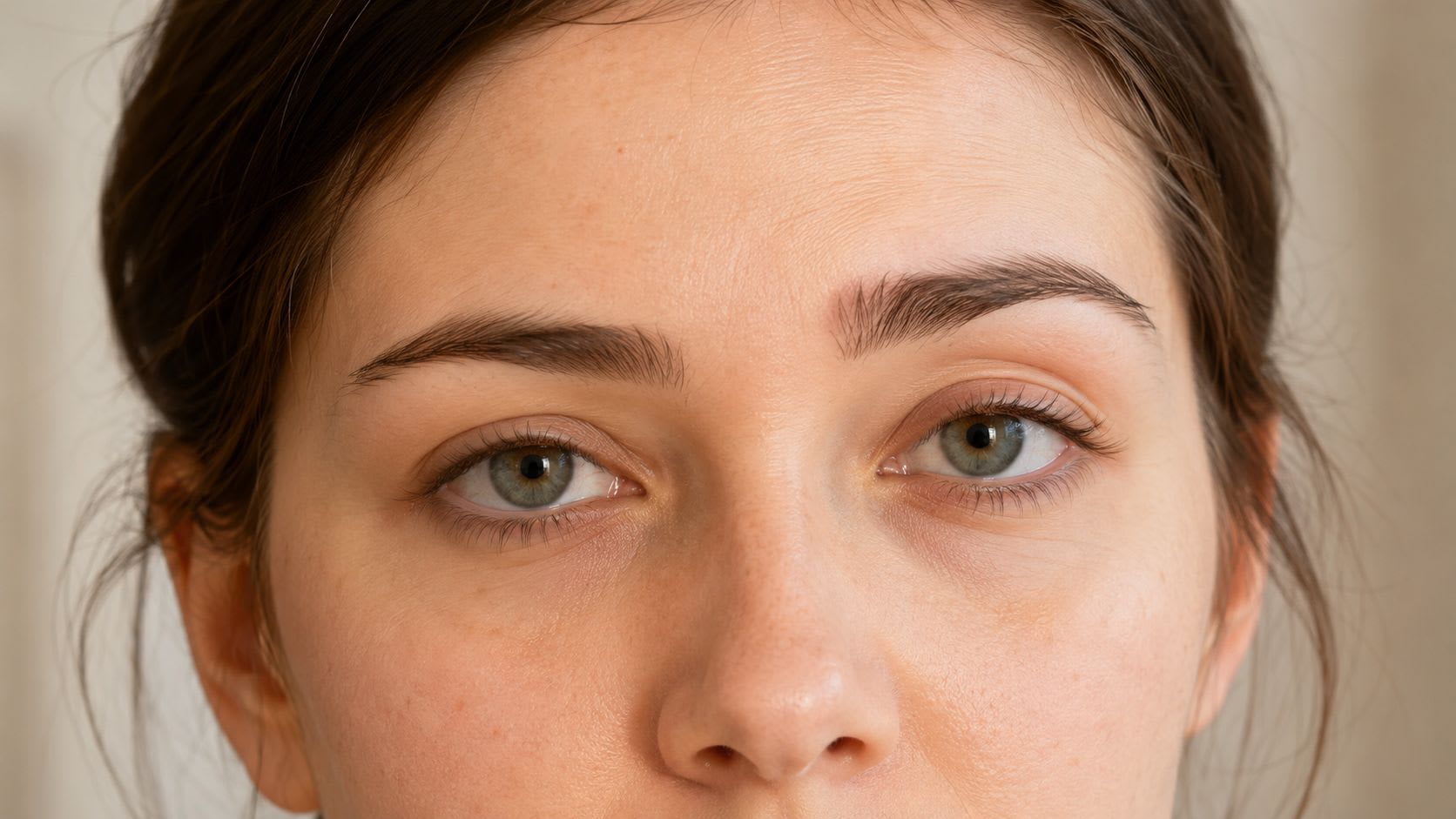
These problems matter because they reveal something important. In aesthetic Botox, many complications are not about “too much toxin” in a general sense. They are often about where it goes.
Ptosis and neighbouring muscle effects
A key example is ptosis, also called blepharoptosis, meaning a drooping upper eyelid. According to this Swiss aesthetic medicine discussion of Botox applications, transient ptosis and localised muscle weakness occur in approximately 1% to 10% of Botox treatments, and the cause is often technical. The toxin can diffuse into the levator palpebrae superioris muscle because of the wrong injection vector or depth, rather than because of a classic overdose.
That explanation helps patients understand a point that is often missed. Botox doesn't “travel randomly” in every case. Problems usually arise when the injector misjudges anatomy, placement, depth, dilution, or the balance between neighbouring muscles.
Aesthetic risks are often technical risks
One person may develop a subtle brow asymmetry. Another may get the so-called “Spock brow”, where part of the brow arches more than intended. Around the jaw, technique matters just as much. If you're curious how anatomy changes the safety discussion in lower-face treatment, this article on understanding safe jawline injections gives a useful anatomy-focused perspective.
A visible Botox complication often tells you more about injector precision than about the product itself.
That's also why patients comparing wrinkle relaxers with dermal filler treatments shouldn't assume all injectables carry the same pattern of risk. Fillers and botulinum toxin behave differently in tissue. The technique questions are different. The anatomy questions are different too.
What this means in practice
When a doctor evaluates your face properly, they don't just look at wrinkles at rest. They assess movement, brow position, asymmetry, eyelid support, forehead compensation, and muscle pull during expression. That's the difference between injecting a standard pattern and tailoring treatment to the individual face in front of them.
Patients often think natural results come from “small doses”. Sometimes they do. But natural results just as often come from accurate placement and knowing what not to inject.
Understanding Rare and Severe Systemic Complications
The question many cautious patients hesitate to ask out loud is simple: can Botox be dangerous beyond the injection site?
The honest answer is yes, in rare circumstances. That risk should be acknowledged clearly, especially in Switzerland, where Swissmedic has issued explicit warnings about systemic botulinum toxin complications.
What Swissmedic has warned about
According to this report discussing the Swissmedic warning, if large quantities of Botox enter the bloodstream, it can cause paralysis and, in the worst-case scenario, death from respiratory failure. The same report states that a Swiss media investigation documented what is possibly the first confirmed death in Switzerland from a cosmetic Botox injection.
Swissmedic's warning mentions severe complications including dysphagia, aspiration pneumonia, muscle weakness, and respiratory insufficiency. The central concern is systemic spread. If enough toxin reaches the circulation, the problem is no longer limited to a local cosmetic effect.
Rare does not mean imaginary
Many articles on this topic become unhelpful. Some minimise the risk so much that readers stop trusting the explanation. Others present severe toxicity as if it were a common result of routine forehead treatment. Neither approach is responsible.
A better interpretation is more precise:
- Mild local effects belong to the normal risk profile of aesthetic Botox.
- Functional local complications usually point to technique and anatomy.
- Systemic complications are rare, but they are medically serious and can be life-threatening.
Severe systemic toxicity is not the usual risk of a correctly performed cosmetic treatment, but it is real enough that Swiss authorities have warned about it explicitly.
How to think about this without panic
For a patient considering standard facial treatment in a proper medical setting, the key point isn't to assume catastrophe. It's to realise that botulinum toxin is still a prescription neurotoxin, not a beauty accessory. The setting, indication, dose, injector training, and emergency readiness all matter.
If a provider speaks about Botox as if it were completely harmless, that should make you more cautious, not less. A medically serious injector should be able to explain the difference between common local discomfort and the exceptional but severe complications that require urgent medical attention.
That seriousness is part of safe care. It isn't a reason to panic. It's a reason to choose carefully.
High-Risk Scenarios and Medical Contraindications
Not every Botox risk comes from a side effect after a well-chosen treatment. Some risks start before the needle is ever used, because the person isn't a good candidate or because the indication itself is questionable.
A proper consultation should include basic contraindication screening. In aesthetic practice, doctors commonly review pregnancy, breastfeeding, neuromuscular conditions, current symptoms, prior reactions, and whether the planned use is medically appropriate. If that conversation feels rushed or absent, that's already a warning sign.
When caution should be much higher
Risk changes sharply when treatment moves away from established aesthetic use and into trend-driven, off-label territory. A good Swiss example is Magen-Botox, promoted for weight loss.
Swiss authorities have flagged this specifically. According to this report on Swiss warnings about the Magen-Botox trend, the BAG and Swissmedic have recently described it as high-risk, with no approved indication in Switzerland. Swiss surgeons cited there warn that this off-label use can cause fatal respiratory or cardiac paralysis due to systemic toxin spread.
That's a very different risk conversation from a small-dose facial treatment for frown lines.
Practical red flags for patients
If you're evaluating whether Botox is suitable, these situations deserve extra caution:
- Pregnancy or breastfeeding: Aesthetic treatment is generally something to postpone and review with a doctor.
- Neuromuscular disease: Conditions that affect nerve-muscle signalling require careful medical assessment.
- Trend-based uses: Social-media treatments that sound novel or “secret” often move ahead of evidence and regulation.
- Vague indications: If the provider can't explain why Botox is appropriate for your specific concern, don't proceed.
The Swiss lesson here
The phrase Botox risiken covers very different realities. A reader may search that phrase because they want to soften crow's feet in Zürich. Another may have seen a dramatic claim online about stomach Botox for weight loss. Those are not the same scenario, and they shouldn't be judged by the same safety assumptions.
A cautious patient doesn't only ask, “What can go wrong?” They also ask, “Is this a sensible indication in Switzerland, for me, in this setting?” That second question often prevents the first problem.
The Single Most Important Way to Reduce Your Risk in Switzerland
If I had to reduce the entire Swiss safety discussion to one sentence, it would be this: the biggest controllable risk factor is the injector's qualification.
That point is more important than brand preferences, discount offers, or social media before-and-after images. A skilled doctor can discuss anatomy, indication, realistic goals, limitations, side effects, and what to do if something doesn't go as planned. An unqualified injector can't replace that with confidence or marketing.

What Swissmedic makes clear
Swissmedic explicitly prohibits non-physicians, such as cosmeticians, from administering botulinum toxin. It also warns that in Switzerland the primary risk factor is increasingly the unqualified injector, as illegal “Instagram Botox” offers from non-medical providers carry exponentially higher risks of nerve damage and permanent deformity, as stated in this Swissmedic document on injectable products for wrinkle treatment.
That changes the usual patient mindset. Many people ask, “Is Botox safe?” In Switzerland, a better question is often, “Is this provider legally and medically qualified to inject it?”
How to verify a provider in Switzerland
This part should be practical, not abstract. Before booking, take these steps:
- Confirm the injector is a medical doctor
- Check MedReg registration
- Look for FMH-recognised training or relevant specialist background
- Be cautious with social media offers
Safety test: If the provider avoids clear answers about licence status, medical title, or who performs the injection, leave.
Why qualification matters so much
Botox treatment isn't just placing a product into the skin. The injector has to judge facial balance, identify risk zones, recognise contraindications, and know what to do if a complication appears. Even an apparently simple forehead treatment can affect brow position, eyelid mechanics, or symmetry when performed poorly.
This is especially relevant in cities with high aesthetic demand such as Zürich, Geneva, Lausanne, and Zug, where patients may see a wide range of clinic styles, from highly medical practices to beauty-led offers that blur legal boundaries. In that environment, qualification isn't a formality. It is the safety filter.
If you want a neutral place to compare providers after checking credentials, a medically screened clinic directory such as the BeautyGuide clinic listings for Switzerland can help organise your search. The key is still the same: verify the person, not only the brand.
Your Safety Checklist Questions for the Consultation
A good consultation should make you feel informed, not rushed. If you leave with fewer questions than you arrived with, that's good. If you leave because you were too intimidated to ask, that's not a strong sign.
Bring a short written list. Patients often remember only half of what they wanted to ask once the appointment starts.

Questions that reveal real safety standards
These are the questions I'd want a cautious patient in Switzerland to ask:
- Are you the doctor who will perform the injection?
- Are you registered in MedReg, and what is your medical specialisation?
- Do you hold an FMH-recognised title or equivalent Swiss-recognised medical qualification?
- Why do you think Botox is appropriate for my concern?
- What side effects are common in my treatment area, and which symptoms would mean I should contact you urgently?
Questions that test planning and judgement
A safe consultation also looks at decision-making quality:
- How do you assess my facial movement before deciding where to inject?
- What result do you think is realistic for me, and what can Botox not do in my case?
- If I develop ptosis, asymmetry, or another unwanted effect, what is your management plan?
- Which product will you use, and why have you chosen it for this indication?
- Who do I contact after hours if I'm worried about a complication?
Write down the answers. Clear, specific answers are easier to compare later than a vague feeling that one clinic seemed “nicer”.
What a strong consultation feels like
It usually feels measured. The doctor examines your face in motion, asks about your health, discusses alternatives if needed, and doesn't promise perfection. They explain risks in plain language. They also make it easy for you to say no.
That last part matters. Good aesthetic medicine in Switzerland should feel like a professional medical decision, not like pressure to book on the spot.
BeautyGuide helps patients in Switzerland compare aesthetic clinics with a stronger focus on medical credibility, including physician licence checks and FMH-relevant context where applicable. If you're looking for a safer starting point to compare options in Zürich, Geneva, Basel, Lausanne, Bern, Lucerne, Lugano, Zug, or beyond, explore BeautyGuide to review clinics and treatments in a more structured, Switzerland-first way.
This article is for informational purposes only and does not replace professional medical advice.