The most common advice about Botox is also the least helpful: compare prices first. In Switzerland, that can push people in the wrong direction.
For Botox Schweiz searches, the safer starting point isn't cost, trendiness, or social media photos. It's medical authorisation. A wrinkle treatment with botulinum toxin may look simple from the outside, but in Switzerland it sits inside a medical and regulatory framework. That matters because the local market includes both properly run physician-led clinics and risky offers that only look professional online.
Considering Botox in Switzerland? Why Safety Comes First
Cheap Botox isn't automatically a smart deal. In Switzerland, it can be a warning sign.
Swiss media has reported that illegal Botox treatments are a real problem, with experts warning that treatment by unqualified providers can lead to infections, facial damage, or even life-threatening complications such as respiratory paralysis, as noted in this Swiss report on illegal beauty treatments. That changes the way patients should think about “good value”.
Botulinum toxin treatment is used in aesthetic medicine to soften expression lines by temporarily reducing the activity of selected muscles. Done well, it can look natural and controlled. Done badly, it can produce an unnatural result or, worse, expose you to unnecessary medical risk.
Why Swiss patients get confused
Many search results for Botox in Zürich, Geneva, Basel, Lausanne, Bern, or Lucerne are clinic-led pages. They often explain benefits and convenience, but they don't always help readers answer the most important questions:
- Who is injecting? Is it a physician, or someone presenting themselves vaguely as a specialist?
- Is the product authorised in Switzerland? A legitimate clinic should be able to explain exactly what it uses.
- Who handles complications or follow-up? If something isn't right, you need a clear medical contact.
Practical rule: If a provider makes it hard to identify the doctor, the medical setting, or the product used, pause before booking.
A calm, safe approach starts with a different question: not “Where is Botox cheapest?” but “Who is qualified to treat me safely in Switzerland?”
That shift helps with every later decision. It makes it easier to compare clinics, understand pricing, and judge whether a local Swiss provider or a border-area option is likely to suit you.
What Is Botox and What Can You Expect
“Botox” is often used as a catch-all word, but it really refers to a treatment based on botulinum toxin type A. In aesthetic medicine, a clinician injects very small amounts into selected muscles so they contract less strongly for a period of time. That softens lines caused by repeated facial movement, such as frown lines between the eyebrows or crow's feet.
The easiest way to understand it is to separate it from treatments people often confuse it with. Botox does not add volume like a filler. It does not improve skin texture like a laser or peel. It reduces muscle activity in a targeted area, a bit like turning down the strength of one overactive switch rather than changing the whole system.
Which products may be used
In Switzerland, patients may hear several product names rather than just “Botox.” Clinics may use brands such as BOTOX, DYSPORT, VISTABEL, AZZALURE, XEOMIN, or BOCOUTURE, depending on the indication and the doctor's treatment plan. That matters because these products are medical preparations with specific approved uses. They are not casual substitutes for one another.
A careful injector should be able to tell you the exact product name, what area it is being used for, and why it fits your case. If a provider stays vague and says only “wrinkle relaxer” without naming the product, that is a fair reason to ask more questions.
If you want to compare Botox with other non-surgical options, this English-language directory of aesthetic treatments in Switzerland can help you place it in context.
What treatment day usually looks like
For many patients, the appointment itself is short. The injections are usually done with a very fine needle and placed into specific facial muscles after the doctor assesses your expressions at rest and in motion. You may be asked to frown, smile, or raise your eyebrows so the injector can map where the muscle pull is coming from.
That assessment is more important than many first-time patients expect. Two people can both have forehead lines and still need different injection points or different doses. Good Botox is not a standard template. It is closer to tailoring than to buying a ready-made item.
The sensation is often described as a series of brief pinches. The final result does not appear the same day. According to the Swissmedic risk-management summary for BOTOX and VISTABEL.pdf), effects typically begin after a few days, are clearer after about two weeks, and gradually wear off over several months.
That timeline helps set realistic expectations:
| Stage | What patients usually notice |
|---|---|
| Treatment day | A short medical appointment with small injections and mild redness or pinpoint marks in some cases |
| First days | Little or no visible change at first. The effect builds gradually |
| Around peak effect | Smoother lines and less forceful movement in the treated area |
| Following months | The muscle action slowly returns, so the effect fades rather than stopping suddenly |
A natural result usually means you still look like yourself. You can still show expression, but the treated muscles pull less strongly. Problems often happen when treatment is too strong, poorly placed, or done without enough attention to facial anatomy. That is one reason suspiciously cheap offers should be judged carefully. The quality of assessment and injection technique matters as much as the product itself.
For readers new to the Swiss system, especially newcomers using a broader guide to living in Switzerland, it helps to view Botox as a medical procedure with a beauty goal, not as a simple cosmetic add-on. That mindset usually leads to better questions, safer choices, and more predictable results.
Swiss Regulations You Must Know Before Booking
Many people still think of Botox as a beauty service. In Switzerland, that isn't the right frame.
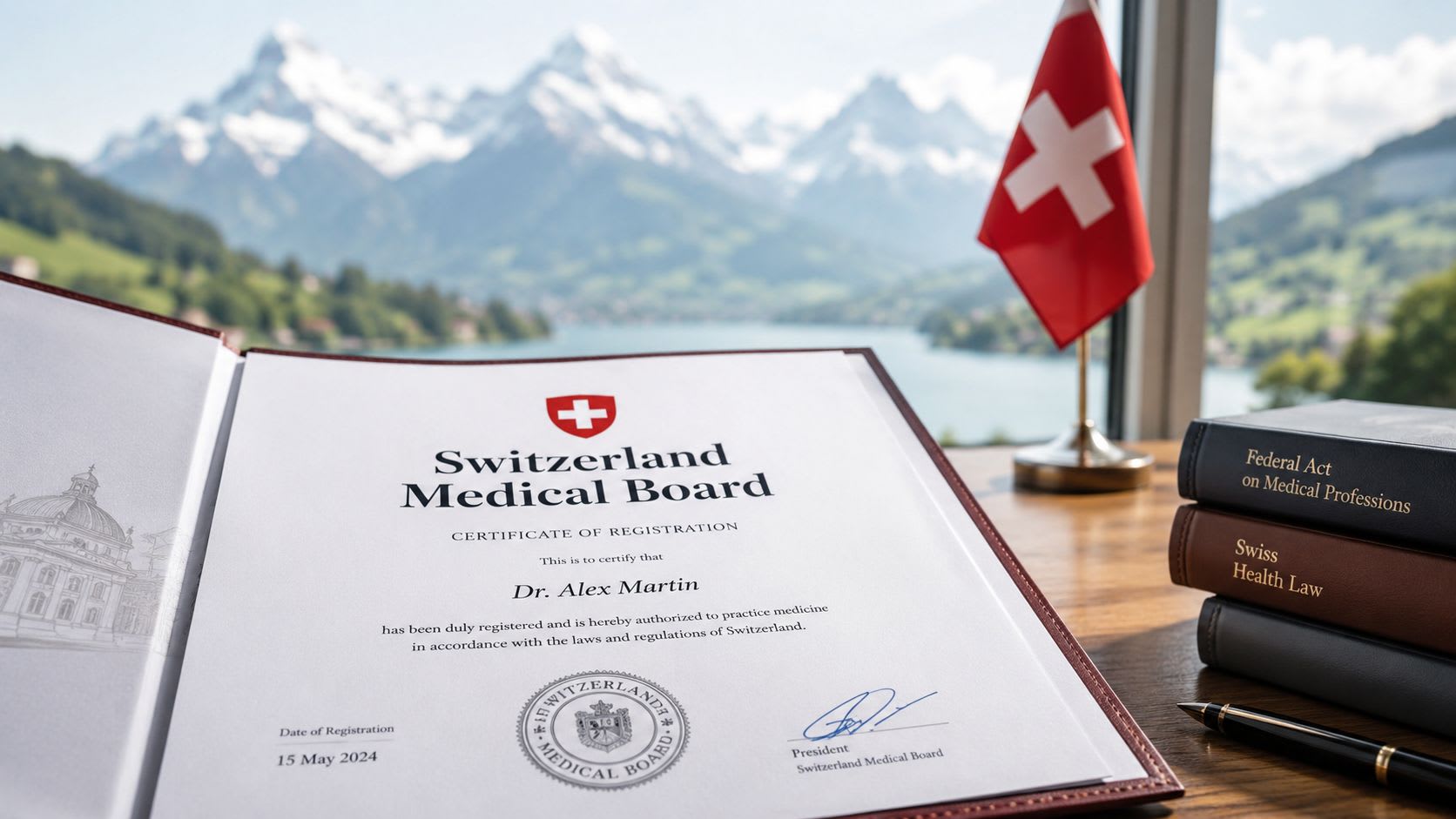
Botulinum toxin products are regulated as prescription medicinal products. They can only be placed on the market if they're authorised by Swissmedic, and the Swiss authorities are clear that cosmeticians are not authorised to use these preparations professionally, as stated in this Federal information sheet on injectable wrinkle treatments in beauty salons.
That single rule clears up a lot of confusion. If someone offers Botox in a non-medical beauty setting, that should raise immediate concerns.
What the rule means in practice
A Swiss Botox appointment should be treated as a medical treatment, not as a salon add-on. That changes what you should expect before, during, and after booking.
A compliant setting usually includes:
- A physician-led process with a doctor responsible for assessment and treatment
- A medical history review before injection, not just a consent form at reception
- Clear product identification so you know what authorised medicine is being used
- A route for aftercare in case you have concerns after treatment
By contrast, a rushed “beauty studio” style offer often strips away the very parts that protect the patient.
Why this matters for expats and new arrivals
This point can be especially confusing for people who are new to Switzerland. In some countries, injectable aesthetic treatments are marketed more casually, and the role of non-physician providers may look different. If you're still learning how Swiss healthcare systems and professional standards work, a practical general resource like this guide to living in Switzerland can help with the wider context around navigating services, documentation, and local expectations.
In Switzerland, the safe default is simple. Treat botulinum toxin as medicine, and choose a medical clinic accordingly.
Advertising is not the same as authorisation
Patients also need to separate marketing from approval. A polished website, social media presence, or influencer-style branding doesn't prove legal compliance. It only proves that someone knows how to advertise.
In the Swiss setting, your safest filter is straightforward:
- Is there a named doctor?
- Is the treatment clearly presented as medical care?
- Can the clinic explain which authorised product it uses?
If any of those answers is unclear, keep looking.
How to Verify a Doctor and Clinic in Switzerland
A polished clinic website can create a false sense of safety. Good branding is easy to buy. Medical accountability is harder to fake, and that is what you need to check.
In Switzerland, verification works a bit like checking the label and the manufacturer before taking a medicine. You are not only choosing a treatment. You are choosing the person legally responsible for assessing your suitability, injecting correctly, and dealing with complications if something goes wrong.
Start with the treating doctor
The first question is simple. Who will inject you?
A trustworthy clinic should name the doctor clearly, not hide behind phrases like “our expert team” or “senior aesthetic specialist.” You should be able to find:
- The doctor's full name
- Their medical qualification and role
- The consultation location
- A clear indication that the doctor, not only an assistant or coordinator, is involved in assessment and treatment
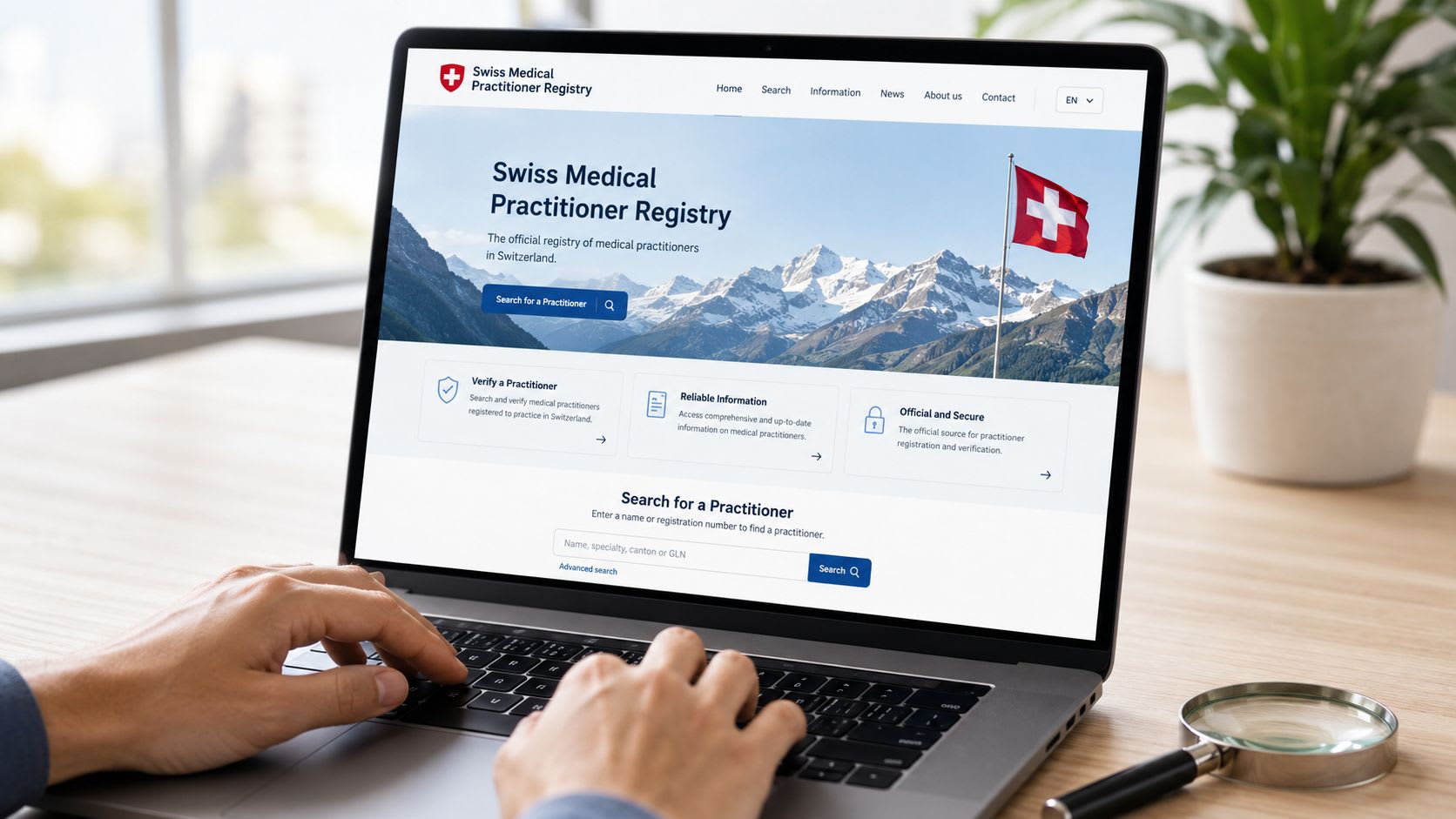
Then check whether that doctor appears in MedReg, the Swiss register of medical professions. If you cannot match the clinic's named injector to MedReg, stop there and ask why.
FMH titles can also help you read a profile more carefully. They tell you about specialist training background, such as dermatology or plastic surgery. Still, FMH is a second check. Legal medical registration comes first.
If you want a starting point for comparison, BeautyGuide's Swiss clinic directory with verified physician profiles states that it checks doctors through MedReg and notes FMH-listed specialists where relevant. That can save time, but it should not replace your own review of the clinic and the named injector.
Read the clinic wording like a patient, not like a shopper
Small wording choices often reveal a lot.
A medical clinic usually explains who assesses you, how the consultation works, and how follow-up is handled. A weak provider often stays vague. The site may focus on discounts, quick booking, or photos, while saying very little about the doctor, the product, or the safety process.
Look closely at how the treatment is described. Clear clinics usually refer to recognised facial areas and a medical consultation. Vague clinics may advertise broad promises, unusual uses, or lifestyle-style language that makes the treatment sound casual. In Switzerland, that should make you more careful, not less.
Questions that help you spot a safer clinic
You do not need to sound confrontational. A calm, direct question is enough.
Ask:
- Who exactly will do the injection?
- Will I meet that doctor before treatment starts?
- Which product do you use, and can you document it on the day?
- What happens if I have an unwanted effect or need review afterward?
- Where does treatment take place?
A serious clinic should answer these points without hesitation. If the answers stay blurry, or the clinic avoids naming the injector until the last minute, that is useful information.
One detail confuses many patients. Reception staff may be friendly and knowledgeable, but they are not the person carrying the medical responsibility. The key check is always the treating physician.
Compare the safety standard, not just the treatment menu
This habit helps across aesthetic medicine. Someone looking at injectables today may later consider another service, such as Electrolysis hair removal in Switzerland. The treatment changes, but the safety questions stay similar. Who performs it, what qualifications do they hold, where is it done, and what aftercare is available?
The clearest sign of a trustworthy clinic is not glossy marketing. It is transparent medical responsibility.
Understanding Botox Costs in Switzerland
Cost matters, but exact prices by themselves don't tell you much. In Switzerland, Botox pricing varies because treatment plans vary.
Some clinics price by area, such as frown lines, forehead lines, or crow's feet. Others price according to the amount of product used. Neither model is automatically better. What matters is whether the clinic explains what is included and why the plan fits your face, goals, and muscle activity.
Why one clinic may charge more than another
Several factors can influence what you pay:
| Cost factor | Why it changes the quote |
|---|---|
| Injector qualification | A physician with a specialist background in aesthetic dermatology or plastic surgery may price differently from a general provider |
| Clinic location | Central Zürich, Geneva, or Basel clinics may structure fees differently from smaller-town practices |
| Treatment complexity | A subtle adjustment in one zone isn't the same as a broader upper-face plan |
| Consultation model | Some clinics include more detailed medical assessment and follow-up support |
This is one reason “cheap Botox” comparisons often mislead patients. A low headline price may reflect a smaller treatment plan, a different consultation standard, or something more concerning.
Low prices can carry a hidden cost
In the Swiss context, suspiciously low prices should trigger questions, not excitement.
Ask yourself:
- Who is injecting for that price?
- What product is being used?
- Is there proper follow-up if something feels wrong?
- Is this being offered in a lawful medical setting?
If a provider avoids those questions and keeps returning to the discount, that's not reassuring.
For patients comparing injectables with other non-surgical options, a broader overview of facial aesthetic treatments in Switzerland can help place Botox in context. In some cases, a patient doesn't need more toxin. They may need a different treatment altogether.
A better way to judge value
The most useful cost question isn't “What's the cheapest option?” It's “What am I paying for?”
In a properly run Swiss clinic, you're paying for medical judgement, authorised product use, facial assessment, dosing decisions, and access to aftercare. That's a different category from a bargain cosmetic offer.
The Patient Journey From Consultation to Aftercare
A good Botox experience in Switzerland usually feels calm, structured, and medically clear. It shouldn't feel improvised.
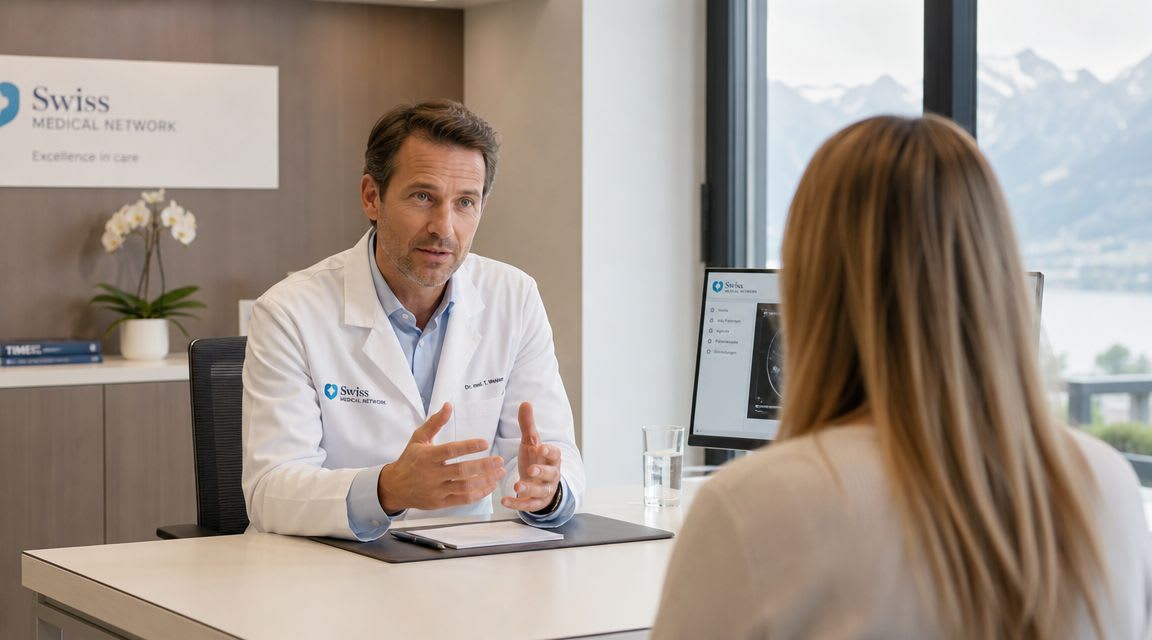
The first appointment often starts with a conversation rather than a syringe. The doctor asks what bothers you, what result you want, whether this is your first treatment, and whether you have any medical issues that matter for injection planning.
What a proper consultation usually covers
A serious consultation is more than “Which area do you want?” The doctor should look at your face at rest and in motion. That matters because Botox treats muscle activity, not just visible lines.
You may be asked to frown, raise your brows, or smile so the injector can see how your muscles work. This helps decide whether Botox is suitable, where injections belong, and whether a different treatment might make more sense.
Useful questions to expect include:
- Your goals. Do you want a very subtle softening or a more noticeable reduction in movement?
- Your treatment history. Have you had botulinum toxin before, and how did it wear off?
- Your medical context. Are there reasons to delay or avoid treatment?
A consultation that feels too fast is often telling you something important.
What treatment day is usually like
Once the plan is agreed, the skin is cleaned and the injections are placed with a fine needle. Most patients describe the treatment as brief and manageable.
Afterwards, the clinic should tell you what to expect over the next days and when the result should settle. You shouldn't be left wondering whether a change is normal or when to ask for review.
Sensible aftercare and follow-up
Aftercare advice varies slightly between clinics, but the general aim is simple: protect the treated area and give the product time to settle as intended. Patients are often told to avoid pressing or rubbing the injected areas and to be sensible with activities for the rest of the day.
Mild redness, swelling, or bruising can happen after any injection treatment. What matters is that you know whom to contact if you have concerns. A reputable Swiss clinic should make that easy.
An ideal patient journey has three qualities:
- You know who treated you
- You understand what was done
- You know what happens if you need help afterwards
If any of those pieces is missing, the clinic experience is below the standard you should expect.
Frequently Asked Questions About Botox
Is Botox in Switzerland common?
Yes. Botox is a familiar treatment in Switzerland, not something unusual or fringe. What matters more than how common it is, though, is how carefully it is offered. A treatment can be widely available and still vary greatly in quality from one provider to another.
Is Baby Botox a different product?
No. “Baby Botox” usually means the doctor plans to use a smaller amount of the same botulinum toxin product, often to create a lighter effect. The label sounds simple, but the decision is not. A low-dose approach only makes sense if it matches your muscle strength, face shape, and treatment goal.
A useful comparison is prescription glasses. Two people can both say they want to see better, but they will not need the same lens. Botox dosing works in a similar way.
Can Botox treat every type of wrinkle?
No. Botox works best on lines caused by repeated muscle movement, such as frown lines or forehead lines. Wrinkles linked mainly to sun damage, thinning skin, loss of volume, or skin laxity usually need a different plan.
This is one reason a proper consultation matters. If a clinic treats every line as a Botox problem, that is a warning sign.
Should I choose a Swiss clinic or a nearby cross-border provider?
For patients living near Basel, Geneva, or other border regions, this question is practical, not theoretical. Lower advertised prices outside Switzerland can look attractive at first glance. The real comparison should include follow-up care, clarity about who is injecting, and how easy it will be to get help if the result is uneven or you have concerns afterward.
A Swiss clinic may make more sense if you want:
- Clear follow-up arrangements if you need review
- Communication in your preferred language
- Care within the Swiss regulatory system from consultation to aftercare
Some patients are comfortable going abroad. Others prefer the extra reassurance of treatment and follow-up in one system. If you are comparing both options, this Swiss-focused overview of local and cross-border Botox choices is a useful starting point.
How often do people usually repeat Botox?
Botox wears off over time, so repeat treatment is common. The interval is different from person to person. Muscle strength, treatment area, dose, and your own response all play a part.
A good clinic should not push you into a rigid schedule. Review should be based on how the effect is fading and whether another treatment still makes sense for you.
What's the most important safety question to ask before booking?
Ask this first: Who will inject me, and are they a licensed physician in Switzerland?
That question cuts through glossy websites, before-and-after photos, and bargain pricing. You are checking the part that matters most. The person holding the needle.
If the clinic gives a vague answer, avoids naming the injector, or shifts the conversation straight to discounts, stop there and keep looking.
If you're comparing Botox clinics in Zürich, Geneva, Basel, Lausanne, Bern, Lucerne, Lugano, or elsewhere in Switzerland, BeautyGuide can help you continue your search with clinic profiles, treatment categories, and credential-focused comparisons. Use it as a starting point to identify physician-led providers, then confirm the doctor's registration, consultation process, and follow-up pathway before you book.
This article is for informational purposes only and does not replace professional medical advice.