
Breast augmentation is a deeply personal journey aimed at increasing breast size or restoring lost volume. Here in Switzerland, the approach is grounded in a philosophy of subtlety and natural-looking results. It’s less about dramatic transformation and more about achieving a beautiful, balanced silhouette that complements your body. This reflects Switzerland’s world-renowned standards for both medical excellence and aesthetic discretion.
Understanding Breast Augmentation in the Swiss Context

While breast augmentation (medically termed augmentation mammaplasty) is one of the most popular cosmetic procedures globally, the way it is practised in Switzerland is distinctive. The focus is not on creating an obvious "operated" appearance. Instead, surgeons work with you to achieve a subtle enhancement that complements your natural body frame.
This mindset is a direct reflection of the meticulous, quality-first nature of the Swiss healthcare system. From Geneva to Zürich, patients consistently seek results that feel authentic, allowing them to feel confident in every aspect of their lives.
Who Considers Breast Augmentation in Switzerland?
Individuals from all walks of life explore breast augmentation, but their motivations often fall into two main categories.
Enhancing Natural Proportions: Many younger individuals, often in their 20s and 30s, feel their natural breast volume does not align with their overall figure. They seek surgery to create a shape that feels more harmonious and proportionate.
Restoring Volume After Life Changes: It is also very common for women, particularly those in their 40s and beyond, to seek breast augmentation. After pregnancy, breastfeeding, or natural ageing, breasts can lose volume and shape. This procedure, sometimes combined with a breast lift, aims to restore a more youthful contour.
The Two Primary Surgical Approaches
In Switzerland, surgeons have mastered two main techniques for breast augmentation. The appropriate choice for you will depend on your anatomy, health, and desired aesthetic outcome.
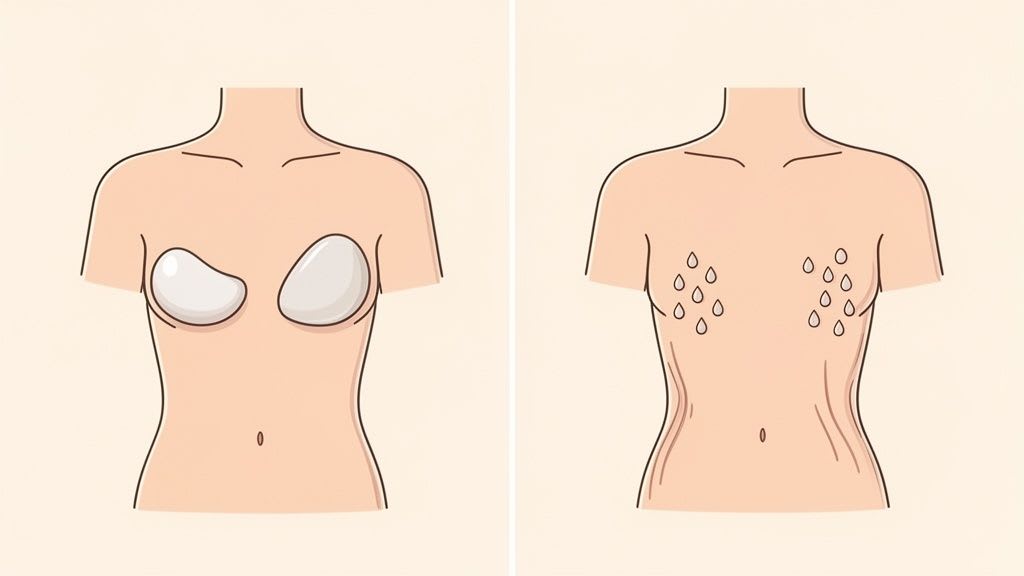
- Breast Implants: This is the most established and common method. It involves placing either saline or cohesive silicone gel implants to add volume and refine the breast shape. A qualified Swiss surgeon will dedicate significant time to helping you select an implant size and profile that harmonises with your body.
- Autologous Fat Transfer: This technique uses your body's own fat to enhance your breasts. First, fat is gently removed via liposuction from an area like your abdomen or thighs. It is then purified and precisely injected into the breasts. This is an excellent option for those seeking a modest size increase and a result derived entirely from their own tissue.
The Swiss philosophy for cosmetic surgery is built on three pillars: safety, precision, and discretion. For breast augmentation, this means creating results that are uniquely yours—enhancing your natural beauty, not creating an artificial look.
Navigating the healthcare system for any procedure can be complex, especially for those new to the country. For a broader overview, this guide to living in Switzerland for expats can be a useful resource.
Ultimately, the decision to undergo this surgery is significant and personal. The most important first step is scheduling a consultation with a qualified, FMH-certified plastic surgeon to explore your options and set realistic goals.
Choosing Your Path: Breast Implants vs. Fat Transfer
Once you decide to proceed with breast augmentation, the next crucial decision, made with your surgeon, is how to achieve your desired outcome. In Switzerland, two excellent methods are available, and the right one for you depends entirely on your body and your goals.
Consider whether you are looking for a significant, predictable change in volume, or a more subtle, natural enhancement. Let's examine the two main techniques: using implants or your own body fat.
Breast Implants: A Trusted and Versatile Option
For many years, breast implants have been the standard for augmentation. They offer predictable, reliable results and can achieve significant increases in size and shape that may not be possible with other methods. Surgeons in Switzerland work with state-of-the-art implants known for their safety and natural feel.
You will generally encounter two types:
Silicone Implants: These are the most popular choice today. They are filled with a cohesive silicone gel that holds its shape well. In the event of an outer shell compromise, the gel remains contained. This creates a soft, natural feel that closely mimics breast tissue.
Saline Implants: These have a durable silicone shell but are filled with sterile salt water (saline) after being placed in the breast. They can feel slightly firmer to the touch. A key benefit is that if a leak occurs, the saline is harmlessly absorbed by the body.
Beyond the filling, your surgeon will guide you through choices in shape (round vs. teardrop), profile (how far they project), and size (measured in cubic centimetres, or 'cc') to find the ideal match for your frame.
Autologous Fat Transfer: A Natural Approach
For those who wish to enhance their breasts without an implant, autologous fat transfer (or fat grafting) is an all-natural option. The procedure uses your own fat to add volume, making it ideal for a more modest result.
It is a two-part procedure:
- Liposuction: Your surgeon first harvests excess fat from another area of your body, such as the abdomen, thighs, or flanks. This provides the additional benefit of contouring the donor area.
- Purification and Injection: The collected fat is then carefully purified. Finally, your surgeon injects these small fat droplets into your breasts at multiple depths to ensure a smooth, natural-looking result.
A key consideration with fat transfer is that a portion of the fat will not survive the transfer process. Experienced surgeons account for this. Your final, stable result—often about a one-cup size increase—will be apparent after a few months once the remaining fat cells have established a new blood supply.
This method is suitable for someone with sufficient donor fat who desires a subtle enhancement and appreciates the added benefit of body contouring.
Comparing Breast Augmentation Methods for Swiss Patients
This table provides a side-by-side comparison of breast implants and fat transfer to help you understand the key differences.
| Feature | Breast Implants (Silicone/Saline) | Autologous Fat Transfer |
|---|---|---|
| Source Material | Medical-grade silicone shell; filled with silicone gel or sterile saline. | Your own body fat, harvested via liposuction. |
| Volume Increase | Significant and predictable. Can increase size by multiple cups. | Modest and less predictable. Typically a 1/2 to 1 cup size increase. |
| Look & Feel | Modern silicone feels very natural. Saline can feel firmer. | Completely natural look and feel, as it is your own tissue. |
| Scars | Small incision scars (inframammary, periareolar, or axillary). | Tiny, dot-like scars at liposuction and injection sites. |
| Body Contouring | None. The procedure is focused only on the breasts. | Yes. Slims the donor area (e.g., abdomen, thighs). |
| Longevity | Not lifetime devices. May require replacement after 10-15+ years. | Permanent. The surviving fat cells are long-lasting. |
| Ideal Candidate | Someone seeking a significant size increase or with very little breast tissue. | Someone wanting a subtle, natural enhancement with enough donor fat. |
Choosing between implants and fat transfer is not about which is "better," but which is right for you. Implants offer more significant and predictable volume, while fat transfer provides a subtle, organic result with the added benefit of sculpting another part of your body.
The only way to determine the best course of action is to have an in-depth consultation with a board-certified (FMH) plastic surgeon in Switzerland. They will assess your body, listen to your goals, and explain the pros and cons of each option for your specific situation. This collaborative approach is key to achieving a result you will be happy with for years to come.
The Reality of Breast Augmentation Costs in Switzerland
One of the most practical questions is about the cost. It is important to understand what the price of breast augmentation in Switzerland represents. It is a direct reflection of the high standards of safety, skill, and patient care that define the Swiss medical environment.
Consider it an investment in your long-term health and satisfaction. Clinics in cities like Zürich, Geneva, and Bern adhere to some of the most stringent medical protocols in the world, and this commitment to excellence is part of the overall cost.
What Factors Influence the Final Price?
The final price is typically all-inclusive, covering every part of your surgical journey.
Here’s a breakdown of the key components:
Surgeon’s Expertise and Credentials: A significant part of the cost is the surgeon's skill. A surgeon holding an FMH (Swiss Medical Association) title in plastic, reconstructive, and aesthetic surgery has invested years in highly specialised training. Their fees reflect a level of expertise that is crucial for a safe and successful outcome.
Clinic Location and Facility Standards: The clinic itself is a major factor. A state-of-the-art facility in a prime location like Zürich or Geneva will have different overheads than a smaller practice in a city like Bern or Lucerne. The quality of the operating theatre, technology, and private recovery rooms all contribute to the final price.
Type of Procedure: The surgical complexity directly impacts the cost. For example, a standard procedure using silicone implants will be priced differently from a breast augmentation with fat transfer, which is a more intricate two-part surgery involving both liposuction and fat grafting.
Anaesthesia and Post-Operative Care: The total cost covers the specialist anaesthesiologist, all medications, your follow-up appointments, and any necessary compression garments for recovery. This comprehensive approach is designed to ensure there are no unexpected fees.
The price for breast augmentation in Switzerland reflects the country's commitment to medical excellence. It encompasses the surgeon's specialised training, the clinic's advanced technology, and the comprehensive care that ensures patient safety and superior results.
Understanding the Swiss Price Point in a Global Context
It is useful to see how Swiss pricing compares internationally. Switzerland is a premium location for aesthetic surgery. While pricing varies, it is a testament to the world-class facilities and highly qualified surgeons available.
Lower-cost options in other countries may be tempting, however, a price difference often highlights a variation in the standards of safety, technology, and regulatory oversight. Opting for a procedure in Switzerland provides a level of assurance.
For a more detailed financial overview, a transparent cost guide can help you plan your budget and understand exactly what is included, reinforcing the value of selecting a verified, high-quality Swiss clinic.
Are You a Good Candidate for Breast Augmentation?
Deciding to have breast augmentation is a significant step, and determining if it is the right choice for you is equally important. In Switzerland, patient safety is paramount. Any reputable surgeon will conduct a thorough consultation to ensure the procedure aligns with your health and goals.
This initial consultation is a partnership. It is a chance for you to express your desires and for your surgeon to understand your motivations, ensuring you are proceeding for personal reasons and not due to external pressure. This open dialogue is the foundation for a positive outcome built on trust.
Your Physical Health and Lifestyle
Your surgeon needs to confirm that your body is prepared for surgery and recovery. This involves a careful review of your medical history and current lifestyle.
Key considerations include:
A Stable Body Weight: It is best if your weight has been consistent for at least six months. Significant weight fluctuations after your procedure can alter the final results.
Being a Non-Smoker: This is a firm requirement for most surgeons. Smoking restricts blood flow, which is essential for proper healing. You will be asked to stop smoking well before and after the operation to reduce the risk of complications like infection or poor scarring.
Good Overall Health: You should be in good general health, without any major medical conditions that could interfere with anaesthesia or recovery. Full transparency about your health is crucial for your safety.
Your Emotional and Psychological Readiness
Your mindset is as critical as your physical health. A suitable candidate has a clear understanding of what surgery can and cannot achieve.
The success of breast augmentation is not just a physical change; it's about feeling more confident. The aim is improvement, not an unrealistic pursuit of perfection.
It is important to have realistic expectations. Perfect symmetry is rarely achievable, and your final result will be unique to your body. Your surgeon will help you understand what is possible by discussing their work with patients who have similar body types.
Your Unique Anatomy
Finally, the surgeon will carefully assess your anatomy to plan the best surgical approach. This involves examining your existing breast tissue, skin quality, and chest shape.
Sufficient Breast Tissue: The amount of natural tissue you have can influence the type and placement of an implant, helping to create a result that looks and feels natural.
Good Skin Elasticity: Firm and supple skin is better able to support an implant and adapt to the new shape, leading to a more stable, long-lasting outcome.
In Switzerland, breast augmentation is a consistently popular cosmetic procedure, reflecting a preference for subtle enhancements that align with the country's reputation for quality. The patients who choose this procedure are diverse; statistics show a significant portion are between 18 and 34, while another large group is aged 35 to 50. There is strong interest from women in their 40s who wish to restore breast volume lost after having children. To see how these preferences compare with global trends, you can discover more insights about breast surgery trends in Switzerland on banic.ch.
Navigating Your Surgical and Recovery Timeline
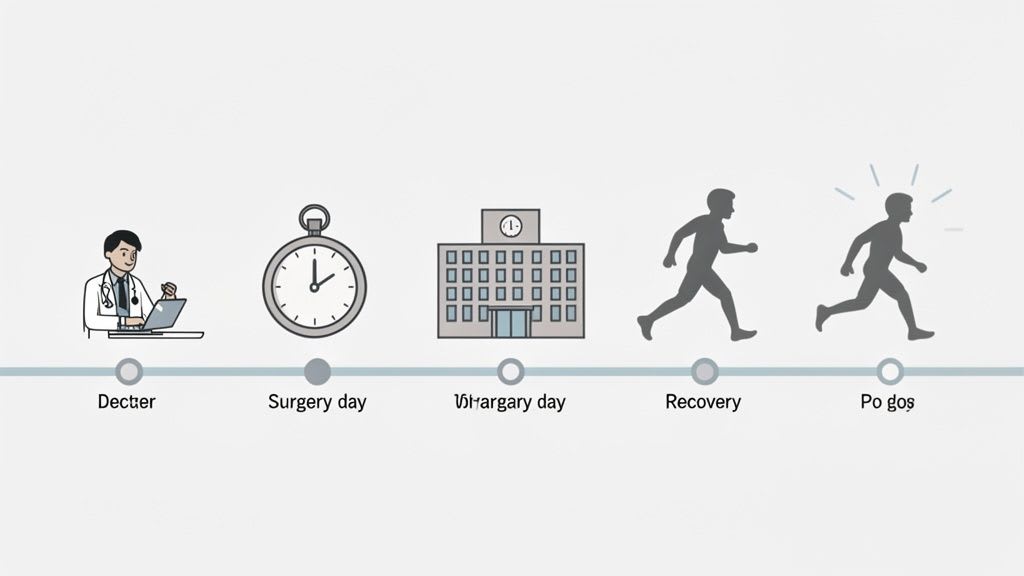
Understanding the process can make breast augmentation feel much less intimidating. It is a well-planned journey. Swiss clinics are known for their methodical approach to patient care, guiding you from preparation through to your final results.
This timeline serves as a road map, outlining what you can expect at each stage of the procedure and the healing journey that follows.
Before Your Surgery
Preparation is as vital as the surgery itself. This phase begins a few weeks before your appointment and involves clear instructions from your surgeon to prepare your body for the procedure.
You will be asked to:
Stop certain medications: Your surgeon will provide a specific list, which usually includes anti-inflammatory drugs like aspirin or ibuprofen and some herbal supplements that can increase bleeding risk.
Cease smoking and nicotine use: This is a critical requirement. Nicotine constricts blood vessels, which can seriously impede healing and increase complication risks.
Arrange for assistance: You will need someone to drive you home from the clinic and stay with you for at least the first 24-48 hours after surgery.
On the day of your operation, you will arrive at the clinic where the team will prepare you. Your surgeon will make final markings, and the anaesthesiologist will speak with you. The breast augmentation surgery itself is efficient, typically lasting between 60 and 90 minutes. It is performed under general anaesthesia, so you will be asleep and comfortable throughout.
Your Post-Operative Recovery Week by Week
Recovery is a gradual process that varies for each individual. However, a general timeline can provide a clear picture of what to expect as your body heals.
Be patient with your body. Healing takes time, and your final result will not be fully apparent for a few months. The best thing you can do for a smooth recovery is to follow your surgeon's instructions precisely.
Week 1: The Initial Healing Phase
The first few days are dedicated to rest and managing discomfort. It is normal to feel tightness across your chest and to experience some swelling and bruising.
Your surgeon will have prescribed pain medication for your comfort. You will also be fitted with a special surgical bra or compression garment, which is crucial for supporting your breasts and minimising swelling. Gentle walking is encouraged for circulation, but all strenuous activity is strictly prohibited.
Weeks 2-4: Returning to Light Activities
By the second week, you will likely start to feel more like yourself. Most people feel ready to return to a desk job and light daily routines. Swelling will begin to noticeably decrease, though some will remain for a while longer.
You will probably have a follow-up appointment during this period for your surgeon to check your healing progress. Even though you are feeling better, it is important to continue avoiding heavy lifting (anything over 5 kilograms) and intense exercise. Your surgeon will advise when it is safe to gradually resume more strenuous activities.
Weeks 4-6 and Beyond
After about a month, you can usually begin reintroducing lower-body exercises. Your surgeon will provide guidance on when it is safe to resume upper-body workouts and more demanding physical activities, typically around the six-week mark.
Over the next 3 to 6 months, the final results will emerge. During this period, the implants settle into their final, more natural-looking position. The remaining swelling will disappear, and the breast tissue will soften and relax around the implants. It is during this time that you will begin to see the long-term outcome.
Finding Your Surgeon and Clinic in Switzerland
No decision is more critical than selecting the surgeon who will perform your procedure. Switzerland's medical standards are exceptionally high, providing access to world-class plastic surgeons. The task is finding the one whose skill, aesthetic sense, and approach to patient care align with your needs.
This is about more than qualifications; it is about building a relationship based on trust and feeling completely safe. A great surgeon is not just technically brilliant; they are a partner in this process, guiding you with honesty from the initial consultation to your final check-up.
Verifying a Surgeon’s Credentials
Your first step should always be to check a surgeon’s official qualifications. In Switzerland, the most important credential to look for is the FMH title for plastic, reconstructive, and aesthetic surgery.
The FMH (Foederatio Medicorum Helveticorum, or Swiss Medical Association) is the country's professional physician organisation. Earning an FMH specialist title signifies that a doctor has completed years of intensive postgraduate training, passed rigorous examinations, and is committed to ongoing education. It is the gold standard for medical specialists in Switzerland.
You can and should verify this information. The Swiss government maintains a public register called MedReg. This online tool allows you to confirm a doctor's licence to practise in Switzerland and check their official specialist titles.
Using MedReg provides assurance that your surgeon meets strict national standards. Some verified platforms, like BeautyGuide.ch, perform these checks in advance, simplifying your research.
What to Look for During Your Consultation
Your initial consultation should be viewed as a two-way interview. It is your opportunity to assess the surgeon and clinic, and their opportunity to determine if they can meet your needs. The meeting should feel like a collaborative, open discussion, not a sales presentation.
A responsible surgeon will dedicate time to listening to your motivations, explaining all options clearly, and helping you form realistic expectations. Come prepared with questions; this demonstrates you are an engaged patient and ensures you receive all the information you need.
Key questions to ask your surgeon:
How many breast augmentations do you typically perform each year?
Based on my body and goals, which approach do you recommend—implants or fat transfer—and why?
Can I see before-and-after photos of your patients with a similar body type to mine?
What are the specific risks associated with this procedure?
Where will the surgery take place (clinic or hospital), and is the facility fully accredited?
What does your aftercare plan involve?
Listen carefully to their responses. Are they patient and thorough? Do they explain complex topics without confusing medical jargon? The clinic itself should feel professional, clean, and welcoming. Ultimately, trust your own judgement. You must feel completely comfortable and respected by the surgeon and their entire team before proceeding.
Your Questions About Breast Augmentation Answered
As you approach a decision, you will naturally have questions about the long-term implications. It is completely normal to have a list of concerns. Here are answers to some of the most common questions from patients.
How Long Do Breast Implants Last?
A frequent question is about the longevity of breast implants. It is important to understand that implants are not lifetime devices. The high-quality silicone implants used in Switzerland are very durable, but they may eventually need to be replaced.
As a general guideline, they can be expected to last from 10 to 20 years. However, many patients have had them for much longer without any issues. Replacement is usually only necessary if a specific problem arises, such as a rupture or capsular contracture (the hardening of scar tissue around the implant).
It can be helpful to think of implants like a car. You expect it to perform well for a long time, but it still benefits from regular check-ups. Annual follow-up appointments with your surgeon provide similar peace of mind.
Will I Be Able to Breastfeed After Surgery?
This is a significant consideration for many women. The good news is that the vast majority of women who have breast augmentation surgery can breastfeed without issues. Much of this depends on the surgeon's technique.
For instance, incisions placed in the crease under the breast (inframammary) or through the armpit (transaxillary) are less likely to disturb the milk ducts and nerves. An incision around the areola (periareolar), while sometimes necessary, carries a slightly higher risk. If you are planning a future pregnancy, make this a key point of discussion during your consultation. Your surgeon can then tailor the surgical plan to best preserve your ability to breastfeed.
How Will Implants Affect Future Mammograms?
This is another excellent and critical question. You absolutely can, and should, continue with regular breast cancer screenings after surgery. The key is to inform the imaging centre that you have implants when scheduling your appointment.
Radiology teams are very familiar with this. They use special techniques called implant displacement views (or Eklund views). This involves gently moving the implant back toward the chest wall to get a clear image of the surrounding breast tissue. It is a standard, routine procedure that ensures your screening is as thorough and effective as it would be otherwise.
Explore More
This article is for informational purposes only and does not replace professional medical advice.