
A non-surgical brow lift is a precise, medical treatment that uses small, targeted injections of botulinum toxin to create a subtle lift in the eyebrows. It works by relaxing specific muscles that naturally pull the brows downwards. The result is a refreshed, more open, and rested look around the eyes, achieved without surgery or significant downtime.
The Modern Approach To A Non-Surgical Brow Lift
With age, skin naturally loses some of its elasticity, which can cause the brows to gradually droop. This may lead to a tired, heavy, or stern expression that does not reflect how a person feels. For many years, surgery was the primary solution, but today, many individuals seek less invasive options that deliver more natural-looking results. This is where the brow lifting botox technique has become a widely considered option.
This treatment is not about creating a dramatic, permanently "surprised" appearance. It is a meticulous technique that relies on a deep understanding of facial anatomy. A qualified Swiss practitioner carefully targets the depressor muscles—the ones that pull the brows down—which then allows the forehead's primary lifting muscle to gently elevate the brow arch.
Why It Is A Preferred Choice In Switzerland
In a country known for its precision and high medical standards, the non-surgical brow lift aligns well with patient expectations. The treatment offers several distinct advantages that have made it a popular request in clinics from Zurich to Geneva.
Minimal Downtime: The procedure itself is typically quick, usually taking less than 20 minutes. Most patients can return to their daily activities immediately afterwards.
Subtle, Natural Results: The aim is rejuvenation, not a complete transformation. The lift is gentle, creating a brighter and more rested look that appears natural.
High Safety Profile: It is a safe treatment when performed by a medically qualified and experienced injector. Swiss clinics operate under strict regulations, prioritising patient safety.
Reversible and Adjustable: Unlike surgery, the effects are not permanent; they typically last for about three to four months. This provides the flexibility to make small adjustments in future sessions to maintain the desired look.
This treatment can be a suitable option for individuals with mild to moderate brow heaviness, or for those who desire a more defined arch without undergoing surgery. It offers a sophisticated method for refreshing the eye area and addressing early signs of ageing.
Understanding how this treatment works is a crucial first step. For those considering a procedure to address heaviness around the eyes, it can be helpful to learn more about the differences between surgical and non-surgical brow lift options in our comprehensive guide. This will help clarify what makes each approach suitable for different goals within Switzerland's trusted medical environment.
How Botulinum Toxin Rebalances Brow Muscles For A Natural Lift
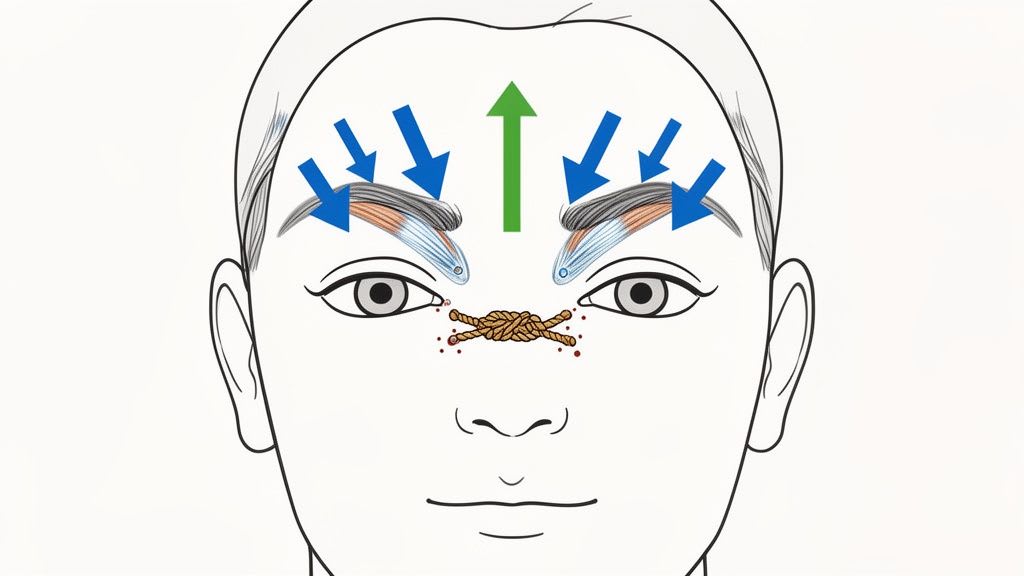
To understand how a Botox brow lift works, it is useful to visualize the forehead as a system of balanced forces. Facial muscles are in a constant, subtle opposition. Some muscles pull the brows down, while others lift them up.
The key to a successful non-surgical brow lift is to gently shift this balance in favour of the lifting muscles. This requires finesse and a deep understanding of facial anatomy, which is the hallmark of a skilled practitioner in Switzerland.
The Muscular Balance In Your Forehead
A network of muscles creates our expressions. In the brow area, two main groups are at play:
The Depressors (Downward Pullers): These are the muscles that pull the eyebrows down during actions like frowning, squinting, or concentrating. The main ones are the corrugator supercilii (between the brows) and the orbicularis oculi (the ring-like muscle around the eye).
The Elevator (Upward Lifter): In contrast, one primary muscle is responsible for lifting the eyebrows. The frontalis muscle, which spans the forehead, is the sole elevator. It is used when raising the eyebrows in surprise.
Over time, the downward-pulling depressor muscles can become more dominant, contributing to a heavy or tired appearance. A brow lift using botulinum toxin directly addresses this imbalance.
By precisely relaxing the specific muscles that pull the brow down, the forehead's natural lifting muscle is allowed to function without opposition. This rebalancing creates a subtle, natural-looking lift in the brow arch, making the entire eye area appear more open and refreshed.
The Science Of Precise Muscle Relaxation
Botulinum toxin is a neuromodulator. When a trained medical professional injects small, controlled amounts, it temporarily blocks the nerve signals that instruct a specific muscle to contract. The muscle is not paralysed; it is simply relaxed.
For a brow lift, the specialist carefully injects botulinum toxin into the depressor muscles—typically the outer part of the orbicularis oculi and the corrugator muscles between the brows. This targeted relaxation prevents them from pulling the brow down.
As a result, the frontalis muscle, which is left untreated, can lift the brow without resistance. This creates a gentle lift of a few millimetres, which is often sufficient to open up the eyes and define the arch, without an unnatural "frozen" look. Precision is paramount to ensure the final result works in harmony with natural facial expressions.
In Switzerland, this refined approach has gained popularity, particularly among professionals. In fact, women aged 35-50 account for approximately 50.2% of all botulinum toxin procedures in Swiss clinics. Many seek to counteract the 'tired eye' appearance associated with demanding lifestyles in cities like Zurich and Geneva, a trend noted in the ISAPS Global Survey.
A solid understanding of how botulinum toxin works is important for anyone considering injectable treatments. For a more detailed look at its applications for other aesthetic concerns, our guide to Botox treatments may be helpful. This background knowledge can facilitate a more productive discussion with a practitioner about achieving desired results safely.
What To Expect During Your Treatment Journey
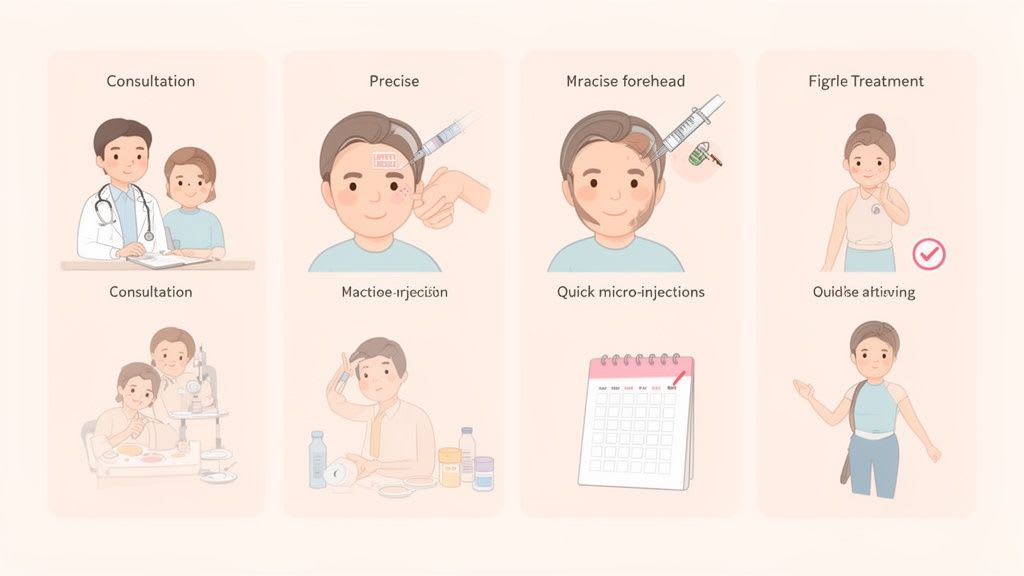
If you are considering a brow lifting Botox treatment in Switzerland, you will find the process is structured and professional. As a medical procedure, each step is handled with care and precision. Knowing what the journey entails can help you feel more comfortable and confident.
The entire experience, from the initial consultation to the treatment itself, is conducted within a thorough and confidential medical framework. A proper assessment is performed to ensure your health, anatomy, and aesthetic goals are aligned before any injections are planned.
The Crucial Initial Consultation
Everything begins with a detailed consultation. This is arguably the most important part of the entire process as it sets the foundation for a successful result. In Switzerland, this discussion will be with a qualified medical doctor, often a specialist with an FMH title in a relevant field like dermatology or plastic surgery.
This initial meeting is a two-way dialogue. It is your opportunity to:
Share Your Goals: Explain to the doctor what you hope to achieve. Whether you want your eyes to look more open, desire a specific brow arch, or wish to correct asymmetry, being specific is helpful.
Discuss Your Medical History: The specialist needs to be aware of any health conditions, allergies, or medications you are taking to ensure your safety.
Receive a Professional Facial Analysis: The practitioner will examine your facial structure, muscle movement during expressions, and skin quality. This analysis is key to creating a personalised treatment plan.
This is also the time to ask any questions you may have. A good practitioner will encourage questions and provide clear, realistic information about what the treatment can and cannot achieve.
The Day Of The Procedure
The treatment itself is typically quick and straightforward, usually taking no more than 15 to 20 minutes. Swiss clinics prioritise comfort and efficiency, making the process as minimally invasive as possible.
Here’s a simple rundown of what happens in the treatment room:
- Preparation: Your face will be gently and thoroughly cleansed to remove any makeup, creams, or oils, creating a sterile surface for the injections.
- Mapping the Muscles: The doctor will ask you to frown, raise your eyebrows, and make other expressions. This helps them observe your muscle function and mark the precise injection points for an optimal lift.
- The Injections: Using a very fine needle, the doctor will administer a series of small botulinum toxin injections at the marked spots. Most people describe the sensation as a quick, slight pinch.
- Completion: The area is cleaned once more, and the procedure is complete. No bandages are required.
The procedure is designed for minimal downtime. You can typically return to your daily activities immediately after leaving the clinic, with just a few simple aftercare instructions to follow for the first 24 hours.
Is a Non-Surgical Brow Lift Right for You?
A brow lift with botulinum toxin can be an effective treatment, but it is not a universal solution. Its success depends on individual suitability. This technique is designed for subtle, natural-looking refinement, not dramatic changes. Determining if it aligns with your anatomy and aesthetic goals is a crucial first step.
The best way to know for certain is through a consultation with a qualified Swiss practitioner. They can assess your unique facial structure and help you understand what this technique can realistically deliver.
Who Benefits Most From This Treatment?
This treatment is often beneficial for people beginning to notice the early signs of ageing around their eyes and forehead. It can provide a noticeable improvement without the downtime or commitment of surgery.
You might be a good candidate if you are experiencing:
Mild to Moderate Brow Heaviness: Your brows have started to droop slightly, creating a tired appearance. Botulinum toxin can provide a gentle, refreshing lift.
A Desire for a More Defined Arch: You are looking to create or enhance a defined brow arch to better frame your eyes.
Slight Asymmetry: It is common for one brow to sit slightly lower than the other. Precise injections can help improve their balance.
Early Signs of Hooding: If you have a minimal amount of skin drooping over your upper eyelids, lifting the brow can help open up the eyes.
In essence, the procedure is most effective when overactive muscles are pulling the brows down. It is less effective if the primary issue is significant skin laxity, which typically requires a different approach.
Understanding Important Contraindications
In Swiss medical aesthetics, patient safety is the highest priority. A thorough screening is essential to rule out any health issues that could make the treatment inadvisable.
A brow lift with botulinum toxin is generally not recommended if you:
Are Pregnant or Breastfeeding: As a precaution, botulinum toxin treatments are not administered to patients who are pregnant or nursing.
Have Certain Neuromuscular Conditions: If you have a condition such as myasthenia gravis or Lambert-Eaton syndrome, this treatment is not a safe option as it can interfere with muscle control.
Have a Known Allergy: If you have a known allergy to botulinum toxin type A or its components, this treatment is contraindicated.
Have an Active Skin Infection: The procedure must be postponed until any infection at or near the injection sites has fully resolved.
Being completely transparent about your medical history during your consultation is crucial. This allows your practitioner to make the safest and most effective recommendation for you.
When Surgery May Be a Better Option
It is also important to have realistic expectations about the limitations of a non-surgical brow lift. While it is excellent for subtle adjustments, it is not a substitute for surgery when dealing with significant sagging or excess skin.
If you have significant brow ptosis (the medical term for severe drooping) or substantial loose skin on your forehead, a surgical brow lift is likely to be a more effective option. In these cases, botulinum toxin will not provide the necessary lift or longevity of results.
To clarify the differences, a side-by-side comparison can be helpful.
Suitability For Brow Lift Options In Switzerland
| Consideration | Non-Surgical Brow Lift | Surgical Brow Lift |
|---|---|---|
| Primary Goal | Subtle lift, arch enhancement, asymmetry correction. | Significant lift, removal of excess skin, deep wrinkle correction. |
| Ideal Candidate | Mild to moderate brow heaviness. | Severe brow drooping (ptosis) and significant skin laxity. |
| Procedure Type | Minimally invasive injections. | Invasive surgery with incisions. |
| Downtime | Minimal to none (typically less than 24 hours). | Several weeks of recovery and healing. |
| Result Duration | Temporary (3-4 months). | Long-lasting (many years). |
An ethical practitioner in Switzerland will always provide an honest assessment and guide you towards the treatment that best suits your needs—even if that means recommending a surgical consultation instead. The ultimate goal is a result that is both effective and appropriate for you.
What to Expect: Your Results Timeline and Aftercare
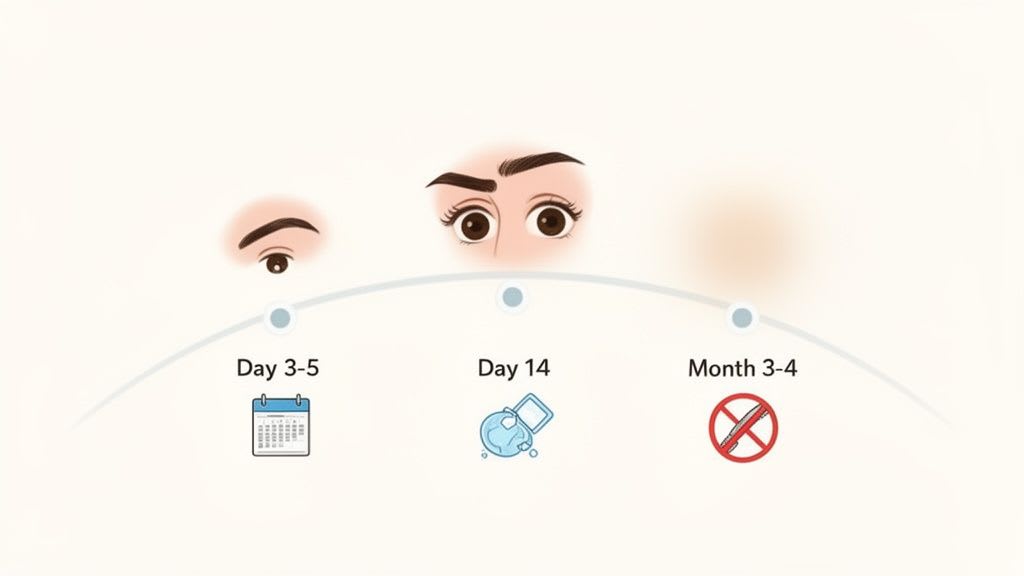
A common question is, "When will I see the lift?" It is important to understand that a brow lifting Botox treatment does not produce instant results. The effect develops gradually over several days. Knowing the timeline—and the proper aftercare—is key to achieving a satisfactory, natural-looking outcome.
The botulinum toxin requires time to interact with the nerve endings and relax the downward-pulling muscles. As these muscles relax, the primary forehead muscle (the frontalis) can lift the brows more effectively. Patience during the first week is important.
Your Results Unfolding Day By Day
While individual responses can vary, the timeline for a non-surgical brow lift is generally predictable. A reputable Swiss practitioner will explain this during your consultation.
First 24-48 Hours: You are unlikely to see a significant change immediately. The primary focus during this time is to adhere to aftercare instructions to ensure the product remains in the intended area.
Days 3-5: You may begin to notice the first subtle effects. The muscles between your brows might feel less active, and the initial signs of a gentle lift may appear.
Days 10-14: The full effect is typically visible by this point. The depressor muscles are fully relaxed, allowing your brows to settle into their new, lifted position. This results in a brighter, more open look around the eyes.
It is standard practice in Swiss clinics to schedule a follow-up appointment approximately two weeks after the treatment. This allows the specialist to assess the final result, check for symmetry, and perform minor adjustments if necessary.
How Long Will My Brow Lift Last?
The refreshed, lifted appearance from this treatment is temporary. You can typically expect the results to last for about three to four months.
Over time, your body naturally metabolises the botulinum toxin. As this occurs, nerve signals to the treated muscles are gradually restored, and your brows will slowly return to their pre-treatment position.
To maintain the effect, regular follow-up treatments are necessary. Most patients find that scheduling an appointment every three to four months is a manageable routine. Consistent treatments can also help soften dynamic lines over the long term.
The temporary nature of botulinum toxin is also a key advantage. It provides the flexibility for you and your practitioner to adjust the treatment over time as your facial structure naturally changes, ensuring that your results always look balanced and harmonious.
Safety and Potential Side Effects in Switzerland
When performed by a medically certified and experienced injector in Switzerland, a brow lift with botulinum toxin is a very safe procedure. The risk profile is low, but like any medical treatment, there is a small possibility of minor, temporary side effects.
The most common side effects are mild and resolve on their own:
Minor redness, swelling, or pinpoint bruises at the injection sites.
A mild headache that may occur within the first day.
A sensation of tightness or slight heaviness across the brow as the botulinum toxin begins to take effect.
More significant but rare complications, such as a drooping eyelid (ptosis), are almost always associated with injector error or improper technique. This underscores the importance of choosing a practitioner with proven credentials, such as an FMH title. Their deep understanding of facial anatomy is crucial for patient safety and a successful outcome.
The popularity of this treatment is growing in Switzerland. It is projected that non-surgical brow lifts will constitute 25% of all injectable treatments in cities like Lausanne and Lucerne by 2026, driven by high patient satisfaction, especially for correcting minor asymmetries. You can find more information on these trends in the latest botulinum toxin market report.
Your Aftercare Checklist: The Dos and Don'ts
Following the aftercare instructions provided by your clinic is essential for protecting your results and health. While your practitioner will give you a detailed list, here are the key guidelines:
- Stay Upright: For the first four to six hours post-treatment, avoid lying down flat. Sit upright to allow the product to settle properly.
- No Strenuous Exercise: Refrain from intense workouts, saunas, or any activity that causes significant sweating for at least 24 hours.
- Avoid Touching the Area: Do not rub, massage, or apply pressure to the treated areas for 24 hours. This prevents the botulinum toxin from migrating to unintended muscles.
- Postpone Other Facial Treatments: Wait at least two weeks before having other facial treatments, such as chemical peels, microdermabrasion, or deep-cleansing facials.
How To Choose A Qualified Clinic In Switzerland
Selecting the right practitioner for a Botox brow lift is the most critical decision in this process. In Switzerland, medical standards are exceptionally high, which benefits patients. However, it is important to know what to look for to ensure you receive the best and safest care.
Your choice should be based on proven medical expertise and official credentials, not solely on price or convenience. It is about entrusting your treatment to an injector with a deep, nuanced understanding of facial anatomy.
Verifying Medical Credentials Is Non-Negotiable
In Switzerland, medical professions are strictly regulated to protect patients. Before booking a consultation, there are two key verifications to perform.
Check the MedReg Register: First, confirm that your practitioner is a licensed medical doctor. The Register of Medical Professions (MedReg) is the official federal database for this purpose. A quick search will verify if they hold a valid Swiss medical licence.
Look for an FMH Specialist Title: This is a key indicator of expertise. The Swiss Medical Association (Foederatio Medicorum Helveticorum, or FMH) awards specialist titles only after a doctor completes years of rigorous postgraduate training. For a brow lift with botulinum toxin, you should seek a doctor with an FMH title in dermatology and venereology or plastic, reconstructive and aesthetic surgery.
An FMH title signifies years of dedicated, specialised training beyond a general medical degree. Choosing an FMH specialist means placing your care in the hands of a true expert in aesthetics.
Using Trusted Platforms For Discovery
Navigating clinic websites can be time-consuming. Platforms that connect patients with reputable, pre-vetted professionals can simplify the process.
A resource like BeautyGuide.ch, for example, provides curated lists of leading clinics in cities such as Zurich, Geneva, and Bern. They perform initial credential checks, offering a level of assurance. Using such a directory allows you to:
Find Verified Specialists: Quickly locate doctors in your area with the appropriate FMH qualifications.
Assess Clinic Profiles: Gain insight into a clinic’s areas of specialisation, the treatments they offer, and the languages spoken.
Read Patient Reviews: See feedback from other patients regarding their experiences, which can provide information about a clinic's approach to patient care.
Prioritising verified expertise is the most reliable way to ensure a safe and satisfying outcome. To learn more, see our complete guide on how to select the right beauty clinic. Thorough research can help you make a confident and informed choice for your treatment.
Your Questions Answered: The Non-Surgical Brow Lift
Here are answers to some of the most common questions about a brow lift with botulinum toxin. This information is intended to be a helpful overview, but it does not replace a one-on-one consultation with a qualified Swiss practitioner who can assess your individual needs and goals.
How Much Can I Expect to Pay for This Treatment in Switzerland?
The cost varies and is not a fixed price. It depends on factors such as the clinic’s location—prices in Zurich may differ from those in Lugano—the doctor's experience, and the amount of product required for your specific anatomy. As a general estimate, prices in Switzerland typically range from approximately CHF 400 to CHF 700.
This should be considered a guideline. A precise quote can only be provided during an initial consultation after a personalised treatment plan has been created. It is advisable to prioritise the practitioner's skill and credentials over cost.
Does a Brow Lift with Botulinum Toxin Hurt?
Most people find the procedure very tolerable. The sensation is often described as a series of quick, tiny pinches. The injections are administered with extremely fine needles, and an experienced professional works efficiently.
It is uncommon for a topical numbing cream to be necessary. However, if you have concerns about discomfort, you should discuss them with your doctor during the consultation. They can ensure you are as comfortable as possible.
How is This Treatment Different From Using Dermal Fillers?
This is an important distinction, as the two treatments work in completely different ways.
A brow lift with botulinum toxin addresses muscle dynamics. It relaxes the specific muscles that pull the eyebrows down (the depressors). By reducing their downward pull, the primary lifting muscle of the forehead (the elevator) can function more effectively, creating a natural lift.
Dermal fillers, conversely, are used to add volume and structural support. A practitioner might inject a filler under the brow to provide physical support, but this does not alter muscle activity.
The two treatments are not mutually exclusive. In some cases, a combination of both may be recommended to achieve a comprehensive and balanced result for rejuvenating the upper face.
What Happens if I Decide to Stop the Treatments?
If you choose not to continue with the treatments, the effect will gradually fade. Over the following three to four months, your body will metabolise the botulinum toxin, and your muscles will slowly return to their normal activity.
Your brows will return to their original position. There are no lasting adverse effects from discontinuing a brow lifting botox treatment. The procedure creates a temporary relaxation of specific muscle movements, not a permanent change to your facial structure.
This article is for informational purposes only and does not replace professional medical advice.