Understanding Breast Augmentation Costs in Switzerland (Brustvergrösserung Schweiz Kosten)

When considering breast augmentation in Switzerland, the initial focus is often on the cost, or Brustvergrösserung Schweiz Kosten. However, this figure is not a simple price tag for a product. It represents a significant medical procedure where the surgeon's qualifications, clinic standards, and patient safety are paramount. Understanding the cost requires shifting perspective from a cosmetic purchase to a long-term investment in your health and well-being, governed by Switzerland's rigorous medical standards.
Average Cost of Breast Augmentation in Switzerland
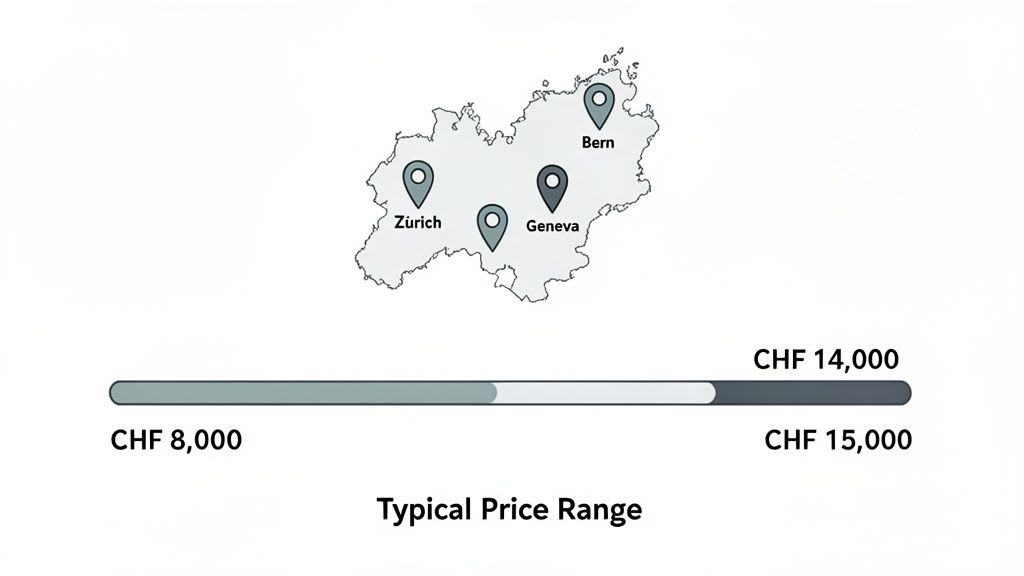
In Switzerland, the price of breast augmentation reflects the country's high standards of medical care, surgical expertise, and clinic quality. There is no single fixed price; instead, patients can expect a realistic range tailored to their individual anatomy and surgical plan.
A standard breast augmentation procedure in Switzerland typically ranges from CHF 8,000 to CHF 15,000. This figure is generally presented as a comprehensive package, covering all essential aspects of the procedure from the initial consultation through to post-operative follow-up care. This transparency helps ensure patients can plan financially without concern for unexpected fees. The final cost will always be determined after a thorough medical consultation where the surgeon develops a personalised treatment plan.
What Influences the Price?
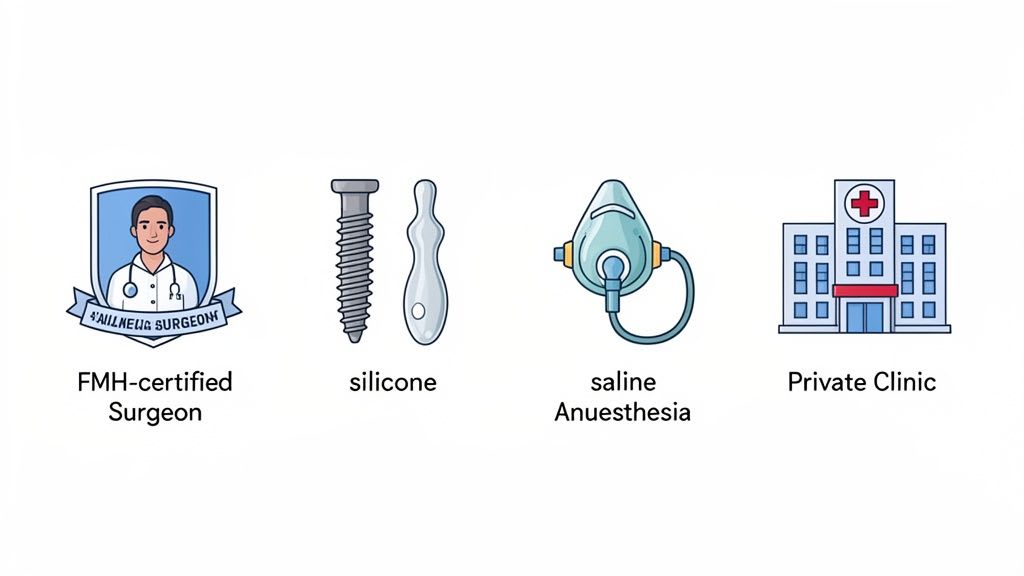
The final quote for a "Brustvergrösserung" is a detailed breakdown of multiple highly specialised components that ensure patient safety, comfort, and the quality of the outcome. Understanding these factors helps in evaluating the value provided, not just the price.
Surgeon Qualification (FMH Certification): The expertise of the surgeon is a primary cost factor. A surgeon holding an FMH (Foederatio Medicorum Helveticorum) title in plastic, reconstructive, and aesthetic surgery has undergone years of rigorous, specialised training. This certification is the gold standard in Switzerland and signifies a high level of competence and experience.
Clinic Type (Private Clinic vs. Hospital): The surgical environment plays a significant role. Accredited private clinics with state-of-the-art operating theatres have different operational costs compared to larger hospitals. This choice influences the overall price while also affecting the patient experience.
Implant Type (Silicone vs. Saline, Brand): The specific breast implants selected directly impact the cost. Premium silicone implants from reputable, globally recognised brands are typically more expensive than standard saline options. The higher price reflects extensive research, advanced safety features, and a more natural feel.
Anesthesia and Operating Room Costs: A board-certified anaesthesiologist is essential for patient safety during surgery, and their professional fee is included. This cost also covers the use of the sterile operating room, advanced medical equipment, and the support of a skilled surgical nursing team.
Aftercare, Follow-up, and Potential Revisions: Comprehensive care extends beyond the surgery itself. The price includes all scheduled post-operative appointments, necessary dressings, and follow-up care to monitor healing. The clinic's policy on revision surgery is also a crucial long-term consideration.
What Is Usually Included in the Quoted Price?
Reputable clinics in Switzerland provide transparent, all-inclusive price quotes to ensure patients have a clear understanding of the total investment. A comprehensive quote typically bundles all necessary medical services into a single figure.
Included services usually are:
Pre-operative Consultations: All meetings with the surgeon to discuss goals, perform examinations, and finalise the surgical plan.
Medical Team Fees: The professional fees for both the FMH-certified surgeon and the specialist anaesthesiologist.
Implant Costs: The price of the high-quality, medically approved breast implants selected for the procedure.
Facility Fees: The cost for the use of the operating room, all surgical equipment, and the dedicated nursing staff.
Standard Aftercare: All scheduled follow-up appointments to monitor healing, remove stitches, and ensure a smooth recovery.
Potential separate costs may include:
Prescription medications (e.g., pain relief, antibiotics).
Specialised post-surgical garments or compression bras.
Treatment for rare or unforeseen complications.
Future revision surgeries that fall outside the clinic's initial policy.
Clarifying what is included and what may be billed separately is a critical step during the consultation. For more information, you can find a breast augmentation clinic in Zurich.
Medical and Legal Requirements in Switzerland
Patient safety is the highest priority within the Swiss medical system. Several regulations are in place to protect individuals seeking aesthetic surgery.
FMH Certification: Only surgeons with an FMH title in plastic, reconstructive, and aesthetic surgery are recognised as fully qualified specialists for this procedure.
Informed Consent: Surgeons are legally required to provide patients with comprehensive information about the procedure, including all potential risks, benefits, and alternatives. The patient must provide written informed consent before surgery.
Mandatory Consultations: A thorough consultation is required to ensure the patient is a suitable candidate, both physically and psychologically, and fully understands the implications of the surgery.
Patient Safety Regulations: Clinics and hospitals must adhere to strict hygiene, equipment, and staffing standards set by Swiss health authorities to ensure a safe surgical environment.
Risks, Limitations, and Long-Term Considerations
Breast augmentation is a surgical procedure with inherent risks and long-term implications that require careful consideration.
Realistic Outcomes: It is important to have realistic expectations. The goal is improvement, not perfection, and the final result will depend on individual anatomy.
Implant Lifespan: Breast implants are not considered lifetime devices. While modern implants are durable, they may need to be replaced or removed after 10-15 years or more due to wear, complications, or changes in the patient's body.
Possible Complications: Potential risks include infection, capsular contracture (scar tissue hardening around the implant), changes in nipple sensation, and implant rupture. An FMH-certified surgeon will discuss these risks in detail.
Future Costs: Patients should be financially prepared for potential future costs related to implant revision or replacement. Basic Swiss health insurance (Grundversicherung) does not cover cosmetic procedures, and while it may cover treatment for a medical complication, it often does not cover the cost of the new implant itself. Find more details on insurance policies for aesthetic surgery complications.
How to Evaluate Clinics Responsibly
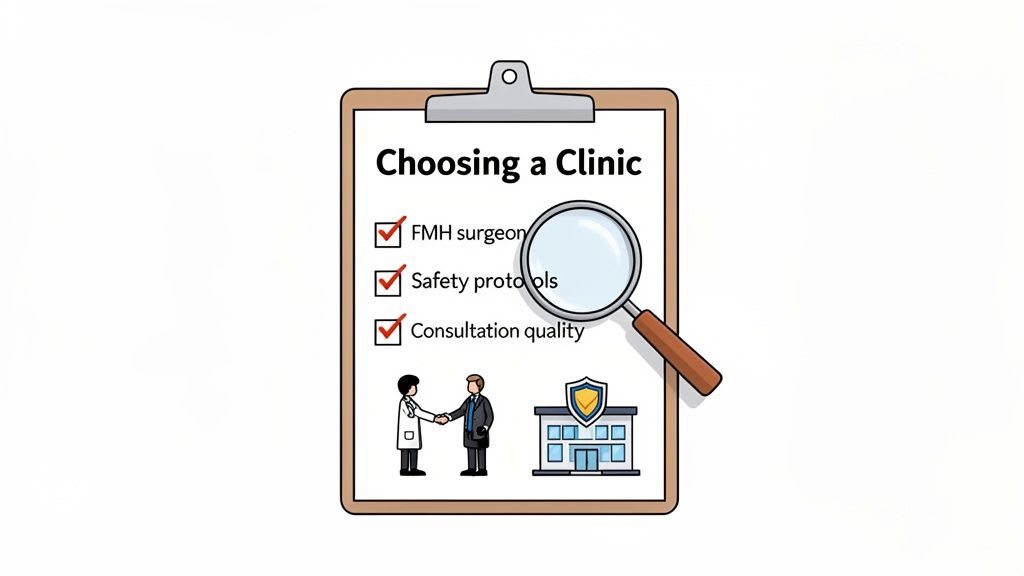
Choosing a clinic for breast augmentation should be a decision based on quality and safety, not price alone. An unusually low cost can be a red flag, potentially indicating compromises in surgeon experience, implant quality, or facility standards.
Key guidance for evaluation:
Verify Surgeon Credentials: Confirm the surgeon holds the FMH title in plastic, reconstructive, and aesthetic surgery.
Assess the Consultation: A responsible surgeon will conduct a thorough consultation, listen to your goals, answer all questions, and explain the risks clearly. Our guide on what to expect during a first aesthetic consultation can help you prepare.
Evaluate the Facility: Ensure the clinic is clean, professional, and accredited for performing surgical procedures.
Trust Your Instincts: The relationship with your medical team is crucial. You should feel comfortable, respected, and confident in their care.
For a deeper look at this process, our guide on how to select the right beauty clinic offers valuable insights. While Swiss clinics are transparent about costs being higher than in other countries, this reflects uncompromising safety regulations and a medical culture prioritising patient well-being. You can explore the global context of breast augmentation pricing to understand this perspective.
Conclusion
The cost of breast augmentation in Switzerland is a reflection of a comprehensive, high-quality medical service. It is not a commodity to be chosen based on the lowest price. Making an informed decision involves understanding what factors contribute to the final cost, prioritising the surgeon's qualifications and the clinic's safety standards, and engaging in a thorough consultation process. By focusing on value and safety over price, patients can make a responsible choice that supports their long-term health and satisfaction.
Explore More
This article is for informational purposes only and does not replace professional medical advice.