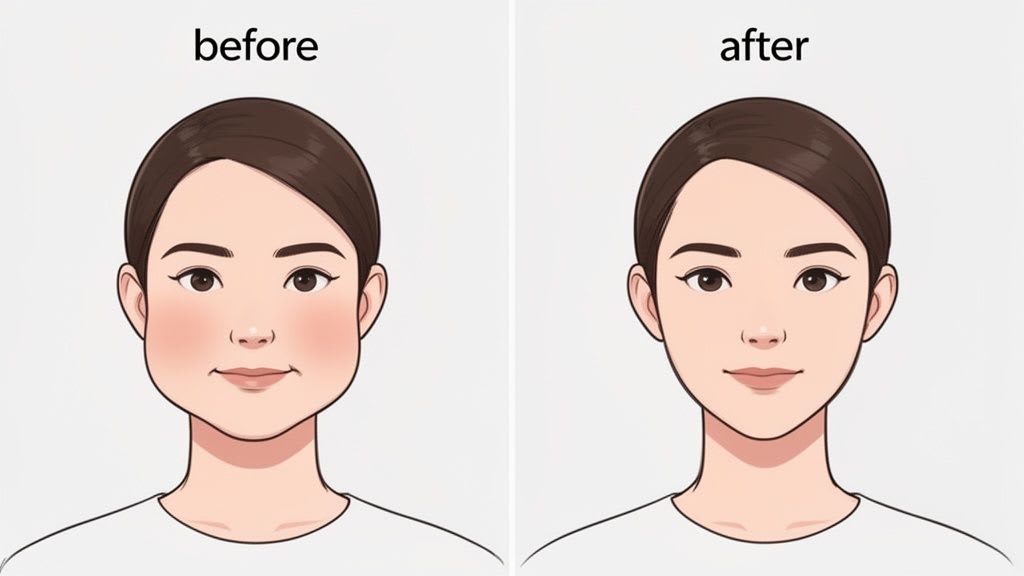
When reviewing buccal fat removal before and after photos, the change is often subtle yet striking. It represents a shift from a softer, rounder lower face to a more sculpted, defined contour. This is not a weight-loss operation; it is a highly precise surgical technique designed to reduce fullness in the lower cheeks, enhancing the natural angles of the face for a more refined appearance.
What Exactly Is Buccal Fat Removal?
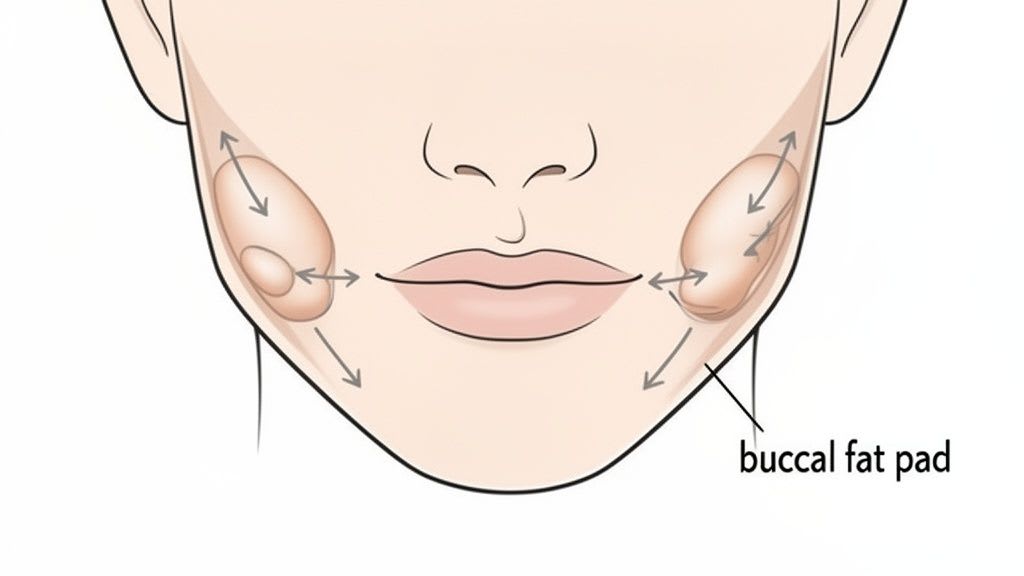
The buccal fat pads are small, naturally occurring cushions of fat located deep within the cheeks, situated between the cheekbones and jawline. In some individuals, these pads are genetically larger, creating a persistent roundness—sometimes referred to as "chipmunk cheeks"—that does not diminish with diet or exercise.
Buccal fat removal specifically targets this issue. A surgeon makes a small, concealed incision on the inside of the mouth to carefully access and remove a portion of these fat pads. The procedure requires a delicate balance. The goal is never to remove the entire pad, which could lead to a hollowed or gaunt appearance, particularly as the face ages. The key is proportional reduction.
The Swiss Approach to Facial Harmony
In Switzerland, the philosophy behind aesthetic procedures like buccal fat removal centres on achieving natural, harmonious results. The focus is less on dramatic transformation and more on subtly enhancing an individual's unique facial structure. Swiss plastic surgeons, particularly those with an FMH (Swiss Medical Association) specialisation, prioritise patient safety and understated refinement.
This process begins with an in-depth consultation. This is a crucial step where the surgeon will carefully evaluate:
Your unique facial anatomy: Assessing the size of the buccal fat pads in relation to your cheekbones and jaw.
Your aesthetic goals: Understanding the look you hope to achieve.
Long-term considerations: Discussing how removing this fat might impact your appearance as you age.
The procedure itself is highly specific. It is not intended to address jowls, a double chin, or general facial fat. Its sole purpose is to reduce volume in the mid-cheek area to help create a more defined, V-shaped lower face.
The objective is to create elegant contours that respect the patient's individual features. The best results appear entirely natural, as if the person was born with those refined facial angles.
Ultimately, the decision to proceed is a partnership between the patient and the surgeon. This collaborative approach ensures the final result aligns with the Swiss standard of sophisticated, understated aesthetic enhancement, helping you achieve a balanced facial profile.
Visualising the Results: Before and After Buccal Fat Removal
Discussing buccal fat removal is one thing, but visualising the process from start to finish helps set clear expectations. In Switzerland, the philosophy is to achieve a refined, elegant contour—not the severe, hollowed look sometimes seen in global media. It is a process that requires patience as the body heals and the final shape reveals itself.
The initial buccal fat removal before and after comparison may be surprising. Post-surgical swelling is completely normal and can temporarily make the cheeks appear fuller than before. This is a natural part of the body’s healing response.
As the swelling subsides, the first hints of a more defined facial structure will emerge. The goal is subtle but noticeable: more defined cheekbones and a sleeker, more graceful jawline. This gentle shift creates a sculpted, sophisticated look in the lower face.
The Timeline from Swelling to Final Contour
The path to your final result is gradual. While healing varies between individuals, the timeline generally follows a predictable course. Understanding what to expect at each stage can make the process more manageable.
Week 1: This is the period of maximum swelling. The face will feel puffy, and the changes will be obscured. Adhering to your surgeon's aftercare instructions—such as sleeping with your head elevated and maintaining a soft food diet—is crucial during this time.
Weeks 2-4: A significant portion of the swelling subsides, revealing the early signs of a slimmer lower face. Some minor puffiness may persist.
Months 2-3: The new contours of your cheeks and jawline become much more apparent as the tissues settle and the surgeon’s work becomes visible.
Months 4-6: This is typically when the final, settled results can be seen. Any residual swelling is gone, and the skin has adapted to its new underlying structure. The outcome is a natural, refined facial contour that appears balanced and harmonious.
A core principle in Swiss aesthetic surgery is subtlety. The best result is one that looks like a natural feature, not an obvious procedure. Success is achieved when facial contours are enhanced in a way that is elegant and proportionate to the individual.
This gradual timeline allows the changes to settle naturally, complementing your unique features without appearing sharp or artificial.
How to Critically Evaluate Before-and-After Photos
When viewing buccal fat removal before and after photos online, it is important to use a critical eye. Lighting, angles, and digital editing can create misleading impressions.
To gain a realistic understanding of potential outcomes, look for galleries from reputable Swiss clinics that adhere to strict medical photography standards. These guidelines ensure an honest representation of the patient's results.
Here’s what to look for in a trustworthy before-and-after gallery:
Consistent Lighting: The light source should be identical in both photos. Different lighting can cast shadows that create the illusion of more dramatic contouring.
Identical Angles: The patient's head must be in the same position for both the "before" and "after" shots. A slight tilt of the chin can alter the appearance of the jawline.
Neutral Facial Expressions: Both images should show the same relaxed, neutral expression. Smiling or frowning changes the shape of the cheeks and does not provide an accurate depiction of the results.
No Filters or Retouching: Reputable clinics will present unaltered photos. Unnaturally smooth or pixelated skin may indicate digital alteration.
By focusing on authentic photo galleries from verified Swiss practitioners, you can get a realistic picture of the subtle yet significant results buccal fat removal can offer. This helps you look past media trends and make a well-informed decision. For those interested in other ways to enhance the lower face, our guide on jawline contouring explores complementary procedures.
Are You An Ideal Candidate For This Procedure?
Determining if buccal fat removal is right for you involves a critical conversation with a qualified Swiss surgeon. Your unique facial anatomy will be carefully assessed against your aesthetic goals. This procedure targets a very specific type of facial fullness and is not suitable for everyone.
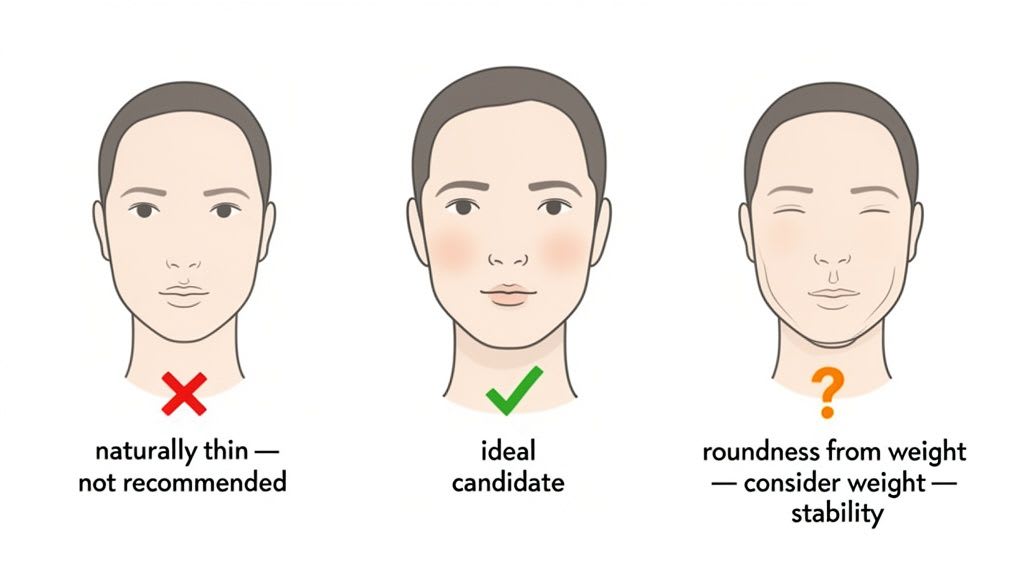
The ideal candidate is typically an adult at a stable, healthy weight who has persistent roundness in their lower cheeks. This appearance is often genetic—related to the natural size of the buccal fat pads, not overall body weight. As the procedure permanently alters facial structure, it is generally recommended for individuals whose facial development is complete.
Key Suitability Factors
A surgeon will evaluate several factors to determine your suitability. A proper consultation is essential to ensure the procedure will yield balanced, harmonious results while managing long-term considerations.
Factors include:
Facial Structure: The procedure is most effective for individuals with a strong underlying bone structure. Well-defined cheekbones and a clear jawline are enhanced once excess buccal fat is reduced.
Age: While there is no strict age limit, surgeons are cautious with younger patients whose faces may still be maturing. For older patients, the surgeon must consider how volume removal will interact with the natural ageing process.
Body Weight: Candidates should be at or near their ideal body weight with a stable lifestyle. This is a contouring procedure, not a weight-loss solution.
Realistic Expectations: It is important to understand that the results are subtle and refining. The aim is enhancement, not a complete transformation.
Who Should Avoid This Procedure?
Understanding who is not a suitable candidate is just as important as identifying who is. In Switzerland, patient safety and long-term satisfaction are paramount, meaning a responsible surgeon will sometimes advise against the procedure.
A key consideration is the natural ageing process. Facial volume diminishes over time, and removing buccal fat from an already lean face could lead to a prematurely gaunt or hollowed appearance in later years.
If you have a naturally thin or narrow face, this procedure is generally not recommended. Removing the limited volume in the buccal area can create an unbalanced, aged look. The goal is always a result that maintains facial harmony for years to come.
Global interest in this procedure is significant, with market data showing a strong preference among women seeking a more sculpted facial contour. This trend is also observed in Switzerland, with high demand for subtle, natural-looking enhancements. The procedure's discreet nature—all incisions are hidden inside the mouth, leaving no visible scars—aligns perfectly with the Swiss preference for understated results. You can learn more about cheek reduction and its benefits from medical specialists.
The Surgical Process and Recovery in Switzerland
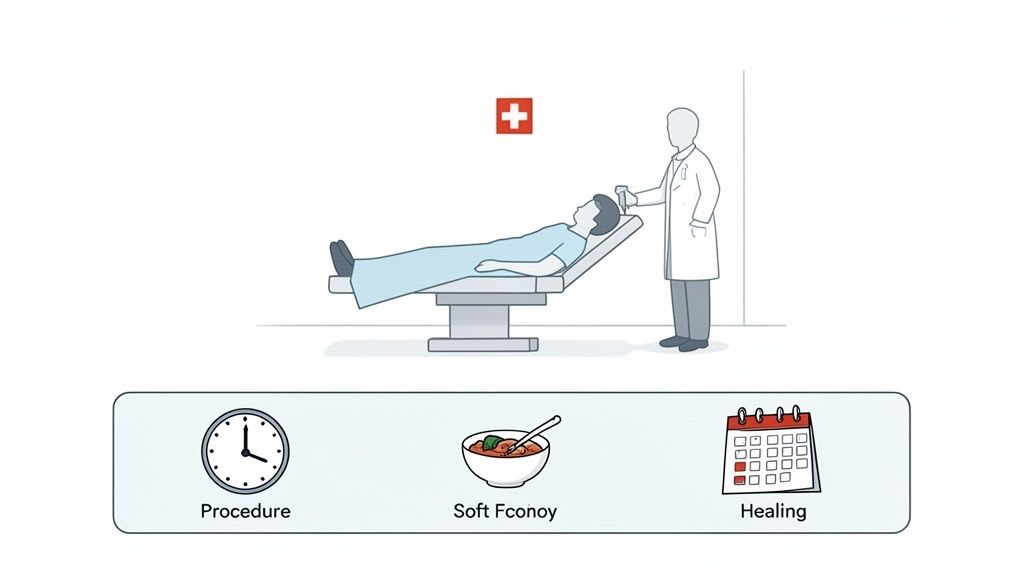
Understanding the surgical and recovery process helps to demystify the experience. In Switzerland, every step of a buccal fat removal procedure is handled with precision, focusing on patient safety and comfort. The procedure itself is relatively quick, typically taking less than an hour.
It begins with local anaesthesia, which numbs the cheeks to ensure you do not feel discomfort. This avoids the need for general anaesthesia, making the procedure less demanding on the body.
With the area numb, the surgeon makes a tiny incision inside each cheek. This is a key advantage of the procedure: because all work is done inside the mouth, there are no external incisions and therefore no visible scars. This approach aligns with the Swiss value for subtle, natural-looking results.
Through the small opening, the surgeon carefully isolates the buccal fat pad and removes a precise amount. This step is both technical and artistic. A skilled surgeon knows exactly how much to remove to create symmetry and avoid an over-corrected appearance. Once complete, the small incisions are closed with self-dissolving sutures.
Navigating The Recovery Timeline
Patience is essential during recovery. This is when your body heals and the final buccal fat removal before and after transformation becomes apparent. While each patient's healing journey is slightly different, a general timeline provides a good overview of what to expect. Following your Swiss clinic’s post-operative instructions is critical for a smooth recovery.
For the first few days, swelling is expected. Your cheeks may temporarily appear fuller than before the surgery. This is a normal, temporary part of the healing process.
"A well-managed recovery is just as important as the surgery itself. Following post-operative guidelines diligently ensures optimal healing and contributes significantly to the quality of the final aesthetic result."
Managing this initial phase involves following key practices provided by your surgeon. These steps are designed to increase comfort and promote efficient healing.
Practical Steps For A Smooth Recovery
Your clinic will provide a detailed, personalised aftercare plan. However, several standard recommendations apply to most patients.
Dietary Adjustments: A diet of soft foods and liquids is necessary for the first few days. This includes items like soups, yoghurts, and smoothies, which avoid stressing the healing incisions.
Oral Hygiene: Maintaining a clean mouth is crucial to prevent infection. You will likely be given a special antiseptic mouthwash to use gently after meals.
Managing Swelling: Sleeping with your head elevated on extra pillows can help reduce swelling. Cold compresses may also be applied to the outside of the cheeks for relief.
Activity Levels: You can typically return to work and light activities within a few days. Strenuous exercise or heavy lifting should be avoided for at least two to three weeks to prevent strain on the healing tissues.
Most significant swelling and any bruising will fade within the first one to two weeks. The dissolvable stitches will disappear on their own, and you can gradually return to your normal routine and diet. The final, refined results will continue to emerge over the following months as all tissues fully settle.
Navigating Costs And Selecting The Right Clinic
When considering buccal fat removal, two primary questions arise: the cost and how to find a qualified surgeon. Addressing both is crucial for a safe and successful outcome.
The price for the procedure in Switzerland can vary based on factors such as the clinic's location (e.g., Zurich, Geneva, Bern), the surgeon's experience, and the complexity of the individual case. It is important to obtain a detailed, all-inclusive cost breakdown during your consultation.
What Should A Quote Include?
A transparent quote from a reputable Swiss clinic will itemise all costs, so you know exactly what you are paying for.
Surgeon’s Fee: This covers the skill, expertise, and time of the plastic surgeon.
Anaesthesia Costs: This includes the fee for the anaesthesiologist and the local anaesthesia.
Facility Fees: This covers the use of the sterile operating room, equipment, and other clinical facilities.
Follow-Up Appointments: Necessary post-operative check-ups to monitor healing should be included.
Always confirm whether the initial consultation or post-operative medications are included. This clarity helps with budgeting and avoids unexpected costs.
Finding A Trusted Surgeon In Switzerland
This is the most critical decision in the process. In Switzerland, the benchmark for quality is a surgeon with an FMH (Foederatio Medicorum Helveticorum) specialisation in plastic, reconstructive, and aesthetic surgery. This qualification is a non-negotiable indicator of quality, guaranteeing the surgeon has undergone extensive, specialised training and adheres to Switzerland's high medical and ethical standards.
The demand for facial contouring is a global trend. The buccal fat removal market reflects this, with significant growth projected worldwide. In Switzerland, the procedure is a staple in aesthetic clinics, which hold a large share of the market. The surgery is efficient, typically lasting 30 to 60 minutes, and head and neck procedures are among the most frequently performed by Swiss plastic surgeons. This indicates a well-established infrastructure and deep expertise in this type of treatment. You can read more about global buccal fat removal market trends on GrandViewResearch.com.
Choosing a surgeon should be based on credentials, specific experience with this procedure, and your personal comfort level—not on price alone. Your safety and the result depend on the skill of your chosen practitioner.
To assist in vetting potential clinics and surgeons, we have compiled a checklist of key factors.
Key Factors When Choosing A Swiss Clinic
| Factor To Verify | Why It Is Important | How To Check |
|---|---|---|
| Surgeon's Credentials | Ensures they have the specialised training required for aesthetic facial surgery. | Look for the FMH specialisation in plastic, reconstructive, and aesthetic surgery on their website or ask the clinic directly. |
| Experience & Specialisation | A surgeon who frequently performs buccal fat removal will have more refined techniques and a better understanding of facial anatomy. | Request to see a portfolio of their before-and-after photos specifically for this procedure. Ask how many they perform each month. |
| Clinic Accreditation | Verifies that the facility meets strict standards for safety, hygiene, and patient care. | Check if the clinic is certified by recognised Swiss health authorities or professional organisations. |
| Consultation Process | A thorough consultation shows the surgeon is invested in understanding your goals and ensuring you are a good candidate. | The surgeon should listen to you, perform a physical examination, and explain the procedure, risks, and realistic outcomes clearly. |
| Patient Reviews | Real patient experiences can provide insight into the surgeon’s professional conduct and the clinic’s overall service quality. | Look for reviews on independent platforms, not just the clinic's own website. |
Making a confident choice requires thorough research and a comprehensive consultation. This is your opportunity to ask questions, explain your aesthetic goals, and assess the surgeon’s approach. For a more in-depth guide, please see our article on how to select the right beauty clinic in Switzerland.
Prepare a list of questions for your consultation. This ensures all your concerns are addressed and helps you feel confident that the surgeon understands your objectives and prioritises your best interests. A good surgeon will always encourage questions and provide clear, honest answers.
Your Top Questions About Buccal Fat Removal Answered
It is normal to have questions when considering any aesthetic procedure. Here are answers to some of the most common inquiries from patients in Switzerland regarding buccal fat removal, provided to help you feel well-informed.
Are The Results Of Buccal Fat Removal Permanent?
Yes, the results of buccal fat removal are considered permanent. Once the buccal fat cells are surgically removed, they do not regenerate.
However, it is important to remember that the rest of your face will continue to age and change. Significant weight fluctuations can cause remaining fat cells in the face to expand, which may soften the sculpted appearance. The natural ageing process will also continue, but the specific volume reduction in the lower cheeks from the procedure will remain.
What Are The Potential Risks I Should Know About?
All surgical procedures carry some level of risk. With buccal fat removal, complications are uncommon, particularly when performed by a skilled and experienced surgeon. A thorough pre-operative assessment is key to minimising potential issues.
Though rare, potential complications can include:
Infection at the incision site inside the mouth.
Facial asymmetry, where the result on one side does not perfectly match the other.
Injury to nearby structures, such as salivary ducts or facial nerves, which could cause temporary numbness or muscle weakness.
Dissatisfaction with the aesthetic outcome, such as an over-corrected or hollowed appearance.
Your surgeon will discuss all potential risks in detail during your consultation at a Swiss clinic, ensuring you have a complete understanding before proceeding.
Are There Any Non-Surgical Alternatives?
There is no non-surgical treatment that can physically remove the buccal fat pad. However, other aesthetic techniques can help create a more contoured facial appearance. For example, a practitioner can strategically place dermal fillers to enhance the cheekbones and jawline.
By adding volume to these bony structures, more pronounced highlights and shadows are created, which can make the lower face appear slimmer. This is a different approach—adding volume to create definition rather than removing it. The results are temporary, typically lasting from several months to over a year. If you are weighing different options for facial contouring, you might also find our guide on understanding facelift costs in Switzerland useful.
Will I Have A Visible Scar After The Procedure?
No, there will be no visible scarring after this procedure. This is one of its primary advantages.
The surgeon makes tiny incisions on the inside* of the mouth, concealed within the inner cheek lining. These are closed with dissolvable sutures that are absorbed by the body during healing. This technique is highly valued by patients in Switzerland who prefer natural-looking results without any tell-tale signs of surgery.
Explore More
This article is for informational purposes only and does not replace professional medical advice.