Understanding the true hair transplant cost is often the first, and most critical, step in the journey to restoring your hair. In Switzerland, it’s essential to view this not as a simple purchase, but as a significant investment in a sophisticated medical procedure. The final price reflects the surgeon's expertise, the clinic's high safety standards, and a treatment plan tailored specifically to you.
This guide will break down every factor that influences the price, helping you understand the value behind the numbers and make an informed, confident decision.
Average Hair Transplant Cost by Country
The price of a hair transplant varies significantly worldwide, influenced by local economic factors, regulatory standards, and the cost of medical care. Here is a general overview to provide context, with prices converted to Swiss Francs (CHF) for easier comparison.
| Country | Average Cost Range (CHF) | Currency | Notes |
|---|---|---|---|
| Switzerland | CHF 6,000 - CHF 18,000+ | CHF | Reflects high medical standards, surgeon expertise, and operational costs. |
| Germany | CHF 5,000 - CHF 14,000 | EUR | Similar standards to Switzerland, slightly lower operational costs. |
| Turkey | CHF 2,500 - CHF 6,000 | EUR / USD | Lower operational costs, but quality and standards vary significantly. |
| UK | CHF 5,500 - CHF 15,000 | GBP | Competitive market with a wide range of clinic quality. |
| USA | CHF 8,000 - CHF 20,000+ | USD | High medical costs and surgeon fees contribute to premium pricing. |
| Europe (Average) | CHF 4,500 - CHF 12,000 | EUR | Represents a broad average across various EU countries. |
Note: These are estimates for a standard procedure (approx. 2000 grafts) and can vary widely.
What Determines the Cost of a Hair Transplant?
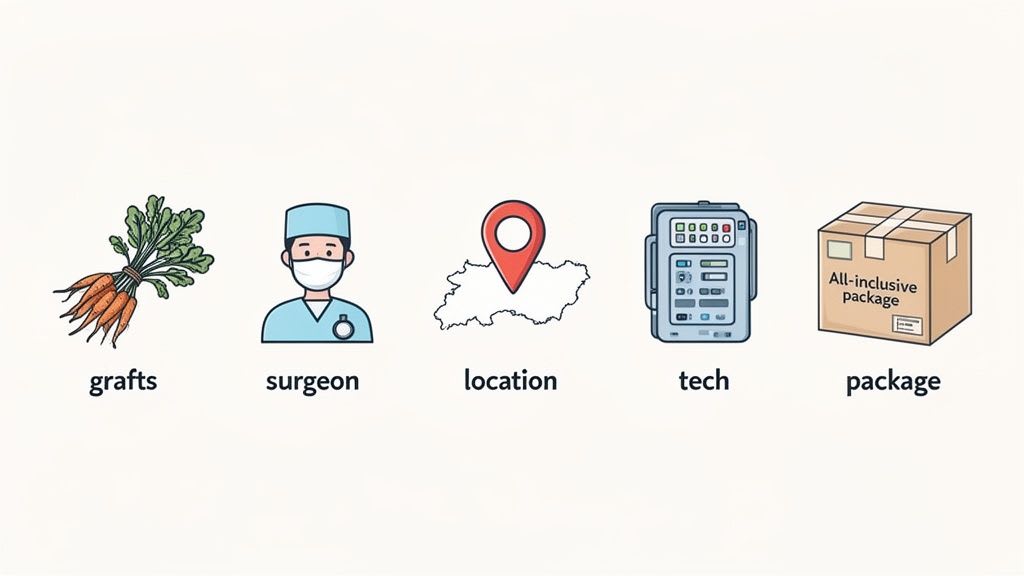
The final quote you receive is a composite of several critical factors. Understanding these elements helps you see why a high-quality procedure in Switzerland is priced the way it is.
Number of Grafts: This is the primary cost driver. A graft is a tiny unit containing 1-4 hair follicles. Minor hairline correction might require 500-800 grafts, while significant restoration could need 2,500 or more.
Technique Used (FUE vs. DHI vs. FUT): Modern, minimally invasive techniques like FUE and DHI are more labour-intensive and require greater skill, making them more expensive than the older FUT (strip) method.
Surgeon’s Experience and Credentials: You are paying for the expertise of a qualified surgeon, often with an FMH (Foederatio Medicorum Helveticorum) specialisation. Their skill in creating a natural hairline is a crucial part of the investment.
Clinic Reputation and Location: A clinic in a major Swiss city like Zurich or Geneva will have higher overheads (rent, staff salaries) than one in a smaller town. A clinic's reputation for excellence also commands a premium.
Technology and Equipment: Top clinics invest in advanced surgical tools, sterile operating environments, and high-magnification microscopes to maximise graft survival and ensure patient safety.
Anaesthesia and Medical Team: The cost includes professional administration of local anaesthesia and the support of a skilled team of nurses and technicians throughout the procedure.
Aftercare and Follow-up: Reputable clinics include post-operative consultations, medications, and specialised care products in their packages to ensure optimal healing and results.
Complexity of the Case: Factors like poor donor area density, the need to correct a previous transplant, or creating a very high-density result can increase the time and skill required, affecting the price.
You can discover more about Swiss hair transplant pricing factors to better prepare for your consultation.
Cost by Technique: FUE vs. DHI vs. FUT
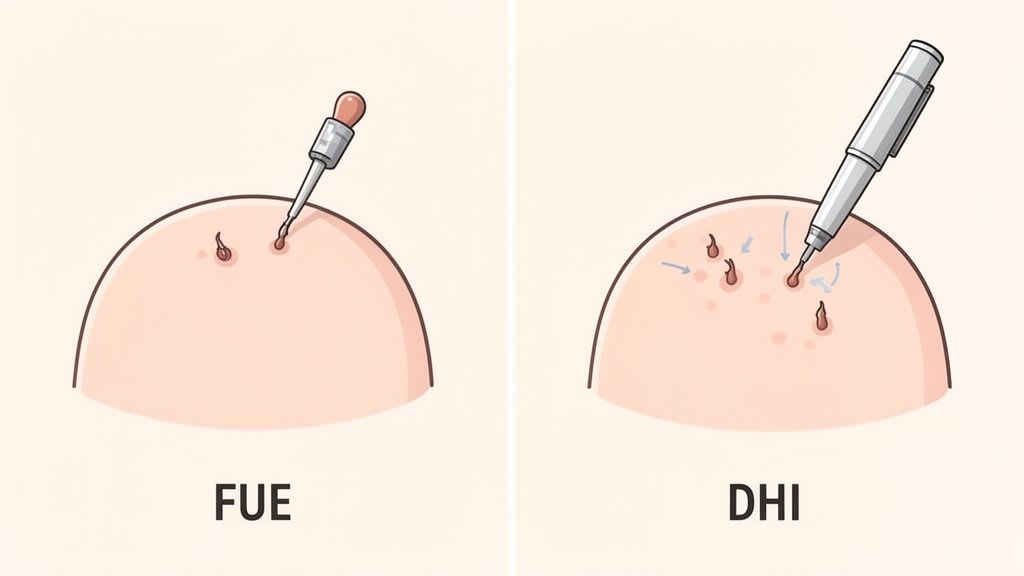
The surgical method chosen has a direct impact on the final cost of a hair transplant. Swiss clinics prioritise techniques that offer natural results and minimal downtime.
FUE (Follicular Unit Extraction) Cost
FUE is the modern standard. The surgeon extracts individual follicular units one by one, leaving only tiny, dot-like scars that are virtually undetectable. This meticulous process is time-consuming and requires significant skill, which is why the FUE hair transplant cost is higher than older methods. It is the preferred choice for patients who want to wear their hair short.
DHI (Direct Hair Implantation) Cost
DHI is an advanced variation of FUE that uses a specialised tool called a Choi Implanter Pen. This device allows the surgeon to implant each graft directly without pre-making incisions, offering maximum control over angle, depth, and density. The specialised equipment and training mean the DHI hair transplant cost is typically the most premium option, ideal for achieving high density.
FUT (Follicular Unit Transplantation) Cost
Also known as the "strip method," FUT involves removing a thin strip of scalp from the donor area. While this technique can yield a high number of grafts efficiently and may be slightly less expensive, it leaves a linear scar, making it less popular today in leading Swiss clinics.
The Cost Per Graft Explained
In Switzerland, the average hair transplant per graft cost typically ranges from CHF 4 to CHF 8. While this seems like a straightforward metric, focusing solely on the lowest price per graft can be misleading and risky.
A suspiciously low per-graft price might indicate:
Inexperienced Technicians: The procedure may be performed by technicians rather than a qualified surgeon.
Compromised Graft Survival: Poor handling can lead to a low survival rate, meaning you pay for grafts that never grow.
Over-Harvesting: An unskilled team may damage the donor area, leaving it thin or patchy.
Hidden Fees: The advertised price may not include consultation, anaesthesia, or aftercare.
A fair price reflects the surgeon's time, the clinic's quality standards, and an all-inclusive service. A procedure requiring 2,000 grafts will have a vastly different cost from one needing 4,000, but the value should remain consistent.
Switzerland vs. Abroad: A Neutral Cost Comparison
Many patients consider going abroad for treatment, primarily due to lower advertised costs. It is crucial to weigh the pros and cons factually and neutrally.
Treatment in Switzerland
Pros:
Strict Regulation: Swiss clinics adhere to some of the highest medical and hygiene standards in the world (e.g., Swissmedic regulations).
Surgeon Training: Surgeons typically have extensive, recognised training (e.g., FMH certification).
Follow-Up Care: Consultations and post-operative checks are convenient and accessible.
Legal Accountability: Patients have clear legal recourse within the Swiss system in the rare event of complications.
Cons:
Higher Price: The cost is significantly higher, reflecting the quality standards and operational costs.
Medical Tourism (e.g., Turkey)
Pros:
Lower Cost: The primary driver is the substantially lower price point.
Cons:
Variable Quality: Standards can vary dramatically from clinic to clinic, with less stringent oversight.
Difficult Follow-Up: Managing post-operative care and addressing complications from afar is challenging.
Legal Risk: Navigating legal issues in another country can be complex and difficult.
Travel Stress: The logistics of travel, accommodation, and recovery in an unfamiliar environment can add stress.
The decision involves balancing upfront cost savings against the long-term value of safety, quality, and peace of mind.
Hidden Costs Patients Often Forget
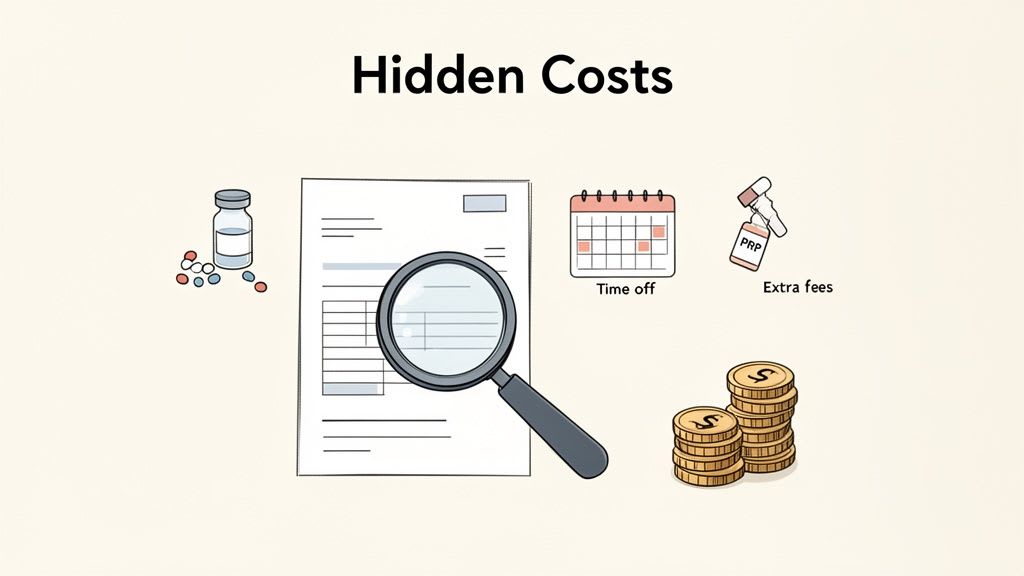
A comprehensive quote from a reputable Swiss clinic should be all-inclusive. However, it's wise to be aware of potential extra expenses that may not be part of the initial surgical fee.
Consultation Fees: Some top specialists charge for the initial in-depth assessment.
Medications: Post-operative antibiotics or pain relief may be a separate prescription.
PRP Sessions: Platelet-Rich Plasma (PRP) therapy is often recommended to boost results, and these sessions are typically priced separately.
Specialised Aftercare Products: Medicated shampoos or lotions may need to be purchased.
Time Off Work: Factoring in lost income during your recovery period is important.
Travel and Accommodation: If the clinic is not local, these costs should be included in your budget.
Revision Surgery: In the unfortunate event of a poor result from a cheap procedure, the cost of corrective surgery can be substantial.
Always ask for a detailed breakdown of what is included in the quote to avoid surprises.
Is a Cheap Hair Transplant Risky?
Choosing a provider based on the lowest price carries significant risks that can lead to poor aesthetic outcomes and potential health complications. A "bargain" price often comes at the cost of safety and quality.
Potential risks of a cheap hair transplant include:
Over-harvesting: Permanently damaging the donor area, leaving it patchy and thin.
Poor Density: Not enough grafts surviving or being implanted, leading to a thin, see-through result.
Unnatural Hairline: A harsh, "pluggy" or asymmetrical hairline created by an unskilled practitioner.
Scarring: Improper technique can lead to excessive scarring in both the donor and recipient areas.
Infections: Compromised hygiene standards increase the risk of serious scalp infections.
Costly Revision Surgery: The financial and emotional cost of fixing a bad hair transplant often exceeds the cost of a high-quality procedure done right the first time.
How to Choose a Clinic Based on Value, Not Just Price
True value is a combination of surgeon expertise, proven results, patient safety, and transparent care. It ensures your investment leads to a satisfying, lifelong result.
When evaluating clinics, prioritise the following:
Board-Certified Surgeons: Look for qualifications like an FMH title in plastic surgery or dermatology.
Before-and-After Photos: A reputable clinic will have an extensive portfolio of real patient results that showcase natural hairlines and good density.
Transparent Pricing: Insist on a detailed, all-inclusive written quote with no hidden fees.
Verified Patient Reviews: Look for consistent, positive feedback from previous patients. Patients can compare verified clinics and real reviews on BeautyGuide.
Our detailed guide on how to select the right beauty clinic offers more insights into making a safe and informed choice.
Frequently Asked Questions (FAQ)
How much does a hair transplant cost in Switzerland?
In Switzerland, you can typically expect a hair transplant to cost between CHF 6,000 and CHF 18,000. The final price depends on the number of grafts needed, the technique used (FUE, DHI), and the clinic's reputation.
Is Turkey cheaper for hair transplants?
Yes, the advertised cost in Turkey is significantly lower. However, patients must balance this against variable quality standards, potential risks, and the difficulty of managing follow-up care from abroad.
How many grafts will I need?
This is determined during your consultation. A minor hairline correction may require 500-1,000 grafts, while more extensive coverage can require 2,500 grafts or more. The surgeon will assess your level of hair loss using a scale like the Norwood scale.
Does health insurance cover hair transplants?
Generally, no. Hair transplantation is considered an aesthetic procedure and is not covered by mandatory Swiss health insurance (Grundversicherung*). It is almost always a self-funded treatment.
Are cheap hair transplants safe?
They can be very risky. A price that seems too good to be true may reflect compromises in surgeon skill, hygiene, or technique, potentially leading to poor results, scarring, or infection.
How long do the results of a hair transplant last?
The results are considered permanent. The transplanted follicles are taken from areas of the scalp genetically resistant to balding and will continue to grow for a lifetime in their new location.
Are there financing options available in Switzerland?
Yes, many Swiss clinics offer financing plans or partner with medical credit providers to help patients manage the cost through monthly payments. It is always worth asking about these options during your consultation.
Does the cost of a hair transplant affect how natural it looks?
Yes, strongly. A higher cost typically pays for a more experienced surgeon with the artistic skill to create a soft, irregular, and completely natural-looking hairline. Cheaper procedures often lack this crucial artistic component.
Conclusion: Investing in Quality and Safety
The hair transplant cost in Switzerland reflects a commitment to the highest standards of medical care, safety, and aesthetic excellence. By understanding the factors that contribute to the price—from surgeon expertise to advanced technology—patients can look beyond the numbers and see the true value of investing in a quality procedure. A successful hair transplant is a lifelong asset, and choosing the right clinic is the most important decision you will make.
Ready to take the next step? Compare verified hair transplant clinics and transparent pricing on BeautyGuide to find a trusted specialist in Switzerland, such as the renowned clinic of Dr. von Albertini.
Explore More
This article is for informational purposes only and does not replace professional medical advice.