
A typical first visit in Zürich starts the same way. Someone is tired of shaving, tired of ingrown hairs, and unsure which clinic can be trusted to treat them safely.
The second problem is very specific to this city. Zürich has a crowded aesthetic market, and laser hair removal is offered in very different settings, from dermatology practices and medical laser clinics to cosmetic studios. On the surface, many offers look similar. In practice, the differences matter: medical oversight, the type of laser used, how candidacy is assessed, and whether pricing is explained clearly before treatment starts.
That is why the useful question is not only whether laser hair removal works. It usually does, for the right patient and with the right device. The more important question in Zürich is how to choose well.
Patients generally do best when they compare clinics with a few concrete criteria in mind. Check whether the provider has recognised medical qualifications, whether the professional can be verified in MedReg when medical treatment is being offered, and whether the clinic names the laser platform instead of hiding behind vague terms. Ask how they assess skin type, whether they adjust settings over a course of treatment, and what a realistic number of sessions looks like for your area and hair pattern.
Price matters too, but low prices alone are not a good filter. In my experience, the better clinics are transparent about what is included, who performs the treatment, and where results may be limited from the outset.
Your Guide to Laser Hair Removal in Zürich
A typical Zürich patient often comes in with a practical question, not a cosmetic fantasy. They want to know whether laser treatment will save time, whether it's safe for their skin type, and whether the price difference between one clinic and another is justified.
Those are the right questions.
In Zürich, availability is not the problem. Clarity is. Some providers focus on medical oversight and device selection. Others compete mainly on promotions. For a new patient, those offers can look similar on the surface, even when the treatment standard behind them is very different.
What patients in Zürich are usually comparing
Individuals typically weigh a mix of convenience, safety, and cost:
- Provider type. Is the treatment performed in a dermatology or aesthetic medicine setting, or in a non-medical beauty studio?
- Technology used. Does the clinic offer the right laser for your skin and hair profile, or only one machine for everyone?
- Transparency. Are prices clear before booking, including package logic and likely session numbers?
- Clinical judgement. Will someone tell you directly if you're a poor candidate, or only try to sell a package?
Practical rule: In a city with many providers, the safest clinic is rarely the one that says the most. It's usually the one that explains the limits of treatment clearly.
The goal with laser hair removal isn't perfection after one appointment. The goal is progressive long-term reduction with a treatment plan that fits your skin, hair pattern, and lifestyle. For Zürich patients, that means looking past branding and asking better questions.
Why a neutral framework matters
A consultation should leave you more informed than impressed. You should understand what machine is being used, why it suits your skin type, what the actual treatment timeline looks like, and how the clinic handles side effects if they occur.
That's where a structured guide helps. The local market is strong, but it's also uneven. Some clinics combine medical-grade technology with proper assessment and follow-up. Others rely on vague claims such as “permanent after one session” or unclear package pricing.
If you approach the decision like a medical treatment rather than a beauty impulse, you're far more likely to make a sound choice.
How Modern Laser Technology Achieves Hair Reduction
Laser hair removal works through selective photothermolysis. In simple terms, the device sends light into the skin, the pigment in the hair absorbs that light, and the energy becomes heat. That heat targets the hair structure while aiming to spare the surrounding skin.
In Swiss medical settings, this distinction matters because good results depend on matching the device to the patient, not just treating the area. The principle is not “stronger is better”. The principle is precise energy in the right target.

The main laser types used in Zürich clinics
According to Dermatologikum Swiss on laser hair removal, laser hair removal uses specific wavelengths such as Alexandrite at 755 nm for fair skin and Nd:YAG for darker skin, allowing practitioners to target follicles without damaging surrounding tissue.
Here is the practical way to think about the main systems:
- Alexandrite laser
- Nd:YAG laser
- Diode platforms
The same source notes that Swiss centres also use high-performance diode systems such as Primelase®, with up to 4800 W power output and three wavelengths in one device, and that these systems can deliver 5 to 8 pulses per second. That matters because treatment speed affects comfort, consistency, and how practical larger body areas are in a busy Zürich schedule.
Why one machine for everyone is a warning sign
A reputable clinic shouldn't talk about “the laser” as if all devices are interchangeable. They aren't.
Hair colour, skin tone, recent sun exposure, treatment area, and hormonal background all affect planning. A patient with light skin and coarse dark underarm hair is different from a patient with darker skin and finer facial hair. The same settings should not be used for both.
Good laser medicine is customised physics. The machine matters, but the matching matters more.
What technology can and cannot do
Laser works best when there is enough pigment in the hair to absorb energy. Very light, grey, white, or red hair is more difficult to treat. Fine hair can also respond less predictably than coarse hair.
That doesn't mean treatment has failed. It means expectations should be calibrated before the first session, not after the sixth.
Laser vs IPL What Zürich Patients Should Know
Many patients in Zürich use the words laser and IPL as if they mean the same thing. They don't.
Both rely on light, but they behave differently in tissue. Medical-grade laser uses a more specific wavelength and targets hair with greater precision. IPL uses a broader spectrum of light, which makes it less selective. In practice, that usually means laser is the more controlled option for long-term hair reduction.
If you've seen clinics or studios market IPL and laser in nearly identical language, that's exactly why this comparison matters. Patients often assume they're buying the same category of treatment when they are not.
Comparison of Laser Hair Removal and IPL
| Feature | Medical-Grade Laser (e.g., Alexandrite, Nd:YAG) | Intense Pulsed Light (IPL) |
|---|---|---|
| Light delivery | Specific wavelength targeted to hair structures | Broad-spectrum light |
| Precision | More precise targeting of individual hairs | Less selective, more scatter into surrounding skin |
| Suitability | Better for tailored treatment by skin and hair type | More variable depending on skin tone and hair characteristics |
| Clinical setting | Common in medical or medically supervised clinics | Often found in cosmetic settings as well as some clinics |
| Expected durability | Usually preferred for long-term reduction | Often seen as less durable |
| Technology choice | Alexandrite, Nd:YAG, diode options can be matched to patient | Fewer meaningful patient-specific distinctions in marketing |
| Why a practitioner may choose it | Greater control and predictability | May be offered as a lower-threshold light treatment |
The key technical difference is stated clearly by the Swiss source cited earlier. Laser uses narrowband light to target hair precisely, whereas IPL uses full-spectrum light and is generally less satisfactory for long-duration hair reduction.
What this means in a real consultation
If a patient asks me which is better, the answer usually comes down to the treatment goal. If the goal is meaningful, medically supervised, long-term reduction, laser is generally the stronger option. If the conversation is mostly about convenience or lower entry pricing, IPL may enter the discussion, but the trade-off is usually reduced precision.
That's why it helps to understand related light-based treatments too. If you want background on how IPL is used in other skin contexts, BeautyGuide's overview of IPL photorejuvenation is a useful comparison point.
If a provider avoids saying exactly whether they use laser or IPL, ask again. That detail is not technical trivia. It changes the treatment.
When cheaper isn't simpler
In Zürich, lower headline pricing can be attractive, especially for small areas. But the important question isn't only the cost of one appointment. It's whether the device, protocol, and operator skill make the course of treatment worthwhile.
A lower price for less suitable technology can become the more expensive route if the results are inconsistent and you need further correction or repeated sessions without a clear endpoint.
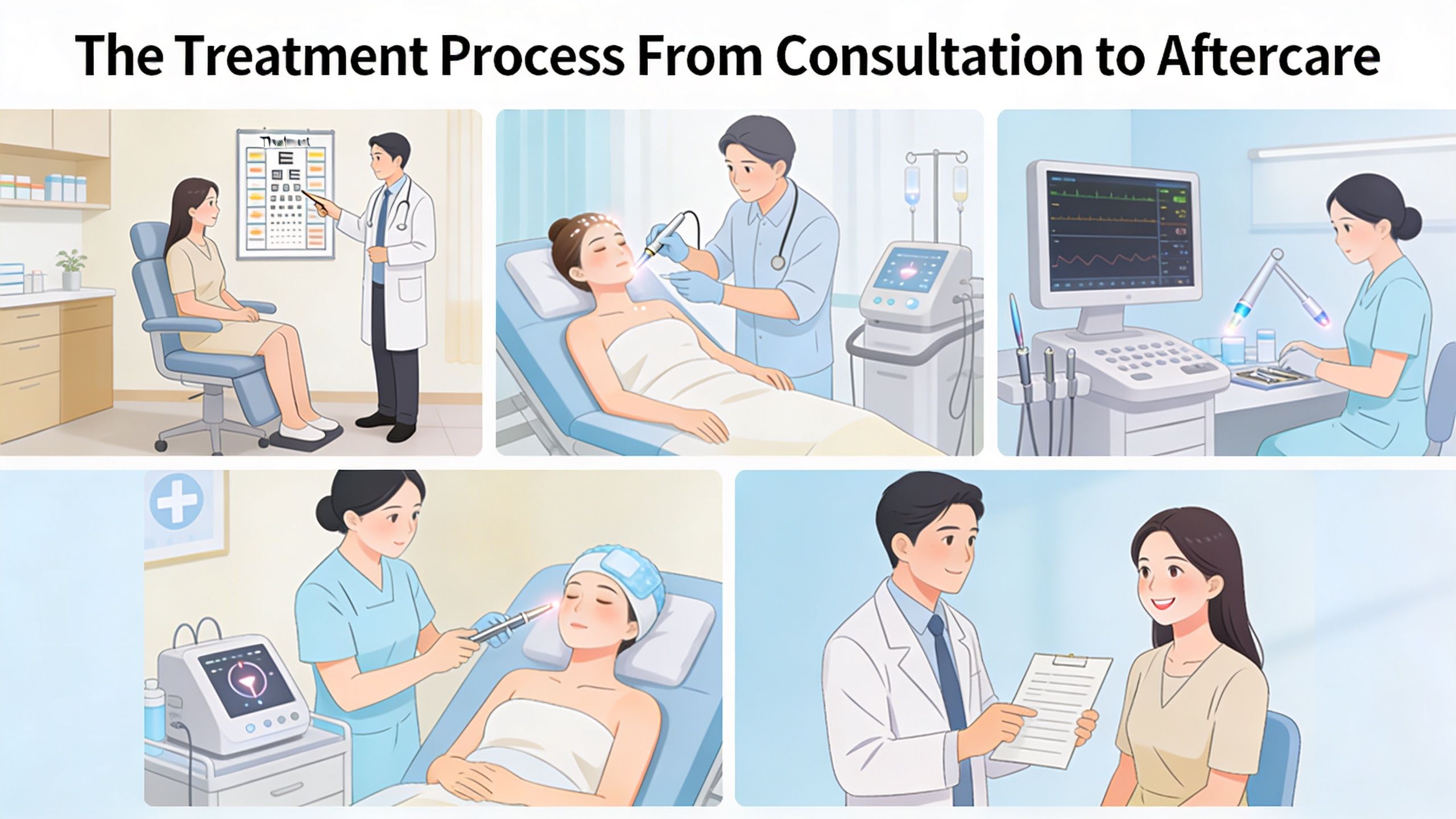
The Treatment Process From Consultation to Aftercare
A well-run laser hair removal treatment is organised, cautious, and repetitive in the right way. It starts before the laser is ever switched on.
For optimal, long-lasting results, laser hair removal in Zürich typically requires 6 to 12 sessions, spaced to catch hairs in the active growth phase, as described by Zürich Plastics on laser hair removal. That timeline is normal. It is not a sign that something is going wrong.
What should happen before the first session
The first appointment should include a proper consultation. At minimum, the provider should review your medical history, current medications, previous hair removal methods, skin behaviour in the sun, and your treatment goals.
A careful clinic will also assess:
- Hair characteristics such as density, thickness, and colour
- Skin profile including baseline tone and sensitivity
- Area-specific issues such as irritation, ingrown hairs, or pigmentation history
A patch test may be used when appropriate, especially if the skin is reactive, the history is unclear, or a more cautious start is sensible. If you haven't had a detailed first appointment before booking a package, that's worth pausing on. A separate guide on what to expect during a first aesthetic consultation can help you recognise what a proper assessment looks like.
What a session usually feels like
Treatment itself is usually straightforward. The area is cleaned, shaved if needed, and then treated in sections. Small areas can be very quick. Larger areas obviously take longer.
Most patients describe the sensation as brief heat or a snapping feeling. Cooling systems built into modern devices can make a noticeable difference. Good technique also matters. An experienced practitioner tends to work methodically rather than aggressively.
Clinical note: The most effective session is not the one that feels the harshest. Overtreatment is not a sign of quality.
Aftercare that actually matters
After treatment, mild redness or warmth can happen. The important part is protecting the skin while it settles.
Basic aftercare usually includes:
- Avoid excessive heat for a short period after treatment, including very hot showers, saunas, and intense exercise if the skin feels irritated.
- Limit sun exposure and follow the clinic's advice on sun protection.
- Don't wax or pluck between sessions because the follicle needs to remain a target for future treatments.
- Use soothing skincare if recommended by your practitioner.
Some patients like to review products designed for post-laser comfort, and a simple example is this overview of Skinstitut Laser Aid benefits, which explains the type of supportive aftercare people often look for after energy-based skin treatments.
Consistency is what makes the course work. Missing sessions, tanning heavily, or switching repeatedly between providers often weakens progress.
Understanding the Cost of Laser Hair Removal in Zürich
A patient in Zürich often arrives with two screenshots. One clinic advertises underarms at a low entry price. Another quotes several times more for what sounds like the same area. The difference is rarely explained well, which is why price confusion is so common.
According to Comparis price comparison data on hair removal in Switzerland, Zürich prices vary widely by area and provider, with small zones commonly priced far below large treatment areas and full courses adding up quickly over multiple sessions.
That range is normal. A fair quote depends on what is being sold.
Why one quote can be much higher than another
The first variable is the area itself. Upper lip, underarms, bikini, lower legs, full legs, chest, and back differ in treatment time, coverage, and follow-up needs.
The second is the technology. Clinics using medical-grade Alexandrite, diode, or Nd:YAG platforms usually price differently from providers offering simpler systems or less flexible setups. A lower price is not automatically poor value, but it should prompt a precise question about which device is being used and why it suits your skin and hair profile.
Medical oversight also affects cost. If a clinic spends time assessing candidacy properly, documents contraindications, and has a clear plan for side effect management, that usually appears in the fee. In practice, I would pay attention to that before I focus on a promotional headline.
Location matters too. Central Zürich addresses often carry higher operating costs, and those costs are reflected in consultation and treatment pricing.
How to read advertised offers without getting misled
Public listings in Zürich show a very broad spread in pricing. Entry offers for small areas can look attractive, while bundled treatments for larger or combined zones may appear surprisingly cheap at first glance. Those numbers are useful only as a starting point.
What matters is the definition behind the price.
“Bikini” may mean a very limited border in one clinic and a much broader area in another. “Full body” may exclude the face, intimate zones, or hands. Session length can also be misleading. A 30-minute booking slot does not always mean 30 minutes of careful laser work.
If you want a practical framework for comparing providers, this guide on how to select the right beauty clinic helps patients check the details behind the offer rather than comparing headline prices alone.
Questions that make a price quote useful
Ask for the quote in a form that lets you compare clinics properly:
- What exact area is included? Ask the clinic to describe the treatment boundaries clearly.
- Which laser system will be used? The device category should be named, not described vaguely as “latest technology”.
- Who performs the session? The person treating you affects consistency and safety.
- How many sessions are usually anticipated for your pattern of hair growth? No one can promise an exact number, but a clinic should still give a realistic treatment plan.
- What is the continuation price if more sessions are needed? This matters more than the introductory offer.
- Is a consultation fee charged separately or included? Zürich clinics handle this differently.
Good clinics also communicate well before the first appointment. Clear booking instructions, realistic preparation advice, and responsive follow-up often reflect how the treatment course will be managed. Even outside aesthetics, the same principle appears in work on optimizing patient interactions using voice AI. Better communication improves the patient experience because fewer details are missed.
The right price is the transparent one
The cheapest quote can still become expensive if the area is defined narrowly, the device is unsuitable, or the plan has to be repeated elsewhere.
A sound Zürich quote is specific, medically coherent, and easy to compare line by line. That is the standard worth paying for.
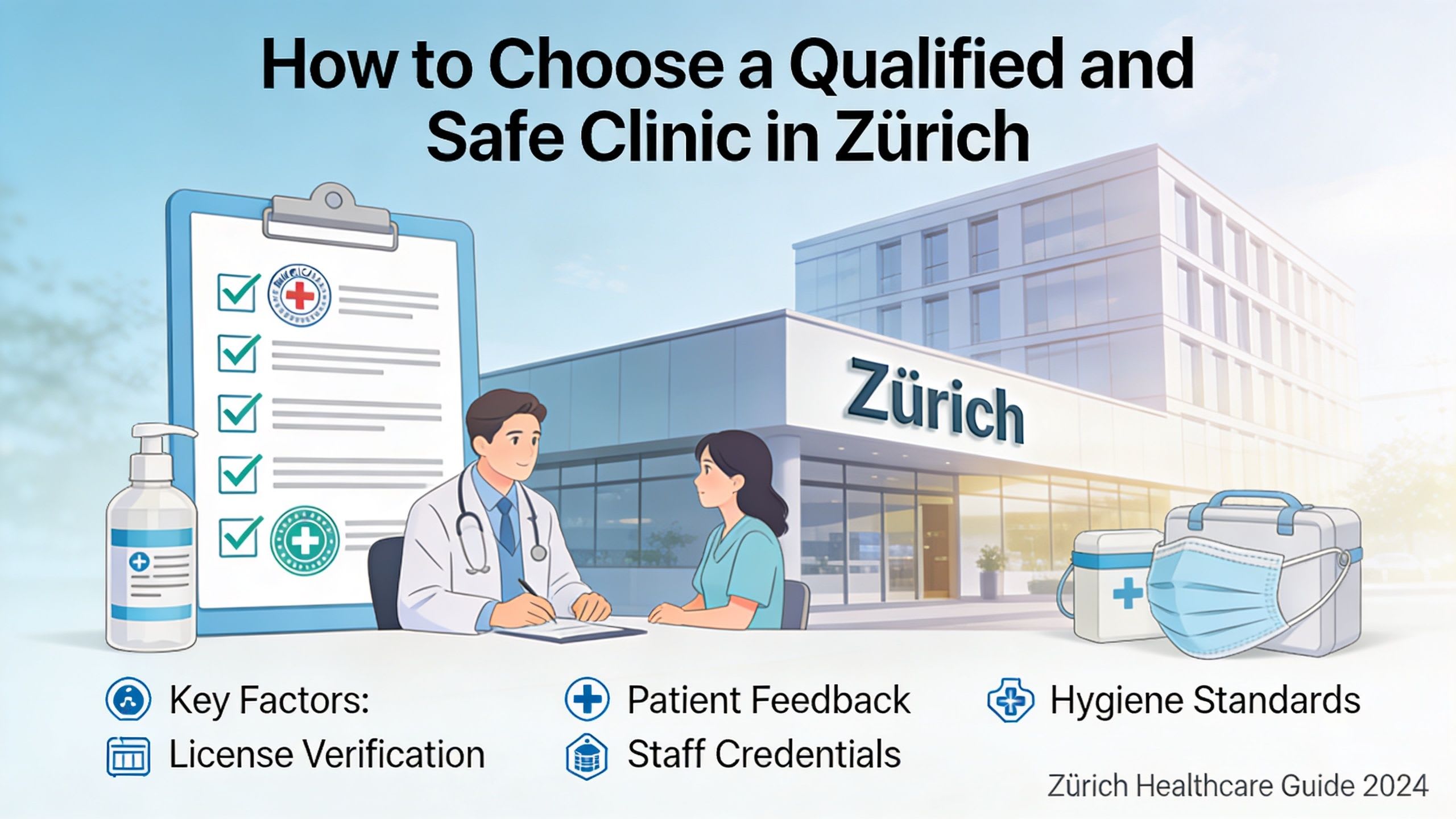
How to Choose a Qualified and Safe Clinic in Zürich
In a city with many providers, clinic selection is where most risk is either reduced or created.
The treatment itself can be routine in experienced hands. Problems tend to appear when clinics use the wrong technology for the patient, rush consultations, or delegate treatment without proper oversight. For that reason, I'd judge the clinic before I judge the discount.
The Swiss checks that matter
Start with credentials and traceability.
- Check MedReg registration
- Look for FMH-linked expertise where relevant
- Ask which laser systems the clinic uses
- Clarify who performs the treatment
Questions worth asking in the consultation
A good consultation should welcome direct questions. You're not being difficult. You're checking whether the clinic thinks medically.
Consider asking:
- Which device will you use for my skin and hair type, and why?
- What response do you expect in this area, and what are the limits?
- How do you handle pigment changes, burns, or unexpected skin reactions?
- Will the same practitioner treat me each time?
- What pre-treatment and aftercare rules do you require?
A trustworthy clinic answers plainly. It doesn't hide behind jargon, and it doesn't promise certainty where biology is variable.
Red flags patients often miss
Some warning signs are subtle:
- Sales pressure before assessment
- No discussion of skin type or recent tanning
- No interest in medications or medical history
- Claims that all hair and all skin types respond equally well
- Vague pricing that changes after the first visit
Operational quality also matters. Clear communication, organised scheduling, and reliable patient follow-up are not cosmetic extras. They reflect how the clinic runs. Even broader healthcare discussions, such as this article on optimizing patient interactions using voice AI, are relevant because efficient patient communication often signals a practice that takes preparation and follow-up seriously.
If you want a neutral way to compare providers, directories can help organise your shortlist. For example, guidance on how to select the right beauty clinic gives a structured starting point, and BeautyGuide also presents Swiss clinic profiles with credential context that can support comparison before booking.
Candidacy, Safety, and Managing Potential Side Effects
Laser hair removal is not equally suitable for everyone, and safety depends on that honesty.
The strongest candidates usually have hair with enough pigment for the laser to target effectively and skin that can be treated with an appropriate device and setting strategy. Suitability becomes more nuanced when hair is very light or fine, when there is recent tanning, when medications increase sensitivity, or when a patient has skin conditions that make irritation more likely. This is why an in-person assessment matters more than online self-diagnosis.
Safety for Zürich's diverse patient population
Zürich's patient base is international, and clinics need to treat skin diversity as standard practice, not a special case. Appropriate technology selection is central here. Nd:YAG systems are particularly important when treating darker skin tones because they offer a safer approach when used correctly by trained practitioners.
The Swiss safety point is not abstract. According to Fineskin on laser hair removal risks and Swiss context, a 2024 BAG report noted that 12% of aesthetic procedure complications were from laser treatments, often involving non-FMH specialists. That doesn't mean laser is unsafe by definition. It means provider choice has direct consequences.
Side effects patients should expect and those they should not ignore
Common short-term reactions can include redness, warmth, and mild swelling around follicles. These are generally manageable and often settle without difficulty.
More concerning problems include:
- Pigment changes
- Burns
- Prolonged irritation
- Unexpected worsening after treatment
The safest laser treatment is one where the practitioner is willing to say no, delay treatment, or change the plan when your skin isn't ready.
A careful clinic will also be realistic about limitations. Hormonal influences can affect long-term maintenance. Some areas respond faster than others. Some patients need adjustments over time.
Safe, effective laser haarentfernung zürich starts with the right indication, the right machine, and the right clinician. None of those should be guessed.
If you're comparing clinics for laser haarentfernung zürich, BeautyGuide can help you continue your search with Swiss clinic discovery tools, treatment education, and credential-focused profiles that support a more informed shortlist before consultation.
Explore More
This article is for informational purposes only and does not replace professional medical advice.