
You're probably here because you like the idea of fuller, better-shaped lips, but you also want a clear answer to a simple question. How risky is it really?
That's the right place to start. Patients who search for lip filler risiken before booking are usually the ones who make safer choices. In practice, the most important part of lip filler treatment isn't the syringe. It's the quality of the assessment beforehand, the injector's anatomical knowledge, and the clinic's ability to recognise and manage problems early.
Individuals don't need a frightening list of worst-case scenarios. They need a realistic consultation. That means understanding the difference between expected short-term effects, such as swelling or bruising, and true complications that need medical attention. It also means understanding a Swiss-specific issue. In Switzerland, qualification and legality are not small technical details. They are central to safety.
Good informed consent doesn't talk you into treatment. It helps you decide whether treatment is appropriate at all.
If you're still deciding whether lip fillers suit your goals, a neutral overview of lip filler treatment options in Switzerland can help you frame the consultation properly. I also encourage patients to understand the principle of shared decision making in healthcare, because aesthetic medicine should still follow the same standard. You should understand the benefits, limits, alternatives, and risks before anyone injects anything.
Considering Lip Fillers Your Guide to Informed Consent
A common consultation starts with mixed feelings. A patient wants a subtle improvement, not an obvious “done” look. At the same time, she has seen stories about migrated filler, bad bruising, blocked blood vessels, or lips that never looked right afterwards. That concern is sensible.
Informed consent in aesthetic medicine isn't just a signature on a form. It's a conversation about trade-offs. More volume may mean more swelling at first. Sharper border definition may look elegant on one person and artificial on another. A very conservative treatment may be safer from an aesthetic point of view, but it may also leave someone under-corrected if expectations weren't discussed openly.
What informed consent should feel like
A proper consultation should slow things down. The practitioner should examine lip anatomy, ask about previous filler, discuss cold sore history, explain likely after-effects, and describe what would happen if there were a complication. If that conversation feels rushed, safety usually is too.
Three practical signs of a good consent process are easy to recognise:
- Your face is assessed, not just your lips. Lip balance depends on the chin, philtrum, oral commissures, and smile pattern.
- Your goals are translated into technique. “Natural” means different things to different people.
- You're told when not to treat. Active infection, unrealistic expectations, or unsuitable anatomy can all be reasons to defer.
Practical rule: If a clinic talks far more about volume than about anatomy, healing, and complication management, that's not a reassuring sign.
What patients often misunderstand
Many people assume risk only starts if something dramatic happens during injection. In reality, prevention begins before the appointment. Product choice, injection plane, amount placed, sterility, emergency readiness, and legal scope of practice all matter.
That's why lip filler safety in Switzerland can't be separated from practitioner qualification. The technique may look simple from the outside. It isn't.
The Spectrum of Lip Filler Side Effects and Risks
Most reactions after lip filler are not dangerous. Lips are vascular tissue, so they often swell, bruise, feel tender, and look uneven for a short period while the product settles. These effects can be unpleasant, but they are usually expected.
Complications are different. A complication is a problem that goes beyond normal healing, persists longer than expected, or threatens tissue health, function, or the final aesthetic result. Patients do better when they know where that line is.
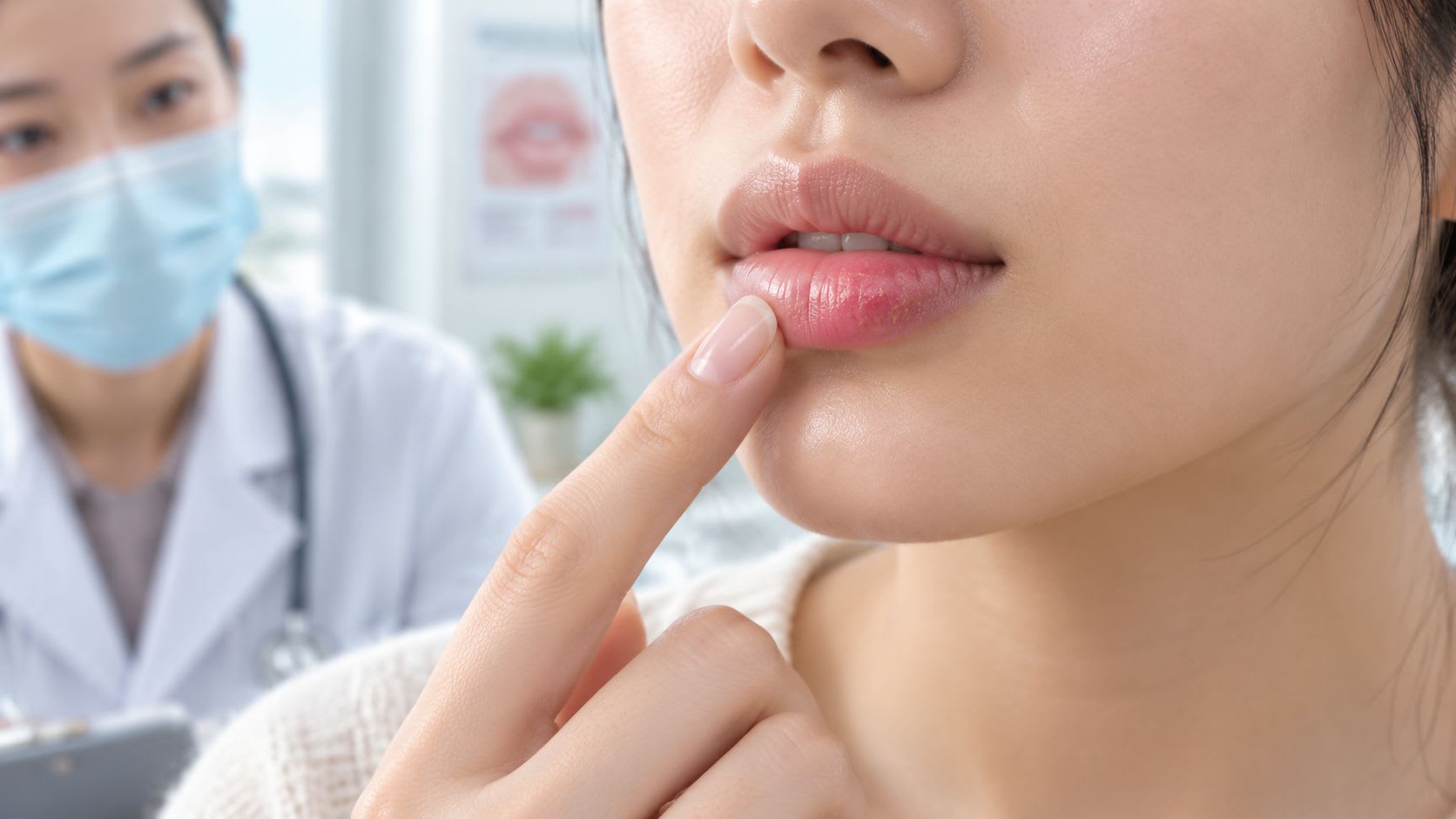
Expected effects versus complications
A swollen upper lip on day one is common. Mild asymmetry early on can also happen because one side holds fluid differently. Small bruises are especially common around the vermilion border.
What should concern you is a pattern that doesn't fit normal recovery. Severe pain, spreading redness, increasing firmness, skin colour change, visible blanching, or symptoms outside the treated area deserve medical review.
Lip Filler Risk Classification by Timing and Severity
| Timing | Risk/Side Effect | Typical Severity |
|---|---|---|
| Immediate | Swelling | Mild |
| Immediate | Redness at injection sites | Mild |
| Immediate | Tenderness | Mild |
| Immediate | Bruising | Mild to Moderate |
| Immediate | Uneven appearance from swelling | Mild |
| Immediate | Severe pain during or shortly after injection | Severe |
| Immediate | Blanching or abnormal skin colour change | Severe |
| Early | Persistent swelling beyond the expected settling phase | Moderate |
| Early | Infection | Moderate to Severe |
| Early | Herpes activation in prone patients | Moderate |
| Early | Lumps from product placement or swelling | Mild to Moderate |
| Early | Filler migration becoming visible | Moderate |
| Delayed | Persistent nodules | Moderate |
| Delayed | Granulomas | Moderate to Severe |
| Delayed | Tissue necrosis after vascular compromise | Severe |
| Delayed | Dissatisfaction from poor shape or overfilling | Mild to Moderate |
Why this classification matters
Patients often panic about normal swelling and ignore the findings that matter more. A useful rule is this: discomfort and puffiness are common, worsening pain and abnormal colour are not.
If the lip looks temporarily overfilled because it's swollen, that can settle. If tissue starts to lose blood supply, time matters.
Mild effects usually improve with observation and aftercare. Moderate problems need assessment. Severe warning signs need urgent action. That distinction is one of the most useful things a patient can understand before treatment.
Understanding Early and Delayed Complications
Some problems don't appear in the treatment chair. They show up later, after the initial swelling has faded and the lips should be settling into a stable result. At this point, patients often feel confused, because a result can look acceptable at first and then become less predictable.
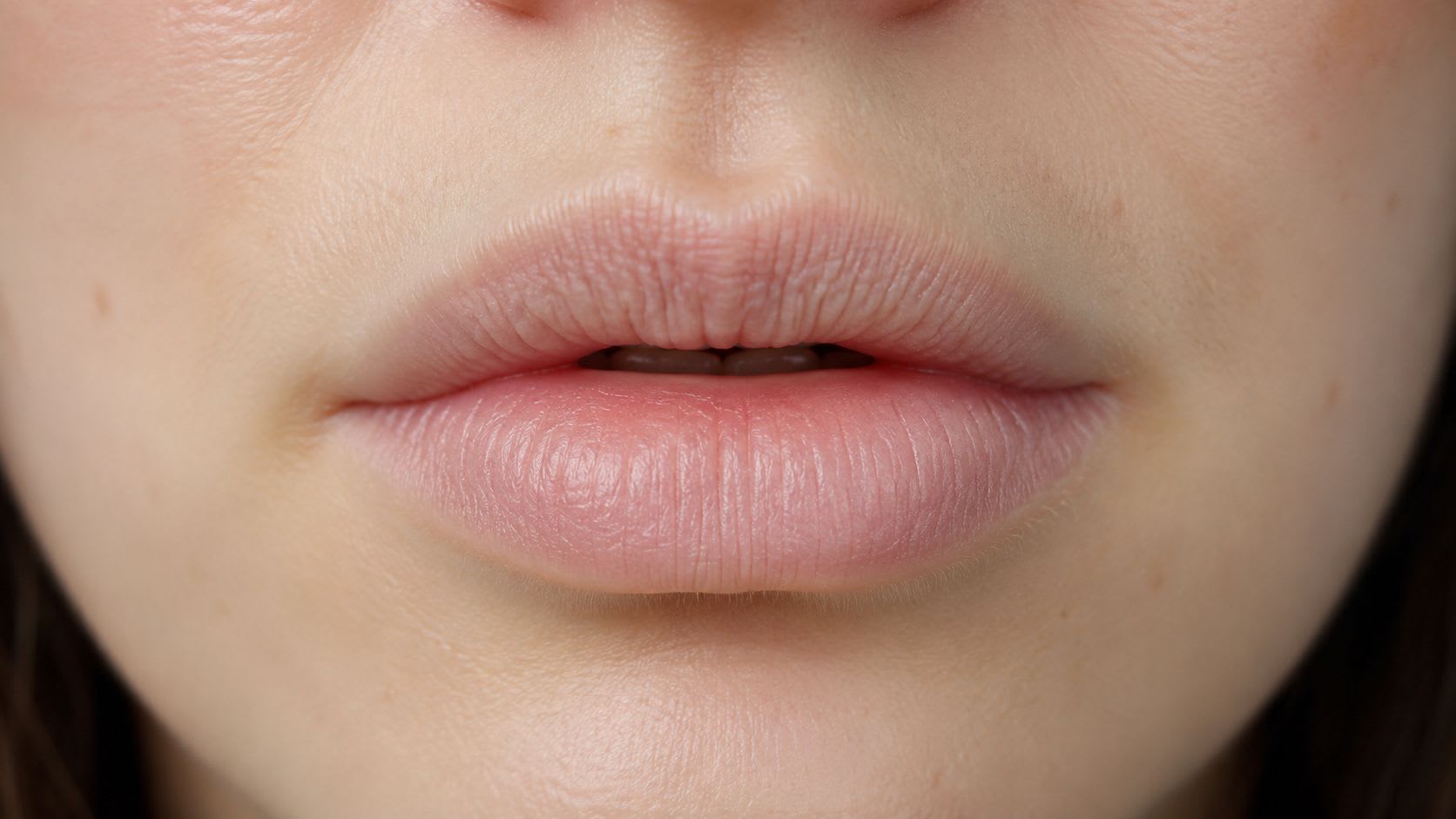
Infection, migration, and persistent lumps
An infection can present with increasing redness, heat, tenderness, swelling that worsens instead of settling, or general unwellness. The cause may relate to skin contamination, poor aseptic technique, or treatment performed when the area was already irritated or compromised.
Filler migration usually means product becomes visible or palpable outside the intended treatment zone. In lips, this can create heaviness above the border, blurred shape, or a “shelf” effect. Migration is often linked to product choice, overcorrection, repeated treatment before full assessment, or placement that doesn't respect the lip's anatomy.
Lumps and nodules need careful interpretation. Some are just product irregularities or temporary swelling. Others are inflammatory reactions that persist and need medical review.
Granulomas are uncommon but important
A specific medical risk is the formation of granulomas (knötchen), which occurs with a documented frequency of 1 in 1,000 to 1 in 10,000 cases, according to dermatological literature cited by Zurich-based medical specialists in this review of lip filler risks. The same source notes that the risk is directly linked to injection technique, with superficial injections significantly increasing the likelihood.
That point matters clinically. Not every lump is a granuloma, but persistent nodules after lip filler shouldn't be dismissed casually. The underlying cause changes the treatment plan. A superficial placement issue may behave very differently from an inflammatory nodule.
A lump is a description, not a diagnosis. The next step depends on what caused it.
What works and what doesn't
What helps is early review by the original injector or another qualified medical practitioner, good documentation of when the problem started, and a clear record of which product was used. What doesn't help is repeated massage without guidance, further filler placed to “balance” a problem, or waiting too long when the area is becoming more inflamed.
If a patient has delayed swelling, tenderness, or visible irregularity weeks later, I'd rather assess it early than reassure blindly.
The Most Serious Lip Filler Risks Vascular Occlusion
The complication patients fear most is the one clinicians take most seriously as well. Vascular occlusion means filler enters or compresses a blood vessel in a way that blocks blood flow. If tissue no longer receives enough oxygen, the skin and underlying structures can become damaged.

What actually happens
The mechanism is straightforward. A filler is placed into a vessel, or pressure around a vessel becomes high enough to obstruct circulation. The first warning signs may be strong pain, pale or white skin, dusky discolouration, or a mottled pattern. If blood flow is not restored, tissue can break down.
This is why anatomy and technique matter so much in the perioral region and face. The lips have a rich vascular supply. That helps normal healing, but it also means injector error can have serious consequences.
Necrosis and the risk to vision
The most critical complication is vascular necrosis from intravascular injection. Even more catastrophic is the risk of blindness, which has been documented in Switzerland when hyaluronic acid is injected into a facial vessel that disrupts blood supply to the eye area, as described in this Swiss discussion of lip augmentation safety. The same source states that the risk of allergy to modern fillers is low, but these severe outcomes underscore the need for an FMH-listed specialist.
That doesn't mean lip filler is broadly unsafe. It means the margin for error is real. Rare events are still important when the consequence can be permanent tissue loss or visual injury.
Prevention is not luck
Prevention depends on factors patients don't always see:
- Anatomical knowledge: The injector needs a precise mental map of facial vessels and danger zones.
- Technique discipline: Product depth, pace, pressure, and constant reassessment matter.
- Emergency readiness: The clinic must recognise an occlusion immediately and act.
- Judgement: Some lips should be treated conservatively, and some shouldn't be treated that day at all.
Severe filler complications are medical emergencies, not customer-service issues.
A calm consultation should acknowledge this plainly. The goal isn't fear. The goal is choosing someone capable of preventing, identifying, and managing the problem if it occurs.
How to Choose a Qualified Practitioner in Switzerland
If you remember one point from this guide, make it this one. The strongest protection against serious lip filler complications is who performs the treatment.
In Switzerland, that isn't just a matter of preference. It's a legal and medical standard. A 2024 Swissmedic review reported by SRF found that approximately 55% of examined beauty clinics lacked the necessary professional qualification to administer fillers. The same report states that Swiss law requires injections to be performed by a physician or by a certified nursing professional under direct medical supervision, and that cosmeticians are explicitly prohibited from administering fillers, as reported by SRF on the Swissmedic review of beauty clinics.
That figure should change how patients think about risk. The question isn't only “What are the side effects?” It's “Is this person legally and medically qualified to inject my face?”

What to verify before you book
A safe booking process is more like checking credentials for a minor medical procedure than choosing a beauty service.
- Check MedReg entry: In Switzerland, a physician's registration should be verifiable in the official registry. If someone avoids this question, stop there.
- Look for relevant FMH training: Dermatology, plastic surgery, and other appropriate medical backgrounds matter because complications require diagnosis, not just technique.
- Ask who injects: If the clinic is vague about whether the injector is a doctor or a properly supervised licensed nursing professional, that's a problem.
- Ask what happens in an emergency: A qualified clinic should be able to answer immediately and clearly.
- Ask what product is used: You should know the filler name, the batch documentation process, and why that product suits lip tissue.
Questions worth asking in the consultation
Some questions reveal a lot very quickly:
- Who will inject me, and what is their medical qualification?
- How do you assess whether I'm a good candidate for lip filler?
- What signs of vascular compromise do you watch for during treatment?
- Do you keep hyaluronidase on site and know when to use it?
- If I develop a problem later the same day or over the weekend, who can I reach?
A serious injector won't be annoyed by these questions. They should welcome them.
Red flags patients often ignore
Cheap pricing by itself doesn't prove poor quality, but unusually low prices should make you ask what has been cut. Home visits, hotel-room treatments, pop-up events, and heavily filtered before-and-after galleries are also warning signs. So is any clinic that pressures you to add more volume before the first result has properly settled.
One practical way to compare clinics is to start with a curated Swiss clinic directory for aesthetic medicine and then verify the practitioner's credentials independently. That combination is far safer than choosing based on social media alone.
The safest lip filler treatment often begins with a patient saying, “I need to verify who is allowed to do this.”
Emergency Signs and Your Immediate Action Plan
The best emergency plan is simple enough to remember when you're stressed. If something feels badly wrong after lip filler, don't wait to see whether it settles overnight.
Warning signs that need urgent attention
Seek immediate medical assessment if you notice any of the following after treatment:
- Severe or escalating pain: Lips can feel sore, but marked pain that seems out of proportion is not reassuring.
- White, grey, or dusky skin: Sudden blanching or unusual colour change may suggest impaired blood flow.
- A mottled or net-like skin pattern: This can signal vascular compromise in the skin.
- Rapidly worsening swelling with increasing tenderness: Especially if the area looks inflamed rather than puffy.
- Visual symptoms: Blurred vision, loss of vision, or any unusual change in sight is an emergency.
- Signs of infection: Increasing heat, redness, pus, or feeling systemically unwell.
What to do right away
Follow this order:
- Contact the treating practitioner immediately. A qualified injector should have an emergency pathway for post-treatment concerns.
- Say clearly what you're noticing. Use direct words such as severe pain, blanching, mottled skin, or vision change.
- Do not wait for a routine review. If the clinic is unavailable or slow to respond, go to the nearest hospital emergency department.
- Bring treatment details if you have them. Product name, clinic name, and time of injection are useful.
- Do not try to self-treat. Don't massage aggressively, apply random topical products, or rely on online advice.
A medically equipped clinic may use hyaluronidase to dissolve hyaluronic acid filler when clinically indicated. That can be an important emergency tool, but it works best when the problem is recognised quickly and managed by someone who knows how to assess the pattern properly.
One practical standard
If a clinic cannot explain its emergency process before treatment, that clinic hasn't earned your trust. A useful reference point is to look at how medically led centres present themselves, such as Dermatologie Klinik Zürich AG, where patients can see the difference between a clinic model and a beauty-service model.
Fast action can make the difference between a reversible event and permanent damage.
Frequently Asked Questions About Lip Filler Safety
Can you do a patch test for filler allergy
Not in a way that reliably predicts all reactions. Modern hyaluronic acid fillers generally have a low allergy risk, but a patch test doesn't function like a simple yes-or-no safety screen for injectable filler. Safety depends more on medical history, product selection, and the ability to manage complications than on a cosmetic-style test.
I get cold sores. Can I still have lip filler
Possibly, but your practitioner needs to know. Lip injections can trigger herpes activation in people who are prone to it. If you've had cold sores before, mention it before booking, not when you're already in the chair. In some cases, treatment timing or preventive medication may be discussed by the prescribing clinician.
Are some filler brands safer than others
Brand matters, but not in the simplistic way social media suggests. A reputable product with clear traceability is important. So are the product's rheology, how it behaves in lip tissue, and whether the injector knows exactly where and why to place it. A good product in poor hands is still unsafe.
If I don't like the result, can it always be dissolved
Not every unsatisfactory result should be dissolved immediately. Early swelling can mimic overfilling. Technique errors, asymmetry, and migration all need proper assessment. Hyaluronidase can be useful, but it should be used thoughtfully by a qualified medical practitioner who understands what problem is being treated.
Does “natural” automatically mean lower risk
No. “Natural” is an aesthetic goal, not a safety category. Small amounts can still be placed badly, and a subtle result can still come from poor planning. Lower risk comes from correct indication, proper anatomy knowledge, sterile technique, and legal qualification.
Is the cheapest clinic in my city ever worth considering
For injectables, price should never be your first filter. In Switzerland, lip filler is a medical act. If a price seems far below the local norm in Zürich, Geneva, Basel, Lausanne, or elsewhere, ask why. Lower cost may reflect lower overhead, but it may also reflect weaker medical supervision, poor product transparency, or inadequate emergency preparation.
What's the safest mindset before booking
Treat lip filler as an elective medical procedure, not as a quick beauty add-on. Go in willing to postpone, willing to ask difficult questions, and willing to walk away if the answers aren't strong enough.
BeautyGuide helps patients compare qualified aesthetic clinics in Switzerland with a focus on transparency, verified medical credentials, and safer decision-making. If you're researching lip fillers in Zürich, Geneva, Basel, Lausanne, Bern, Zug, Lucerne, Lugano, Winterthur, or St. Gallen, you can use BeautyGuide to continue your search in a more structured way.
This article is for informational purposes only and does not replace professional medical advice.