
A standard Morpheus8 facial treatment in Switzerland typically costs between CHF 450 and CHF 850 per session. The final price depends on the treatment area, the number of sessions, the clinic's location, and who performs the procedure.
If you're searching for Morpheus8 Kosten Schweiz, you're probably trying to answer two questions at once. First, what should I budget? Second, why does one quote look reasonable while another feels surprisingly high? In Swiss aesthetic medicine, the gap usually isn't random. It often reflects treatment scope, physician expertise, clinic standards, and how extensively the device is used in practice.
Many patients compare offers in Zürich, Geneva, Basel, Lausanne, Bern, Zug, Lucerne, or Lugano and assume Morpheus8 is a simple commodity. It isn't. The same brand name can sit behind very different consultation quality, safety protocols, treatment planning, and technical execution. That matters more in Switzerland, where patients generally expect a high medical standard and where clinic overheads are correspondingly higher.
Understanding Morpheus8 Costs in Switzerland
A patient comes in with two quotes on her phone. One looks attractively low. The other is several hundred francs higher for what seems to be the same treatment. In practice, those offers often cover different treatment areas, different operator experience, different review protocols, and sometimes a different level of medical oversight.
That is why Morpheus8 pricing in Switzerland needs to be read as a treatment plan, not a menu price. If you only compare the headline number, you can miss what you are buying.
What Swiss pricing usually reflects
A quoted fee often combines several cost drivers at once. The first is scope. A focused area such as the lower face is not priced the same way as a broader session that includes face and neck, scar work, or a more intensive protocol. The second is who performs the procedure. In a medical setting, part of the fee pays for assessment, parameter selection, complication management, and restraint, meaning the judgement to avoid treating too aggressively.
Swiss patients also pay within a healthcare economy with high staffing, rent, insurance, and regulatory costs. Zürich, Geneva, and Zug usually sit at the upper end for that reason. A lower quote in a smaller city is not automatically a problem. A low quote without clear information about treatment depth, number of passes, anaesthesia, aftercare, or supervision deserves closer scrutiny.
For readers comparing Morpheus8 with medical microneedling options in Switzerland, this is the key distinction. Device access is only one part of the price. Clinical planning and safe execution are the larger part.
Why the cheapest quote can become the more expensive choice
Low entry pricing often looks attractive because it reduces the barrier to booking. The problem appears later, when the treatment is too light for the concern being treated, or when important elements are billed separately. I see this most often in patients seeking improvement in acne scars or lower-face laxity. They thought they were comparing equal offers, but one quote covered a brief, conservative pass and the other covered a physician-led treatment plan with review and adjustment.
The total budget matters more than the single-session number. If a lower-priced clinic recommends more sessions, excludes follow-up, or treats a smaller area, the apparent saving may disappear.
What to ask before you compare prices
A serious consultation should answer a few direct questions:
- What exact area is included in the quote
- Who will perform the treatment, and what are their qualifications
- How many sessions are likely for your indication, not for an average patient
- What is included after the procedure, such as review visits or aftercare products
- Whether the plan is conservative maintenance or structural correction
In Switzerland, I would put particular weight on the treating practitioner's medical background. An FMH specialist in dermatology or plastic surgery may charge more, but that difference often reflects better patient selection, better risk management, and more realistic planning. Patients who want to explore Morpheus8 treatment options should use price as one filter, not the deciding one.
A useful quote is transparent. It tells you what is being treated, who is treating it, what is included, and what outcome the clinic believes is realistic. That is how to judge Morpheus8 costs in Switzerland with common sense and with proper attention to safety.
What Is Morpheus8 and How Does It Work
A patient will often ask why one clinic prices Morpheus8 closer to advanced resurfacing and another presents it as a simple skin-refresh treatment. The answer starts with the technology itself. Morpheus8 is radiofrequency microneedling, and it works below the surface in a way standard microneedling does not.
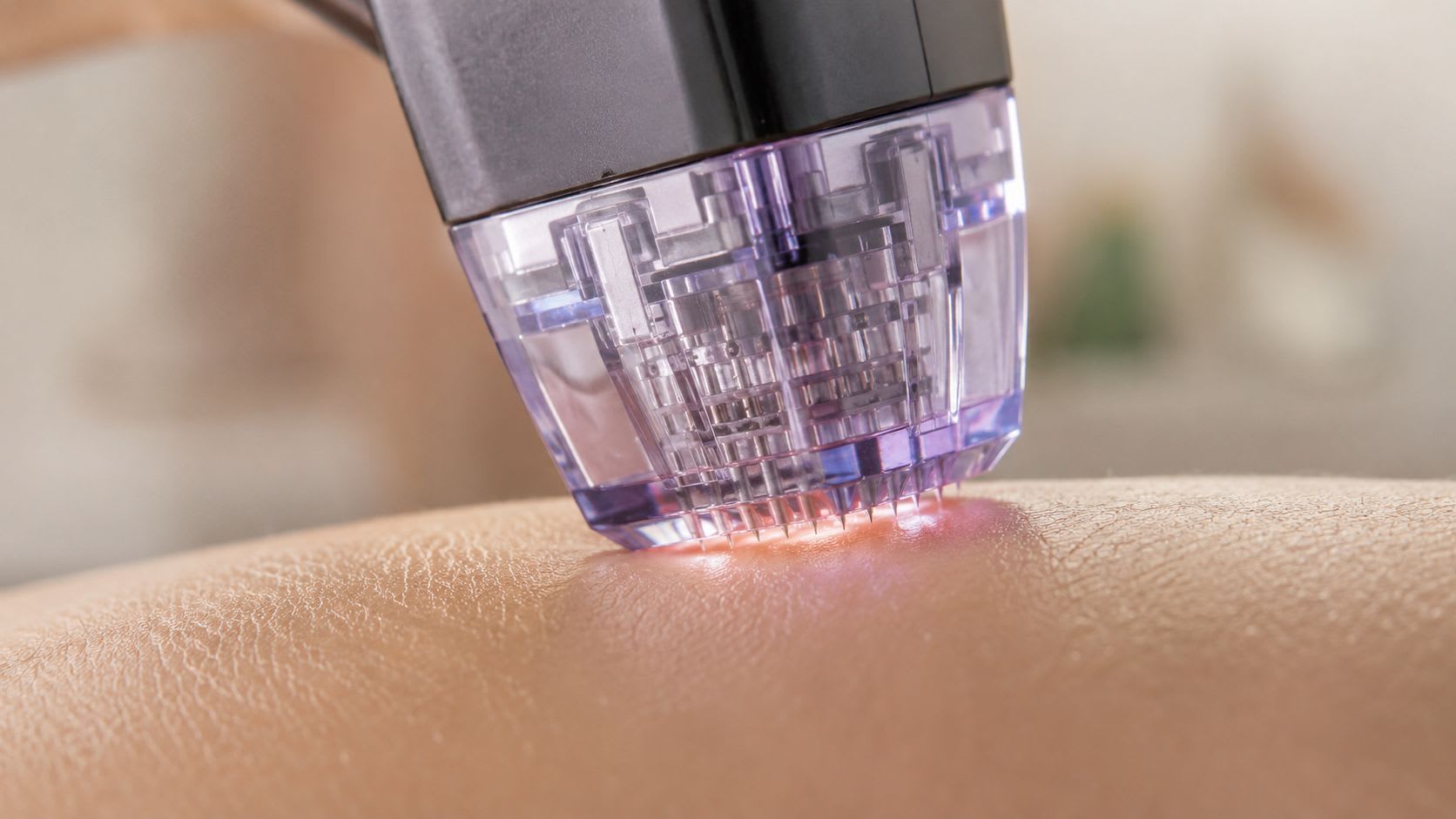
The device places fine needles into the skin and delivers radiofrequency energy at depth. That combination creates controlled injury and targeted heat in the deeper tissue, where collagen remodelling and soft-tissue contraction matter most. In practice, this is why Morpheus8 is used for more than surface texture alone.
Standard microneedling works like mechanical stimulation of the upper skin layers. Morpheus8 goes further by adding thermal energy in the tissue being treated at depth. For readers comparing the two, this overview of microneedling treatment basics helps clarify where classic microneedling ends and RF microneedling begins.
What makes it different from ordinary microneedling
The main difference is not branding. It is treatment depth, heat delivery, and the need for medical judgement.
That matters for concerns such as:
- Acne scars
- Uneven skin texture
- Fine lines and selected deeper wrinkles
- Mild to moderate skin laxity
- Lower-face definition in appropriately chosen patients
These indications sound straightforward on paper, but treatment planning is not automatic. Needle depth, energy settings, number of passes, and whether the skin can safely tolerate an aggressive approach all affect outcome and downtime. In Swiss practice, this is one reason physician-led clinics, especially those run by FMH-qualified dermatologists or plastic surgeons, often charge more. You are paying for assessment and restraint as much as for the device.
What treatment planning usually looks like
Morpheus8 is usually done as a course, not as a one-off beauty appointment. Many patients need a series, and the interval between sessions is part of the plan because collagen remodelling takes time. A single-session quote can therefore be technically correct and still understate the actual budget.
The treatment also has limits. Morpheus8 can improve skin quality, refine pores, soften acne scarring, and tighten mildly lax tissue. It does not replace a surgical lift in a patient with advanced laxity, heavy jowling, or significant excess skin.
Where Morpheus8 works well and where it doesn't
Results are strongest when the treatment goal matches the device. Early ageing changes, acne-related textural change, and mild lower-face laxity are often good use cases. Patients expecting a facelift effect from an energy-based treatment are usually looking at the wrong tool.
Cost and safety converge. The cheaper mistake is often the expensive one later. If the indication is weak, if settings are too timid to produce a result, or too aggressive for the patient's skin type, the lower quote loses its appeal quickly. Patients who want to explore Morpheus8 treatment options before consultation can use that background to ask better questions, but the final decision should rest on a Swiss medical assessment, not on marketing language.
Morpheus8 Price Breakdown in Switzerland
A patient in Zürich may be quoted one price for the lower face, another for the full face and neck, and a higher figure again once the eyes or décolleté are added. That is normal. Morpheus8 is priced by treatment scope, not by a single national flat fee.
In Swiss practice, the fee usually reflects four concrete cost drivers: treatment area, procedure time, consumables, and medical oversight. A small periocular session is quicker and uses fewer resources than a session covering the face, neck, and upper chest. The quote should follow that reality.
Typical per-session prices
Across the Swiss market, small areas tend to start in the mid hundreds of francs per session, while larger combined zones move higher. For practical budgeting, patients usually encounter pricing that begins around CHF 450 for a limited area and can rise to about CHF 850 when the treatment includes several zones in one sitting.
That range is more useful than a headline offer because it reflects how Morpheus8 is sold in clinic. If you are comparing clinics, ask which anatomical area is being treated, whether topical anaesthesia is included, and whether the procedure is physician-led or delegated.
Estimated Morpheus8 Cost Per Session in Switzerland 2026
| Treatment Area | Typical Price Range (per session) |
|---|---|
| Eye area | From around CHF 450 |
| Full face | About CHF 625 to CHF 750 |
| Neck | Around CHF 590 |
| Face and neck | Around CHF 750 |
| Larger treatment zones, including face, neck, and décolleté | Up to about CHF 850 |
These figures are reference points, not a regulated tariff. A serious consultation may still shift the recommendation up or down depending on what needs to be treated. Patients comparing this with other forms of radiofrequency skin tightening treatments in Switzerland should make sure they are comparing similar treatment depth, area, and medical supervision.
How package pricing changes the real budget
Single-session pricing is only part of the financial picture. Morpheus8 is often planned as a course, and the total budget matters more than the entry price.
For face-only treatment, a three-session plan in Switzerland often lands around CHF 1,875 to CHF 2,475. Broader plans that include the face, neck, and eyes can reach roughly CHF 2,900 to CHF 3,000, depending on package structure and whether any clinic discount applies. Some clinics also offer reduced pricing when Morpheus8 is combined with adjunctive treatments such as PRP, but combination plans should be chosen for a clinical reason, not because the add-on is discounted.
A lower package price only makes sense if the treatment indication is sound, the area selection is appropriate, and the settings are being chosen by someone who understands skin biology, not just device operation.
Why Zürich often looks more expensive
Zürich quotes are often higher than quotes in smaller Swiss markets. Rent is higher, staffing costs are higher, and clinics that keep treatment under closer medical supervision usually carry more overhead.
Price differences also reflect who is treating you. A clinic led by an FMH-qualified physician with experience in energy-based devices will rarely compete with the lowest advertised number. That difference is not cosmetic. It affects assessment, treatment planning, risk control, and the likelihood that the procedure is done at a setting strong enough to produce a result without crossing into avoidable complications.
A careful patient should compare value, not just price. The useful questions are straightforward: What area is included? How many sessions are realistically recommended? Who performs the procedure? Who handles complications if they occur? In Switzerland, those questions usually tell you more than the cheapest quote ever will.
Key Factors That Influence Morpheus8 Costs
The fee for a Morpheus8 treatment reflects several clinical and economic factors, not just the device itself. In Switzerland, a serious quote should tell you what is being treated, who is planning it, who is performing it, and what level of medical oversight is built into the price.
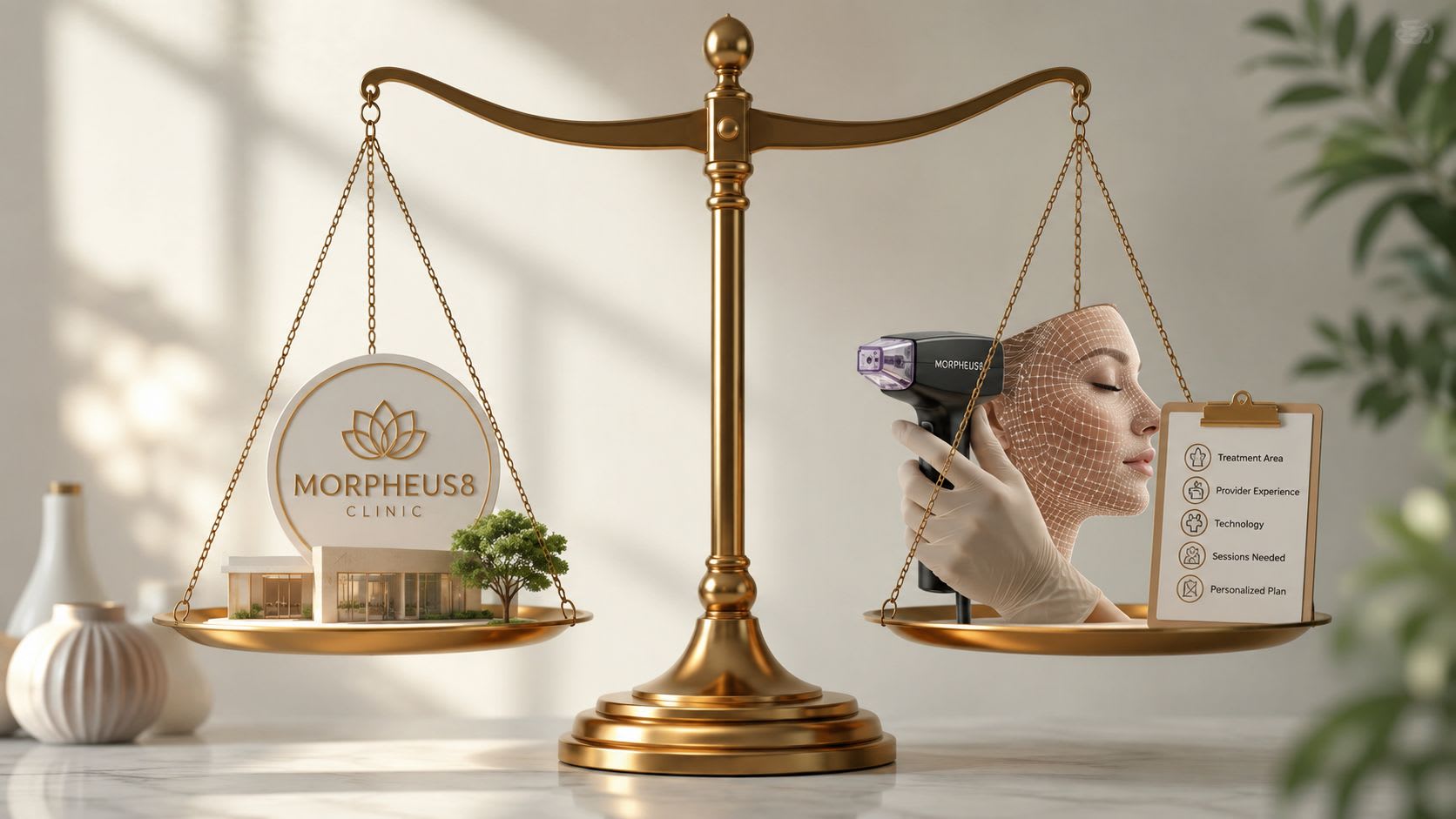
Treatment area and treatment scope
Morpheus8 pricing changes with scope because the work changes with scope. A small periocular treatment, acne-scar revision on the cheeks, and full lower-face-and-neck tightening do not use the same time, settings, consumables, or level of treatment planning.
This is why area-based pricing is clinically sensible. A low advertised price may apply only to a limited zone, while your actual concern may require broader coverage or a different treatment strategy. In practice, the cheapest quote often becomes less attractive once the clinic clarifies what is excluded.
The number of sessions
The overall budget depends on the treatment course, not just the first appointment. Many patients need a staged plan rather than a one-off session, especially for concerns such as textural change, acne scarring, or mild laxity.
A single-session quote can still be useful, but only if the clinic is honest about whether one treatment is likely to be enough for your indication. I advise patients to ask for the expected total plan cost at the consultation, including review visits if those are part of the clinic's protocol.
Physician qualifications and who actually treats you
This factor matters more than many patients realise.
A clinic led by an FMH-qualified dermatologist or plastic surgeon will usually price differently from a setting where the treatment is sold primarily as a device service. You are paying for diagnosis, patient selection, parameter choice, risk assessment, and medical management if healing does not follow the expected course. Those are not administrative extras. They affect both safety and outcome.
The practical question is simple. Who decides whether Morpheus8 is appropriate for your skin, your scarring pattern, your laxity, and your tolerance for downtime?
Regional economics and Swiss clinic overhead
Swiss pricing also reflects the local cost base. Zürich and Geneva usually run higher than smaller cities because rent, staffing, insurance, and medical infrastructure cost more. Clinics with stronger physician presence and tighter follow-up systems also carry higher overhead.
That does not mean every expensive clinic is better. It does mean that very low pricing in Switzerland deserves scrutiny. If a quote sits well below the local norm, ask what has been reduced: consultation time, treatment depth, aftercare, medical supervision, or the extent of the area treated.
Device capability and treatment intensity
Not every Morpheus8 treatment is delivered with the same clinical intent. Results depend on depth selection, energy settings, pass strategy, and whether the practitioner is experienced enough to treat assertively while staying within a safe margin for your skin type and indication.
Patients who are also considering RF skin tightening options in Switzerland should understand that these approaches are not interchangeable in practice. Morpheus8 combines microneedling with radiofrequency delivery at controlled depths. That affects both the treatment plan and the price.
- Ask who performs the consultation. This shows whether the plan starts with a medical assessment or a sales process.
- Ask what area is included. “Face” may mean cheeks only, full face, or lower face with submental coverage.
- Ask whether aftercare is included. Some clinics include review visits and post-treatment support. Others bill them separately.
- Ask what clinical goal is being treated. Tightening, scar revision, pore refinement, and texture improvement may call for different settings and a different number of sessions.
- Ask who manages complications if they occur. In a well-run medical clinic, that answer should be clear before treatment starts.
Sample Morpheus8 Pricing Scenarios
A patient usually arrives with a simple question: "What will Morpheus8 cost me?" The useful answer starts with the treatment objective, not the device name. In Swiss practice, the final quote changes with the area treated, the degree of correction sought, and how much medical judgement the case requires.
Scenario one with a focused concern
A patient in Bern wants treatment for acne scarring limited mainly to the cheeks. That is a different plan from full-face rejuvenation. The area is smaller, but scar work often needs deliberate parameter selection and realistic counselling about what Morpheus8 can and cannot change on its own.
In a case like this, the budget may sit toward the lower end of the per-session range outlined earlier. A lower price is only sensible if the treatment area is limited. Deep or tethered scars may still need a staged approach or combination treatment, and a clinic should say that clearly before you commit.
If scarring is the main issue, a full-face tightening package may simply be the wrong plan.
Scenario two with early laxity and lower-face ageing
A patient in Geneva is bothered by early jowl formation, reduced jawline definition, and some neck laxity. This usually means a broader treatment field and, in many cases, a series rather than a single session.
If the clinic proposes three sessions for the face, the total budget will usually fall within the Swiss range already discussed in the pricing section. Adding the neck raises the cost because the treatment surface is larger and the session takes longer. This is also the type of case where a very low quote often reflects a reduced scope, for example lower face only, fewer passes, or no neck despite the patient's stated concern.
Scenario three with periocular ageing only
A patient in Zürich wants treatment around the eyes and does not want full-face work. That is a narrower indication, and it may align with the eye-area price point mentioned earlier.
This is why direct comparisons between clinics often fail. The periocular patient is buying a smaller intervention than the patient treating face and neck. Lower cost does not automatically mean better value. It may mean less area, less time, and a different clinical goal.
How to use scenarios intelligently
Use these examples to test whether a quote matches your actual concern.
- State the primary problem clearly. Acne scars, skin texture, lower-face laxity, and fine periocular lines do not lead to the same plan.
- Match the budget to the scope. A small, localised area should not be priced like a full-face protocol. A face-and-neck plan should not be marketed as a bargain if major areas are excluded.
- Ask what outcome the clinic is targeting. Tightening, scar revision, and texture improvement often require different settings and sometimes a different number of sessions.
- Treat regional price differences realistically. Geneva and Zürich often carry higher overhead than smaller cities, and that can appear in the quote even when the technology is the same.
The safest way to compare offers in Switzerland is to compare like with like: same area, similar treatment intensity, similar aftercare, and medical oversight at the right level. That gives you a budget you can trust, and it reduces the risk of paying less for a weaker plan.
Beyond Price Choosing a Qualified Practitioner
Low pricing attracts attention. In Morpheus8, it shouldn't be your main filter. This treatment relies on judgement as much as on hardware. The wrong indication, wrong depth, or weak supervision can leave you with little improvement and a false sense that the technology “doesn't work”.
Why qualifications matter in Switzerland
In the Swiss setting, I'd give more weight to the treating doctor's training than to a promotional offer. A practitioner with FMH specialisation in dermatology or plastic surgery usually brings stronger diagnostic judgement about skin quality, laxity, scarring patterns, and whether Morpheus8 is the right tool at all.
That doesn't mean every non-FMH provider is unsuitable. It does mean the medical framework matters. Energy-based procedures need more than device familiarity. They need patient selection, informed consent, and complication awareness.
Here is the practical benchmark many patients overlook.
What to verify before you book
Use the public MedReg register to confirm that a physician is licensed in Switzerland. Then look at whether the clinic clearly states the doctor's specialty, who performs consultations, and who remains medically responsible during your treatment course.
A serious consultation should answer these questions clearly:
- Who will examine me and decide if Morpheus8 is suitable
- Who will perform the procedure
- How often do you perform this treatment in patients with my concern
- What result is realistic for my skin
- What alternatives would you suggest if I'm not an ideal candidate
- How are side effects or complications managed
Red flags patients should take seriously
Some warning signs are simple.
- Price-first marketing. If the clinic focuses on discounts before diagnosis, be careful.
- No clear medical lead. If you can't tell who is responsible, step back.
- Vague promises. “Lift”, “tighten”, and “rejuvenate” are meaningless without area-specific explanation.
- No discussion of limits. Every credible practitioner should explain what Morpheus8 won't do.
Choose the clinic that gives you the clearest indication and the most honest limits, not the clinic that tries hardest to close the booking.
The best value in Swiss aesthetic medicine usually comes from accurate indication, proper technique, and realistic planning. Cheap treatment with poor selection is often the most expensive option in the long run.
Safety Aftercare and Finding Your Clinic
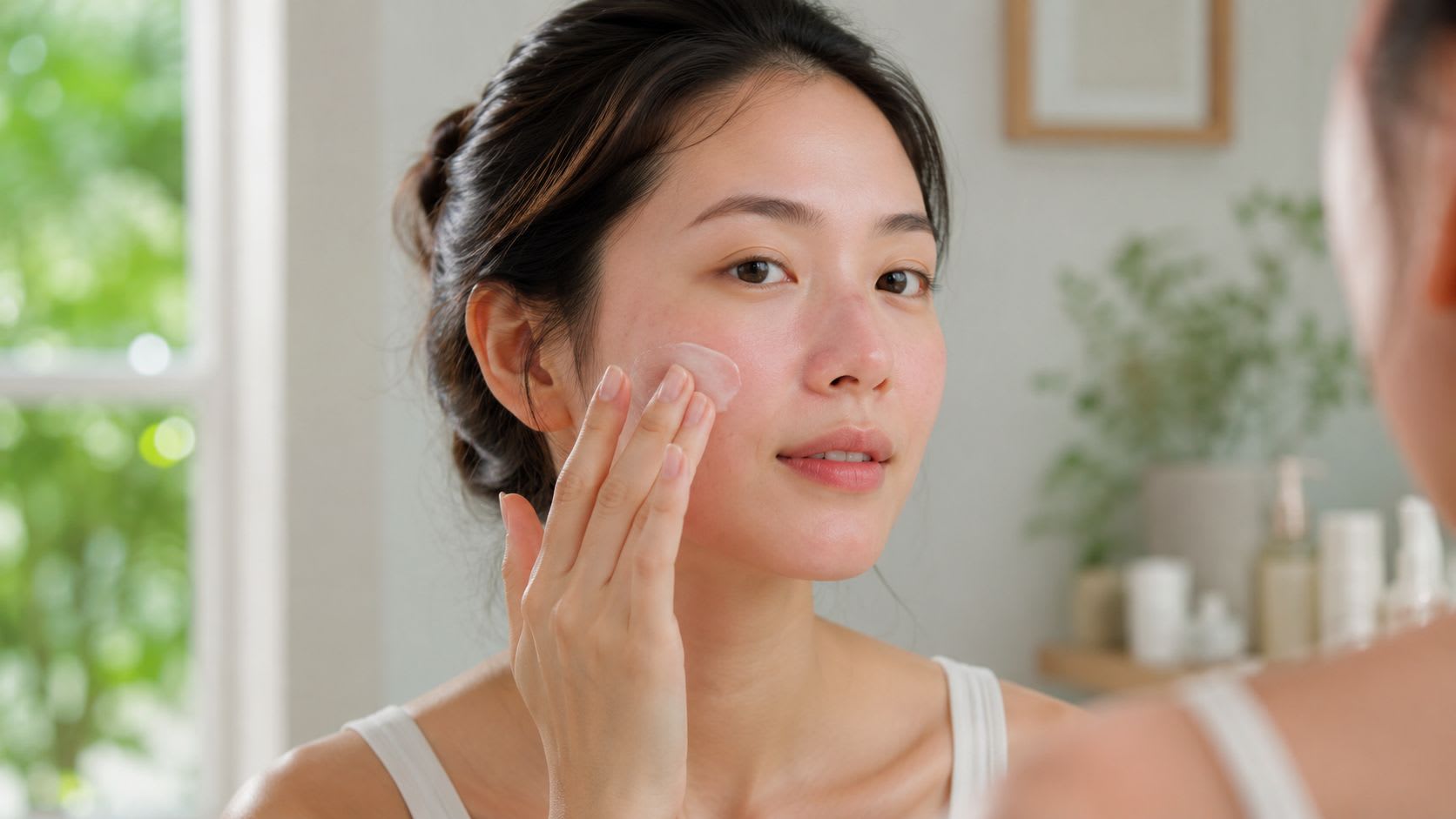
After Morpheus8, patients should expect a short recovery period with visible but usually manageable skin reactions. Common early effects include redness, swelling, a rough sandpaper-like feel, and tiny grid or needle marks. The exact intensity varies with area, settings, and skin sensitivity.
What good aftercare usually involves
Recovery is often straightforward when patients follow instructions carefully.
- Protect the skin barrier. Use gentle skincare and avoid aggressive active products until your clinic says it's appropriate.
- Avoid direct sun exposure. Freshly treated skin is more vulnerable and should be protected carefully.
- Don't over-handle the skin. Scrubbing, exfoliating, or picking delays recovery.
- Follow the clinic's review plan. If redness, swelling, or irritation feels excessive, contact the provider rather than guessing.
What works and what doesn't
What works is simple, boring, and consistent. Gentle cleansing, moisturising, sun protection, and patience.
What doesn't work is rushing back into acids, retinoids, strong workouts, heat exposure, or trying to “boost” the result with random home products. Morpheus8 already creates a controlled injury response. The skin needs calm support, not additional stress.
For clinic selection, the same principle applies. Look for a provider who explains downtime transparently, documents candidacy clearly, and has visible medical accountability. If you're comparing options across Switzerland, it helps to review clinics by city and specialty rather than relying on social media impressions alone. A curated starting point is the Swiss aesthetic clinic directory.
Cost matters, but it isn't the deciding factor on its own. In Switzerland, the safest and most sensible Morpheus8 decision usually comes from matching the right indication with the right practitioner and then paying for a treatment plan that is medically coherent.
BeautyGuide helps you compare qualified aesthetic clinics across Switzerland in a more structured way. If you're considering Morpheus8 in Zürich, Geneva, Basel, Lausanne, Bern, Lucerne, Zug, Lugano, or beyond, you can use BeautyGuide to review clinic profiles, check specialties, and narrow your shortlist before booking a consultation.
This article is for informational purposes only and does not replace professional medical advice.