When you start exploring aesthetic or reconstructive surgery, you’ll quickly notice there are two main types of clinics in Switzerland: the solo practitioner and the plastic surgery group. A solo practice is run by a single doctor, while a group brings together multiple specialists under one roof.
Think of a plastic surgery group like a high-end Swiss watchmaking atelier. Instead of one master watchmaker, you have a whole team of specialists—one for the intricate gears, another for the case design, and a third for the final polish. Together, they create a product that's far more complex and refined than one person could achieve alone.
Understanding The Plastic Surgery Group Model
Choosing a provider is one of the most important decisions you'll make in your aesthetic journey. Understanding how a clinic is structured is a significant part of that choice.
The solo practitioner model is very common in Switzerland. These doctors often have an excellent reputation and deep expertise in a handful of procedures they perform frequently. For a specific, straightforward treatment, this can be an ideal option. The limitation, however, is that their services are confined to their individual skillset.
A plastic surgery group, on the other hand, is built on a foundation of collaboration. It’s an entire ecosystem of aesthetic care, designed to provide a more comprehensive and cohesive experience from start to finish.
The Collaborative Advantage in Swiss Healthcare
The group model aligns perfectly with Switzerland's high standards for patient safety and medical excellence. The core idea is that the collective expertise of the team offers a significant advantage over a single practitioner.
Here’s what that looks like in practice:
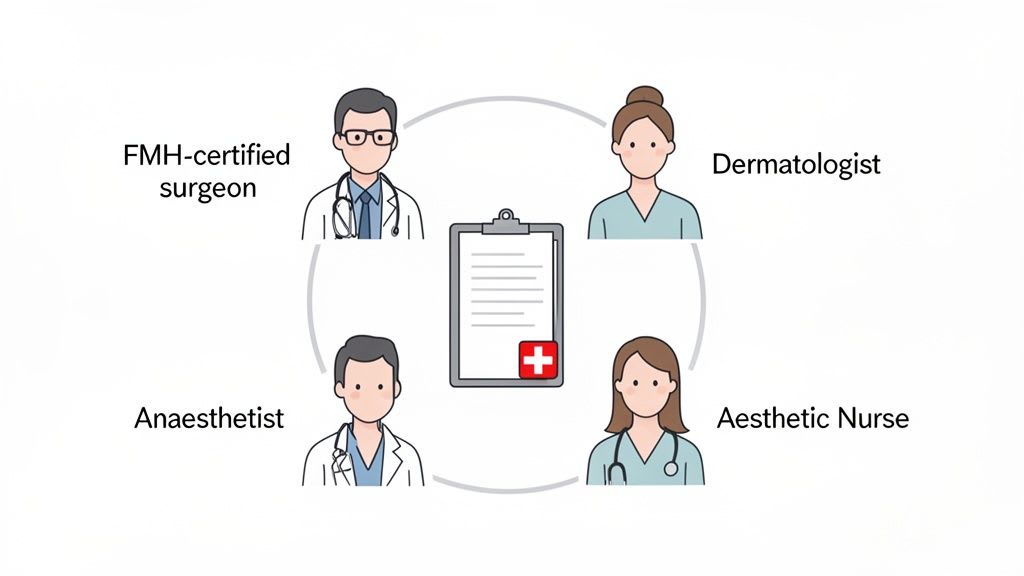
Integrated Expertise: The team isn't just made up of surgeons. You’ll often find FMH-certified plastic surgeons working alongside dermatologists, anaesthetists, and highly specialised nurses. This allows for a truly holistic plan that considers everything from your skin’s condition to your final surgical result.
Built-in Second Opinions: Consulting with another specialist for a second opinion is straightforward. You can easily consult with another expert within the same practice, ensuring your treatment plan is sound and that you feel completely confident before moving forward.
Enhanced Safety for Complex Cases: For more complex procedures, like a "mummy makeover" or a facelift combined with laser skin resurfacing, surgeons can collaborate in the operating theatre. One surgeon's deep experience in body contouring might be paired with another's specialisation in facial rejuvenation, improving both safety and the quality of the outcome.
A plastic surgery group isn't just a clinic with more doctors. It is a framework for integrated care, where a team of specialists actively communicates and works together on your behalf at every stage of your journey.
This seamless approach makes a real difference. Imagine you’re interested in facial rejuvenation. You might start with a dermatologist in the group to get your skin in peak condition, then see a surgeon to discuss surgical options—all in a familiar, trusted environment.
Let's look at a quick comparison to make the differences clear.
Solo Practitioner vs. Plastic Surgery Group
| Feature | Solo Practitioner | Plastic Surgery Group |
|---|---|---|
| Scope of Services | Limited to one doctor's specialities. | Wide range of surgical and non-surgical treatments available in-house. |
| Expertise | Deep expertise in a narrow set of procedures. | A collective of specialists, each with their own focus area. |
| Second Opinions | Requires visiting an entirely separate clinic. | Easily accessible from another expert within the same team. |
| Complex Cases | Handled by one surgeon; may need to refer out for complementary treatments. | Multiple specialists can collaborate on planning and even during surgery. |
| Patient Experience | Highly personal relationship with one doctor. | A coordinated team approach with multiple points of contact. |
| Continuity of Care | Dependent on the single doctor's availability. | Team-based care ensures coverage and continuous support. |
Ultimately, both models have their place. However, by pooling their knowledge, resources, and diverse skills, a plastic surgery group offers a depth of care and continuity that many patients in Switzerland find reassuring.
The Team Behind the Treatment: Inside a Swiss Surgery Group
When you choose a Swiss plastic surgery group, you’re not just picking a surgeon. You're gaining access to an entire team of dedicated medical specialists, all working together under one roof. Think of it less like a solo artist's studio and more like a world-class orchestra, where each musician’s expertise contributes to a flawless performance.
This team-based approach is what allows top Swiss clinics to deliver such comprehensive care. It ensures every single part of your journey—from skin preparation to the surgery itself and all the aftercare—is handled by a professional who lives and breathes that specific discipline.
Who's on the Team? The Core Specialists
A well-run group practice is built around a core team, ensuring you receive expert care at every step. This structure means that whether you’re looking for a surgical procedure, a non-invasive skin treatment, or a carefully planned combination of both, you’ll be in the hands of the right expert.
Here’s a look at the key players you'll typically find:
FMH-Certified Plastic Surgeons: These are the experts leading any surgical procedure. A surgeon holding the FMH (Foederatio Medicorum Helveticorum) title has completed Switzerland’s demanding specialist training in plastic, reconstructive, and aesthetic surgery. They are the ones who plan and perform procedures like facelifts, breast augmentations, and rhinoplasties.
Dermatologists: The skin experts. Their focus is on the health, texture, and quality of your skin. They manage an array of non-invasive treatments like laser resurfacing, chemical peels, and advanced skincare. Very often, they’ll work with you before a surgery to get your skin in the best possible condition, which can dramatically improve the final surgical result.
Dedicated Anaesthetists: This is a crucial, non-negotiable member of the surgical team. An anaesthetist is a medical doctor who specialises in keeping you safe and comfortable during any procedure that requires sedation or general anaesthesia. Their sole focus is on you and your wellbeing while the surgeon works.
Aesthetic Nurses and Medical Aestheticians: These highly skilled professionals are the heart of the patient experience. They often administer non-surgical treatments like injectables (botulinum toxin and dermal fillers), perform advanced skin therapies, and provide essential post-operative care, from wound management to guiding you through your recovery.
How This Team Approach Benefits You
The real benefit materialises when these skills are integrated. Imagine you’re considering a facelift. In a group setting, you might start with a dermatologist to improve your skin’s elasticity and tone. Armed with that progress, the plastic surgeon can then design a surgical plan that may appear more natural and provide longer-lasting results.
This synergy is becoming more important as aesthetic medicine in Switzerland grows. While the number of FMH-recognised plastic surgeons is concentrated in cities like Zurich, Geneva, and Lausanne, the industry has seen significant growth in non-surgical treatments. Today, injectables like botulinum toxin and dermal fillers make up the vast majority of all aesthetic procedures performed.
The collaboration within a plastic surgery group ensures that your treatment plan is not just a single procedure, but a comprehensive strategy. It connects surgical goals with skin health, safety protocols, and long-term aftercare.
One of the biggest advantages is improved communication. When specialists work together, it streamlines care coordination in healthcare. Your dermatologist knows your surgical plan, and your surgeon understands the skin treatments you’ve had. This connected approach closes the information gaps that can arise when you see separate, unaffiliated doctors, leading to a safer and more cohesive experience.
What You'll Find Under One Roof: The Services of a Plastic Surgery Group
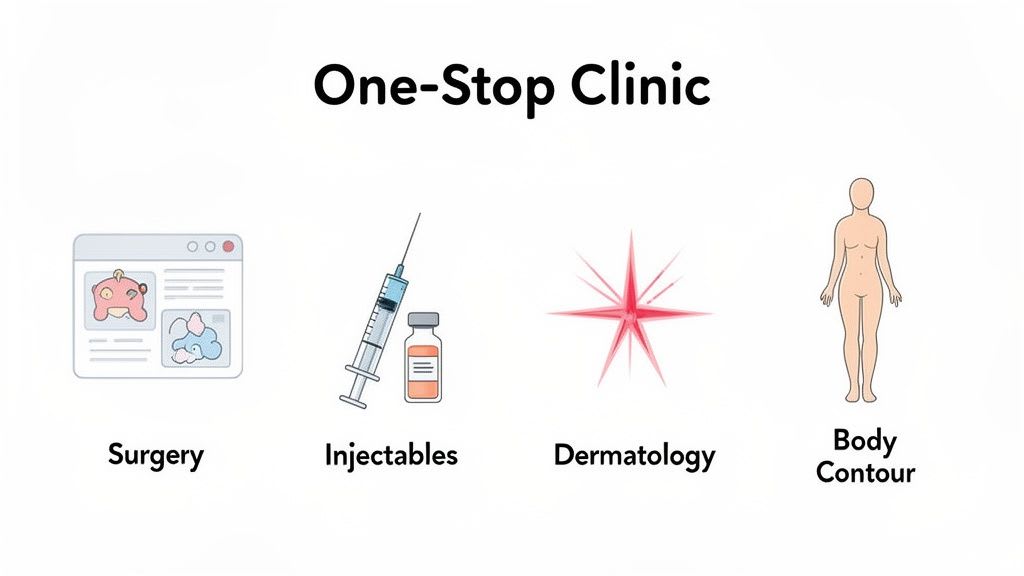
Perhaps the biggest draw of a plastic surgery group is having a full spectrum of treatments available in one place. Think of it as your trusted aesthetic headquarters. This "one-stop" approach isn't just about convenience; it’s about cohesive, intelligent care. You can build a long-term relationship with a team that truly understands your goals, creating a personalised plan that evolves with you.
This means your entire aesthetic journey can be mapped out thoughtfully. You might start with a dermatologist to get your skin in top condition, move on to injectables for some subtle refinement, and perhaps later consider a surgical procedure. All of this is managed by a collaborative team who knows your history and vision, a hallmark of excellent care in Switzerland.
Surgical Procedures
At the heart of any top-tier group are its FMH-certified plastic surgeons. They perform a wide range of procedures for the face, breasts, and body. This is where the group model proves its worth, as surgeons can combine their skills and consult one another on complex cases, giving you the benefit of multiple expert opinions.
Common surgical treatments include:
Facial Surgery: This covers everything from facelifts (rhytidectomy) and eyelid surgery (blepharoplasty) to nose reshaping (rhinoplasty). The goal is to restore a natural appearance or enhance facial harmony.
Breast Surgery: Includes popular procedures like breast augmentation, lifts (mastopexy), and reductions, as well as complex reconstructive surgery after a mastectomy.
Body Contouring: After major weight loss or pregnancy, surgical procedures like tummy tucks (abdominoplasty) or arm and thigh lifts can help reshape and tighten the body’s contours.
Non-Surgical Injectables
Injectable treatments are a significant and growing part of modern aesthetics. These minimally invasive treatments are performed by qualified doctors or specially trained nurses, offering noticeable results with little to no recovery time. Within a group practice, you have the assurance that these procedures are done in a medically supervised environment.
The real advantage here is synergy. Your injectable plan can be perfectly timed with your surgical and skin treatments, ensuring every element works together for a balanced, natural-looking result.
The mainstays in this category are:
Botulinum Toxin: Used to relax expression lines like crow's feet and frown lines, creating a smoother appearance.
Dermal Fillers: Most are hyaluronic acid-based and are used for restoring volume to the cheeks, enhancing lips, or filling in deeper, static wrinkles.
Advanced Dermatology and Skin Rejuvenation
Good surgical results are built on a foundation of healthy skin. That's why most plastic surgery groups have an integrated dermatology department focused on improving skin quality, tone, and texture. Think of it as preparing the canvas to ensure the final result looks its best. These services are also a fantastic starting point for anyone not yet ready for surgery. You can explore many of these effective, non-invasive options in our guide to available aesthetic treatments.
Surgical and Non-Invasive Body Contouring
Body contouring is an incredibly popular field in Switzerland, with clinics in Zurich and Geneva seeing consistent demand. Procedures to address changes after pregnancy or weight loss are especially sought-after by women aged 35-50. This trend is partly driven by advanced, less invasive technologies that align with the Swiss preference for precision and quality. You can learn more about what's on the horizon in our look at the latest plastic surgery trends.
A group setting gives you access to the full toolkit:
Liposuction: The classic surgical method for precisely removing stubborn pockets of fat.
Non-Invasive Fat Reduction: Technologies that use fat-freezing (cryolipolysis) or radiofrequency to reduce fat cells without any incisions.
How to Evaluate a Plastic Surgery Group in Switzerland
Choosing a plastic surgery group in Switzerland is a major decision. It’s easy to get drawn in by glossy websites and impressive before-and-after photos, but your focus should be on safety and the quality of your care. Looking beyond marketing is essential.
A proper evaluation means making a choice based on solid facts, not just feelings. By systematically checking credentials, understanding the team's structure, and assessing the clinic's standards, you can build real confidence in the group you choose.
Verify Medical Credentials and Qualifications
This is the most critical step. In Switzerland, a surgeon's qualifications are a non-negotiable guarantee of their expertise.
First, look for the letters FMH. Every surgeon in the group should hold the FMH (Foederatio Medicorum Helveticorum) title in plastic, reconstructive, and aesthetic surgery. This is the gold standard in Swiss medicine, proving the doctor has completed a rigorous, state-recognised training programme.
You can and should verify this yourself. The Federal Office of Public Health (BAG) manages the MedReg platform, a public register of all licensed doctors in Switzerland. A quick search will confirm their official specialty and licence to practise, providing peace of mind.
Assess the Specialities of the Entire Team
A great plastic surgery group is more than just its surgeons. Your journey involves an entire team, and the quality of their work directly impacts your results and safety.
Dermatologists: If the clinic offers skin treatments, ensure the dermatologist also has an FMH title in their field (dermatology and venereology).
Anaesthetists: For any procedure requiring general anaesthesia, a qualified anaesthetist is mandatory. Their credentials are just as important as the surgeon's.
Nurses and Aestheticians: Don't hesitate to ask about the training and certifications of the wider team. They should be properly qualified professionals.
Looking at the whole team ensures every person contributing to your care meets Switzerland's high standards.
Evaluate the Clinic and its Facilities
The physical environment says a lot about a clinic's commitment to patient safety. When you visit, the space should feel modern, professional, and spotlessly clean.
A top-tier facility in Switzerland will often have certifications that demonstrate compliance with national standards for hygiene, surgical equipment, and emergency protocols. This is a critical indicator of a clinic's dedication to operating at the highest level of safety.
Find out if the clinic has its own certified operating theatre or if surgeries take place at an affiliated hospital. Both are safe options, but knowing the setup helps you understand the logistics. For a deeper dive into what makes a great clinic, our guide to Swiss plastic surgery covers these standards in more detail.
Swiss Clinic Evaluation Checklist
To help you stay organised during your research, use this simple checklist. This table can help you compare different plastic surgery groups and ensure you've covered all the essential points.
| Verification Point | What to Look For | Why It Matters |
|---|---|---|
| Surgeon Credentials | FMH title in Plastic, Reconstructive, and Aesthetic Surgery for all surgeons. | This is the official Swiss hallmark of a fully trained and recognised specialist surgeon. |
| Official Licence | Surgeon's name and specialty listed on the public MedReg register. | Provides independent, government-backed confirmation of their right to practise in Switzerland. |
| Team Expertise | FMH-certified dermatologists and anaesthetists; qualified nurses. | Ensures every professional involved in your care is credentialed and competent. |
| Clinic Facilities | Clean, modern environment; certifications for hygiene and safety. | The physical space reflects the clinic's commitment to patient safety and professional standards. |
| Operating Theatre | On-site certified operating theatre or clear affiliation with a reputable hospital. | Guarantees that your procedure will be performed in a facility equipped for safe surgery. |
| Language & Communication | Staff (reception, nurses, doctors) can communicate clearly in your language. | Prevents misunderstandings and ensures you can give fully informed consent. |
| Patient Reviews | A balanced mix of detailed testimonials and online reviews. | Offers insight into the patient experience, from consultation to post-op care. |
By methodically working through this list for each potential clinic, you can move forward with a decision grounded in confidence and security.
Review Patient Experiences and Communication
While qualifications are the foundation, the human element is just as important. Patient reviews can offer a window into how a clinic truly operates—its communication style, bedside manner, and overall patient care.
Of course, approach reviews with a discerning eye. They can be managed, so look for detailed, balanced feedback. Understanding the business of getting reviews for dermatologists, for instance, shows how a clinic might actively shape its online reputation.
Finally, can the team speak your language? Clear, easy communication is absolutely vital. From the moment you call the reception to your final post-op appointment, you need to feel heard and understood. This isn't a minor detail; it's fundamental to building the trust required for a successful and comfortable experience.
Why a Group Is often Suited for Complex and Combined Procedures
While a skilled solo surgeon can be an excellent choice for many standard aesthetic treatments, when your goals are more ambitious—involving multiple procedures or a particularly complex issue—the dynamic of a plastic surgery group becomes particularly advantageous. It’s all about bringing more specialised brainpower to the table.
Think about a "mummy makeover," a popular set of procedures to help restore the body after pregnancy. This might involve a tummy tuck, a breast lift, and perhaps some liposuction. A single surgeon can handle all three, but a group practice offers a different, often more powerful, approach.
The Power of Combined Expertise
Within a group, you could have one surgeon whose practice is dedicated to breast aesthetics working alongside a colleague who is a master of body contouring. This isn't just about getting two surgeons; it's about getting two specialists to focus on what they do best, for your benefit.
This kind of collaboration leads to tangible advantages:
A Refined Surgical Plan: With multiple experts weighing in from the start, your surgical plan is stress-tested. They can anticipate challenges and refine the approach, making the entire process safer and more predictable.
Reduced Time Under Anaesthesia: In certain cases, two surgeons can work at the same time on different areas of the body. This teamwork can significantly reduce your total surgery time, a key factor in improving safety and speeding up recovery.
Harmonious Results: When a dedicated specialist handles each component of your surgery, the final outcome often looks more harmonious and natural.
This meticulous, team-based approach fits perfectly with the Swiss mindset of precision, thorough planning, and minimising risk. Patients in Switzerland expect high standards, and a group practice is structurally designed to deliver just that by pooling its expert resources.
A Case Study in Facial Rejuvenation
This benefit is just as clear when it comes to complex facial work. Let’s say a patient is looking for comprehensive facial rejuvenation—a facelift combined with a rhinoplasty and perhaps some laser resurfacing to improve skin texture.
A plastic surgery group is built for this. The team might involve one surgeon with extensive experience in facelifts and another who is a renowned expert in rhinoplasty. At the same time, a dermatologist on the team can plan and perform the laser treatments, ensuring the non-surgical work complements the surgical results.
Rhinoplasty continues to be one of the top aesthetic surgeries in Switzerland. Data from the Swiss Society for Plastic, Reconstructive and Aesthetic Surgery (SGPRAC) shows that demand is consistently high, executed with Swiss precision. In cities like Geneva and Zurich, where BeautyGuide lists top FMH-verified clinics, a significant number of cases involve blending functional corrections with cosmetic refinements. Federal health data indicates that many of these procedures are for patients aged 20-35 looking for subtle enhancements. You can dive deeper into the top cosmetic surgery statistics and trends.
For complex, multi-stage procedures, a plastic surgery group functions like a specialist task force. Each member contributes their unique skills to a single, unified mission: achieving the best possible outcome for you with the highest standard of safety.
For anyone with aesthetic goals that require more than one procedure, the built-in expertise and collaborative safety of a group practice offers a level of care that’s tough for even the best solo practitioner to match.
How BeautyGuide Helps You Find the Right Clinic
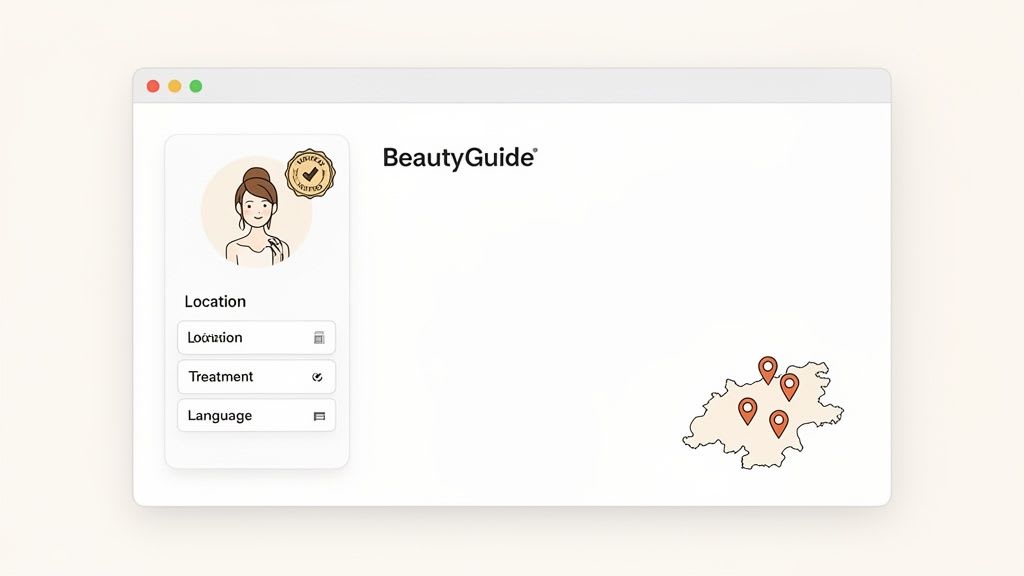
Knowing what makes a great plastic surgery group is one thing, but actually finding one you can trust in Switzerland is another challenge. With so many options, how do you sort through them to find a team that’s truly qualified?
That’s exactly why we built BeautyGuide. We're not an advertising platform; we're an independent resource designed to bring clarity to your search. Our goal is simple: to help you connect with proven professionals, safely and with confidence.
Verified Credentials for Your Peace of Mind
Nothing is more important than the qualifications of the medical team you choose. We take this verification step seriously, so you don't have to do all the heavy lifting yourself.
Every doctor listed on our platform is cross-referenced with the official Swiss MedReg register to confirm they are fully licenced to practise in Switzerland. We go a step further by highlighting specialists with the coveted FMH title, making it easy to spot surgeons and dermatologists who have completed Switzerland’s demanding specialist training programmes.
BeautyGuide is not a substitute for a medical consultation. Think of us as an essential first step—a tool that gives you the verified, transparent information you need to choose the right clinic for that all-important first meeting.
Detailed Profiles and Intuitive Search Tools
Finding the right fit goes beyond credentials. It’s also about finding a team you feel comfortable with and a clinic that understands your goals. Our platform is designed to make this part of the process feel simple and intuitive.
Comprehensive Clinic Profiles: Each listing gives you a clear snapshot of the clinic, their philosophy, and the full team. You can see who the surgeons, dermatologists, and other experts are within a plastic surgery group at a glance.
Targeted Search Filters: Looking for a clinic in Zurich, Geneva, or Bern? You can filter by location in seconds. Our tools also let you narrow your search by specific treatments or by the languages spoken, ensuring there are no communication barriers.
By giving you this level of structured, verified information, BeautyGuide helps you move from researching to taking action. You can build a shortlist of top-tier clinics, compare their expertise, and confidently book your first consultation. For a deeper dive into making your choice, check out our guide on how to select the right beauty clinic.
Your Questions About Plastic Surgery Groups, Answered
It’s completely normal to have questions when you’re considering a plastic surgery group. Feeling comfortable and clear on the process is the first step. Let's walk through some of the most common practical concerns we hear from patients in Switzerland.
The idea is to give you a real sense of what to expect, so you can walk into your first consultation feeling confident and well-informed.
How Are Consultations With Multiple Specialists Managed?
This is an excellent question. You might be picturing yourself juggling appointments with different doctors, but these groups are set up to make it much simpler.
Your journey will almost always start with one main consultation. You'll meet with the specialist whose expertise best matches your primary goal. From there, they become your advocate. For example, if you came in to discuss a facelift but also mentioned concerns about sun damage, your surgeon would personally arrange a meeting for you with the group’s dermatologist.
The benefit of this model is that you don’t have to do the legwork. The team coordinates everything for you behind the scenes, creating one smooth, connected experience instead of a series of disconnected appointments.
One of the biggest advantages of a Swiss plastic surgery group is the shared communication. Everyone involved in your treatment works from a single patient file, so the entire team is on the same page about your medical history, goals, and care plan.
Does a Group Practice Cost More Than a Solo Clinic?
It's a common assumption that more experts must mean a higher price tag, but that’s not necessarily the case. In reality, the costs for specific procedures are generally on par with what you'd find at a top-tier solo practice.
The final fee for a surgery is determined by factors like the surgeon’s experience, the anaesthesia, and the clinic's facility fees—not by the number of doctors who work there. If you choose to have multiple procedures, the total cost will be higher, but the pricing for each individual service isn’t inflated.
Any professional Swiss clinic, whether a group or solo practice, will provide you with a transparent and detailed cost breakdown after your consultation. This ensures you can review every fee before making a decision.
How Is My Care Coordinated Within the Team?
Clear and constant communication is what makes a group practice work so well. From the moment you begin, your care is typically overseen by a central point of contact. This might be your lead surgeon or a dedicated patient coordinator.
Think of this person as your personal guide through the entire process. They’ll schedule your appointments, pass information between the specialists, and be there to answer any questions you have. This centralised approach is designed to prevent anything from falling through the cracks, giving you a seamless experience from start to finish—exactly the kind of meticulous organisation Swiss healthcare is known for.
This article is for informational purposes only and does not replace professional medical advice.