
A common starting point is simple. You look in the mirror, notice that your skin seems less fresh than it used to, and begin searching for injectable treatments in Zurich, Geneva, or elsewhere in Switzerland. Then the confusion starts. One clinic mentions Profhilo®. Another talks about dermal fillers. Both contain hyaluronic acid, so they sound similar.
They are not the same treatment.
That distinction matters because many patients don't need “more volume”. They need better skin quality, or they need structure restored in a very specific area, or they need both in the right order. If you misunderstand that difference, it's easy to book the wrong consultation or ask for the wrong product.
Introduction Navigating Your Injectable Options
If you're comparing Profhilo vs filler, the most useful first question isn't “Which one is better?” It's “What exactly am I trying to improve?”
Some people are bothered by dehydration, fine lines, crepey texture, or a general loss of radiance. Others are seeing hollow cheeks, thinning lips, deeper folds, or less definition along the jawline. These concerns may appear together, but they don't respond to the same tool.
In Swiss aesthetic practice, that difference is usually explained in a practical way. Profhilo® is a skin-quality treatment. Dermal fillers are shaping and support treatments. One works across the skin. The other works in targeted points where structure is needed.
Clinical perspective: If your goal is healthier-looking skin without changing facial proportions, Profhilo® and filler are not interchangeable choices.
That's why a neutral comparison is more helpful than a trend-based one. A patient in Geneva who wants subtle improvement for tired-looking skin may be a very different candidate from someone in Zurich who wants to restore mid-face support or define the lips.
The most overlooked nuance is strategic. For some Swiss patients, Profhilo® works well as a foundation treatment before filler because better skin elasticity can change how much structural product is needed later. That long-term planning matters if you prefer a restrained result and want to make sensible decisions over time, not only at one appointment.
Understanding Profhilo The Skin Bioremodelling Approach
A common Zurich consultation goes like this. A patient points to tired-looking skin and asks for filler, but the actual issue is often not missing volume. It is skin that has become thinner, less springy, and less reflective of light.
Profhilo® is used for that kind of change. It belongs to the hyaluronic acid family, yet its role is different from a shaping product. In Swiss practice, it is generally discussed as a skin bioremodelling treatment. The goal is to improve how the skin behaves and looks across an area, not to create projection in one exact point.
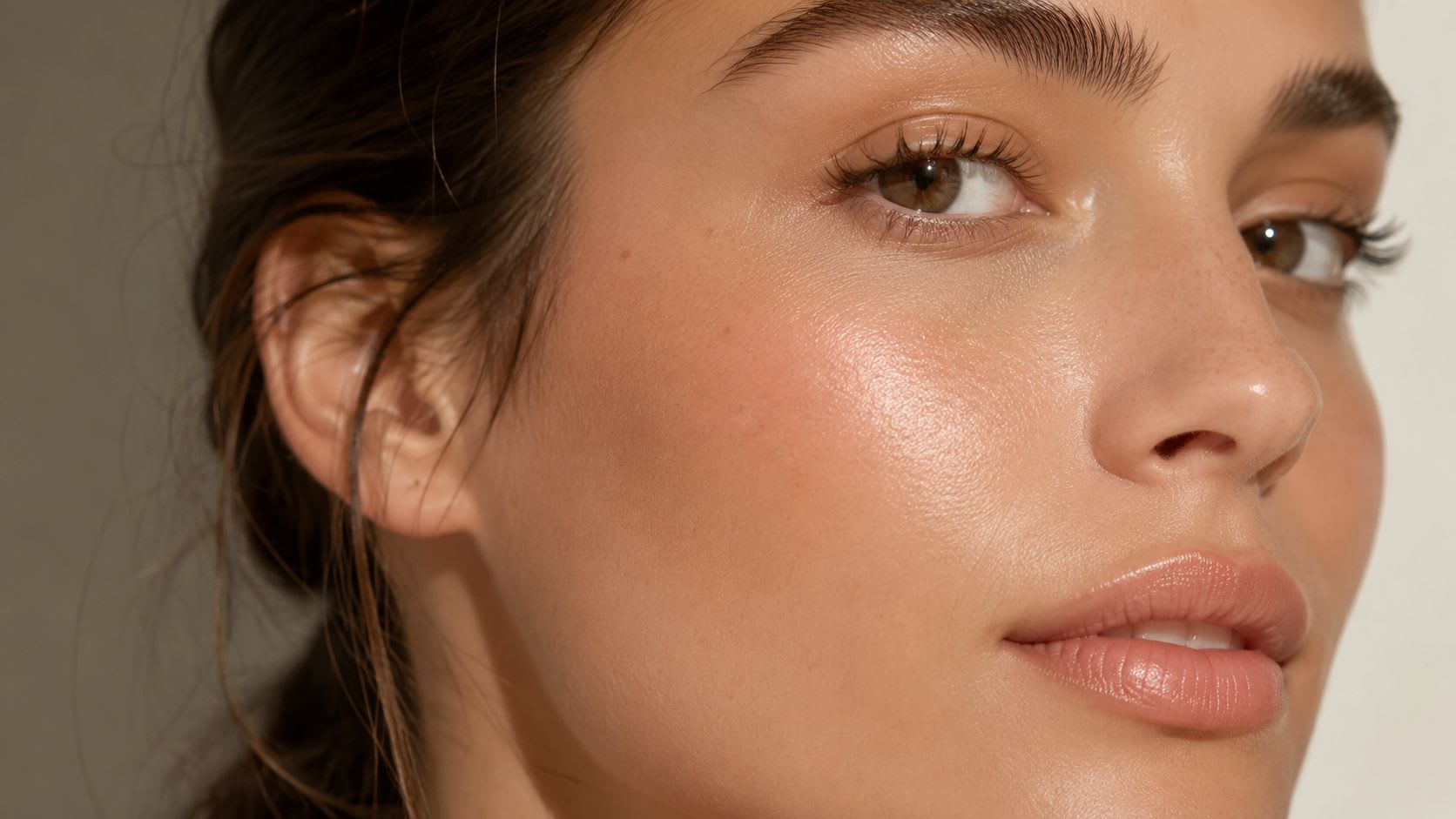
What Profhilo actually does
Profhilo® works more like improving the quality of the fabric than adding padding underneath it. The product spreads through superficial tissue planes after carefully chosen injection points, which is why the outcome is usually described as more hydrated, more supple, and a little firmer rather than sculpted.
Its formulation also helps explain why patients and practitioners do not treat it like a classic filler. Profhilo® contains high- and low-molecular-weight hyaluronic acid and is produced without BDDE cross-linking. That design supports diffusion through the tissue instead of creating a fixed, structural block.
This matters during treatment planning.
If your main concern is diffuse skin crepiness, early laxity, or a general loss of freshness, Profhilo® can make sense as a foundation step. If your main concern is a flatter cheek, a weaker chin, or a lip border that has lost definition, a structural filler is usually the more direct tool.
What changes you can expect
The result tends to develop gradually over the weeks after treatment. Patients often describe the skin as looking better rested rather than visibly altered. Friends may notice that you look fresher without being able to identify a changed facial feature.
That subtlety is part of its value. In a Swiss setting, where many patients prefer restraint and want to avoid chasing repeated corrections, Profhilo® can be a sensible long-term strategy. Better skin quality does not replace filler when true support is missing, but it may reduce how much filler is needed later in some patients because the skin itself is in better condition before any sculpting is considered.
A practical way to read the indication is:
- Dull, dehydrated, crepey skin: Profhilo® may be appropriate.
- Fine-texture change across the face or neck: Profhilo® may be appropriate.
- Loss of contour in cheeks, lips, chin, or jawline: another treatment is usually needed.
For a patient, the useful consultation question is simple. “Am I trying to improve the skin itself, or am I trying to replace structure?” If you want a plain-language overview before your appointment, the BeautyGuide page explaining Profhilo treatment options is a helpful starting point.
Profhilo® improves skin quality across the canvas. It does not build the frame.
Understanding Dermal Fillers The Sculpting and Volumising Tool
Dermal fillers serve a different purpose. They are used when a practitioner wants to restore support, replace lost volume, or alter contour in a specific area. If Profhilo® is about overall skin quality, filler is about architecture.
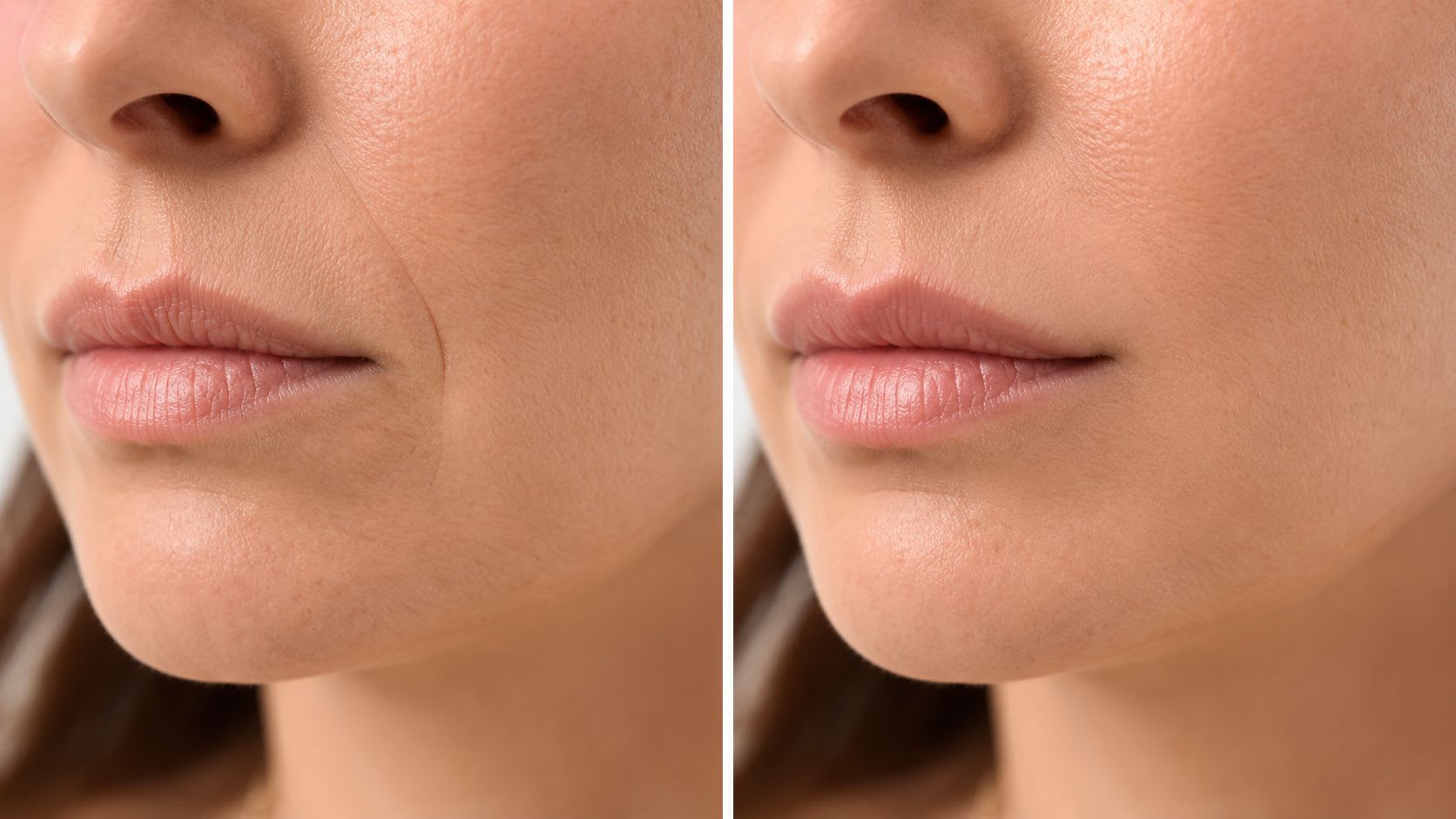
Why fillers behave differently
Most dermal fillers used in aesthetic medicine are designed as more structured gels. Their job is to remain where they are placed so they can support tissue, soften a hollow, define a border, or create projection. That's why they are used for areas such as lips, cheeks, chin, jawline, and certain folds.
If you want a basic non-medical refresher on what hyaluronic acid is and why it's valued in skin care and injectables, the ArtNaturals hyaluronic acid guide is a straightforward companion read. It's not a substitute for a medical consultation, but it helps explain the ingredient itself in plain language.
What fillers are good at
Fillers are useful when the issue is structural rather than diffuse. A few common examples make the distinction clearer:
- Cheeks: To restore shape when the mid-face has flattened.
- Lips: To increase volume or redefine the border.
- Jawline or chin: To improve contour and support.
- Specific folds: To soften areas where local support is needed.
This is why many patients become disappointed if they choose filler for a problem that is mainly about skin quality. Filler can sometimes soften the look of fatigue, but it won't function like a broad skin-conditioning treatment. In the same way, Profhilo® won't create the kind of targeted lift or shape that filler can provide.
The practical difference in consultation
A skilled injector usually thinks in layers. Is the concern in the skin? In the deeper structure? In both? That is the clinical question.
If your concern is “My face looks less defined,” filler often enters the discussion. If your concern is “My skin looks tired and thin,” filler may not be the logical first step.
For a neutral overview of treatment uses and clinic discussions, the BeautyGuide dermal fillers page can help you prepare before a consultation.
A Side-by-Side Comparison Profhilo vs Dermal Fillers
The easiest way to compare Profhilo vs filler is to stop grouping them together as generic injectables and look at what each one is meant to achieve.
| Feature | Profhilo | Dermal Fillers |
|---|---|---|
| Main purpose | Improve skin quality | Restore or enhance structure |
| Effect on face shape | Does not markedly change facial proportions | Can change contour and projection |
| Product behaviour | Spreads through superficial tissues | Stays in targeted placement areas |
| Best suited to | Hydration, firmness, radiance, fine textural ageing | Volume loss, shaping, definition, local support |
| Treatment style | Diffuse and global | Precise and localised |
| Typical visual outcome | Fresher, smoother-looking skin | More contour, support, or fullness |
Goal and aesthetic outcome
Profhilo® suits patients who want their skin to look healthier without obvious reshaping. The result is often described as fresher or more supple.
Fillers suit patients who need correction in a defined area. They are chosen when a practitioner wants to build, support, or rebalance.
Mechanism and placement
Profhilo® disperses. That matters because its effect is broad rather than sculptural.
Fillers stay where they are placed. That local stability is what makes them useful for contouring. If a patient wants lip enhancement, cheek restoration, or chin support, that precision is the point.
Some of the confusion around Profhilo vs filler comes from the ingredient, not the outcome. Both may involve hyaluronic acid, but they are formulated and used very differently.
Type of concern each one addresses
Profhilo® tends to make sense for concerns such as:
- Dullness: Skin looks tired rather than hollow.
- Fine surface ageing: Texture is less smooth and less elastic.
- Diffuse dehydration: The issue isn't one line or one feature.
Fillers tend to make sense for concerns such as:
- Volume loss: The cheeks or temples appear depleted.
- Feature enhancement: The patient wants more shape in lips, chin, or jawline.
- Support around folds: The issue is structural rather than purely skin-based.
How results feel in real life
Many new patients in Switzerland find the comparison most helpful.
With Profhilo®, friends may say you look well-rested or notice your skin looks better, without being able to identify why. With filler, the result is usually easier to localise. The lips may look fuller. The cheek may look lifted. The jawline may look clearer.
Neither outcome is more natural. The naturalness depends on whether the treatment matches the problem, and whether the injector uses restraint.
A practical rule for consultations
Bring your concern in ordinary language, not product language.
Instead of saying, “I want filler,” say, “My lower face looks heavier and my skin looks tired.” Instead of saying, “I want Profhilo®,” say, “I don't want more volume, but I want my skin to look better.” Those descriptions help a practitioner decide whether the issue is skin quality, structure, or a combination.
Which Treatment Is Right for Your Goals
The right choice depends less on age than on the pattern of change you're seeing.
If your skin has become drier, less elastic, and less radiant, Profhilo® often fits the problem more closely. If your face has lost support in a specific place, or you want more contour, filler is usually the more direct tool.
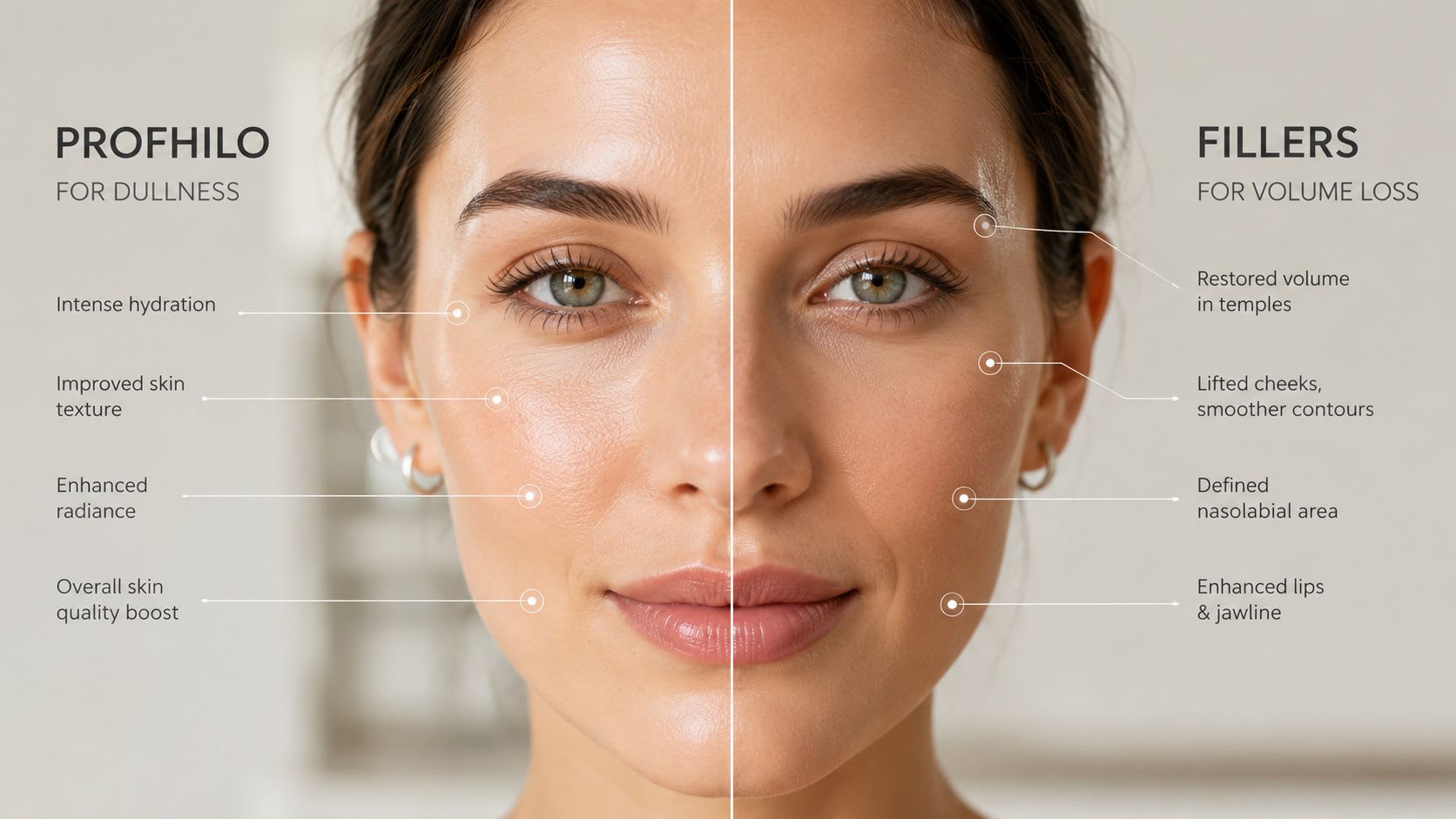
Choose Profhilo if your main issue is skin quality
Profhilo® may be the better starting point if your concerns sound like this:
- “My skin looks tired.” You're not asking for larger features. You want a fresher overall appearance.
- “I've got fine lines and crepey texture.” The problem is surface quality and elasticity.
- “I want subtle improvement.” You prefer not to alter your facial proportions.
This is often the group of patients who worry about looking puffy. In many cases, they don't need added structure first. They need better-quality skin.
Choose filler if your main issue is shape or support
Filler usually enters the discussion when the concern is more anatomical:
- Cheek flattening or hollowing
- Lip enhancement
- Jawline or chin definition
- Targeted support in a localised area
In those cases, hydration alone won't rebuild contour.
When a combination plan makes sense
This is the part many basic comparisons miss. For Swiss patients thinking beyond a single appointment, Profhilo® can function as a foundation treatment rather than a competing one.
A useful financial and strategic detail is that a single Profhilo® session in Switzerland costs around CHF 450 and gives a result for 6 to 9 months, while fillers range from CHF 600 to CHF 1,200 per session with results lasting 6 to 18 months. Beyond these figures, Profhilo® can reduce long-term filler volume needs by 20 to 30% by improving skin elasticity, and patients who start with Profhilo® often need less filler later (Swiss pricing and long-term planning insight for Profhilo®).
That doesn't mean Profhilo® replaces filler. It means better skin quality may improve how much structural correction is needed.
Decision shortcut: If you want to look refreshed, think skin first. If you want to look more defined, think structure first. If you want both, ask about sequencing.
In practice, this sequencing can matter. A patient in Geneva who treats skin quality first may later need a more conservative volume approach. For someone who values subtlety and long-term planning, that can be an advantage both aesthetically and financially.
Safety Recovery and Costs in Switzerland
A typical Swiss consultation often reaches the same moment. You understand the aesthetic difference between Profhilo® and filler, then the practical questions take over. How much recovery should you plan for, what are the risks, and how should you think about cost over a year or two rather than one appointment?
Safety starts with the product category and the injector
Profhilo® and dermal fillers are both injectable hyaluronic acid treatments, but they are not handled in exactly the same way. Profhilo® is used more like a skin-quality treatment. Filler is used more like a shaping tool. That difference matters for safety, because a product placed to hydrate and remodel the skin does not carry the same pattern of risk as a product placed to create structure in a precise anatomical plane.
For Profhilo®, expected short-term reactions are usually limited to small bumps at injection points, mild swelling, tenderness, or bruising that settles quickly. For dermal fillers, those same temporary reactions can happen, but the discussion must go further. A careful Swiss consultation should also cover asymmetry, lumpiness, migration, and the rare but serious vascular complications associated with filler injections. The medical literature on filler complications consistently treats vascular occlusion as an uncommon but important risk that every injector must be prepared to recognise and manage promptly.
Low downtime does not mean low responsibility.
Recovery tends to be simpler with Profhilo®
Many patients choose Profhilo® because recovery is usually straightforward. The treatment is delivered at a small number of points, and visible marks are often brief. You may still have swelling or a bruise for a few days, especially if you are prone to bruising, but the treatment generally fits more easily around work and social plans.
Filler recovery is less predictable because it depends on the area treated, the volume used, and how much correction is being attempted. Lips, tear troughs, and jawline treatments often need more planning than a skin-quality session. A patient treated on Friday may look presentable by Monday, but a patient with a noticeable bruise or swelling can need longer. This is why timing matters. If you have a wedding, a business presentation, or travel planned from Zurich or Geneva, ask your injector how much buffer time they advise for that specific area.
Cost in Switzerland. Look at the treatment plan, not just the session price
Swiss pricing varies by city, clinic, injector experience, and product used. Profhilo® is usually sold as a course rather than as a one-off event, because the usual starting plan involves two sessions spaced about a month apart. Fillers are usually priced by syringe, and the final cost depends heavily on the area and the amount needed.
That difference can confuse first-time patients. A single filler appointment may look more direct because you can see structure being added immediately. Profhilo® can look less obvious on paper because it works gradually through skin quality. But for the right patient, especially someone in their thirties, forties, or fifties who is noticing crepey texture, early laxity, or dullness more than true volume loss, Profhilo® can function like groundwork before any sculpting is considered.
A practical analogy helps here. If filler is like adjusting the frame of a chair, Profhilo® is more like improving the fabric stretched over it. If the skin envelope is in better condition, some patients later need less structural product to get a balanced result. That can matter financially in Switzerland, where small differences in syringe use add up over repeated maintenance visits.
Questions worth asking in a Swiss clinic
Cost-efficiency does not mean choosing the cheaper line on a price list. It means matching the product to the problem early, so you do not pay for unnecessary correction later.
Useful consultation questions include:
- Is my main issue skin quality, volume loss, or both?
- If we start with Profhilo®, could that reduce how much filler I may need later?
- What short-term reactions are common for this area?
- What rare complications do you specifically watch for, especially with filler?
- How many sessions or syringes should I budget for over the next 12 months, not just today?
Those questions often lead to a better plan than asking only, "What does one session cost?" In Swiss aesthetic medicine, the more economical choice over time is often the treatment sequence that uses the least product necessary to reach your goal safely and subtly.
How to Choose a Qualified Clinic in Switzerland
Choosing between Profhilo® and filler is only half the decision. The other half is choosing the person who will assess your face properly.

A good Swiss consultation should feel diagnostic, not transactional. The practitioner should ask what bothers you, examine skin quality and facial structure separately, and explain why one option, or a staged combination, makes sense. If the clinic moves too quickly to a product recommendation, that's a reason to slow down.
What to check before booking
- Medical credentials: Verify the physician in MedReg and check whether they hold relevant FMH specialist recognition where applicable.
- Treatment reasoning: Ask why they recommend Profhilo®, filler, or both, and what problem each product is meant to solve.
- Experience with restraint: Ask to see examples of subtle work in patients with concerns similar to yours.
- Risk explanation: The clinic should explain complications in clear language, especially for fillers.
- Follow-up plan: You should know what happens after treatment, not only on the treatment day.
For readers interested in the Swiss reputation for skincare standards more broadly, the Swiss heritage of Karin Herzog offers a useful cultural side note on why Swiss consumers often prefer credibility and discipline over hype.
If you're comparing providers across cities such as Zurich, Geneva, Basel, Bern, or Lausanne, a curated clinic directory can make that process easier. You can browse Swiss aesthetic clinics on BeautyGuide to continue your search.
Frequently Asked Questions
Can Profhilo make my face look puffy or unnatural
Profhilo® is usually chosen for skin quality, not for changing facial shape. It spreads through the treated area to improve hydration and skin texture, so the result is meant to look fresher rather than fuller.
That said, patients sometimes use the word "puffy" to describe several different things. One person means swelling in the first day or two. Another means a face that looks heavier because too much filler was used over time. Those are different issues, and it helps to ask your injector which risk they are addressing in your case.
For Swiss patients who want subtle maintenance, this distinction matters. If your main concern is tired, crepey, or less elastic skin, starting with Profhilo® can sometimes improve the canvas enough that you need less filler later, or can delay adding larger filler volumes.
Is one treatment more painful than the other
Both treatments involve injections, so some discomfort is normal. The feeling is different rather than "more" or "less."
Profhilo® is often described as a brief sting or pressure at a small number of planned points. Filler can feel more noticeable in areas such as the lips or nasolabial folds, especially when the product is being placed with precision to shape or support tissue. Numbing methods, technique, and your own sensitivity all influence the experience.
A useful question in consultation is not only "Will it hurt?" Ask how the clinic reduces discomfort, how long the appointment takes, and whether the area you want treated is known to be more sensitive.
How soon will I see results
Filler usually shows its main structural effect quickly because it adds support where it is placed. If a cheek has been lifted or a lip border has been defined, you can often see that change early, even allowing for short-term swelling.
Profhilo® works more like improving the quality of the fabric rather than adding padding underneath it. Changes tend to appear gradually after the treatment course, with skin looking more supple, better hydrated, and a little more refined over the following weeks, as noted earlier in the article.
This slower timeline can still be cost-conscious over the long term. If skin quality improves first, later filler plans may be smaller and more targeted. For a patient in Zurich or Geneva comparing treatment budgets over a year rather than a single visit, that is often the more useful comparison.
BeautyGuide helps patients in Switzerland compare aesthetic treatments and discover qualified clinics with a safety-first lens. If you're weighing Profhilo® against dermal fillers in Zurich, Geneva, Basel, Lausanne, or beyond, explore BeautyGuide to review treatment information, compare clinics, and prepare for a more informed consultation.
Explore More
This article is for informational purposes only and does not replace professional medical advice.