
PRP for hair is a regenerative treatment that uses the healing power of your own blood to stimulate dormant hair follicles. In essence, a concentrated solution is created from your blood—rich in platelets—to help reduce shedding, improve hair thickness, and encourage new growth. It has become a common choice in Switzerland for individuals noticing the first signs of hair thinning.
How PRP Treatment Rejuvenates Hair Follicles
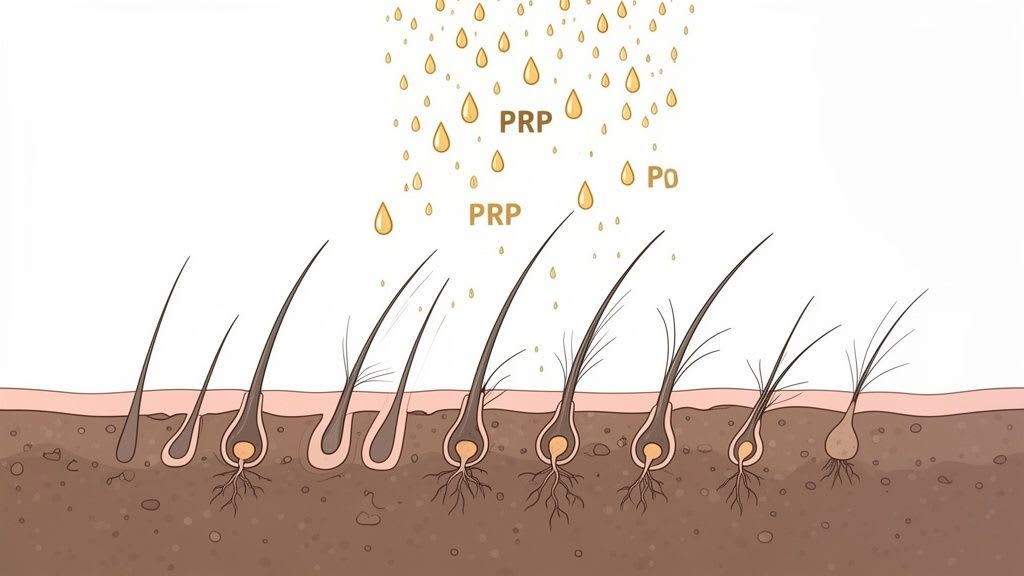
Platelet-Rich Plasma (PRP) therapy taps into your body's natural repair systems to combat hair loss. The entire process begins with a small blood sample, similar to a routine blood test. This blood is then placed into a centrifuge, a machine that spins it at high speed to separate its components.
The Power of Platelets
This centrifugation process isolates the platelets and plasma from the red blood cells, creating a golden, highly concentrated serum packed with growth factors. If hair follicles are struggling, the PRP acts like a targeted nutrient boost, delivering nourishment directly to the root.
These growth factors are natural proteins that, when injected back into the scalp, begin their work:
Stimulating follicles: They send signals to dormant or weakened hair follicles, encouraging them back into the active growth phase.
Boosting blood flow: They promote the formation of tiny new blood vessels around the hair root, improving circulation and the delivery of oxygen and nutrients.
Strengthening hair shafts: This enhanced nourishment helps produce thicker, more robust hair strands, which contributes to a fuller appearance.
Reducing shedding: By anchoring the follicles more firmly and extending their growth cycle, PRP can help reduce excessive hair fall.
The entire process is autologous, meaning it uses materials sourced directly from your own body. This aligns with a preference in Switzerland for natural, minimally invasive treatments and significantly reduces the risk of allergic reactions.
A Natural Approach to Hair Restoration
This regenerative technique is not about adding foreign chemicals; it's about concentrating your body's own healing potential exactly where it is needed. By stimulating follicles that are thinning but not yet completely inactive, PRP offers a proactive strategy for managing certain types of hair loss.
The same principles that make PRP effective for hair are also used in other aesthetic treatments. For instance, you can discover more about its benefits for skin rejuvenation in our detailed guide on the PRP Face Rejuvenation treatment.
This scientific foundation has made PRP a trusted option in Swiss aesthetic medicine for individuals looking to restore their hair's health and volume in a natural way.
What to Expect During a PRP Session in Switzerland
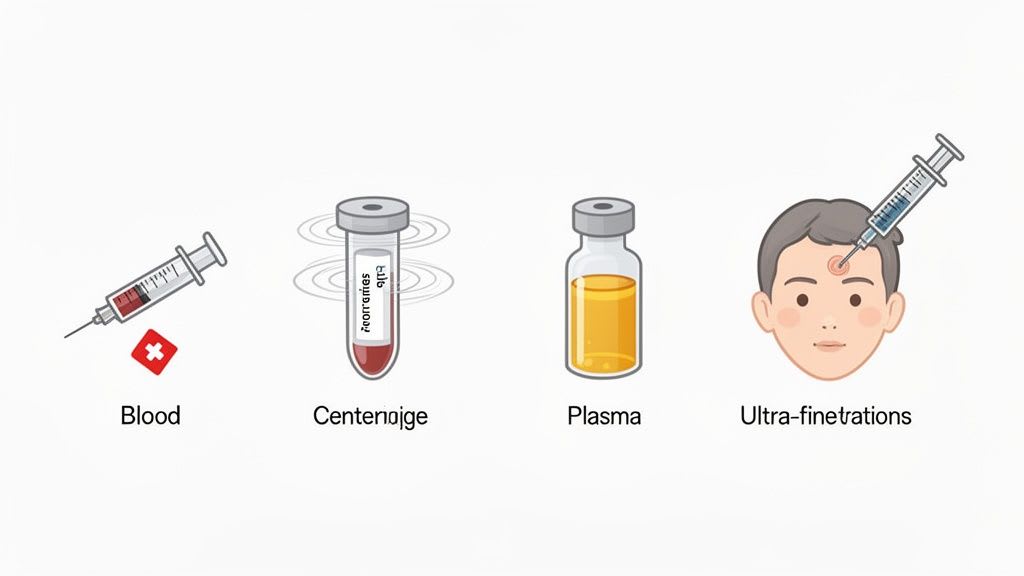
If you're considering PRP for hair loss, you may be wondering what the treatment itself involves. In a Swiss clinic, the process is straightforward and conducted with a focus on safety and comfort, upholding Switzerland's high medical standards.
The procedure is often called a "lunchtime treatment." Many specialised Swiss clinics can perform the entire session in about 30 to 60 minutes, allowing it to be integrated into a regular day. You can explore the details of this efficient hair restoration therapy to see how these sessions can support fuller, healthier-looking hair.
The Four Key Stages of Treatment
A PRP session follows four precise stages, all handled by a skilled medical professional.
- Blood Draw
- Centrifugation Process
- PRP Preparation
- Scalp Injections
Comfort and Safety During the Procedure
Patient comfort is a key consideration in Swiss medical care. While the injections are very quick, your practitioner can offer a topical anaesthetic cream or a cooling device to numb the area beforehand, ensuring the experience is as comfortable as possible.
The entire process is carried out in a sterile clinical environment. Because the treatment uses your own biological material, the risk of allergic reactions is virtually eliminated, making PRP in hair one of the safer hair restoration treatments available.
After your session, you might notice some redness or tenderness on your scalp, which is normal and usually subsides within a day or two. Your clinic will provide simple aftercare advice, such as avoiding intense exercise or harsh hair products for a short period. The goal is a seamless, effective, and comfortable experience from start to finish.
Determining if PRP Is Right for You
Platelet-Rich Plasma therapy can be beneficial for thinning hair, but it's not a universal solution. The most important first step is to determine if you are a suitable candidate. The effectiveness of PRP in hair treatment depends on the specific cause and stage of your hair loss.
A consultation with a qualified medical professional in a Swiss clinic is essential. Only a specialist can diagnose the cause of your hair loss and advise if PRP is a suitable path for you.
Who Is an Ideal Candidate?
PRP works by stimulating and strengthening hair follicles that are weak or dormant. It cannot revive follicles that are no longer viable. PRP provides a boost to existing follicles; it does not create new ones.
The best results are often seen in:
Individuals in the early stages of hair loss: If you have recently started noticing thinning from androgenetic alopecia (pattern baldness) or a general decrease in density, you may be a good candidate.
People with weakened but living follicles: If fine, 'vellus' hairs are visible in thinning areas, it's a positive sign that follicles are still alive and can be stimulated.
Both men and women: PRP can be effective for both genders, provided the type of hair loss is appropriate for the treatment.
The objective of PRP is to make existing hair appear thicker and denser by stimulating follicles that are still functional. It is less effective on areas that have been completely bald for an extended period, where follicles may have permanently ceased activity.
Who Is Not a Suitable Candidate for PRP?
Certain conditions can make PRP an unsuitable or inadvisable choice. Any reputable Swiss clinic will be transparent about these contraindications during your consultation.
For example, individuals with active scalp infections, certain blood disorders, or specific autoimmune conditions may be advised against the procedure. This is why a thorough review of your medical history is critical—it ensures your safety and helps set realistic expectations.
It's also worth noting that PRP can be combined with other treatments. Many people use it to complement other approaches. For example, it’s often recommended to support healing and growth after a hair transplant. If you're considering a more comprehensive approach, our guide on choosing the best hair transplant options in Switzerland may be helpful.
Ultimately, a professional evaluation is the only way to know for sure. It will provide a clear, honest assessment of what to expect and ensure your treatment plan is tailored to your specific situation.
Treatment Timeline and Expected Results
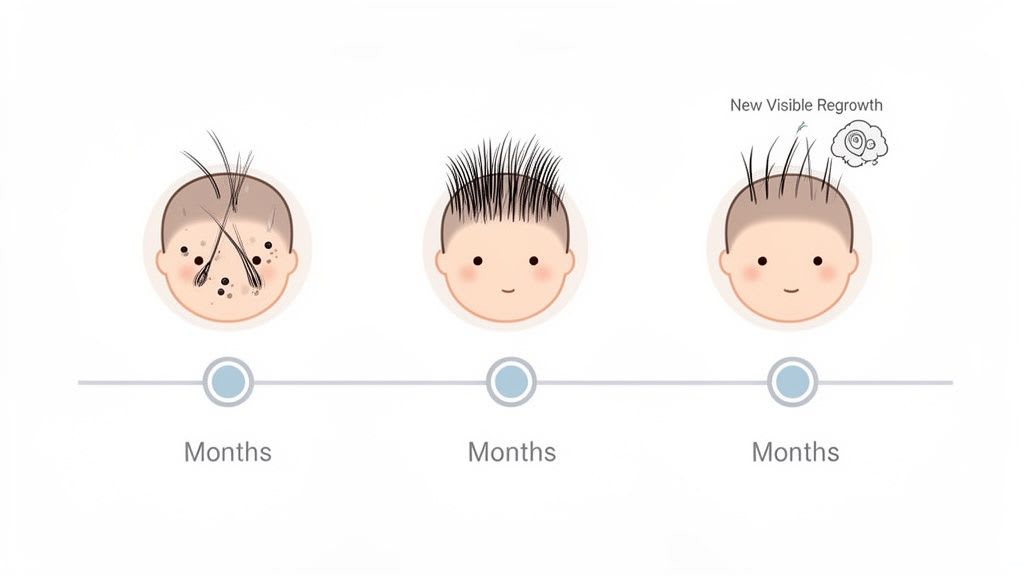
When considering PRP in hair treatments, it is important to understand that results are not immediate. PRP works by stimulating your body's natural hair growth cycles, so improvements appear gradually over several months. Swiss medical professionals will explain this realistic timeline during your consultation.
The process can be compared to tending a garden. The initial series of treatments is the "loading phase," enriching the scalp environment with a high concentration of growth factors to stimulate dormant follicles. Subsequent maintenance sessions help sustain the health of the hair.
The Initial Treatment Phase
A standard protocol in Switzerland involves a series of sessions to begin the process. For example, leading clinics like the University Hospital Zurich (USZ) often recommend an initial course of <strong>3 to 4 sessions</strong>, with each treatment spaced about a month apart.
This schedule is designed to provide a consistent supply of growth factors to stimulate your hair follicles over a critical early period. While significant new hair growth may not be visible immediately, this is when important foundational work is being done. The first signs are often subtle but indicate the treatment is having an effect.
PRP is a biological process that relies on time and consistency. Adhering to the recommended treatment plan is essential for achieving noticeable, lasting results.
A Realistic Timeline of What to Expect
Each patient's journey is unique, and results depend on factors like the type of hair loss, genetics, and overall health. However, based on clinical experience in Switzerland, a general timeline can help set clear expectations.
Here’s a breakdown of what you can typically anticipate after starting your PRP treatments.
PRP Hair Treatment Timeline and Expectations
| Timeframe | Expected Outcome |
|---|---|
| Months 1–3 | The first positive sign is often a noticeable reduction in hair shedding. Your existing hair may also start to feel stronger and look healthier, with improved texture and shine. |
| Months 4–6 | This is when visible new growth may begin to appear. You might spot fine, new "baby hairs" emerging in thinning areas, which can gradually improve scalp coverage and density. |
| Months 6–12 | Results continue to mature. The full effect of the initial treatment series often becomes apparent within this window, with hair appearing substantially fuller as new strands grow longer and thicker. |
After completing the initial series, your practitioner will work with you to create a personalised maintenance plan. For most people, this means a follow-up session every 6 to 12 months.
These maintenance treatments are important for preserving your progress and sustaining the hair density achieved. This commitment ensures that the high-quality care you receive in a Swiss clinic provides long-term value for your hair's health.
Understanding PRP Treatment Costs in Switzerland
When considering a procedure like PRP for hair, cost is a key consideration. The price reflects an investment in the quality, safety, and medical expertise for which Switzerland is known. Understanding the factors that influence pricing can help you plan your hair restoration with confidence.
In Switzerland, PRP therapy is typically priced per session. The cost can vary between clinics due to several key factors.
What Influences the Cost of PRP
Clinic Location: Clinics in major urban centres like Zurich or Geneva generally have higher operational costs than those in smaller towns, which can be reflected in their pricing.
Practitioner's Expertise: The fee often corresponds to the practitioner's experience. A dermatologist with specialised training in regenerative hair treatments may have a different fee structure than a general practitioner. Their skill can directly impact the quality of the outcome.
Technology Used: The quality of the equipment, from the centrifuge to the preparation kits, can influence the price. Advanced systems that yield a higher concentration of platelets may involve a higher cost but can deliver a more potent treatment.
To provide a general idea, Swiss costs for a single PRP hair session typically range from approximately CHF 560 to CHF 1,000. For example, some clinics offer PRP injections starting at a certain price point, with a reduced cost per unit if more is needed during the same appointment. For a specific example, you can review their PRP treatment costs to understand how one leading clinic structures its pricing.
It is important to note that PRP for hair loss is considered an aesthetic procedure. As such, it is not covered by basic Swiss health insurance (Grundversicherung) or most supplementary plans.
To help manage the investment and promote consistency, many clinics offer treatment packages. Purchasing a block of initial sessions upfront often comes at a reduced overall price. This can make the treatment more accessible and helps you commit to the recommended schedule, which is crucial for achieving the best possible outcome.
How to Choose a Qualified PRP Provider in Switzerland
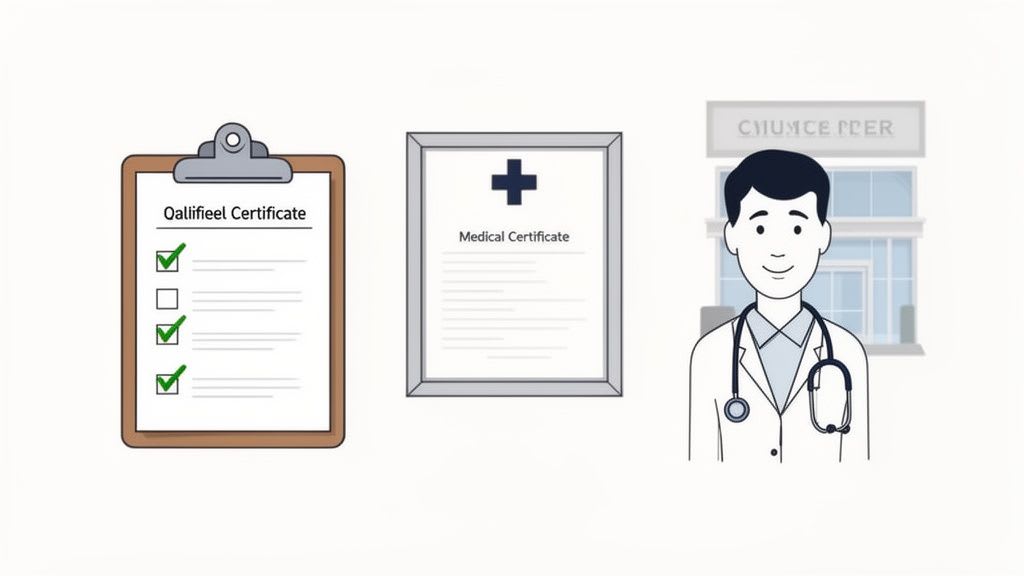
The success of your PRP in hair treatment depends heavily on the person performing it. In Switzerland, where medical standards are exceptionally high, selecting the right professional is the most important decision you will make. A positive result begins with a procedure that is, first and foremost, safe and expertly administered.
Your search should focus on one non-negotiable criterion: a qualified medical professional. This means a dermatologist or a physician with specialised training in aesthetic and regenerative medicine. These experts have a deep understanding of hair biology, scalp anatomy, and the precise techniques required for effective PRP therapy.
Verifying Credentials in Switzerland
Verifying a doctor's qualifications in Switzerland is relatively straightforward. A key indicator of credibility is their registration with the Swiss Medical Association (FMH). This mark signifies they have completed the country's rigorous training and certification standards. Clinics listed on curated platforms like BeautyGuide.ch also typically undergo a verification process, offering an additional layer of assurance.
The quality of the PRP itself is directly related to the equipment and methods used. A reputable medical clinic invests in high-grade, approved centrifuge systems. A superior system is designed to produce a high concentration of viable platelets, which is essential for stimulating dormant hair follicles.
Key Questions for Your Consultation
The consultation is your opportunity to evaluate the provider. A confident, reputable professional will welcome your questions and provide clear, open answers.
Here are a few things to confirm:
Who will perform the procedure? Ensure that a qualified doctor will be administering the treatment.
What is your experience with my type of hair loss? Ask about their experience with PRP for hair and with cases similar to yours.
What PRP system do you use? Inquire about the brand and whether it's a medically certified device. This speaks to their commitment to quality.
What does the full treatment plan entail? A professional should provide a clear plan, including the number of initial sessions, the expected timeline for results, and a long-term maintenance strategy.
What are the post-treatment instructions? They should provide concrete guidelines on what to do—and what to avoid—to protect your investment and ensure a smooth recovery.
Choosing the right provider is about finding a medical partner who prioritises your safety and understands your aesthetic goals. For a deeper dive, our article on how to select the right beauty clinic offers further guidance.
Common Questions About PRP Hair Treatments
It is normal to have questions before committing to a treatment like PRP. An informed decision is the first step towards feeling confident in your hair restoration journey. Here are straightforward answers to frequently asked questions in Swiss clinics.
Is the Treatment Painful?
This is a common concern. For most people, the discomfort is minimal. The procedure uses a very fine needle, and patients often describe the sensation as a series of quick, small pricks on the scalp.
Your comfort is a priority. A professional Swiss clinic will take steps to make the experience as comfortable as possible. This may include:
Applying a topical anaesthetic cream to the scalp beforehand.
Using a cooling device to numb the skin just before each injection.
Sometimes, a vibrating tool is used nearby to distract from the sensation.
With these measures, the vast majority of individuals find the treatment entirely manageable.
What Are the Potential Side Effects?
One of the main advantages of PRP is its excellent safety profile. Since the treatment is derived from your own blood, the risk of an allergic reaction or rejection is virtually non-existent.
The most common side effects are mild and temporary, typically resolving within a day or two. These may include:
Some redness or slight swelling at the injection sites.
A temporary feeling of tightness on the scalp.
Occasionally, minimal bruising.
When a qualified medical expert performs the procedure in a sterile environment, serious complications are exceptionally rare.
PRP is a regenerative treatment, not a drug. It works with* your body's own healing systems rather than introducing a foreign substance. This is why significant side effects are uncommon.
Can PRP Be Combined with Other Hair Loss Treatments?
Yes. PRP often works well as part of a comprehensive strategy for hair loss. It can be combined with other proven treatments, which may lead to enhanced overall results.
For example, many specialists recommend using PRP alongside daily treatments like topical minoxidil or oral finasteride. It is also an excellent adjunctive therapy after a hair transplant, as it can help accelerate healing and support the growth of new follicles.
How Long Do the Results Last?
PRP is not a one-time permanent solution for hair loss, but the results can be long-lasting with a proper maintenance plan. It is similar to maintaining a garden—it requires consistent care to flourish.
After completing your initial series of sessions, most people find they can maintain their results with a follow-up appointment every 6 to 12 months. This regular stimulation helps keep the hair follicles active and healthy, making PRP a sustainable, long-term approach to managing hair density.
Explore More
This article is for informational purposes only and does not replace professional medical advice.