
You're in a Zurich consult room or scrolling between meetings in Geneva, trying to answer a practical question, not a cosmetic one. If you have acne scars, etched lines, sun damage, or texture that makes makeup sit unevenly, the issue is whether a skin resurfacing laser will give enough improvement to justify the downtime, and which clinic in Switzerland is qualified to do it well.
That decision gets confusing quickly because resurfacing isn't one device. It's a category of treatments, with older fully ablative CO2 systems, lighter fractional options, and non-ablative approaches that behave very differently in recovery and effect. A clear explanation matters, especially if you're comparing treatment paths in Zurich, Geneva, Basel, Lausanne, or elsewhere in Switzerland.
For readers who want a deeper look at one classic device family, the CO2 laser for wrinkles guide is a useful external primer. Here, the focus stays on what Swiss patients need to decide, what the laser is doing to the skin, who should wait, and how to judge a clinic with a calm eye.
Why Swiss Patients Are Asking About Skin Resurfacing Laser
A common Swiss scenario looks like this. You've got a work calendar full of client meetings, a long-planned wedding, or winter weekends in the Alps, and you're weighing whether scar revision or wrinkle treatment is worth the temporary redness and peeling. That's the core question behind most searches for skin resurfacing laser in Switzerland, not just “what does it treat?”
The article's job is to make the choice clearer. A resurfacing laser can mean a deep ablative CO2 session, a more precise Er:YAG pass, or a fractional protocol that preserves surrounding tissue while still stimulating collagen. Those options differ in downtime, result intensity, and which skin types or concerns they suit best, so the right answer depends on your skin, your calendar, and the provider's judgement.
Why the term matters
The history explains why clinics separate these treatments today. Modern resurfacing grew out of the mid-1980s ablative CO2 lineage, then became more predictable with scanning devices in the 1990s and more tissue-sparing with fractional technology from 2004 onward, which is why Swiss clinic menus now often distinguish older full-field resurfacing from fractional systems (historical review). That progression is not academic trivia, it shapes the safety profile, the healing window, and the level of correction you can reasonably expect.
Practical rule: if a clinic can't explain whether it is offering ablative, fractional, or non-ablative treatment, it probably hasn't framed the procedure carefully enough for a first consultation.
For patients in Zurich or Geneva, the main task is simple in theory and tricky in practice. You're not just choosing a device, you're choosing a treatment philosophy, and the best clinic conversation starts there.
How Laser Resurfacing Actually Works on Skin
Laser resurfacing works by creating a controlled injury in the skin, so the body repairs it in a more ordered way. The device removes or heats targeted layers, then the skin responds with new surface cells and collagen remodeling underneath. That is why the goal is smoother texture, softer lines, and a firmer feel after healing, rather than a short-lived polish.
Ablative and non-ablative work differently
In ablative resurfacing, the laser removes the epidermis and heats the dermis. That stronger response usually produces more visible change, and it also means more recovery. In non-ablative treatment, the skin surface stays more intact and the device mainly heats the dermis, so downtime is shorter and the result is usually more subtle.
The history of the field helps explain why clinics separate these approaches today. A 1985 report of CO2 treatment for actinic cheilitis is widely cited as the first published case, and four years later the same approach was extended to facial actinic damage (historical review). That progression matters because today's CO2 laser, Er:YAG, and fractional systems all build on the same core idea, using controlled laser injury to remodel skin.
Robotic scanning in the 1990s made beam delivery more even and predictable, and fractionated thermolysis became available in 2004, allowing treatment to preserve surrounding tissue while still triggering collagen change (practice-pattern review). Swiss clinics often separate “full ablative” and “fractional” treatments for this reason. They are different levels of tissue effect, not marketing labels.
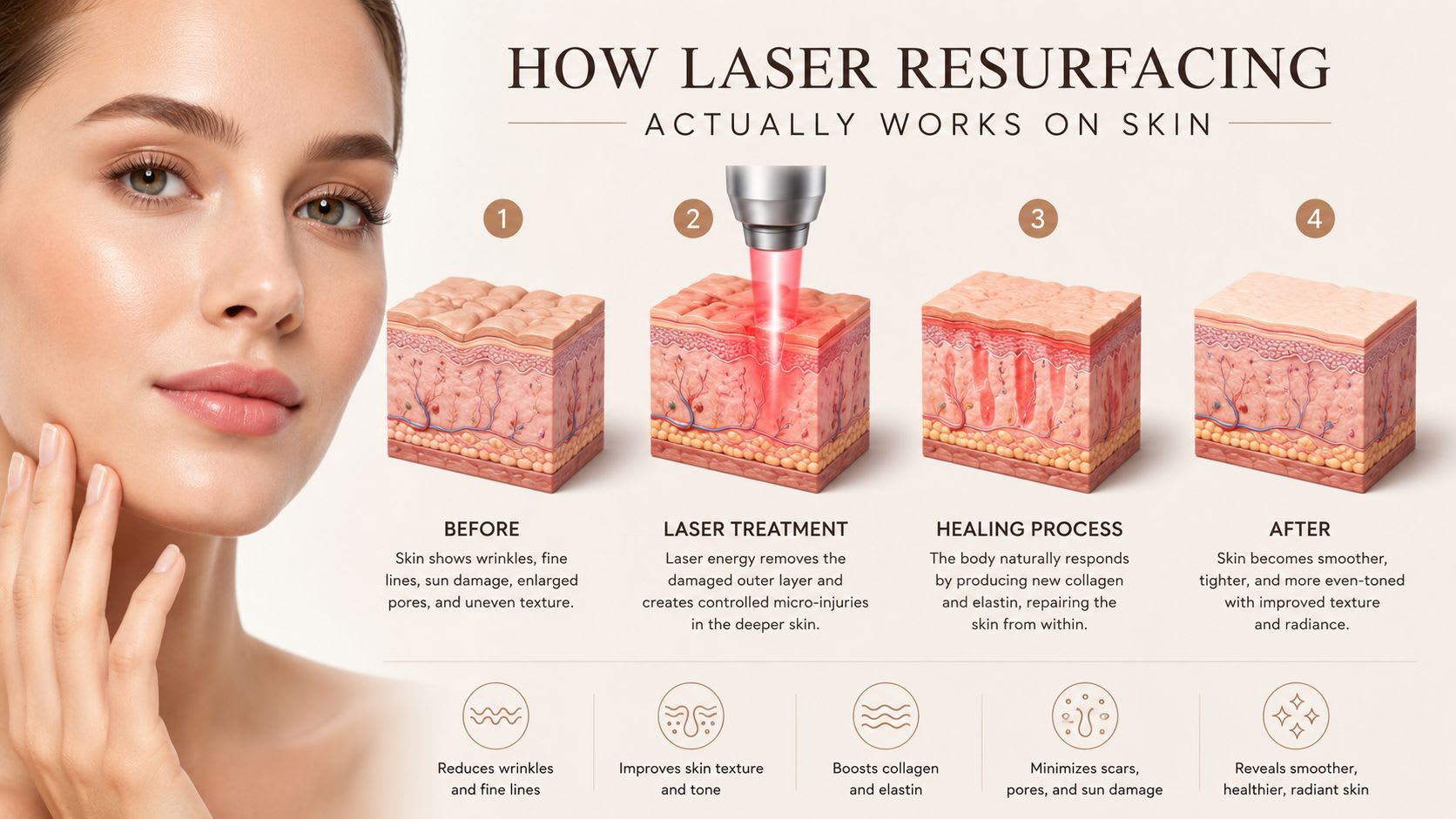
For a patient in Zurich or Geneva, the practical question is not only what the device can do. It is which amount of skin injury matches the concern, the recovery window, and the experience of the credentialed provider. A more aggressive setting can correct more, but it also asks more of the skin during healing. For a clinic overview of one common CO2 approach, see this CO2 laser resurfacing treatment overview.
Comparing CO2, Erbium and Fractional Lasers
The patient-facing difference between CO2 and Er:YAG is mostly a trade-off between tightening and healing speed. CO2 lasers at 10,600 nm are strongly absorbed by water, so they're used for deeper vaporisation and more thermal tightening. Er:YAG at 2,940 nm is also water-targeted, but it gives more precise ablation with less residual heat, which often means faster healing and potentially less immediate tightening (Mayo Clinic, technical review).
What the settings mean in practice
The numbers only matter if they change the patient experience. In a relevant Swiss-market Er:YAG class, one platform operates at 2,940 nm with up to 250 J/cm² fluence, 100 to 1,500 µs pulse duration, and repetition rates up to 20 Hz (Mayo Clinic). On the CO2 side, fractional systems can report scan densities of 25 to 3,025 PPA/cm² and pulse widths down to 0.1 to 0.9 ms in ultra-pulse mode (technical review). The takeaway is simple, aggressiveness is tunable, not fixed.
A higher-energy setting isn't automatically better. It just means the operator has chosen a different balance between correction, hemostasis, thermal spread, and recovery.
For Swiss patients comparing devices, that balance often matters more than the brand name. A strong CO2 protocol may fit deeper wrinkles or etched scars, while fractional Er:YAG can suit a patient who wants visible improvement with less healing time. Non-ablative systems usually sit lower on the intensity scale, so they're often chosen when downtime needs to stay modest.
| Laser family | Typical downtime | Best-fit indications | Skin-type caution |
|---|---|---|---|
| Ablative | Longer, with peeling and more visible healing | Deeper wrinkles, more pronounced scars, stronger texture correction | Higher dyspigmentation caution in darker skin |
| Non-ablative | Shorter, with subtler recovery | Mild texture change, early photodamage, maintenance-style rejuvenation | Often better tolerated, but results are less dramatic |
| Fractional CO2 | Variable, from moderate to longer depending on intensity | Wrinkles, acne scars, photodamage, more intensive resurfacing | Needs careful parameter selection, especially in pigmentation-prone skin |
| Fractional Er:YAG | Usually shorter than full ablative options | Fine lines, texture, lighter scar revision | Precision helps, but patient selection still matters |
For a deeper Swiss-oriented overview of one resurfacing category, the clinic page on CO2 laser resurfacing is a relevant starting point.
What a Skin Resurfacing Laser Can Realistically Treat
The four buckets patients ask about most are wrinkles, scars, pigmentation, and texture. The laser choice shifts depending on which of those is most dominant, because a deep acne scar and a fine line next to the mouth do not need the same amount of energy.
Matching concern to technology
Deep perioral wrinkles and severe acne scars usually push clinicians towards ablative or deep fractional CO2, because those concerns need stronger remodeling. Fine lines and overall texture often fit fractional Er:YAG or non-ablative fractional treatment, where the aim is improvement without a long recovery. Photodamage and uneven tone can sometimes be addressed with lighter fractional or combination protocols, especially when the concern is more diffuse than deep.
That broad menu exists because the field matured quickly after selective photothermolysis in the 1980s and then expanded again when fractional technologies entered practice in 2004 to 2005 (practice-pattern review). Today's Swiss clinics can therefore match the same patient concern to several different tools, rather than forcing one treatment for every problem.
A good consultation doesn't begin with “Which laser do you want?” It begins with “What is the skin problem doing, and how much recovery can you realistically accept?”
Patients often get confused because pigmentation can mean two very different things. Some people mean sun spots and uneven colour, while others mean post-inflammatory marks left after acne. In clinic, those are not identical targets, so the provider has to decide whether resurfacing is the main tool, part of a staged plan, or not the right first step at all.
Who Is a Good Candidate and Who Should Wait
Candidacy is where responsible Swiss practice becomes visible. A patient can be motivated and still be a poor candidate for a specific laser setting, especially if the skin is pigment-prone, inflamed, or recovering from another treatment. A careful clinic will screen before booking, not after the device is already warmed up.
Skin type and pigment risk matter
Darker skin types, especially Fitzpatrick IV to VI, have a higher dyspigmentation risk with ablative resurfacing, and standard references list them as a caution area or contraindication for that form of treatment (clinical reference). That doesn't mean no treatment is possible. It does mean the clinic may steer toward gentler, more individualized approaches instead of a one-size-fits-all ablative plan.
Reasons to defer treatment
Several conditions or exposures should trigger a pause. A review of laser and IPL rejuvenation lists active psoriasis, lichen planus, infectious lesions such as herpes simplex, active neoplastic disease, a tendency to scar, phototoxic substances, retinoid treatment within six months, pregnancy, recent tanning, and epilepsy for visible-spectrum devices as contraindications or major precautions (review of contraindications). In practice, those are the details that separate a safe consultation from an overly optimistic one.
- Active skin disease: If the skin is already inflamed, the laser can aggravate the problem rather than solve it.
- Infection history: Active herpes lesions need attention before resurfacing, because reactivation is a real concern.
- Medication timing: Retinoids and other phototoxic substances change risk, so timing matters.
- Pregnancy and tanning: These are reasons to defer, not negotiate.
A patient is not “rejected” when a clinic says no. In good Swiss practice, that usually means the provider wants medical clearance, more time, or a different treatment path. That is the right answer when safety and pigmentation risk are on the line.
Recovery, Downtime and Swiss Sun Season Planning
A skin resurfacing laser does not heal in one single phase. The skin usually moves through redness and swelling first, then peeling or crusting, then gradual re-epithelialisation as the surface closes again. How long that sequence lasts depends on whether the treatment is ablative, fractional, or non-ablative, and on how strongly the clinician set the device.
The trade-off is straightforward. Deeper treatment can give more visible change, but it usually requires more downtime and more careful aftercare. Gentler settings often fit busier schedules, yet they may need a more gradual approach to reach the same level of improvement.
What patients actually experience
A clinical series reported that treated patients were often graded as having excellent or very good results, while some still developed temporary post-inflammatory hyperpigmentation, acne, herpes type 1 reactivation, or needed a secondary touch-up resurfacing. Major complications such as hypertrophic scarring were not reported in that series. Those figures matter because they show the treatment can work well, while still carrying real minor risks and, sometimes, the need for a second pass.
Recovery also has a seasonal side in Switzerland. Patient guidance from the Cleveland Clinic advises avoiding tanning and heavy sun exposure before treatment, using broad-spectrum sunscreen daily in the lead-up, and remembering that skin can stay sun-sensitive for some time afterwards. That matters in a country where outdoor sport, terrace weather, and alpine reflected UV can complicate healing.
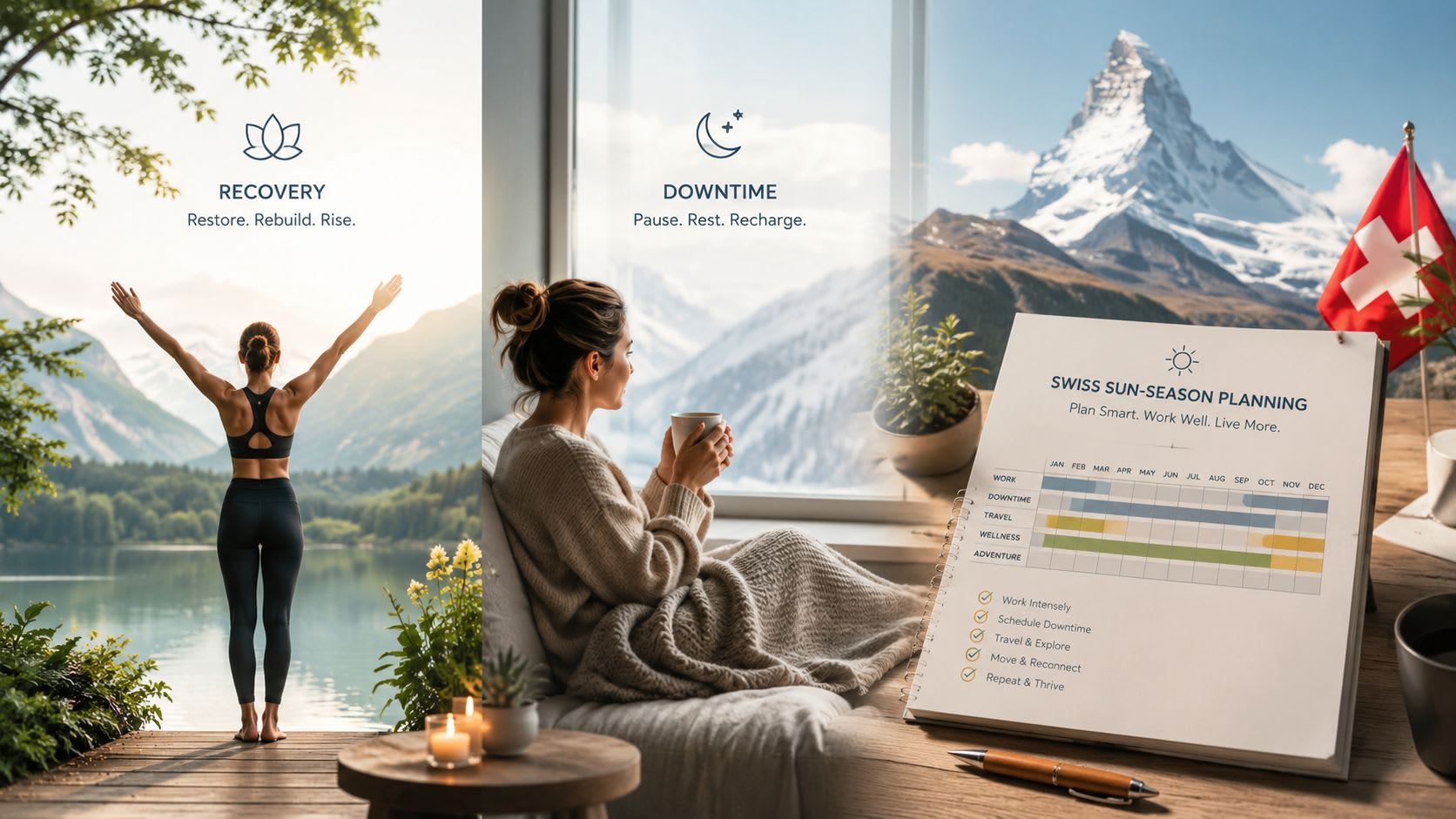
For many Swiss patients, autumn and winter are the easier windows for ablative or deeper fractional work. Lighter fractional sessions can still fit into other seasons if sun protection is strict, but the practical question stays the same, can your routine really avoid UV exposure while the skin is healing? If the answer is uncertain, timing deserves more caution.
Aftercare is where many people underestimate the process. Simple barrier support, gentle cleansing, and steady UV avoidance matter because freshly treated skin behaves more like a healing wound than normal facial skin. A general guide to complete after sun care helps explain why that caution is part of recovery, not an optional extra.
For patients comparing collagen-stimulation options alongside laser, the microneedling treatment page is a useful reference when the decision is between more downtime with laser and a gentler, staged approach.
How Resurfacing Compares With Peels, Microneedling and PRP
A Swiss patient weighing resurfacing often starts with a simple question, what level of correction is needed, and how much healing can life in Zurich, Geneva, or elsewhere in Switzerland realistically absorb? That answer usually points the discussion toward one of three paths, a peel, a laser, or a collagen-stimulating treatment such as needling or PRP.
Chemical peels and resurfacing can overlap when the target is rough texture or sun damage. The mechanism is different, though. A peel uses controlled chemical exfoliation at the skin surface, while a laser lets the clinician shape depth, heat, and treatment pattern more precisely. That extra control matters more when the concern is scar edges, etched lines, or other changes that sit deeper in the skin.
Microneedling, including RF-microneedling, and PRP usually sit at the lower-intensity end of the range. They are often chosen when a patient wants gradual collagen stimulation with less visible downtime, or when the skin is better suited to a staged approach than to a single stronger pass. In practice, they can stand alone, or they can be paired with laser in a planned sequence when the goal is to build change slowly rather than create one larger jump in recovery.
For a patient, the decision is usually less about which method sounds stronger and more about which method fits the skin, the season, and the tolerance for redness, crusting, or temporary pigment change. That is especially true in patients with a higher risk of post-inflammatory hyperpigmentation, where intensity has to be matched carefully to skin type and aftercare discipline.
What patients experience
A peel often feels more superficial and more predictable in the short term, but it gives the clinician less control over exactly where treatment reaches. Laser resurfacing can be customized, which is why it is often chosen when the treatment plan needs to match a specific scar pattern or a mix of wrinkles and texture change.
Microneedling and PRP are usually easier to fit around work and social commitments because recovery tends to be lighter. They are also a sensible reference point if you are comparing collagen-induction options and want to understand where a gentler approach sits relative to laser, which is why the microneedling treatment page is a useful next stop. For pricing context, the ProMD Health Bel Air pricing guide shows how much the final quote can shift depending on device choice, treatment depth, and area, even before local Swiss clinic standards are added into the decision.
Costs, Session Counts and Choosing a Swiss Clinic
In Switzerland, price is usually driven by device class, treated area, session count, consultation structure, and clinic location. A full-face fractional CO2 session will not be priced the same way as a small perioral pass or a lighter Er:YAG treatment, and practices in Zurich, Geneva, and Lausanne often sit at the upper end of the market. Exact prices vary, so a clinic should give a personalised quote and explain what is included, such as anaesthetic, aftercare products, and follow-up.
Session count depends on intensity. Lighter non-ablative and fractional work often comes as a series, while deeper ablative resurfacing may be planned as a single session with more recovery. The right cadence depends on the indication, the skin type, and how much correction the provider is trying to achieve.
A useful comparison point for patients reading around the topic is a local pricing breakdown such as the ProMD Health Bel Air pricing guide, which shows how many variables sit behind one quote. Swiss patients should still insist on a local, personalised estimate, because clinic standards, device choice, and aftercare expectations differ by provider and city.

Before booking, check the clinic's MedReg physician license, relevant FMH specialisation where applicable, before-and-after photos with consistent lighting, a transparent consultation, and a clear aftercare plan. Also pay attention to whether the provider is willing to defer or refuse treatment when candidacy is poor. For Swiss patients comparing clinics across cities, the BeautyGuide clinics directory is a practical place to continue that search.
If you're comparing skin resurfacing options in Switzerland, use BeautyGuide to check clinic credentials, treatment categories, and city-based availability in one place. Visit BeautyGuide to narrow down qualified Swiss clinics, then bring your skin type, downtime limits, and seasonal timing questions to a proper consultation.
This article is for informational purposes only and does not replace professional medical advice.