
You might be looking at your reflection in a Zurich clinic waiting room or checking your neck line after a video call in Geneva, and realising that makeup and skincare no longer change the shape you see. That moment often raises a practical question, not a glamorous one, what needs lifting, and what kind of facelift matches that change?
For many people, the answer is not “more tension in the skin”. It is deeper structural support. The SMAS face lift sits in that category, because it works on the layer beneath the skin that helps define the jawline, lower cheeks, and neck. In Switzerland, that matters because patients usually want two things at once, a natural result and a clear, medically serious explanation of what the surgeon is really lifting.
Why the SMAS Layer Changes a Face Lift
A patient in Zurich can often describe the problem in simple words, “my jowls are softer” or “my neck looks heavier”, but the solution depends on anatomy, not just appearance. If the surgeon only tightens skin, the face can look pulled without being properly supported. If the lift reaches the SMAS, the tension moves deeper, and that changes both the look and the feel of the result.
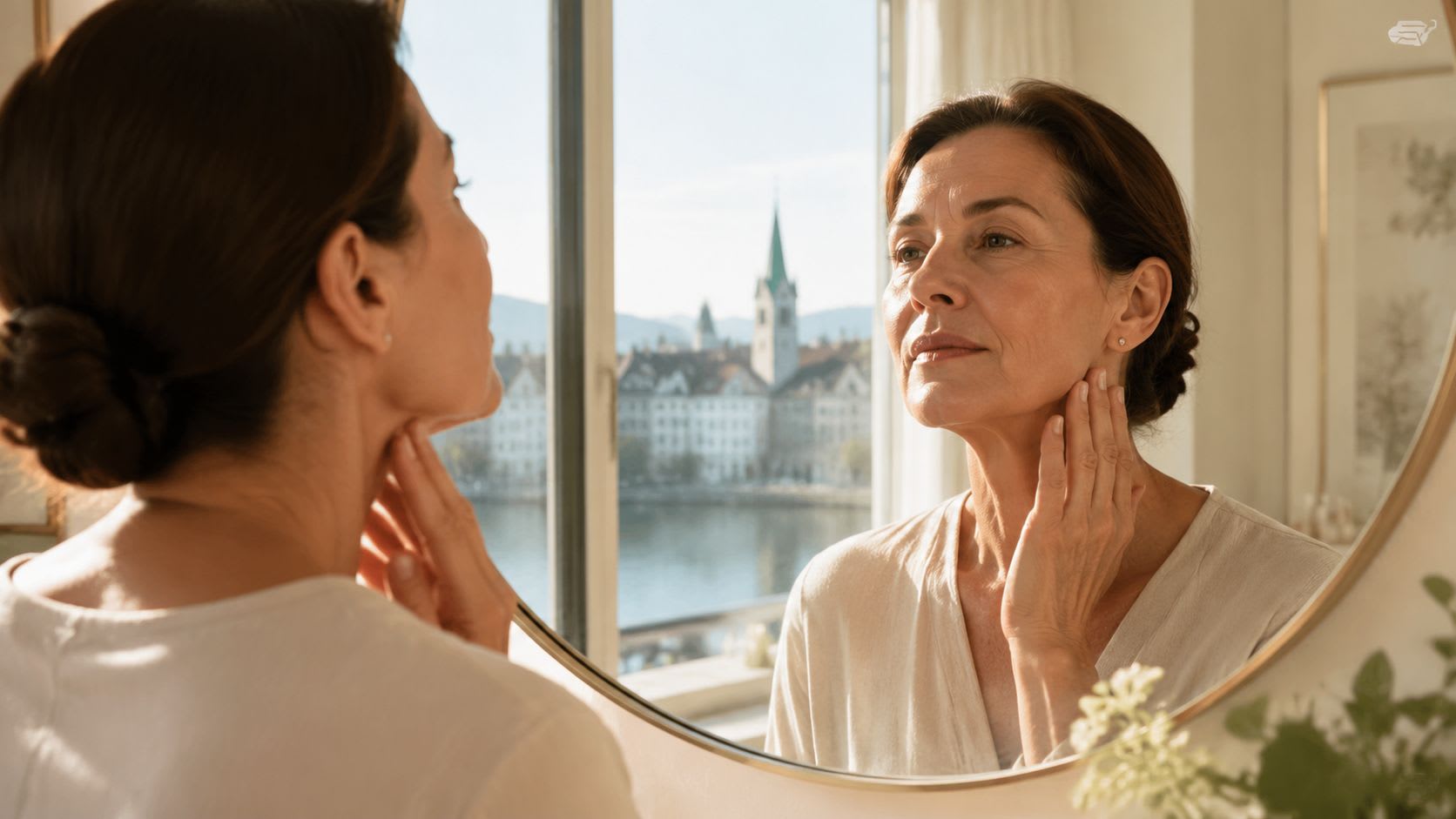
What patients usually notice first
The first concerns are often jowls, jawline softness, and neck laxity. Those changes make the lower face appear less defined, even when the skin itself is still fairly healthy. That is why SMAS-based surgery is so often discussed for lower-face and neck rejuvenation rather than as a general skin-tightening treatment.
Why the layer matters more than the label
The core point is not the name of the operation. It is whether the surgeon is lifting the deeper support system or relying on the skin alone. A true SMAS facelift is defined by limited SMAS undermining, with no significant undermining beyond 3 cm, followed by plication or imbrication, which shifts the work away from the skin and onto a deeper support layer (Plastic Surgery Key).
That architectural choice shapes how a lift holds up over time and how much tension sits on the closure. It also explains why two clinics may both use the phrase “SMAS face lift” while describing meaningfully different operations. For a Swiss patient comparing clinics, that difference is not cosmetic, it is central to informed consent.
The SMAS Anatomy Explained in Plain Language
Think of the face like a house. The skin is the outer siding, the fat is part of the insulation, and the SMAS works more like the load-bearing frame beneath the surface. If you pull only on the siding, the house still sags where the frame has loosened. If you support the frame, the whole structure behaves differently.
What the SMAS actually is
The SMAS is a fibromuscular structure composed of the platysma muscle, parotid fascia, and the fibromuscular layer covering the cheek. It also divides the face's deep and superficial fat compartments and helps transmit, distribute, and amplify facial muscle activity (NCBI Bookshelf). That is why surgeons target it rather than treating a facelift as if it were only about the skin.
In plain terms, the SMAS is part of the face's structural support, not a decorative term. When ageing and gravity soften this layer, the lower face loses definition. A surgeon who works at this level is trying to reposition support, not merely stretch skin tighter.
Why the definition can still be confusing
There is one nuance patients rarely hear in clinic marketing. A 2024 review in Plastic and Reconstructive Surgery states that the SMAS does not exist as a distinct layer except over part of the parotid gland, while still having surgical meaning as a flap created during dissection (Plastic and Reconstructive Surgery). That sounds contradictory, but it is useful.
It means the term SMAS facelift is partly anatomical and partly surgical. Different surgeons may create and manipulate that plane in different ways. For patients in Switzerland, the practical lesson is simple, ask what the surgeon means by SMAS, because the same phrase can hide different operative planes, fixation choices, and recovery profiles.
Practical rule: if a clinic cannot explain which tissue plane it lifts, it is hard to compare its result with another clinic's result.
SMAS Technique Variants Compared
The phrase SMAS face lift covers a family of operations, not one fixed method. That matters because a patient with mild lower-face heaviness may need a different lift from someone with deeper jowling or midface descent. The decision is less about branding and more about how far the surgeon dissects, what they anchor, and what direction the tissues are moved.
SMAS facelift variants at a glance
| Technique | Best-suited concern | Lift vector | Key trade-off |
|---|---|---|---|
| SMAS plication | Mild to moderate lower-face laxity | Folding and tightening the layer without broad release | Less invasive, but limited change in heavier descent |
| SMASectomy | More established jowling or tissue redundancy | Removes a strip, then closes the edges | Can create strong support, but depends on careful tissue handling |
| High-SMAS | Midface and cheek descent | Vertical suspension, with the flap anchored to temporalis fascia and mastoid fascia | Strong vector control, but requires precise balancing to avoid lower-eyelid distortion (Aesthetic Surgery Journal) |
| Deep-plane extension | More advanced midface and neck correction | Releases retaining ligaments and lifts deeper tissue with the overlying skin | Greater dissection, potentially stronger midface and neck correction, but higher reported complications (PubMed review) |
How the choice is usually framed
SMAS plication is often the simplest way to improve moderate laxity. SMASectomy tends to suit patients with more obvious tissue excess, while high-SMAS gives the surgeon more control over the vertical direction of lift, which matters when the cheek and jawline need different support.
The deep-plane approach goes further into the deeper face. In a comparative study of 50 patients, it produced better midface and neck results than SMAS plication, but the larger pooled review also found a higher overall complication rate for deep-plane facelifts, 17.2% versus 10.3% across SMAS cases overall (PubMed systematic review). That is the central trade-off, deeper dissection may improve certain contours, but it also increases complexity.
For Swiss patients, the most useful question is not “which facelift is best?” It is “which plane matches my pattern of ageing, and why?”
Realistic Outcomes and Complication Ranges
A good SMAS consultation should not promise a perfect face. It should translate evidence into a realistic range, then explain where your own anatomy sits inside that range. The best numbers available are useful here because they provide a benchmark, not a guarantee.
What the pooled data suggests
A 2024 systematic review screened 2,474 studies and included 21 studies with 2,896 patients. Across those SMAS cases, reported patient satisfaction was 87.8%, with an overall complication rate of 10.3% (PubMed systematic review). A broader review of 27 studies covering 6,086 patients found more than 85% satisfaction and an overall complication rate of 8.33% (PubMed review).
Those are pooled figures, not personal forecasts. A qualified Swiss surgeon should use them to explain the general risk-benefit profile, then adjust the discussion for your skin quality, medical history, and the exact technique being considered.
The complications patients ask about most
The most common pooled complications in the broader review were temporary facial nerve injury at 0.85%, hematoma at 1.62%, and skin necrosis at 0.41% (PubMed review). Another educational source states that a well-performed SMAS flap facelift lasts, on average, 12 years, which is why the approach became such a foundation in facial rejuvenation surgery (PubMed-indexed study).
A separate educational review describes results as often lasting 5 to 10 years, with visible settling over 1 to 3 months and final results usually seen at 6 months and beyond (educational review). That range is useful for expectation-setting, even though no individual face ages on a timetable.
A deeper lift can improve contour, but it also adds dissection. The more extensive the plane, the more carefully the surgeon must weigh gain against risk.
For readers comparing options in Switzerland, the most honest conversation is about the trade-off between a more powerful correction and a higher complication burden. That is especially relevant when a clinic suggests a deep-plane approach for a patient who might do well with a more limited SMAS lift.
Candidacy, Procedure Day, and Swiss Recovery Timeline
The best candidate is usually a healthy adult with midface descent, jowling, and neck laxity, plus realistic expectations. People with uncontrolled medical problems, poor wound-healing factors, or very limited concerns may be better served by non-surgical options or a lighter procedure. The point is not to exclude people, it is to match the operation to the degree of ageing.
What the day of surgery often looks like
A SMAS facelift is typically performed on an outpatient basis, usually under general anaesthesia, and often takes 5 to 6 hours (educational review). In Swiss practice, that usually means a planned surgical day in an accredited setting, with structured follow-up rather than casual check-ins.
The operative length matters because it reflects the complexity of the lift, the number of planes addressed, and whether other procedures are added. If the plan includes the neck, brows, or eyelids, the consultation should make clear how that affects the theatre time and recovery burden.
A realistic recovery rhythm
In the first week, most surgeons advise head elevation, limited movement, and careful attention to swelling control. Around the second week, suture removal and a more public social return often become realistic, though patients still look and feel healing. By 1 to 3 months, much of the visible settling has usually occurred, and by 6 months and beyond, final contour becomes clearer (educational review).
What matters in Switzerland is follow-up quality. A patient should know who reviews wound healing, who answers concerns after hours, and how complications are escalated if they appear. If you notice increasing pain, one-sided swelling, bleeding, new weakness, or skin colour changes, that is not a “wait and see” situation.
What Drives SMAS Face Lift Cost in Switzerland
Swiss pricing varies because the operation itself is only one part of the bill. A SMAS facelift quote usually reflects the surgeon's training, the theatre team, facility standards, and how much time the operating room is reserved. Two highly qualified surgeons can quote different figures for the same broad label because they are not selling the same package.
The main cost drivers
The biggest variables are FMH training and subspecialty, anaesthesia team fees, accredited facility costs, and operative time. The quote also changes if the surgery includes fat grafting, a neck lift, or eyelid surgery, because each adds complexity and time. Post-operative garments, follow-up cadence, and revision policy can also affect the final amount.
Location matters too. Operating costs in Zurich, Geneva, Basel, Lausanne, Bern, Lucerne, Lugano, and Zug can differ from those in smaller cities, even when clinical quality is similar. That does not mean a higher quote is automatically better, only that the cost structure is different.
What a reliable quote should include
Ask for an itemised estimate that states what is included and what is not. A clear quote should separate the surgeon's fee, anaesthesia, theatre use, garments, follow-up visits, and possible revision terms. If a clinic won't spell those out, the comparison is incomplete.
Published pricing online can help with orientation, but only an in-person assessment can link anatomy to a proper plan. For a related overview of structural facial tightening, you can also review BeautyGuide's discussion of skin-tightening treatment options in Switzerland, which helps place surgical and non-surgical choices in context.
How to Choose a Qualified Swiss SMAS Surgeon
A Swiss facelift consultation should feel methodical, not sales-driven. The surgeon ought to explain the operative plane, show similar cases, and discuss complications in plain language. If that doesn't happen, the patient is being asked to book before understanding the operation.
What to verify before booking
Start with the physician's MedReg registration and the FMH specialty title in plastic, reconstructive and aesthetic surgery. Then check whether the clinic uses an accredited operating facility and a qualified anaesthesia provider. A proper portfolio should show before-and-after cases that resemble your face shape, skin quality, and ageing pattern, not just idealised marketing images.
Ask directly: which SMAS plane will you use, what vector are you choosing, where are the incisions, and who manages complications if they occur?
Those questions matter because the term “SMAS face lift” can cover different techniques, as covered earlier. You should also ask whether the surgeon performs the procedure personally, who assists in theatre, and what the revision policy looks like. A clinic that answers clearly is already giving you useful evidence about its standards.
Red flags that should slow you down
Be cautious if the consultation avoids technical detail, if credentials are vague, or if the booking pressure feels urgent. A surgeon who cannot explain why a plication, a high-SMAS lift, or a deeper approach fits your face may be relying on branding instead of anatomy.
BeautyGuide's verified clinic listings can help you continue the search in Zurich, Geneva, Basel, Lausanne, Bern, Lucerne, Lugano, and Zug, while keeping the focus on credentials and location rather than marketing claims. For a clinic example, see Center for Plastic Surgery in Switzerland, then compare the consultation style against what you need.
Alternatives to SMAS Lifts and Final Patient FAQs
Not everyone who wants facial rejuvenation needs a surgical lift. Ultherapy and other HIFU treatments, thread lifts, filler-based contouring, mini lifts, and isolated neck lifts may fit earlier ageing or people who want less downtime. They can soften change, but they usually cannot reproduce the structural repositioning of a true SMAS dissection. For non-surgical tightening, Ultherapy and HIFU in Switzerland is a useful comparison point.
Three questions patients often ask
How visible are scars at one year? In a well-planned facelift, scars are usually placed around natural creases near the ear and hairline, so they are intended to be discreet once healing has matured.
Can a SMAS facelift be combined with eyelid or brow surgery? Yes, combination surgery is common in facial rejuvenation, but the exact plan depends on anaesthesia time, recovery load, and what the face needs.
What if I'm unhappy with the result? The first step is a formal review with the operating surgeon, because swelling, settling, and scar maturation can alter early impressions. If a revision is ever discussed, it should happen only after careful assessment, not impulsively.
For Swiss patients, the practical next move is simple, compare verified clinics, ask for technique clarity, and choose a surgeon who discusses anatomy rather than slogans.
BeautyGuide helps you compare Swiss aesthetic clinics with a focus on verified medical credentials, city-based searches, and clear treatment information. If you're considering a SMAS face lift in Switzerland, visit BeautyGuide to review clinics, compare consultation styles, and continue your search with a more informed shortlist.
This article is for informational purposes only and does not replace professional medical advice.