You have probably seen the pattern already. A clinic website mentions “stem cells” for younger-looking skin, stronger hair, or tissue renewal. Another page uses terms like regenerative medicine, SVF, exosomes, or cell therapy as if they all mean the same thing. Then you try to work out what is offered in Switzerland, what is legal, and what is still mostly marketing.
That confusion is reasonable. Stem cell science is real. So is the hype around it.
For a patient in Switzerland, the most useful question is not whether regenerative medicine sounds exciting. It is whether a specific treatment is clearly defined, legally compliant, medically supervised, and realistically suited to an aesthetic concern such as facial volume loss, skin quality, scar support, or hair restoration. Swiss stem cells biotech is relevant in this context. It sits at the intersection of cell storage, manufacturing quality, and the regulated clinical environment that shapes what Swiss clinics can responsibly offer.
The Promise and Hype of Stem Cells in Aesthetics
A common scenario looks like this. Someone in Zürich, Geneva, or Lugano starts researching options for tired skin, early facial ageing, thinning hair, or recovery after a cosmetic procedure. They find polished online claims for “stem cell facials” and “anti-ageing stem cell infusions”. The language sounds advanced, but the details are often blurred.
That blur matters. In aesthetics, the phrase stem cell treatment can refer to very different things.
Some clinics are talking about fat transfer techniques that use the patient’s own tissue. Others are referring to cell-rich fractions derived from adipose tissue. Some are discussing future-oriented biobanking, where cells are preserved now for possible later use. And some marketing materials use stem cell language loosely for products or protocols that are not equivalent to a true cell-based therapy.
Why Swiss patients need a different lens
Switzerland does not operate like loosely regulated markets where broad claims can circulate with little scrutiny. The Swiss approach is more conservative, and that is a strength for patients. It limits the gap between what is advertised and what can be delivered in a licensed medical setting.
In practice, that means two things.
First, real promise exists, especially where regenerative methods overlap with established aesthetic procedures such as lipofilling. Second, the scope is narrower than many patients expect after reading global online content.
A useful rule is simple. If a treatment is described as if it can improve everything from skin ageing to joint pain to energy levels, treat that as a warning sign rather than a mark of innovation.
What patients often misunderstand
Three ideas tend to get mixed together:
- Cell banking means storing biological material for possible future use.
- Regenerative aesthetics means using biologically active material in a targeted aesthetic procedure.
- Experimental medicine means approaches still under investigation, not routine beauty treatments.
A Swiss consultation should separate those categories clearly. If a clinic cannot explain that difference in plain language, the science is probably not the problem. The communication is.
A grounded way to read the field
The most reliable way to think about swiss stem cells biotech is this. It is not a magic shortcut to reversal of ageing. It is part of a highly controlled medical field that may support selected aesthetic procedures when the tissue source, processing method, and indication all fit Swiss rules.
That is a very different message from global hype. It is also far more useful if you are making a real treatment decision.
Understanding Stem Cell Science in Simple Terms
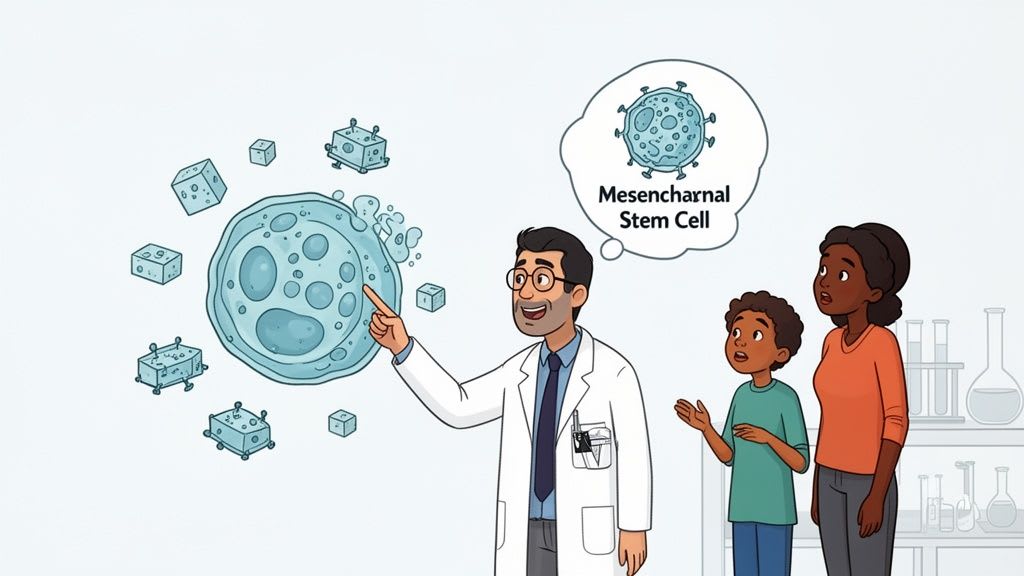
Stem cells are cells with the ability to develop into other cell types or to help coordinate repair processes in tissue. In aesthetic medicine, the cells most often discussed are mesenchymal stem cells, often shortened to MSCs.
These are not science-fiction cells. They are adult-derived cells associated with tissue maintenance and repair. In aesthetic discussions, they are usually linked to adipose tissue (fat) or to tissue collected and stored earlier, such as umbilical cord blood for future autologous use.
Think of MSCs as a repair crew
A simple analogy helps. MSCs are less like replacement bricks and more like a specialised repair and maintenance crew.
They do not “fill” an area the way a dermal filler does. Instead, they are valued because they may help signal tissue repair, support healing, and influence inflammation and local tissue behaviour. In aesthetics, that matters because skin ageing and soft-tissue decline are not just problems of lost volume. They also involve changes in tissue quality.
That is why regenerative procedures attract attention in facial rejuvenation, scar support, and tissue recovery. The aim is not only to add structure, but to support a healthier tissue environment.
Not all stem cells are the same
Patients often hear “stem cells” and assume all categories are interchangeable. They are not.
For Swiss aesthetic medicine, the focus is generally on adult-derived cells, especially from adipose tissue. That is different from embryonic stem cells, which raise separate ethical and legal issues and are not the basis of routine Swiss aesthetic care.
This distinction matters because it changes both the medical conversation and the regulatory one. A treatment based on your own tissue in a defined clinical setting is not the same as a broad, vaguely described “stem cell therapy” promoted online.
Why storage and viability matter
A second point often gets overlooked. Even when people are not pursuing treatment now, some are interested in preserving future options. The infrastructure behind storage is therefore part of the story, not a side issue.
The Cell and Gene Therapy Review overview of Switzerland’s translational pipeline notes that the University of Zurich’s Center for Therapy Development/GMP combines gene therapy, stem cell transplantation, tissue engineering, and cellular reprogramming. In practical terms, that shows how Swiss institutions connect laboratory work to clinical development. For aesthetics, it also helps explain why cryopreserved autologous material is discussed as a future regenerative resource when viability is maintained through certified systems.
What this means in a clinic setting
A patient does not need to master cellular biology to ask good questions. It is enough to understand a few essentials:
- Source matters: Is the material coming from your own body?
- Processing matters: Has it been minimally handled, or heavily manipulated?
- Purpose matters: Is the clinic using it for a defined aesthetic indication, or wrapping broad claims around a vague protocol?
The most credible clinics explain cell-based procedures in the same clear way they explain fillers, lasers, or surgery. If the explanation becomes more mysterious as the price rises, pause.
The Swiss Regulatory Framework for Cell Therapies
The Swiss regulatory environment is one of the main reasons patients should treat local stem cell aesthetics differently from international marketing. In Switzerland, a clinic cannot adopt a global buzzword and turn it into a routine cosmetic service without facing legal and quality constraints.
The key idea is that cell-based interventions are regulated according to how the cells are handled, what they are used for, and how they are manufactured. Once that framework is understood, many confusing clinic claims become easier to assess.
Why manipulation changes the legal category
A useful dividing line in aesthetics is the difference between minimally manipulated tissue and substantially manipulated cells.
Standard fat grafting gives a familiar example. A surgeon harvests fat, prepares it for transfer, and uses it for volume restoration or contour support. That sits within a known aesthetic framework.
But once cells are isolated, processed more extensively, or prepared in a way that places them into a more advanced therapeutic category, the legal and manufacturing requirements become much stricter. At that point, the treatment may be treated more like a medicinal product than a simple office-based cosmetic procedure.
That is why terms such as GMP and ATMP matter.
GMP and ATMP in plain language
GMP means Good Manufacturing Practice. It is the quality system used for pharmaceutical-grade production.
ATMP means Advanced Therapeutic Medicinal Product. When a cell-based product falls into this category, it is subject to a much higher level of control than a standard aesthetic injectible or fat transfer procedure.
The SSCB adult-cells page states that Swiss Stem Cells Biotech operates a GMP-certified laboratory, and that this qualifies its products as ATMP under EU regulations. It also notes that SSCB holds FACT-NetCord accreditation and is the only Swiss facility with this certification. For patients, that translates into a practical point. If cells are being prepared for clinical use, the quality framework behind them is not optional.
Who oversees what in Switzerland
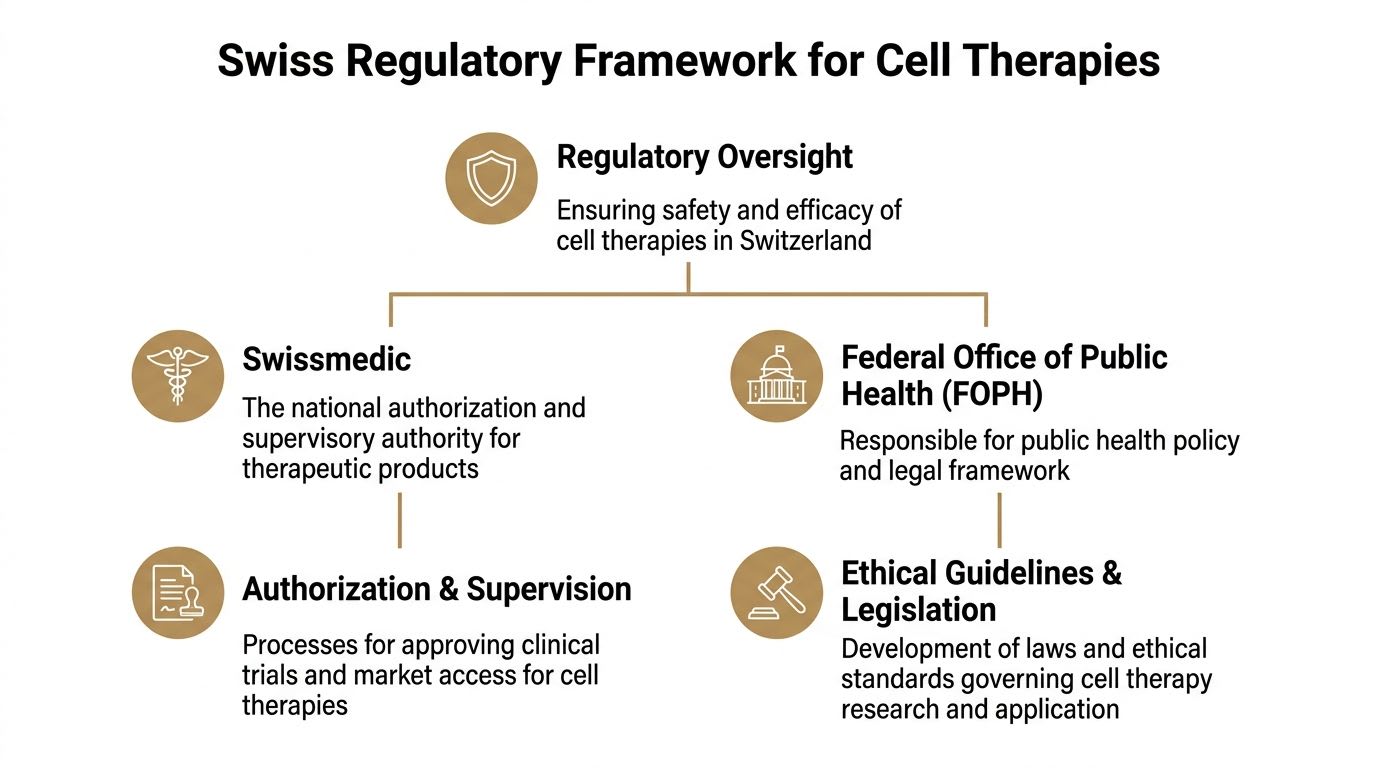
Patients often know the name Swissmedic, but not what it does. Swissmedic is the national authority that authorises and supervises therapeutic products. In cell therapies, that role becomes relevant when a product or process moves beyond simple tissue handling.
The wider Swiss framework also involves federal public health rules and ethical oversight for research activity. That means the path from laboratory work to routine clinical availability is not quick, and it is not supposed to be.
This is one reason Switzerland has been less vulnerable to the explosion of loosely described stem cell clinics seen elsewhere. Slower adoption may frustrate some patients. It also protects them.
For a broader patient-focused explanation of this mindset, https://beautyguide.ch/en/blog/how-swiss-medical-standards-protect-aesthetic-patients gives a useful overview of how Swiss medical standards shape aesthetic care.
What strict regulation means for real patients
The practical effect is not that regenerative aesthetics are impossible in Switzerland. The effect is that broad claims get narrowed into specific, supportable uses.
A reputable clinic should be able to answer questions such as:
- What exactly is being used
- How it is produced
- Whether the indication is accepted
Swiss regulation is not an obstacle to good care. It is the filter that separates a medically defined procedure from an attractive but poorly supported promise.
Approved Aesthetic Uses vs Investigational Treatments
For patients, this is usually the most important distinction. What can a serious Swiss clinic discuss as part of current aesthetic practice, and what remains investigational, unsupported, or outside accepted use?
The answer is narrower than many websites suggest.
A useful starting point comes from the SSCB about-us material, which notes two things that matter for patient expectations. First, mesenchymal cells from adipose and cord tissue in aesthetics are still an emerging area. Second, SSCB collaborates with numerous clinics, yet specific Swiss outcome data for aesthetic uses such as skin rejuvenation or hair restoration is not yet published. That absence of local published aesthetic outcome data is not a trivial detail. It means patients should ask more questions, not fewer.
What a clinic can discuss more credibly
In Switzerland, the most grounded regenerative-aesthetic conversations are usually linked to autologous tissue procedures. The classic example is lipofilling, where fat is harvested and transferred for volume restoration or contour support.
When clinics discuss adipose-derived regenerative components around this kind of procedure, the conversation remains closer to existing surgical and aesthetic practice. Typical aesthetic use cases may include facial volume support, hand rejuvenation, and selected tissue-quality goals linked to autologous fat transfer.
That is different from a general promise that stem cells can “rejuvenate the whole body”.
What should trigger caution
The biggest red flags are treatments described in broad anti-ageing language but with little procedural clarity. Examples include intravenous “stem cell drips” marketed for youthfulness, vague systemic infusions for cosmetic benefit, or injections promoted for multiple unrelated conditions under a beauty umbrella.
Patients should also be careful when a clinic presents hair restoration, skin tightening, orthopaedic complaints, and neurological improvement as if they all sit on one simple menu. In Swiss medicine, those indications are not casually interchangeable.
For a helpful parallel on how to distinguish medically grounded care from looser cosmetic claims, https://beautyguide.ch/en/blog/medical-vs-non-medical-aesthetic-treatments-what-patients-should-know offers a useful framework.
Stem Cell Applications in Swiss Aesthetics
| Application Type | Description & Status in Switzerland | Common Use Case |
|---|---|---|
| Autologous fat grafting | Established aesthetic procedure when performed in a licensed medical setting. Uses the patient’s own fat for transfer. | Facial volume restoration, contour refinement, hand rejuvenation |
| Fat grafting with regenerative focus | Discussed in selected clinics where adipose tissue is used with attention to regenerative properties. Must still be presented with precise indications and compliance. | Volume support with potential tissue-quality goals |
| Banked autologous cells for future use | Relevant as a storage strategy rather than a guaranteed current beauty treatment. Depends on future indication and regulatory pathway. | Planning for future regenerative options |
| Intravenous stem cell anti-ageing therapy | Not a standard compliant Swiss aesthetic offering. Broad cosmetic claims should be treated cautiously. | Marketed online for “longevity” or systemic rejuvenation |
| Stem cell injections for broad cosmetic or medical crossover claims | If presented without clear indication, approval context, and manufacturing detail, this sits in a high-risk information zone. | Vague claims covering skin, joints, energy, or hair simultaneously |
The practical takeaway
A patient does not need to reject regenerative medicine. A patient does need to insist on specificity.
If a clinic can explain the tissue source, the procedure, the legal status, and the realistic cosmetic aim, the conversation is on solid ground. If the language stays abstract, the treatment probably is too.
Pioneers in Swiss Stem Cells Biotech
When patients hear about regenerative aesthetics, they often focus only on the clinic consultation. That is understandable, but incomplete. The quality of any cell-related treatment also depends on the institutions behind collection, storage, processing, and traceability.
In this context, swiss stem cells biotech becomes more than a company name. It represents the infrastructure layer that helps explain why Swiss regenerative medicine has a different reputation from more loosely organised markets.
Why SSCB matters in the Swiss context
According to Parents Guide to Cord Blood Foundation’s SSCB profile, Swiss Stem Cells Biotech was founded in 2005 in Lugano and was the first family cord blood bank in Switzerland. The same profile notes that its laboratory stores more than 26,000 stem cell samples and has conducted over 400 mesenchymal stem cell releases from adipose tissue.
Those facts matter for two reasons.
First, they show continuity. A company with long-term operational history in Swiss biobanking is not entering the field as a trend response. Second, they show that clinical release is not just theoretical. There is real experience in handling and preparing biological material under a regulated framework.
Translating technical credentials into patient meaning
Patients often see terms such as FACT-NetCord, GMP-certified, clean room processing, and cryopreservation, but may not know why they should care.
In practical language, these terms point to four patient-relevant issues:
- Identity
- Quality
- Traceability
- Compliance
That does not automatically mean every possible aesthetic use is established. It does mean the underlying platform is serious.
Why this matters for aesthetic medicine
In an aesthetic setting, patients usually care about visible outcomes such as skin texture, volume, recovery, or hair density. But none of those goals can be discussed responsibly if the biological material itself is vague.
A top-tier Swiss clinic needs more than good branding and a modern treatment room. If it offers regenerative options, it should also be able to point to a credible supply and handling chain. Institutions like SSCB help anchor the conversation in something verifiable.
A useful way to think about it is this. Lasers depend on device standards. Surgery depends on operating standards. Cell-based aesthetics depend on biological standards.
In Switzerland, the strongest signal of credibility is often not the boldness of the claim but the discipline of the process behind it.
A Patient's Checklist for Choosing a Clinic
Once a clinic starts using words like regenerative, cellular, SVF, or stem cell-based, the consultation should become more detailed, not more vague. This is the moment to slow the conversation down and ask precise questions.
The wider Swiss biotech setting supports that caution. The Swiss Biotech Report 2024 reports that Switzerland’s biotech sector reached CHF 7.3 billion in revenue in 2023, with CHF 2.4 billion in R&D spending, and that Swissmedic approved 49 new drugs in 2023. For patients, the message is straightforward. Swiss medicine is built around evidence, manufacturing discipline, and regulated adoption. Your clinic choice should reflect that environment.

Questions worth asking in consultation
- Who is performing the treatment
- What is the exact source of the cells or tissue
- How is the material processed
- What cosmetic concern is being treated
- What evidence supports this use in your clinic
- What are the alternatives
For broader guidance on comparing providers, https://beautyguide.ch/en/blog/how-to-select-the-right-beauty-clinic can help patients structure a clinic search.
Red flags that should make you pause
Some warning signs are simple.
- Cure-all language
- No clear medical setting
- Pressure to book quickly
- No discussion of limits
A practical way to judge the conversation
Notice how the clinician responds when you ask direct questions. A strong consultation usually sounds measured. The doctor defines what is known, what is uncertain, and what is not offered.
A weak consultation often leans on futuristic language. It may present innovation as a substitute for evidence.
If a clinic cannot explain the treatment plainly, you should not consent to it. Complexity in biology is normal. Confusion in consent is not.
Frequently Asked Questions about Stem Cell Aesthetics
Is a stem cell aesthetic treatment the same as a stem cell facial
Usually not. “Stem cell facial” is often a marketing label rather than a precise medical term. In a Swiss medical setting, a real cell-based procedure should be clearly defined by tissue source, processing method, and indication. If the clinic cannot tell you exactly what is being used, assume the phrase is promotional rather than technical.
Can I bank my own cells for future aesthetic use
Possibly, but it is important to keep expectations realistic. Banking is primarily about preservation, not a promise of a future cosmetic treatment menu. A person may store biological material for later autologous use, but whether that material can be used for a specific aesthetic indication will depend on the future legal and clinical context at the time of use.
Patients sometimes get confused regarding this distinction. Storage is one decision. Actual treatment eligibility is a separate one.
How long is recovery after a regenerative procedure linked to fat transfer
Recovery depends more on the procedure performed than on the stem cell language around it. If the treatment involves harvesting fat and reinjecting it, downtime may include swelling, bruising, and a short recovery period at both the donor and treatment sites. The treating surgeon or doctor should explain the practical timeline based on the exact technique, not on broad regenerative claims.
How long do results last
There is no single answer because different procedures aim at different outcomes. Volume restoration, skin quality support, and tissue healing do not behave the same way. Regenerative approaches may also develop gradually rather than produce the immediate visual effect associated with fillers.
A careful Swiss consultation should separate:
- the structural result, such as volume change
- the biological aim, such as tissue support
- the uncertainty, especially where aesthetic outcome data remains limited
What does treatment cost in Switzerland
There is no reliable single price for “stem cell aesthetics” because the term covers very different interventions. A consultation, a surgical fat-transfer procedure, a medically supervised regenerative protocol, and long-term biobanking are not interchangeable services.
The safest approach is to ask for an itemised written plan that separates:
- consultation fees
- harvesting or procedure costs
- laboratory or processing components, if applicable
- follow-up care
If a clinic gives one simple headline price for a complex cell-based treatment without explaining what is included, that is a reason to ask more questions.
Are these treatments widely available in Switzerland
No, not in the broad way they are sometimes portrayed online. Switzerland has serious scientific and manufacturing infrastructure, but patient-facing aesthetic availability remains selective and tightly framed by regulation. That is why careful clinic selection matters more here than trend awareness.
Swiss patients do not need to choose between excitement and caution. They can ask for both innovation and discipline. That is the standard worth keeping.
If you are comparing regenerative aesthetic options in Switzerland, BeautyGuide can help you identify verified clinics, check practitioner credentials, and narrow your shortlist before you book a consultation.
This article is for informational purposes only and does not replace professional medical advice.