You're probably here because you want more than a holiday. You want a reset, maybe a calmer body, clearer skin, or a break from routines that have started to feel too heavy. A wellness retreat Thailand search often starts that way, with a desire to feel better, look fresher, and come back restored.
For readers in Switzerland, the harder question is not whether a retreat sounds appealing, it's whether it matches the result you want. A peaceful stay can support rest and general well-being, but aesthetic medicine is different, because it is designed to address specific concerns with regulated medical oversight. If your goal is to soften frown lines, improve skin texture, or correct volume loss, the safest path is usually a qualified clinic, not a wellness holiday.

The Allure of Rejuvenation Abroad
A Thai retreat looks attractive for good reason. The setting is often calm, the hospitality is polished, and the promise of renewal feels immediate. For many travellers, that combination is enough to make wellness retreat Thailand feel like the right answer when life in Switzerland has become too crowded, too fast, or too clinical.
That appeal deserves respect, because rest does matter. A retreat can create space for sleep, movement, reflection, and lighter living, which are all useful when stress has been building for months. The question is not whether that atmosphere has value, but whether it can be expected to deliver the kind of targeted cosmetic change people often have in mind when they start searching.
If your aim is a holiday that helps you slow down, a retreat may fit well. If your aim is a procedure that changes a facial feature, reduces a scar, or treats a specific skin concern, then the standard of care has to shift from ambience to medical precision. That is where Swiss patients need to be selective, because the service category matters more than the destination.
Before booking anything abroad, it can help to separate the trip from the treatment plan. If you want to combine travel with general relaxation, you might also plan your dream Southeast Asia trip as a leisure decision first, and treat any wellness activity as secondary. That keeps expectations realistic and prevents a holiday from being mistaken for clinical care.
Practical rule: if the outcome you want is visible and specific, ask whether the service is a medical treatment or just a restorative experience.
Defining Wellness Retreats vs Aesthetic Medicine
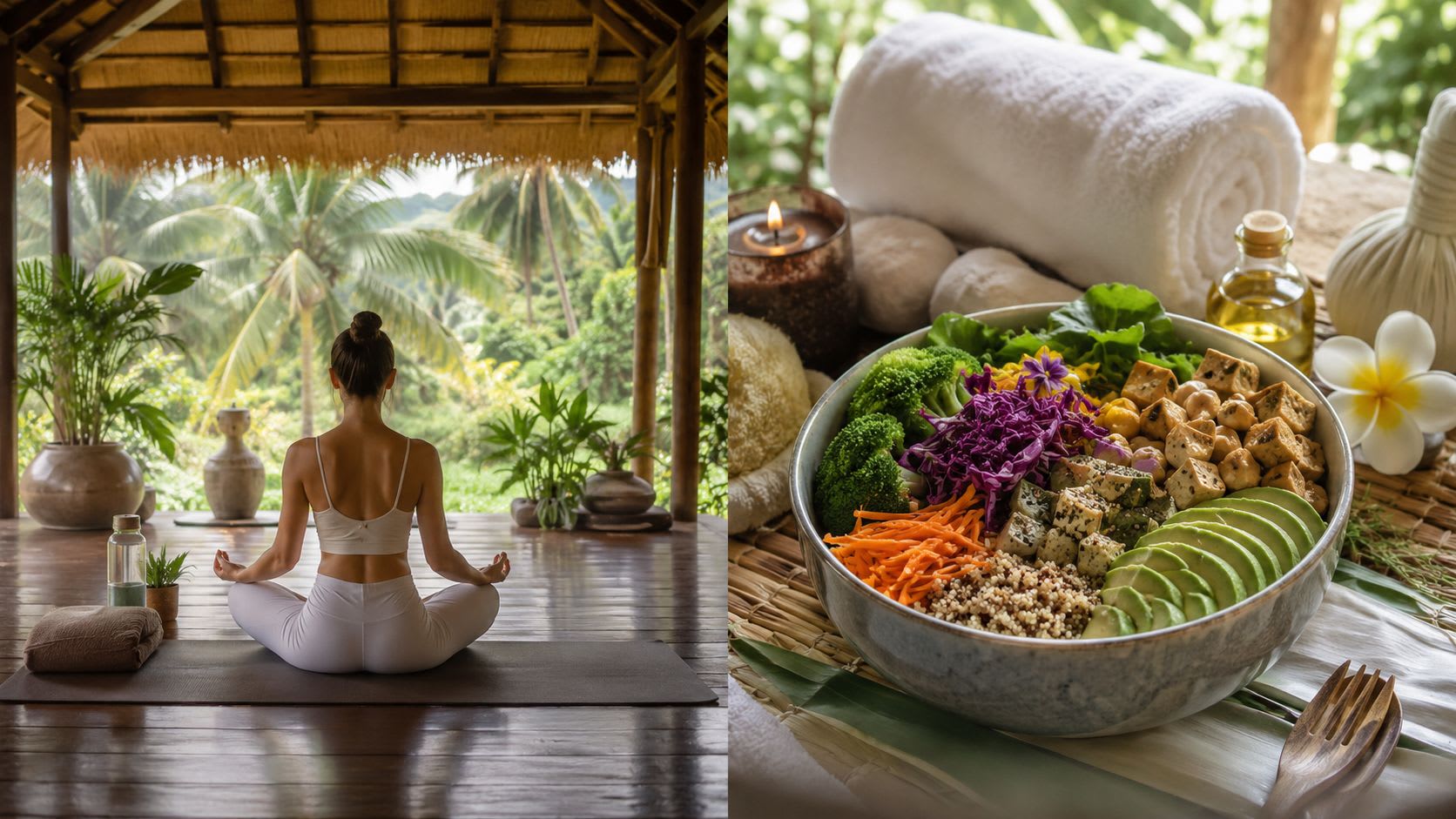
A wellness retreat usually focuses on broad support for body and mind. In Thailand, that often means yoga, meditation, spa therapies, breathwork, lighter eating patterns, and a slower daily rhythm. Those elements can feel beneficial, and peer-reviewed evidence suggests the effect is not purely subjective, because an observational study of wellness tourists found statistically significant and clinically relevant improvements across multiple health and well-being dimensions, with the largest gains among people who arrived in poorer health (PMC study).
That said, the mechanisms are different from those used in aesthetic medicine. A retreat is usually built around lifestyle support, stress reduction, and general renewal. It is not the same thing as a clinical intervention that targets wrinkles, pigmentation, unwanted volume, or skin laxity with a defined medical method.
Aesthetic medicine works from a narrower brief. In a Swiss clinic, a practitioner may use injectables, laser devices, or other clinically controlled tools to address a specific concern after assessment. The point is not to feel better for a few days, it is to achieve a measurable treatment goal with a plan, informed consent, and follow-up.
What each path is really for
A retreat can suit someone who wants to decompress, sleep better, and step away from pressure. It may also suit people who want structure without the intensity of a medical appointment. Those are valid goals, and they are different from wanting a correction that needs a clinician's judgment.
By contrast, botulinum toxin, dermal fillers, laser resurfacing, and similar procedures belong in a setting where indication, anatomy, contraindications, and recovery are discussed properly. That distinction matters because a pleasant environment can't replace medical reasoning.
Corporate offsite and wellness retreat planning is useful if the primary need is organisational rather than medical, because many retreat decisions begin as stress-management choices rather than treatment decisions.
Medical Credentials and Oversight A Swiss Perspective
Swiss patients tend to ask the right questions early. Who is treating me, what is their qualification, and what happens if something looks wrong afterwards? That instinct is sensible, because medical aesthetics should be anchored in identifiable credentials and accountable oversight, not just polished branding.
In Switzerland, that means checking the practitioner's legal right to practise and, where relevant, specialist recognition. Public Swiss education on aesthetic medicine states that physicians may perform the full scope of aesthetic procedures only when they are adequately trained, and that doing these interventions without the proper qualification can carry legal and professional consequences (Swiss education on aesthetic medicine). That is a strong patient-protection standard, and it gives you something concrete to verify.
International wellness centres often use broader labels such as therapist, wellness expert, or consultant. Those titles may describe a real service, but they do not always tell you whether the person is medically qualified to supervise treatment, interpret risk, or manage complications. The gap becomes important when a retreat offers services that sound clinical but are not clearly framed as medical care.
A recent criticism of the Thailand wellness market is exactly that ambiguity. Many articles describe luxury, yoga, and spa experiences, yet they rarely explain how to confirm whether services are medically supervised, what clinicians' credentials are, or whether a programme is more suitable for relaxation than for post-treatment recovery (medical-governed wellness gap). For Swiss readers, that missing information is not a minor detail, it is the core safety question.
How to read a consultation correctly
A proper consultation should leave you clearer, not more confused. The provider should explain the treatment, the expected limitation, the aftercare, and the alternatives in direct language. If the answers stay vague, or if the service sounds more like a spa menu than a treatment plan, that is a warning sign.
Ask whether the person seeing you can legally and professionally perform the intervention they are proposing, then ask what happens if recovery does not go to plan.
Comparing Goals and Realistic Outcomes
The cleanest way to choose is to match the goal to the method. If you want to sleep more soundly, clear your head, and spend a few days away from constant messaging, a retreat can be a good fit. If you want to reduce crow's feet, restore mid-face volume, or improve skin quality with a defined procedure, a Swiss aesthetic clinic is the more precise option.
Stress relief versus visible correction
A wellness stay can help with decompression. It can create structure, remove decision fatigue, and support healthier routines for a short period of time. That can be valuable, especially if burnout is the issue or a sense that everything feels too noisy.
Aesthetic medicine works differently because it aims at a visible endpoint. The practitioner assesses the concern, chooses the tool, and explains what that tool can and cannot do. That makes the process more suitable for people who want a direct cosmetic change rather than a general reset.

What tends to work and what does not
A retreat tends to work best when the goal is broad and experience-based. That includes rest, a calmer pace, and a short-term break from habits that are not serving you well. It does not work as a substitute for a consultation if you need diagnosis, treatment planning, or a technique that depends on anatomy.
A clinic tends to work best when the goal is specific and measurable. If the concern is facial ageing, acne scarring, skin laxity, or unwanted pigmentation, a medically supervised treatment plan is usually the better fit. The benefit is not just the intervention itself, it is the ability to adjust the plan if your skin or tissue response is not straightforward.
How to think about expected results
A retreat may leave you feeling renewed, but that feeling is not the same as a medical outcome. Aesthetic treatment should be assessed by whether the concern improved, whether the recovery was acceptable, and whether the result remained appropriate over time. Those are different standards.
Practical rule: if you need a nameable procedure to solve a nameable problem, a holiday format is usually the wrong category.
For Swiss readers comparing options, this is also where clinical aesthetics stands apart from general travel content. Switzerland's medical aesthetics market was valued at USD 340.83 million in 2022 and is forecast to reach USD 807.07 million by 2030, with a 11.4% CAGR over the projection period (market overview). That growth reflects a real domestic treatment ecosystem, not a niche sideline.
Practicalities of International vs Local Care
Travel adds friction that people often underestimate. A retreat abroad may feel simple at the point of booking, but the practical questions begin later. What happens if you need follow-up, what if healing is slower than expected, and who helps you if the result needs review?
Those issues matter because medical aesthetics is rarely a one-and-done decision. Recovery can require adjustment, monitoring, or advice that is easier to obtain when the practitioner is in the same country and operating under familiar Swiss standards. With local care, the process is more continuous and the barriers to reassessment are lower.
Language is another quiet variable. Even when English is widely used, medical conversations need precision, especially around risks, contraindications, and consent. A pleasant consultation is not enough if you leave unsure about what was agreed, what was omitted, or how to contact the provider later.
The insurance and travel side also deserves attention. If a trip includes any medically relevant service, the question of protection becomes more complicated than for a normal holiday. A resource on expat health insurance in Thailand may help with travel planning, but it does not replace the clarity that comes from having care close to home.
Why local care is usually easier to manage
Local Swiss treatment makes aftercare more realistic. You can return for review, discuss unexpected swelling or asymmetry, and keep the same record trail with the same provider. That continuity matters in aesthetic medicine, where small details can make a large difference to satisfaction.
It also reduces the distance between concern and correction. If a treatment needs adjustment, you are not trying to solve it from another time zone. You're dealing with someone who can see you again and work within the same medical framework.
IV vitamin infusion in Switzerland is a better example of how to assess a service locally, because even wellness-adjacent treatments become easier to evaluate when the clinical context is clear.
Finding Trusted Aesthetic Expertise in Switzerland
Start with geography, then move to credentials. If you live in or near Zurich, Geneva, Basel, or Lausanne, you already have access to established Swiss medical centres, and Swiss clinic network data show that aesthetic medicine is available through named facilities across cities including Genolier, Lausanne, Sorengo, Genève, Schaffhausen, Winterthur, Zürich, and Oerlikon (Swiss Medical network). That breadth matters, because it shows the service is part of real healthcare infrastructure.
What to ask before you book
A strong consultation should answer a few basic questions clearly. Who will perform the procedure, what is their training, what result is realistic for your face or skin, and what are the main risks? If you cannot get straight answers, keep looking.
The consultation should also include a plan for aftercare. Ask how follow-up works, how complications are handled, and whether the practitioner has experience with the exact concern you want treated. A good clinic will not try to push you into a procedure before those points are covered.
What a serious Swiss clinic should feel like
The atmosphere should be calm, but the process should still feel medically disciplined. You should expect an assessment, not a sales pitch. You should also expect the provider to explain why a treatment is, or is not, appropriate for you.
A Swiss aesthetic clinic can be the right answer when the goal is cosmetic and the standard is high. That is exactly why credential verification matters. BeautyGuide's approach to clinic discovery is built around that logic, because patients need a way to compare providers without relying on glossy language alone.
Good aesthetic care feels personalised, but it should never feel improvisational.
This is also where a Switzerland-first mindset helps. You are not trying to find the most exotic option, you are trying to find the most accountable one. In practice, that usually means shortlisting clinics by city, checking practitioner qualification, and choosing a plan that fits your face, your schedule, and your tolerance for downtime.
Conclusion Your Best Path to Rejuvenation
A wellness retreat Thailand search makes sense if what you want is rest, distance from routine, and a gentler rhythm for a few days. That kind of trip can be restorative, and it has a place. But it is not a substitute for medical aesthetic care when the goal is a specific cosmetic outcome.
For Swiss residents, the safest and most predictable route is usually a qualified clinic in Switzerland, where credentials are clear, oversight is familiar, and follow-up is straightforward. That matters more than the scenery, because aesthetic medicine is about treatment quality, not travel appeal.
If your concern is a wrinkle, volume loss, skin texture, or another visible issue, start with a proper consultation rather than a holiday brochure. A calm, medically supervised discussion will tell you far more about suitability than any retreat description ever can.
A CTA for BeautyGuide. If you're comparing aesthetic treatments in Switzerland, use BeautyGuide to explore qualified clinics, review practitioner credentials, and choose a medically supervised path that fits your goals, your city, and your need for safe, realistic results.
This article is for informational purposes only and does not replace professional medical advice.