
Your first aesthetic consultation is a crucial medical appointment, not a sales meeting. It is an opportunity to meet with a qualified Swiss professional, discuss your aesthetic goals, and develop a safe, realistic treatment plan. This initial discussion is designed to ensure you understand all possibilities and feel fully informed before proceeding with any treatment.
Your First Step into Swiss Aesthetic Medicine
Entering an aesthetic clinic in Zürich or Geneva for the first time is a significant step. The initial consultation is structured to build a foundation of trust and outline a clear, safe, and personalised path forward. This process can be compared to an architect's briefing before construction begins—every detail is discussed to ensure the final result aligns with your vision and is medically sound.
A Collaborative Medical Appointment
This is your dedicated time with a medical expert to discuss your objectives and determine how they align with what is medically advisable. In Switzerland, the focus is on achieving natural-looking results while prioritising patient safety, which is why this first consultation is so thorough. It is a dialogue where your perspectives are as valued as the practitioner's medical expertise.
The primary goal is to demystify the process, providing all the necessary information for you to make a confident decision. This collaborative approach helps set clear expectations and ensures you are comfortable with every stage of the treatment journey.
In Switzerland, the emphasis is firmly on patient education and safety. A reputable practitioner will always prioritise a thorough evaluation over promoting a specific treatment. This patient-first philosophy is a hallmark of the country's high medical standards.
Why This Consultation Is Crucial
This appointment is fundamental for several key reasons, all reflecting the stringent standards of Swiss medical practice.
Safety First: The practitioner must review your medical history, identify any potential contraindications, and confirm that you are a suitable candidate for the desired treatment.
A Personalised Plan: A one-size-fits-all approach is ineffective in aesthetic medicine. The consultation is where a plan is designed specifically for your unique anatomy, skin type, and personal goals.
Building Trust: This is the starting point for a professional relationship with your practitioner. Trust is essential for achieving optimal results and ensuring a positive experience.
Platforms like BeautyGuide can help you find vetted Swiss aesthetic clinics that adhere to these high standards of patient care and safety, simplifying the process of connecting with the right professional for this important first conversation.
How to Prepare for a Productive Consultation
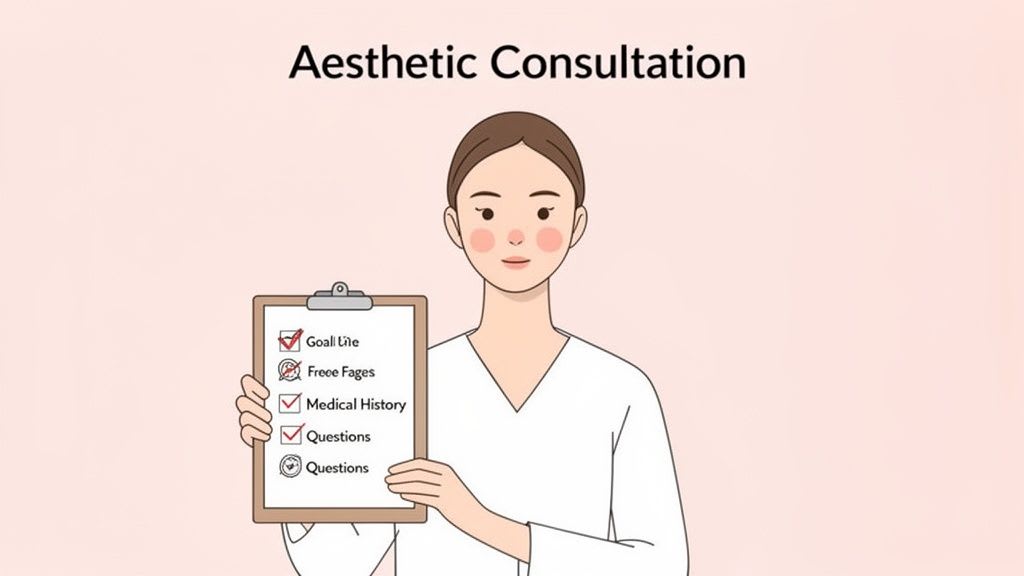
A successful consultation begins before you arrive at the clinic. Preparation can transform a simple discussion into a productive planning session. Arriving organised helps your practitioner fully understand your goals and medical background, which is the foundation of any safe and effective treatment plan.
As a key participant in this process, providing clear and honest information enables the medical professional to offer their best advice, grounded in the high standards of care expected in Switzerland.
Organise Your Thoughts and Goals
Before your appointment, take time to reflect on what you hope to achieve and the motivation behind it. Perhaps you wish to soften fine lines, address changes in skin texture, or restore volume in a specific area.
Having a clear vision of your desired outcome helps guide the conversation. Try to think beyond just naming a treatment; consider how you want to look and feel afterwards.
A productive consultation is a dialogue. Clearly articulating your motivations—whether it is to appear more rested for professional reasons or feel more confident in social settings—provides your practitioner with valuable context to recommend the most suitable options.
Compile Your Medical and Treatment History
Your safety is the highest priority. A complete medical history is not a formality; it is essential for any aesthetic procedure, and Swiss practitioners are known for their thoroughness. Be prepared to share your full medical background.
Here is a checklist of information to have ready:
Current Medications: List all prescription drugs, over-the-counter medicines, vitamins, and herbal supplements you take.
Allergies: Note any known allergies, particularly to medications, anaesthetics, or topical creams.
Past Procedures: Detail any previous cosmetic treatments, both surgical and non-surgical, as well as any other significant surgeries.
Health Conditions: Disclose any ongoing health issues or significant past illnesses.
Practical Steps for the Day
A few simple actions on the day of your appointment can make a significant difference. It is advisable to arrive with a clean, makeup-free face. This allows the practitioner to properly analyse your skin’s condition without obstruction.
Finally, bring a list of questions. No question is too minor when it concerns your health. This is your opportunity to gather all the information you need to leave the clinic feeling confident, informed, and clear about the next steps.
What to Expect During the Medical Evaluation
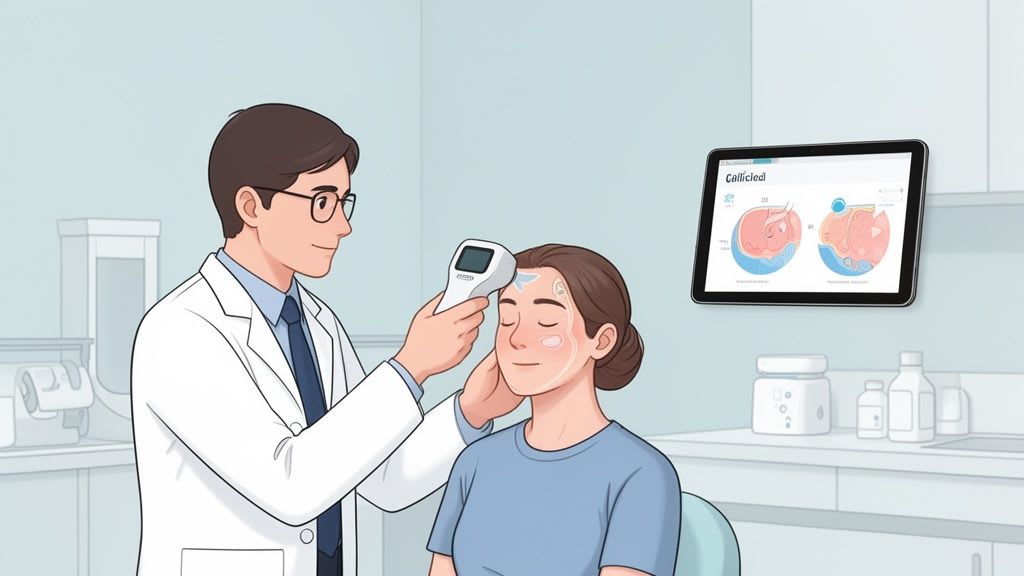
This is the core of your visit, where your personal goals are assessed with medical expertise. It is more than a brief look; it is a detailed evaluation designed to deliver safe, effective, and natural-looking results, a hallmark of Switzerland’s high medical standards. The process begins with a conversation about your reasons for seeking treatment, creating a comfortable environment to share your objectives.
Your physician will then conduct a full medical review and a detailed physical examination of the areas of concern. This is not merely a visual check. Consistent with Swiss precision, this step often involves specialised tools to analyse skin quality, underlying bone structure, and other factors not visible to the naked eye. This approach enables the development of a treatment strategy that is genuinely appropriate for you.
By understanding every detail of your unique anatomy and skin health, your doctor can map out a path that is both safe and effective in achieving your desired outcome.
The consultation generally follows a structured flow. The table below outlines the key stages so you know exactly what to expect.
Key Stages of Your First Consultation
| Stage | What to Expect | Typical Duration |
|---|---|---|
| 1. Medical History | Discussion of allergies, past surgeries, current medications, and lifestyle factors. Honesty and thoroughness are vital for your safety. | 10-15 minutes |
| 2. Physical Examination | The doctor assesses your skin, facial structure, and muscle movement, possibly using gentle touch and diagnostic tools. | 15-20 minutes |
| 3. Treatment Discussion | Your doctor explains suitable options, the rationale for their recommendations, and available alternatives in a two-way conversation. | 15-20 minutes |
| 4. Q&A and Consent | An opportunity to ask all your questions. The doctor reviews risks, benefits, and the informed consent form with you. | 10-15 minutes |
| 5. Next Steps | Discussion of the treatment timeline, costs, and scheduling the procedure or any necessary follow-up appointments. | 5-10 minutes |
This structure ensures a comprehensive evaluation, allowing you to leave fully informed and confident in your decision.
Detailed Skin Analysis
The physical examination is a cornerstone of any quality aesthetic consultation. Your practitioner will carefully evaluate a range of factors to determine the best approach, such as your skin’s elasticity, hydration levels, and overall health.
At a Swiss clinic, particularly one with FMH-certified specialists, you can expect an in-depth analysis. It is common for these experts to use advanced diagnostic tools to gain a complete understanding of your skin's condition. This thorough analysis helps the specialist to:
Identify areas of volume loss or asymmetry.
Note the specific depth and type of wrinkles or fine lines.
Assess any sun damage, pigmentation, or scarring.
Understand your unique facial anatomy and muscle movement.
This level of detail is critical for creating an effective treatment plan and is often referenced in current trends in aesthetic services reports as a key differentiator in high-quality care.
From Evaluation to a Clear Recommendation
Once your doctor has gathered this detailed information, they can connect your goals with scientifically sound treatment options. They will explain why certain procedures are well-suited for you and, just as importantly, why others may not be appropriate.
For example, if your primary concern is fine lines, they will not just suggest a single solution. They will explain the type of lines you have and discuss whether a neuromodulator, a specific dermal filler, or a skin resurfacing treatment would be the most effective choice. This educational dialogue is a key component of the Swiss approach, empowering you to make an informed decision.
A crucial aspect of the Swiss standard of care is the focus on realistic, natural-looking results. The detailed evaluation helps align your expectations with what is medically and artistically achievable, preventing potential disappointment.
Achieving this alignment is vital. A reputable doctor will be transparent about the limitations of any procedure and will always prioritise a result that enhances your natural features rather than creating an artificial appearance. This commitment to patient education and honesty distinguishes the best aesthetic clinics across Switzerland.
Understanding Your Custom Treatment Plan
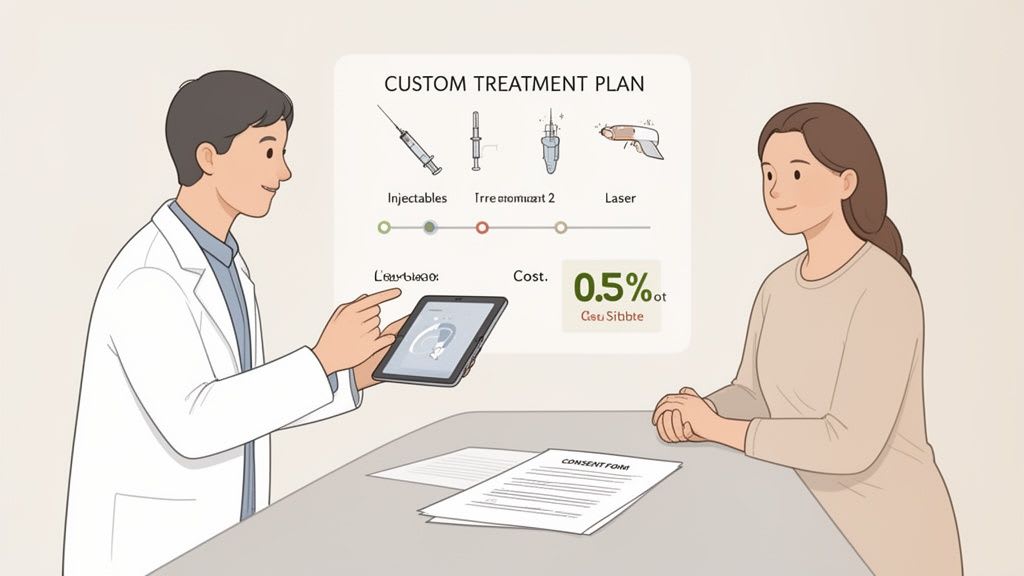
Following the evaluation, your doctor will develop your personalised treatment plan. This is not merely a list of services and prices; it is a strategic roadmap based on your unique anatomy, skin condition, and stated goals. It represents the path from your current state to your desired outcome, built upon a foundation of medical expertise.
Your doctor will guide you through the recommended options, explaining everything in clear, accessible language. They will cover the benefits as well as any potential limitations or risks, ensuring you have a complete and balanced understanding. This conversation is central to the Swiss approach to patient care—it is about providing you with the knowledge to make an informed choice, not pressuring you into a decision.
From Diagnosis to Recommendation
This is where the information gathered during your examination is converted into a clear plan of action. The plan will address your primary concerns by outlining the specific procedures that are most appropriate for you.
For instance, if you wish to improve skin texture and soften fine lines, the plan might suggest a series of chemical peels or microneedling sessions. If volume loss in the cheeks is your main concern, you might discuss different dermal fillers suitable for that area. A reputable practitioner will explain the rationale behind each suggestion, so you understand how it addresses your goals.
When you visit a clinic in Lucerne or Lugano, this in-depth discussion is a core part of the experience. It is particularly important as many patients in Switzerland are seeking anti-ageing solutions, which often require a nuanced and multi-faceted approach.
Transparency in Cost and Consent
A defining characteristic of a reputable Swiss clinic is complete transparency, especially regarding costs. Your treatment plan should include an itemised breakdown of all associated expenses. This includes procedure fees, any required follow-up visits, and a clear explanation of what your initial consultation fee covers.
The initial consultation fee, typically between CHF 150 and CHF 300, is standard practice and compensates for the practitioner's dedicated time and expert assessment. You should leave the consultation with a clear understanding of the total investment, with no hidden costs.
A critical final step is signing the informed consent form. This is not a mere formality; it is a legal requirement in Switzerland designed to protect you. Your practitioner will review a document with you that clearly details the treatment, its purpose, potential risks, and the realistic outcomes you can expect.
This is your opportunity to ask any remaining questions and ensure you are completely comfortable. A professional will never rush this part of the process. It solidifies the trust and openness that define a quality medical partnership, giving you the confidence to proceed.
To better understand the options that might be discussed, you can explore our comprehensive guide to aesthetic treatments in Switzerland.
Essential Questions to Ask Your Practitioner
A productive consultation is a two-way dialogue. While the doctor will conduct the medical evaluation, your role is to obtain all the information you need to feel completely comfortable and confident in your decision. Any reputable practitioner in Switzerland will expect and welcome your questions.
This conversation is your most important tool. It helps clarify the technical aspects of the treatment and allows you to assess the specialist’s approach and professionalism. Direct, thoughtful answers demonstrate a commitment to your safety and education—the Swiss standard. Conversely, feeling rushed or receiving vague answers should be considered a reason to pause.
To ensure you cover all necessary points, consider bringing this list of questions with you.
Questions About the Practitioner and Clinic
First and foremost, you must trust the professional responsible for your health and results.
What are your specific qualifications? Are you an FMH-certified specialist in dermatology or plastic surgery?
How many years have you been performing this specific procedure?
May I see before-and-after photographs of your patients who have undergone this treatment?
Whom should I contact if I have a question or concern after the treatment, particularly outside of normal business hours?
Questions About the Treatment Details
Understanding the specifics helps manage your expectations regarding the process, recovery, and realistic outcomes.
Based on my goals, why do you recommend this particular treatment for me?
What does the recovery period entail? Can you describe the downtime?
How many sessions will be required, and what is the recommended interval between them?
How long can I expect the results to last, and what is involved in long-term maintenance?
Questions About Risks and Follow-Up Care
Every medical procedure carries potential risks. A transparent discussion about these is not only good practice but also a legal requirement in Switzerland.
Asking about potential complications is not negative—it is the action of a responsible patient. A true professional will respect this and discuss potential issues honestly, ensuring you are fully informed before giving consent.
What are the most common side effects I should expect?
Are there any serious, albeit rare, risks that I need to be aware of?
What is included in the follow-up care? Are these appointments covered in the price we discussed?
Arriving at your consultation with these questions transforms it from a passive appointment into an active discussion where you are in control. You will leave the clinic in Bern or Basel with clarity, a solid plan, and the confidence needed to move forward.
What Happens After Your Consultation
The process does not end when you leave the clinic. The steps you take in the hours and days following your first consultation are just as important as the meeting itself. This is your time to process the information and make a decision that feels right, without pressure.
A reputable clinic in Switzerland will encourage you to take this time and will not press for an immediate decision. The objective is for you to leave with a clear, personalised treatment plan and a detailed cost estimate, allowing you to consider it carefully at home.
Reviewing Your Plan and Making a Decision
The documents you receive serve as your personal roadmap, detailing the proposed treatments, realistic expectations, and all associated costs. This level of transparency is a cornerstone of Swiss medical care.
Once you have had time to review the information, the path forward is straightforward. When you feel confident and ready, simply contact the clinic to schedule your first appointment. They will guide you through the scheduling process and provide any important pre-treatment instructions, such as minor dietary adjustments or pausing certain supplements to ensure optimal conditions for your procedure.
Your first consultation is about building a foundation of trust. That relationship continues beyond the initial meeting. If new questions arise later, do not hesitate to contact the clinic.
Seeking a Second Opinion and Continuing Your Research
It is completely normal to seek a second opinion, especially if you have any uncertainty. This is your health and your body, and a professional practitioner will understand and even encourage this step.
This is part of being an empowered patient, a principle highly valued in the Swiss healthcare system. Your confidence is paramount. If you need assistance finding another vetted specialist or have general questions, you can always get in touch with our team for impartial guidance.
Your Questions, Answered
Here are answers to some common questions that arise when preparing for a first aesthetic consultation in Switzerland.
Is the Consultation Fee Deductible?
In many cases, it is, but it is important to confirm this with the clinic. Most Swiss clinics will deduct the initial consultation fee—typically between CHF 150 and CHF 300—from the total cost if you proceed with the recommended treatment.
This fee covers the practitioner's dedicated time and expertise for a thorough medical evaluation. As this is not a universal policy, it is best to inquire directly with the clinic when you book your appointment to avoid any surprises.
What Should I Bring to My Consultation?
A small amount of preparation can be very beneficial. To provide your doctor with a complete picture, it is helpful to bring:
A list of any medications and supplements you are currently taking.
Information about past cosmetic treatments or relevant medical procedures.
A note of any known allergies.
Additionally, try to arrive with a clean, makeup-free face. This allows the physician to perform a more accurate skin analysis, which is crucial for developing an appropriate treatment plan.
How Can I Verify a Doctor's Credentials?
This is an excellent and important question. In Switzerland, you can verify a physician's license using the official MedReg register, a public database that confirms they are legally permitted to practise medicine.
For an additional layer of assurance, look for the "FMH" title (Foederatio Medicorum Helveticorum). This designation indicates that the doctor has completed rigorous, specialised training and is board-certified in their field, such as dermatology or plastic surgery. To simplify this process, platforms like BeautyGuide.ch pre-verify the credentials of every listed clinic, ensuring you are connected with qualified and safe professionals.
Article created using Outrank*
This article is for informational purposes only and does not replace professional medical advice.