
When people say they look tired, they are often pointing to the area right under their eyes. This is where dermal fillers, specifically tear trough fillers, come in. It is a non-surgical treatment that tackles that hollowed-out look and can soften the appearance of dark circles.
A skilled practitioner uses a hyaluronic acid-based gel to very carefully add back a bit of volume. The goal is to create a seamless, smooth transition from the lower eyelid to the cheek, resulting in a more rested and refreshed appearance.
Your Guide to Under-Eye Fillers in Switzerland
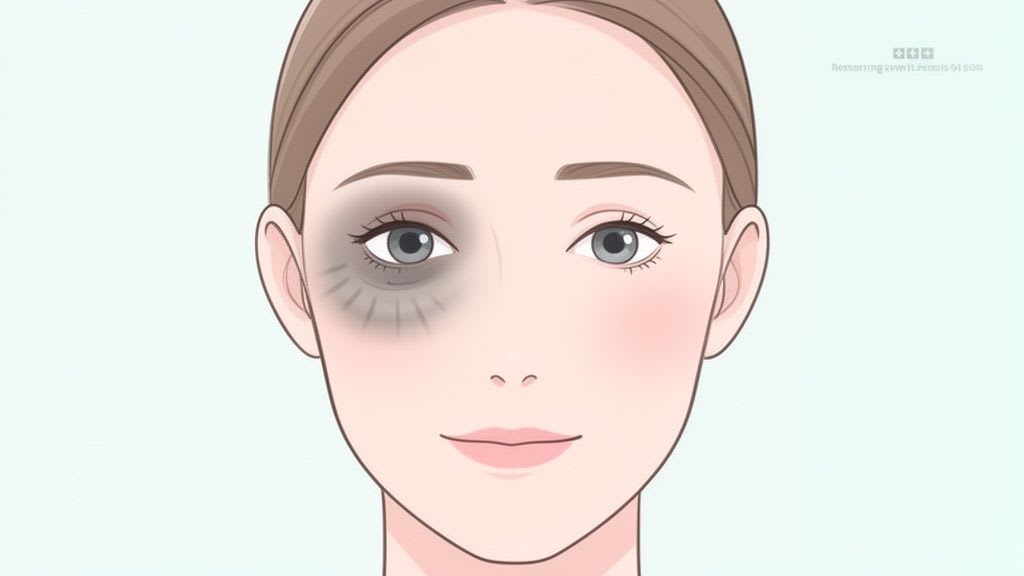
It is a common complaint: you feel rested, but your reflection tells a different story. Even with a full eight hours of sleep, shadowing and a loss of volume under the eyes can create a permanently tired appearance. This hollow area is what we call the tear trough.
While concealers and eye creams can help temporarily, they are just a temporary fix. Dermal fillers address the issue by addressing the underlying structure.
In Switzerland, this is a very common non-surgical treatment for facial rejuvenation. Patients are not typically looking for a drastic change. They simply want to restore a natural, brighter look that matches how they feel.
What This Guide Covers
This guide is for anyone in Switzerland considering dermal fillers under the eyes. We have put together clear, medically sound information to help you understand if this treatment is suitable for you, all from a local Swiss perspective.
We will walk through everything you need to know, including:
The anatomy behind why under-eye hollows and dark circles form.
The different kinds of fillers available and why certain ones are better for this delicate area.
A step-by-step look at what happens during the procedure in a Swiss clinic.
Crucial safety information, post-treatment care, and how potential risks are managed.
Tips on finding a qualified doctor in Switzerland using trusted resources like BeautyGuide.ch.
Our aim here is to provide clear information, set realistic expectations, and give you the confidence to have a well-informed conversation with a medical professional.
Understanding the details of tear trough treatments is essential. For a deeper dive into the specifics, check out our detailed article on tear trough fillers. By the time you finish this guide, you will have a solid grasp of the procedure, whether it fits your needs, and the high standard of care you should expect in Switzerland.
Why Do We Get Hollows Under Our Eyes?
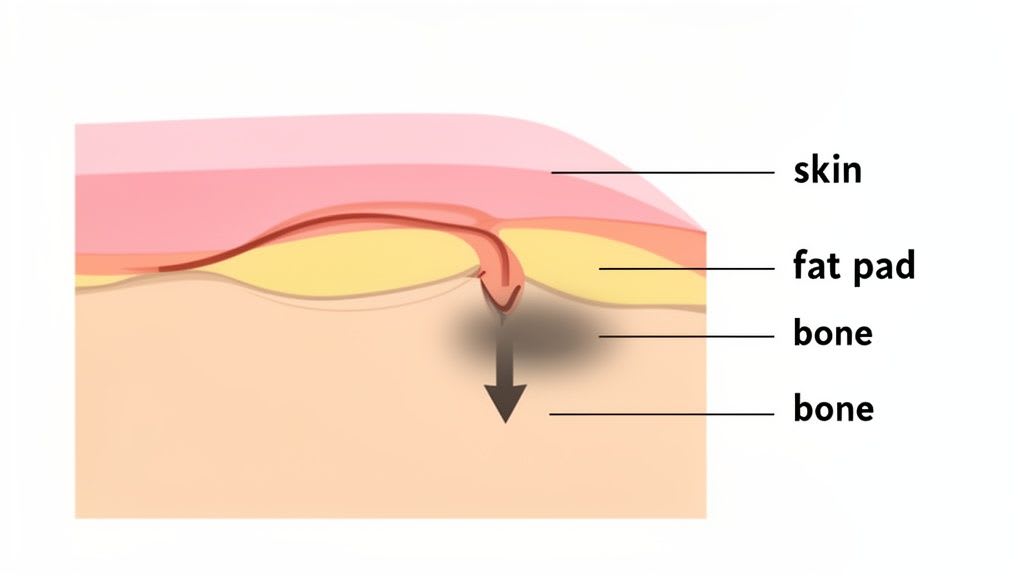
Those dark, hollowed-out areas under the eyes that can make us look tired are not just about poor sleep. They are the result of complex changes happening deep beneath the skin. Understanding what is really going on is the first step in seeing why a treatment like dermal fillers under eyes can be effective.
In a youthful face, the area from the lower eyelid to the cheek is smooth and seamless. This is because, under the skin, a combination of fat pads, supportive ligaments, and the orbital bone creates a firm, plump cushion.
Over time, this delicate structure begins to change, due to a mix of natural ageing, genetic predisposition, and lifestyle habits.
Anatomy and the Ageing Process
The skin under our eyes is incredibly thin and delicate, which is why it is often the first place to show signs of ageing. As we get older, a few key things start to happen simultaneously.
First, the fat pads in our face begin to shrink and descend. Those small pockets of fat that once gave our under-eyes youthful volume start to deplete, creating a sunken groove or "trough" that follows the rim of the eye socket.
At the same time, our body’s production of collagen and elastin—the proteins that provide structure to our skin—slows down. This makes the skin thinner and less elastic, so it can no longer hide the underlying dips and shadows as well as it used to.
The Key Factors Behind Tear Troughs
The formation of under-eye hollows is rarely due to a single cause. It is more of a domino effect, where several factors combine to create that characteristic sunken look.
Genetics: Your natural bone structure is a major factor. Some people are simply born with deeper-set eyes or less natural padding in the area, making them prone to hollows even from a young age.
Bone Resorption: As we age, our facial bones change. The bone around the eye socket (the orbital rim) can subtly recede, which deepens the trough and removes some of the essential support for the skin and fat above it.
Ligament Changes: The tiny ligaments holding everything in place can weaken and stretch over time. This allows the remaining fat to droop, contributing to both hollows and under-eye "bags".
This combination of events creates the shadow we perceive as a dark circle. The depression catches the light differently, making the area look darker and contributing to a tired appearance, regardless of sleep.
This is precisely why treating the tear trough area requires an expert. A qualified practitioner in Switzerland, such as an FMH-certified dermatologist or plastic surgeon, has an intimate understanding of these facial layers. They know exactly where to place dermal fillers to restore volume safely and achieve a truly natural result.
How Lifestyle Plays a Part
While genetics and time are the main drivers, some daily habits can accelerate the process or worsen the appearance of hollows.
Sun exposure is a significant factor. UV rays are known for breaking down the collagen and elastin that keep skin firm, making it thinner and accentuating the trough underneath. Smoking is another contributor, as it constricts blood vessels and harms circulation, which can accelerate the skin's ageing process.
Factors like chronic stress and insufficient sleep also contribute by impacting overall skin health and hydration. While they are not the root cause of volume loss, managing these factors can support your skin and enhance the results of any aesthetic treatments.
Ultimately, under-eye hollows are an issue of lost volume deep within the tissue, not just a problem on the skin's surface. This is a crucial distinction—it explains why topical creams have limited effect and why a treatment like dermal fillers under eyes is designed to address the problem at its source by restoring that missing volume from within.
Choosing the Right Filler for Your Under-Eyes
When treating the delicate under-eye area, not just any dermal filler is suitable. The skin here is exceptionally thin, which means the choice of product is as critical as the injector's skill. In Switzerland, experienced practitioners almost exclusively use hyaluronic acid (HA) fillers for this purpose, as they offer an excellent safety profile and natural-looking results.
Hyaluronic acid is a sugar molecule that your body naturally produces to keep your skin hydrated and plump. When synthesised into a medical-grade gel, it can be precisely injected to restore lost volume. However, even within the HA family, there are significant differences between products.
Fillers have different properties, like viscosity (how thick or thin the gel is) and hydrophilicity (how much water it attracts). For the tear trough, a filler that is soft, smooth, and does not draw in a lot of water is required. The wrong choice could lead to a puffy or over-corrected look.
The Standard of Care: Hyaluronic Acid Fillers
The ideal product for dermal fillers under eyes needs to blend seamlessly into the fine tissue, giving a subtle lift without creating lumps or attracting excess fluid. This requires a filler specifically engineered for this sensitive zone.
A thick, robust filler designed for sculpting cheekbones would be inappropriate under the eyes. Instead, specialists in Switzerland prefer specific low-viscosity, low-hydrophilicity HA fillers. These are designed to be placed deep, right on the bone, providing structural support from underneath without being visible through the skin.
The goal is not to simply "fill" the hollow space. It is about rebuilding the foundational support that has diminished over time. This approach ensures you look refreshed and natural, not "treated."
This careful selection process is a hallmark of high-quality aesthetic medicine in Switzerland. A good practitioner will match the filler's properties not just to the area, but to your unique anatomy, skin thickness, and the degree of volume loss you are experiencing.
To better understand why these properties are so crucial, let's break down what makes a filler suitable for this delicate work.
Comparing Key Properties of Under-Eye Fillers
The table below outlines the essential characteristics of a suitable tear trough filler. It shows why a "one-size-fits-all" approach is not appropriate for the under-eye area.
| Filler Property | Description | Importance for Under-Eye Area |
|---|---|---|
| Cohesivity | The filler's ability to stick together and hold its shape. | High: A cohesive filler will not spread into unwanted areas. It stays where it is placed to provide targeted support. |
| G' (G-Prime) | A measure of the filler's firmness or ability to resist deformation. | Low: A soft, low G' filler feels natural under the thin skin and moves with your facial expressions, preventing a stiff appearance. |
| Hydrophilicity | How much water the filler attracts and holds after injection. | Low: This is crucial. A low water-attracting filler minimises the risk of post-treatment puffiness and swelling (malar oedema). |
| Viscosity | The thickness of the gel and how easily it flows through a needle. | Low: A thinner, less viscous filler can be injected smoothly and evenly, which is essential for avoiding lumps and bumps. |
Choosing a filler with the right balance of these properties is key to achieving a smooth, natural-looking result that revitalises your appearance without being obvious.
A Swiss Innovation: TEOSYAL Redensity 2
It is notable that one of the world's most highly regarded products for the tear trough was developed in Geneva. TEOSYAL® PureSense Redensity 2 (R2), made by TEOXANE, is widely considered the first filler specifically designed to treat under-eye hollows.
Its unique formula makes it exceptionally well-suited for this purpose:
Low Hydrophilicity: It is engineered to attract minimal water, which dramatically reduces the risk of puffiness or swelling after the treatment.
Ideal Viscoelasticity: The gel is a blend of cross-linked and non-cross-linked HA. This makes it fluid enough to spread evenly but firm enough to provide a gentle, supportive lift.
Biocompatible Ingredients: In addition to HA, it contains amino acids, antioxidants, minerals, and vitamins to help nourish the skin from within. It also includes lidocaine for a more comfortable procedure.
The effectiveness and safety of this Swiss-made product are supported by evidence. In a large real-world study called the EYELIGHT trial involving 136 subjects, TEOSYAL® R2 showed over 70% improvement for tear troughs. Furthermore, 84.3% of subjects were still satisfied with their results 12 months later. Importantly, all common side effects like mild bruising were temporary and resolved within a month, with no serious issues reported.
Matching the Filler to Your Face
Ultimately, the best filler is the one your qualified practitioner selects specifically for you. During a proper consultation at a Swiss clinic, your doctor will carefully assess your facial anatomy, skin quality, and the cause of your under-eye concerns.
They should explain why they recommend a particular product, detailing its properties and how it aligns with your goals. Understanding these details empowers you to have a more informed and confident conversation about your treatment plan. This collaborative approach ensures you feel comfortable and secure throughout the process.
What to Expect During Your Treatment
Once you have decided to proceed with tear trough fillers, knowing what happens step-by-step can help alleviate any nervousness. In Switzerland, the process is calm, methodical, and prioritises your safety and comfort. From the moment you arrive to the final aftercare discussion, everything is designed to be clear and reassuring.
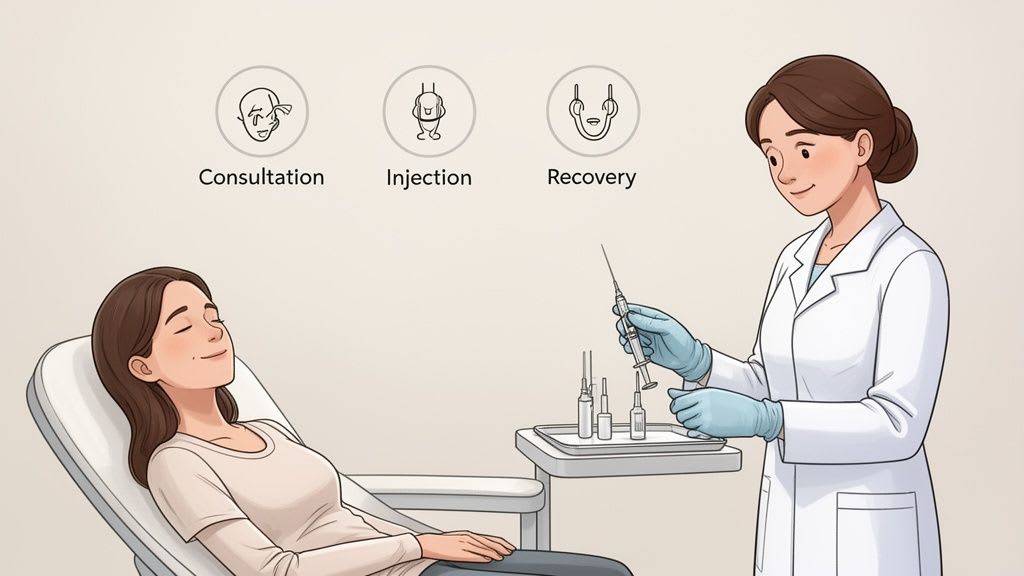
The entire appointment is relatively quick, usually concluding within 30 to 45 minutes. The actual injections often take only about 15 minutes. The rest of the time is spent on careful preparation and ensuring you are comfortable before you leave.
The Initial Steps in the Treatment Room
Once you are settled in the treatment chair, a few crucial preparation steps are taken. This lays the groundwork for a safe, comfortable, and effective treatment.
- Cleansing the Area: First, your practitioner will meticulously clean the under-eye area with an antiseptic solution. This is a mandatory step that drastically minimises any risk of infection.
- Applying Numbing Cream: Next, a topical anaesthetic cream is applied. This requires about 15-20 minutes to take effect, ensuring you will feel very little during the actual injections.
- Finalising the Treatment Plan: While waiting for the numbing cream to work, your doctor will again examine your facial anatomy. They may use a sterile pencil to make tiny markings on your skin—these serve as guideposts for placing the filler with precision. This is also an ideal time for any last-minute questions you might have.
A hallmark of the Swiss medical approach is meticulous documentation. Your practitioner will take a series of standardised "before" photos from different angles. These are not for social media; they are a vital part of your clinical record, allowing for objective tracking of your results over time.
The Injection Process Explained
With the area prepped and numbed, the filler is administered. A skilled Swiss practitioner will typically use one of two main techniques, both chosen for their safety and effectiveness in this delicate part of the face.
Your doctor will inject tiny amounts of filler, working slowly and methodically. The aim is to place the product deep, right onto the orbital bone that frames your eye socket. This creates a subtle, supportive lift from underneath, smoothing out the hollow without making the skin look puffy or overfilled.
Needle vs. Micro-Cannula
There are two primary tools for the injection, and the choice depends on your anatomy and the practitioner's expert judgment.
Fine Needle: Using a very fine needle allows for incredibly precise placement of tiny filler droplets. This is ideal when extreme accuracy is needed to sculpt specific contours.
Micro-Cannula: A cannula is a thin, flexible tube with a blunt tip. It is introduced through a single small entry point (made with a needle) and can then be gently guided under the skin to distribute the filler smoothly. Many practitioners in Switzerland prefer the cannula for the under-eye area because it significantly reduces trauma to the tissue, meaning less risk of bruising and swelling.
Evidence supports this preference. A comprehensive review of studies shows high patient satisfaction, with results lasting 8 to 12 months. While mild, temporary side effects like bruising (17%), swelling (22%), and redness (32%) can occur, they are generally manageable. In Switzerland, where clinics operate under strict medical standards, experienced FMH specialists often use fine-gauge cannulas to enhance safety. You can find more detail in these tear trough rejuvenation studies on thieme-connect.com.
Completing Your Treatment
Once the injections are done, your practitioner may gently massage the area. This helps the filler integrate seamlessly with your own tissue for a perfectly smooth finish.
You will be given a cold compress to apply for a few minutes to calm any immediate swelling. Before you leave, you will receive a clear rundown of your aftercare instructions—the dos and don'ts for the next few days to ensure proper healing and the best possible result from your treatment.
Safety and Aftercare: Post-Treatment Expectations
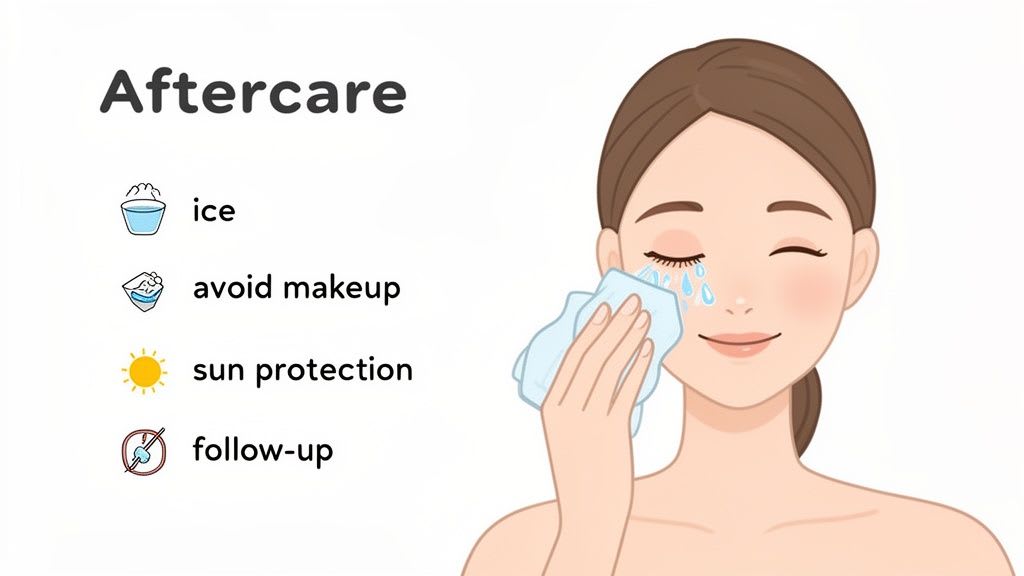
For any medical procedure, especially one near the eyes, safety is paramount. Dermal fillers under eyes have a strong safety profile, but it is crucial to be fully aware of potential side effects and how to care for yourself afterwards. A reputable Swiss clinic will always make patient education a top priority.
Most post-treatment experiences are mild and temporary, usually fading within a week. These are considered the body’s normal reaction to the injections.
Ultimately, the single biggest factor in minimising risks is the skill of your practitioner. An injector with a deep understanding of facial anatomy knows the intricate network of blood vessels and how to place the filler safely for an optimal outcome.
Common and Manageable Side Effects
It is normal to notice a few minor effects after your appointment as the treatment settles.
Bruising and Swelling: This is the most common reaction. Even with a micro-cannula, which reduces the chances of bruising, you may still see some slight puffiness or a small bruise.
Redness and Tenderness: The injection sites may appear slightly pink and feel tender for a day or so.
Small Bumps: You might be able to feel tiny bumps of filler under the skin. These almost always smooth out on their own, but if they persist, your practitioner can easily massage them down during a follow-up appointment.
These effects tend to be most noticeable in the first 48 hours and then begin to subside. Following the aftercare advice your clinic provides is the best way to manage them.
Rare but More Serious Risks
While very unlikely with an experienced injector, it is important to be aware of the more significant risks.
One rare issue is the Tyndall effect. This occurs if the filler is placed too close to the skin's surface, causing a faint bluish tint as light passes through the gel. It can be corrected by dissolving the filler with an enzyme called hyaluronidase.
The most serious—and extremely rare—complication is a vascular occlusion. This occurs if filler is accidentally injected into a blood vessel, blocking blood flow. This is precisely why choosing a practitioner with an FMH specialisation in dermatology or plastic surgery is essential, as they are trained to manage such medical emergencies.
Your choice of injector is your most important safety measure. A qualified medical professional in Switzerland operates under strict regulatory standards, prioritising your health. They possess the anatomical expertise to avoid complications and the medical training to manage them if they occur.
Your Aftercare Plan for a Smooth Recovery
Following post-treatment instructions is your contribution to the process. Adhering to these simple steps, especially for the first 24 to 48 hours, will help you heal faster and protect your results.
Avoid Strenuous Activity: Refrain from intense exercise, hot yoga, or saunas for at least 24 hours. Keeping your heart rate down helps minimise swelling.
Stay Upright: For the first few hours, try not to lie down flat. Propping your head up with an extra pillow when you sleep can also help with overnight swelling.
Use Cold Compresses: Gently apply a cool pack (wrapped in a cloth) to the area for 10-15 minutes at a time throughout the first day to reduce swelling and bruising.
Avoid Touching the Area: Do not touch or rub the treated area, and hold off on makeup for at least 12-24 hours. This helps prevent irritation and keeps bacteria away from the injection sites.
Avoid Alcohol & Certain Medications: Steer clear of alcohol, aspirin, or ibuprofen (unless medically necessary) for a day or two, as they can thin the blood and increase the likelihood of bruising.
Following this advice helps ensure your dermal fillers under eyes settle in well, giving you the fresh, natural look you were hoping for.
How to Find a Qualified Practitioner in Switzerland
Choosing the right person to perform your under-eye filler treatment is the most important decision in this process. While Switzerland has high medical standards, it is still your responsibility to do your research. The tear trough is a complex anatomical area that demands a professional with specialised training and a deep understanding of facial structures.
Your search should focus on medical doctors with a proven track record in aesthetic medicine. This is not just about achieving a good result—it is about ensuring the procedure is safe and that any potential complications are managed by a competent professional.
Look for FMH Specialisation
In Switzerland, the "gold standard" to look for is the FMH (Foederatio Medicorum Helveticorum), the nation's professional organisation for physicians. A practitioner with an FMH title in a relevant field—such as dermatology or plastic, reconstructive, and aesthetic surgery—has completed years of extensive, specialised postgraduate training recognised nationwide.
This credential is your assurance that the doctor has a deep, working knowledge of skin, facial anatomy, and the principles of surgery. This is the level of expertise required for injectables, especially in a sensitive area like under the eyes.
Verify Credentials with MedReg
The MedReg is the official Swiss Register of Medical Professions, a public database run by the Federal Office of Public Health (FOPH). It allows anyone to quickly verify a medical professional's qualifications and their licence to practise in Switzerland.
Before booking a consultation, take a moment to look up the practitioner's name. This simple step confirms their credentials are valid and recognised by Swiss authorities, providing a fundamental layer of security. Platforms like BeautyGuide.ch perform this verification as part of their clinic selection process.
Selecting a provider is about entrusting your health and face to an expert. Thorough verification is a non-negotiable step in your journey.
Research and Consultation Are Key
Once you have a shortlist of qualified doctors, research their specific experience with under-eye fillers. Look for clinics that are transparent about their work and approach. Patient satisfaction in Switzerland is generally high. For example, a Geneva-based study reported an 84.3% satisfaction rate among individuals who had injections for concerns around their eyes.
The best practitioners achieve these results consistently because they use meticulous techniques. You can find more details about the growing European dermal fillers market on fortunebusinessinsights.com.
The consultation is where you can truly assess their expertise. A good practitioner will perform a thorough facial analysis and listen to your goals. They should explain the entire procedure in plain language and be upfront about potential risks.
To help you feel confident in that meeting, here is a checklist of questions to ask:
What are your specific qualifications and specialisations (e.g., FMH in dermatology)?
How many under-eye filler treatments have you personally performed?
Which specific filler do you recommend for me, and why?
Can you explain the injection technique you plan to use (needle or cannula)?
What are the most common side effects you observe with your patients for this treatment?
How do you manage complications if they were to occur?
Could I see some anonymised before-and-after photos of your own patients?
Listen carefully to the answers. They should be clear, confident, and focused on you. You should feel heard and respected, never rushed. Choosing the right clinic is an important decision, and our guide on how to select the right beauty clinic offers more tips to help you make the best choice.
Common Questions About Under-Eye Fillers
It is normal to have many questions when considering an aesthetic treatment. Here are answers to some of the most common queries people in Switzerland have about dermal fillers under the eyes.
How Long Do Under-Eye Fillers Last?
Results from hyaluronic acid fillers in the tear trough area typically last from 9 to 12 months. For some individuals, the effects may last longer.
The exact duration depends on the specific filler used, your body's metabolism, and your lifestyle. The under-eye area has less movement than other parts of the face, like the lips, so the filler tends to break down more slowly. Your practitioner will provide a more personalised estimate during your consultation.
Is the Under-Eye Filler Procedure Painful?
Most people find the treatment quite manageable and report only minimal discomfort. Practitioners in Switzerland prioritise patient comfort and use several techniques to make the experience as gentle as possible.
A topical numbing cream is usually applied to the skin beforehand.
Many of the premium fillers used in Swiss clinics already contain lidocaine, a local anaesthetic that numbs the area from within as it is injected.
* Practitioners often use a micro-cannula—a small, blunt-tipped tube—instead of a sharp needle, which can significantly reduce discomfort and bruising.
What Is the Cost of Under-Eye Fillers in Switzerland?
The cost for tear trough fillers in Switzerland varies. It can depend on factors like the clinic's location—prices in Zurich might differ from those in Geneva or Bern—as well as the practitioner's experience and the amount of filler required.
As a general guide, you can expect the price to be in the range of CHF 600 to CHF 1,200 for the treatment. You will receive a precise, personalised quote during your initial consultation. When considering treatments for your face, it is advisable to prioritise the injector's qualifications and skill over price.
Can Filler Be Reversed If I Dislike the Results?
Yes. This is one of the most reassuring aspects of using hyaluronic acid (HA) fillers. If you are not satisfied with the outcome or if a rare complication occurs, the treatment is reversible.
A qualified practitioner can inject an enzyme called hyaluronidase, which quickly breaks down and dissolves the HA filler. The process is fast, with the filler typically dissolving within 24 to 48 hours. This serves as an important safety net and is a standard procedure that all certified medical professionals in Switzerland are trained to perform.
Explore More
Questo articolo è solo a scopo informativo e non sostituisce il parere medico professionale.