
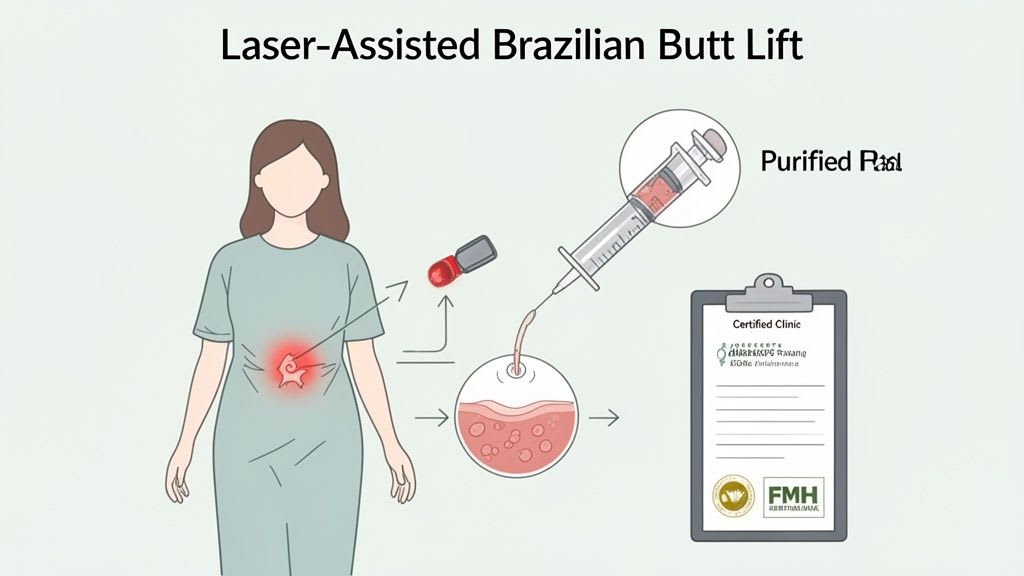
A common point of confusion in aesthetic medicine is the term "Brazilian butt lift laser". This phrase doesn't refer to a non-invasive laser treatment that reshapes the buttocks from the outside. Instead, it describes a sophisticated surgical procedure that combines laser-assisted liposuction with fat grafting to enhance and contour the buttocks.
The laser is an advanced tool used during the first, crucial step of the procedure: harvesting the fat.
Understanding the Modern BBL Procedure in Switzerland
The Brazilian Butt Lift (BBL) has gained significant international attention. The concept is compelling: transferring fat from an area where it is unwanted (such as the abdomen or flanks) to an area where more volume is desired. The goal is to create a more balanced and curvaceous silhouette.
Globally, the procedure saw a notable increase in demand, as highlighted in data from aesthetic societies. You can learn more about the rise in BBL procedures and the evolution of its techniques.
In Switzerland, this procedure is subject to stringent medical standards and is performed exclusively by highly qualified plastic surgeons. The "laser" component specifically refers to the technology used during the liposuction phase.
The Role of Laser Technology
The laser's function is laser-assisted lipolysis—using targeted energy to gently liquefy fat before removal.
Instead of relying solely on the physical movement of a cannula to break up fat deposits, the surgeon inserts a thin fibre that emits laser energy. This serves two primary purposes:
Liquefies fat cells: The laser's thermal energy turns solid fat into a liquid, allowing for gentler suction. This can reduce trauma to surrounding tissues and blood vessels.
Promotes skin tightening: The heat generated can stimulate collagen production in the skin's deeper layers, potentially helping the skin retract more effectively over the newly contoured area.
The Fat Grafting Process
Once the fat is gently harvested, it undergoes a crucial purification process. This step separates healthy, viable fat cells from excess fluids, oils, and damaged cells.
The quality of the harvested fat is a critical factor for the procedure's success. Only the most robust and intact fat cells are selected for transfer, as they have the highest probability of surviving and establishing a new blood supply in the buttocks.
The purified fat is then meticulously injected. This is a highly skilled technique where fat is placed in small amounts across multiple layers of the buttock's subcutaneous tissue to create a smooth, natural-looking shape and maximise cell survival.
In Switzerland, this is a specialised surgery performed in accredited clinics by surgeons holding an FMH (Swiss Medical Association) certification in plastic, reconstructive, and aesthetic surgery. This title is a key indicator of extensive training and adherence to the highest safety standards.
Comparing Buttock Contouring Methods in Switzerland
Choosing the appropriate body contouring procedure depends on your anatomy, aesthetic goals, and expectations for recovery. In Switzerland, patients have access to several excellent options that work in fundamentally different ways. The decision between a surgical fat transfer like a BBL and non-surgical injections should be made in consultation with a qualified specialist.
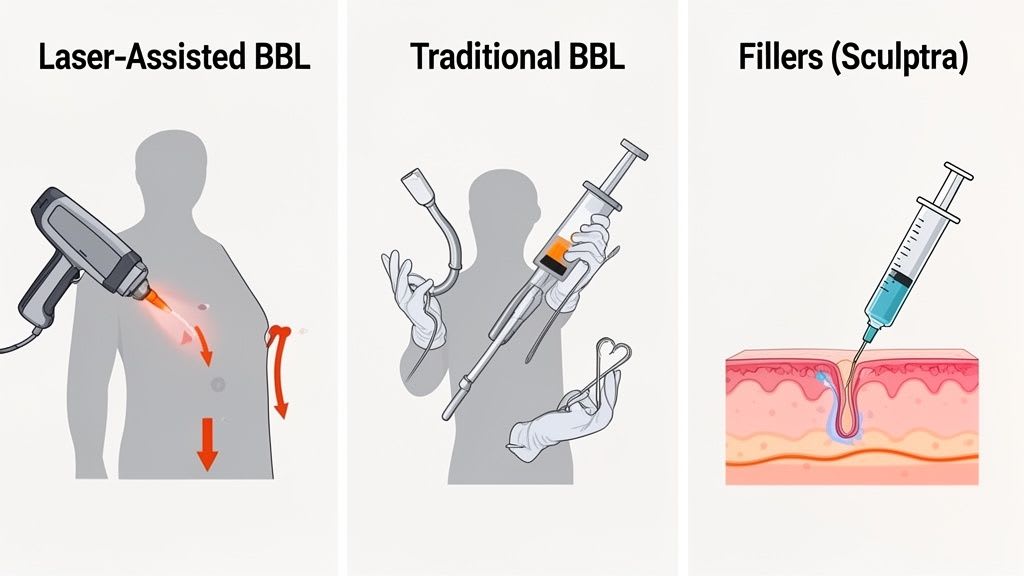
Let's compare the main approaches: the Laser-Assisted BBL, the Traditional BBL, and non-surgical fillers.
Surgical Option: Laser-Assisted BBL
The Laser-Assisted BBL is a technologically enhanced version of the classic fat transfer. It is a full surgical procedure designed to create significant, lasting changes to the shape and volume of the buttocks.
It begins with laser-assisted liposuction, where a fine laser fibre liquefies fat cells in a donor area—such as the abdomen or thighs—for easier removal. This fat is then collected, purified, and strategically injected into the buttocks to achieve the desired contour.
This approach is suitable for individuals in good health who have sufficient excess fat for donation and desire a noticeable, long-term transformation. It requires a surgical setting and a dedicated recovery period.
Surgical Option: Traditional BBL
The Traditional BBL achieves the same objective as its laser-assisted counterpart—reshaping the buttocks using your own fat. The primary difference lies in the tools used for fat harvesting.
In this method, the surgeon uses a cannula and manual techniques to break up and suction fat from donor areas. The fat is then purified and transferred in the same meticulous manner as a laser-assisted BBL.
The ideal candidate is the same: a healthy person with adequate donor fat seeking a significant, lasting contour change. Both BBL methods are major surgical procedures that require general anaesthesia and a structured recovery.
Non-Surgical Option: Buttock Fillers
For those seeking a subtle enhancement without surgery, non-surgical augmentation with fillers is an option. This approach does not involve liposuction or fat transfer.
In Switzerland, biostimulators like Sculptra (poly-L-lactic acid) are often used for this purpose, rather than standard hyaluronic acid fillers. These products work by stimulating the body’s own collagen production, gradually building natural-looking volume over time.
The procedure involves a series of injections into the target areas, typically performed with a local anaesthetic.
This is a suitable option for individuals seeking a modest lift, increased volume, or correction of minor asymmetries like "hip dips." It is also appropriate for those who lack sufficient donor fat for a BBL or wish to avoid a surgical procedure. To understand more about these injectables, our guide on dermal fillers and their applications provides further detail.
Comparison of Buttock Contouring Techniques in Switzerland
This table provides a side-by-side comparison of the key features of these techniques available in Swiss clinics.
| Attribute | Laser-Assisted BBL | Traditional BBL | Non-Surgical Fillers (e.g., Sculptra) |
|---|---|---|---|
| Primary Goal | Significant volume and shape change | Significant volume and shape change | Subtle volume, lift, and contouring |
| Method | Laser liposuction + fat grafting | Manual liposuction + fat grafting | Direct injection of biostimulatory filler |
| Invasiveness | Surgical | Surgical | Minimally invasive (injections) |
| Anaesthesia | General or deep sedation | General or deep sedation | Local anaesthetic |
| Results | Long-lasting, significant results | Long-lasting, significant results | Gradual, subtle, and temporary (approx. 2 years) |
| Downtime | 2-3 weeks of notable downtime | 2-3 weeks of notable downtime | Minimal; often possible to return to work next day |
| Ideal For | Major reshaping; requires donor fat | Major reshaping; requires donor fat | Minor enhancements; no donor fat needed |
Ultimately, there is no single "best" procedure—only the one most appropriate for your individual needs. A thorough consultation with an FMH-certified plastic surgeon is essential. In clinics across Switzerland, from Geneva to Zurich, specialists will assess your anatomy and discuss your goals, guiding you toward the safest and most effective choice under Swiss medical regulations.
How Laser Technology Refines Body Contouring
When discussing a brazilian butt lift laser procedure, it's important to clarify that the laser does not replace liposuction but enhances it. It represents a high-tech upgrade to the fat harvesting stage, providing surgeons in leading Swiss clinics with greater precision.
Modern energy-based devices are designed to refine the entire process, addressing both the fat removal and the quality of the overlying skin. This comprehensive approach distinguishes today's advanced procedures from older, traditional methods.
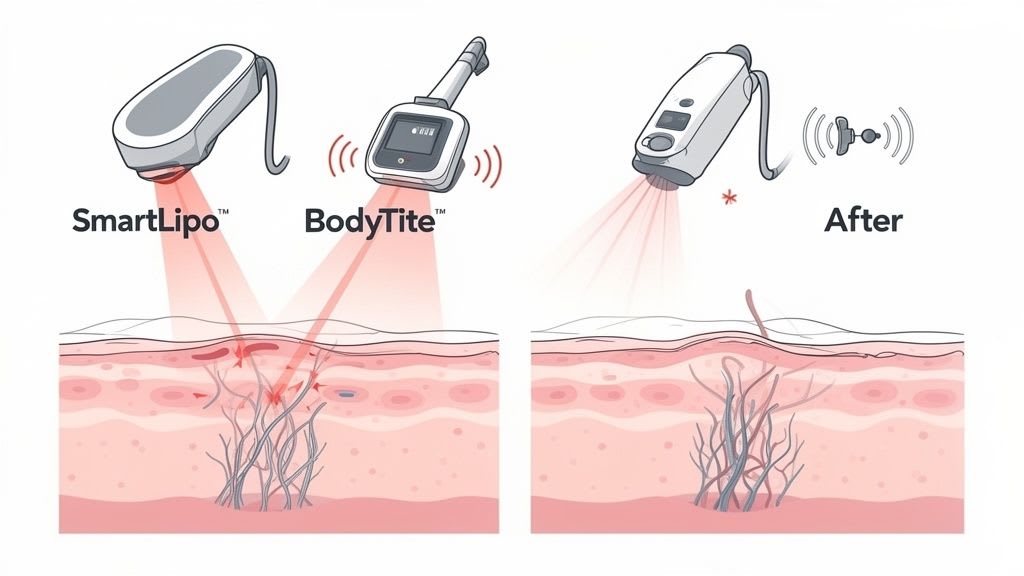
The Science of Energy-Based Liposuction
The underlying principle is to prepare the fat before it is removed. Instead of relying solely on the physical force of a cannula to break apart fat cells, surgeons can use focused energy to gently liquefy them first. This can result in a smoother process with less trauma to surrounding tissues.
Two primary technologies are prevalent:
Laser-Assisted Lipolysis (LAL): Known by brand names such as SmartLipo, this technique uses a fine laser fibre inserted into the fat layer. The laser emits targeted heat, melting fat cells into an oily liquid that can be suctioned out with less force.
Radiofrequency-Assisted Lipolysis (RFAL): Devices like BodyTite use controlled radiofrequency energy. A current passes between a small internal probe and an external applicator, creating a field of heat that liquefies fat while also warming the skin from within.
For the patient, these methods often translate to less post-operative bruising and swelling, which can contribute to a more comfortable recovery.
The Additional Benefit of Skin Tightening
This is where energy-based devices offer a distinct advantage. The controlled heat from both laser and radiofrequency systems provides a secondary benefit that traditional liposuction cannot match: collagen stimulation.
The gentle warmth generated during the procedure triggers the body's natural healing response. This signals the skin to produce new collagen and elastin, causing it to gradually contract and tighten in the months following the surgery.
This is particularly beneficial for patients with some skin laxity in the donor areas, such as the abdomen or flanks. While traditional liposuction might occasionally leave the skin looking loose, an energy-assisted procedure helps it retract more smoothly over the new contours. For a deeper understanding of this technology, you can explore our guide on RF body contouring techniques.
The adoption of these devices is a growing trend in aesthetic surgery. Studies have shown a significant percentage of liposuction patients receive complementary skin-tightening treatments, indicating a shift towards creating more complete and refined results in a single operation.
BBL Safety and Swiss Medical Standards
Patient safety is a paramount concern for any surgical procedure, and the Brazilian Butt Lift is no exception. International reports have sometimes raised concerns about its safety.
The most serious risk associated with the BBL is a pulmonary fat embolism, a rare but life-threatening event where fat is mistakenly injected into large blood vessels within the gluteal muscles. The fat can then travel to the heart and lungs with severe consequences.
However, it is critical to understand the context. Research has shown that these incidents are overwhelmingly linked to procedures performed by unqualified individuals in unregulated settings.
The Swiss Framework for Patient Protection
The situation in Switzerland is fundamentally different. The approach to any BBL, whether laser-assisted or traditional, is governed by a robust system of medical regulations and training standards designed to prioritise patient safety.
Choosing a verified Swiss clinic means entering a protective healthcare ecosystem built on several key principles:
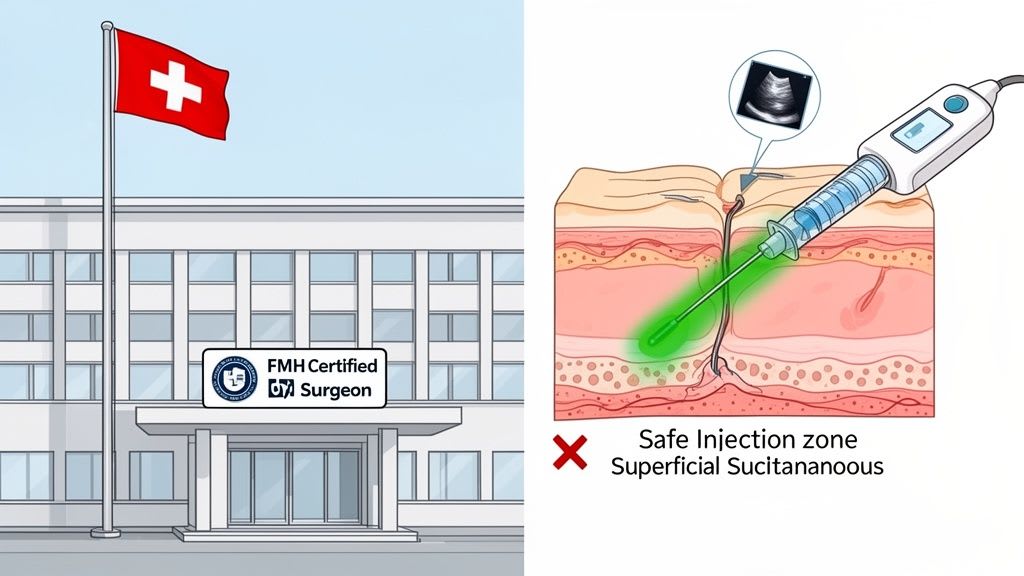
Surgeon Expertise: The only practitioners considered qualified specialists are surgeons holding an FMH (Swiss Medical Association) specialisation in plastic, reconstructive, and aesthetic surgery. This title signifies years of rigorous, hands-on training.
Accredited Facilities: Surgeries are performed in accredited surgical centres that meet hospital-grade standards for sterility, equipment, and emergency protocols.
Mandatory Best Practices: Swiss surgeons are obligated to follow the latest international safety protocols, which are continually updated based on global data.
Safe Injection Technique: The Gold Standard
A safe BBL adheres to one unwavering rule: fat is injected only into the subcutaneous layer. This is the fatty tissue that sits above the large gluteal muscle, not within it.
To ensure this, qualified surgeons in Switzerland employ evidence-based techniques:
Superficial Injections: They meticulously place fat grafts into this "safe zone," avoiding the deeper, vascular muscle tissue.
Specialised Instruments: They use blunt-tipped cannulas, which are designed to slide through tissue without puncturing blood vessels.
Ultrasound Guidance: Increasingly, surgeons use real-time ultrasound imaging to view the cannula's tip and tissue layers. This technology allows them to confirm with certainty that every injection is placed correctly.
In the past, the BBL was associated with a higher mortality rate, primarily linked to unqualified practitioners injecting fat into the muscle. The widespread adoption of safer techniques, especially ultrasound-guided injections by certified experts, has dramatically improved the procedure's safety profile.
While any surgery carries general risks, such as those related to anaesthesia or infection, the specific, serious dangers of a BBL are significantly minimised in the hands of a qualified expert. By choosing a verified surgeon in Switzerland, you are placing your safety within one of the most rigorous medical systems in the world. Learn more in our guide on how Swiss medical standards protect aesthetic patients.
Your Patient Journey: Recovery, Results, and Costs
The post-operative recovery is as crucial as the surgery itself for achieving the desired outcome. When you choose a laser-assisted BBL in Switzerland, you enter a structured programme of care managed by highly professional medical staff. Understanding what to expect can help you navigate the process smoothly.
The initial weeks are focused on healing and protecting the newly transferred fat cells.
The Immediate Post-Op Phase: The First Few Weeks
Immediately after your procedure, your primary responsibilities are to rest and follow your surgeon's instructions. This is a critical period when the new fat grafts are establishing a blood supply.
Compression Garment: You will wear a specialised medical garment to manage swelling in the liposuctioned areas and help your skin retract. You should expect to wear it for several weeks.
Managing Comfort: Post-operative pain, bruising, and swelling are normal. Your clinic will provide a pain management plan to ensure your comfort.
The Golden Rule: No Pressure. This is a non-negotiable instruction. You must avoid sitting or lying directly on your buttocks for at least two to three weeks. Pressure can compromise blood supply to the new fat cells. You will need to sleep on your stomach or side, and a special "BBL pillow" will be provided to offload pressure when sitting is unavoidable.
The first phase of recovery requires discipline. Adhering strictly to your aftercare plan gives your body the best opportunity to heal and for the transferred fat cells to survive.
Getting Back to Your Normal Routine
As swelling subsides, you can gradually reintroduce normal activities based on your surgeon's timeline.
Most people feel able to return to a desk job within one to two weeks, using their BBL pillow. Strenuous activities, heavy lifting, and intense exercise are typically restricted for four to six weeks or longer. Always follow the guidance of your medical team.
It is common for patients interested in body contouring to also be curious about other aesthetic technologies. For example, understanding the results possible with other treatments, such as microneedling before after transformations, can provide a broader perspective on modern tissue rejuvenation techniques.
When Will You See the Final Results?
Patience is essential. The shape immediately after surgery is temporarily augmented by swelling and a deliberate "overfilling" by the surgeon, who anticipates that not all fat will survive.
Over the first few months, your body will naturally absorb some of the transferred fat—a loss of 30-50% is normal. The final, stable contour of your brazilian butt lift laser procedure will become apparent around three to six months post-surgery. The fat cells that remain at this point have successfully integrated and are considered permanent. However, significant future weight fluctuations can still alter your results.
The Cost of a Laser BBL in Switzerland
In Switzerland, the cost of a laser-assisted BBL reflects the country's high medical standards, the surgeon’s expertise, and the quality of the clinical facilities. The price is typically an all-inclusive figure covering all aspects of your care.
You can anticipate a cost ranging from CHF 12,000 to CHF 20,000.
This comprehensive investment generally includes:
The surgeon's fee (reflecting their FMH specialist title and experience)
The anaesthetist's fee
All costs for the accredited surgical facility
All pre-operative assessments and post-operative follow-up appointments
The specialised compression garments and other necessary medical supplies
Choosing to have your procedure in Switzerland is an investment in safety, quality, and predictable outcomes, upheld by rigorous medical regulations.
How to Choose a Qualified Clinic in Switzerland
When considering a procedure like a laser-assisted BBL, selecting a safe, skilled practitioner is the most important decision you will make. This process is about ensuring both your health and a satisfactory aesthetic outcome.
Your search should be centred on verifying the surgeon's qualifications.
Verifying Surgeon Credentials
In Switzerland, the field of plastic surgery is well-regulated. The gold standard is the FMH (Foederatio Medicorum Helveticorum) specialisation title in plastic, reconstructive, and aesthetic surgery. This title confirms that a surgeon has completed years of dedicated, formal training and passed rigorous examinations in this specific medical field.
You can and should verify these credentials independently.
Check the MedReg Register: The Swiss government maintains a public Register of Medical Professions (MedReg). You can search by a doctor's name to confirm they hold a valid federal licence to practise in Switzerland.
Look for the FMH Title: A surgeon with this specialisation will typically display it on their clinic website. You can also check the FMH member directory.
To simplify this process, BeautyGuide independently verifies the qualifications of the specialists featured on our platform. This provides a pre-vetted list of practitioners who meet Switzerland’s high standards.
Asking the Right Questions During Your Consultation
Once you have a shortlist of credentialed surgeons, the consultation is your opportunity to assess their suitability. This is where you move from verifying qualifications to evaluating real-world expertise. A good surgeon will be transparent, clear, and willing to answer all your questions.
Essential questions to ask include:
How many laser-assisted BBLs have you performed, and what is your experience with this technique?
Do you use ultrasound guidance for fat injections to enhance safety?
May I see before-and-after photos of your work on patients with a body type similar to mine?
What type of laser or energy device do you use for liposuction, and why have you chosen it for your practice?
Pay close attention to their responses. You are looking for professionalism, transparency, and a clear commitment to your safety and aesthetic goals.
Your next step is to begin your search. You can use the BeautyGuide platform to discover verified specialists in cities like Zurich, Geneva, or Lausanne and schedule initial consultations. This is the most reliable way to find a surgeon who not only understands your vision but also operates under the highest medical standards in Switzerland.
Frequently Asked Questions
It is natural to have questions when considering a surgical procedure. Here are answers to some of the most common inquiries from patients.
How Much Fat Is Needed for a Laser BBL?
The amount of fat required depends on your anatomy and desired outcome. Generally, surgeons in Switzerland need to harvest several litres of fat to ensure a sufficient quantity of healthy, viable cells for transfer.
Having adequate fat in donor areas—such as the abdomen, back, or thighs—is a key factor in determining your candidacy for a brazilian butt lift laser procedure.
Are the Results of a Laser BBL Permanent?
The results are considered long-lasting. The fat cells that successfully integrate with the surrounding tissue will remain permanently. However, like other fat cells in your body, they will expand or shrink with significant weight fluctuations.
Surgeons anticipate that the body will naturally reabsorb approximately 30% to 50% of the transferred fat. They account for this by strategically injecting a slightly larger volume to achieve the desired final contour.
This anticipated absorption is a normal part of the healing process. A skilled surgeon plans for this, knowing the final, stable shape will be visible after about six months once the fat has fully settled.
What Are the Main Benefits of Using a Laser?
The primary advantages of incorporating a laser relate to the quality of the liposuction and the final aesthetic result. Using a laser can reduce trauma and bruising in the donor area, potentially leading to a more comfortable initial recovery. It also allows for a gentler and more efficient fat extraction process for the surgeon.
The most significant additional benefit is skin tightening. The heat from the laser stimulates collagen production, encouraging the skin in the liposuctioned areas to contract. This is particularly advantageous for achieving a smooth, toned contour, especially for patients with mild skin laxity.
This article is for informational purposes only and does not replace professional medical advice.