
When considering an aesthetic treatment in Switzerland, the price reflects more than just the procedure itself—it represents your safety. How do Swiss medical standards protect aesthetic patients? Through a rigorous system of world-class regulations, strict professional accountability, and an unwavering commitment to patient care that underpins every step of your journey. The higher cost is, in effect, your "Safety Insurance."
In Switzerland, aesthetic medicine is not a commercial service; it operates under the same demanding principles as mainstream healthcare. This is a world away from the regulatory grey areas found in many other countries. This protective infrastructure is built on non-negotiable pillars: elite practitioner qualifications, strict product control, rigorous clinical oversight, and a mandatory legal safety net for every patient.
Understanding these standards is vital. They are the reason Swiss aesthetic medicine is among the safest in the world. For more context, see our guide on why medical supervision matters in aesthetic treatments.
The "Swissmedic" Shield: Your First Line of Defence
Swissmedic is the vigilant gatekeeper for every aesthetic product entering Switzerland. This national agency provides an uncompromising defence against unsafe, unproven, or counterfeit medical products, ensuring that quality is never sacrificed.
What is Swissmedic?
Swissmedic is the Swiss Agency for Therapeutic Products. It is one of the strictest regulatory bodies in the world (stricter than the FDA in many regards). It ensures that every injectable product (Botox/Filler) used in Switzerland has passed rigorous safety trials. 'Grey market' imports are illegal and confiscated at the border.
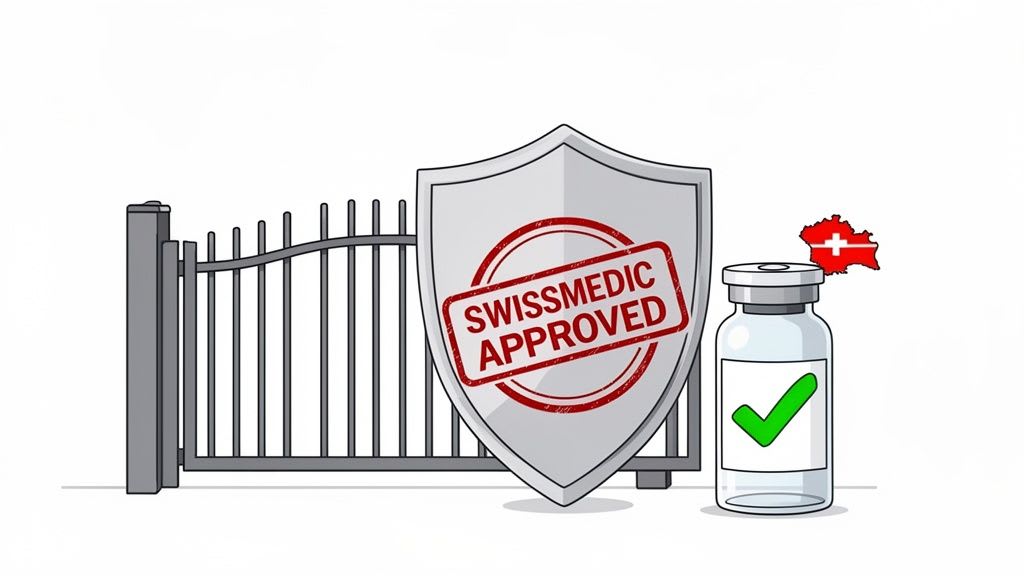
Before any injectable—dermal filler or botulinum toxin—can be used in a Swiss clinic, it must pass Swissmedic's exhaustive approval process. This strict oversight means the Swiss aesthetic injectables market, valued at $33.2 million USD in 2023, is built on professional accountability and proven product safety. You can find more insights about the Swiss aesthetic market dynamics on medicaldevice-network.com.
This system guarantees that the product used in your treatment is authentic, stored correctly, and of the highest medical grade. The Swissmedic seal protects you from the serious risks posed by counterfeit or improperly handled substances common in less-regulated environments.
Why 'FMH' Matters: The Gold Standard for Specialists
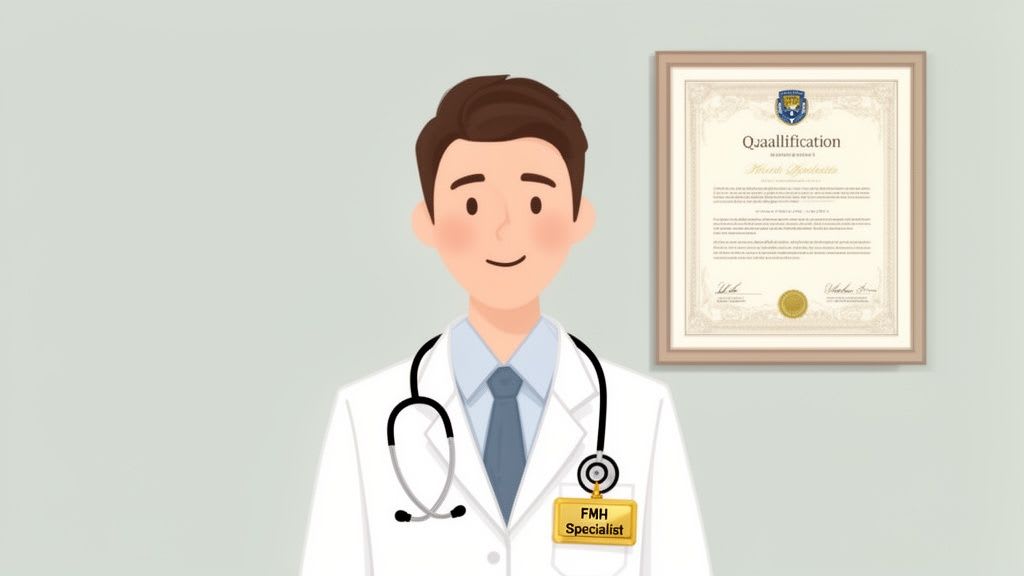
When seeking an aesthetic specialist in Switzerland, you will encounter various titles. While 'Arzt' means doctor, the designation you must look for is 'Facharzt FMH'. This is not merely a title; it is a legally protected mark of elite, board-certified expertise.
The Difference: 'Arzt' vs. 'Facharzt FMH'
'Arzt' (Doctor): An individual who has earned a medical degree.
'Facharzt FMH' (Specialist): A doctor who has completed an additional 5-6+ years of intensive, federally regulated specialization in a field such as Plastic, Reconstructive and Aesthetic Surgery or Dermatology and Venereology.
This demanding specialization is overseen by the Swiss Medical Association (Foederatio Medicorum Helveticorum, or FMH). It ensures a practitioner possesses deep, hands-on experience in their chosen field. For your safety, always look for 'FMH' on the door. It is the single most reliable sign that your practitioner has the specialised training required to perform complex aesthetic procedures safely and effectively. To learn more, see our guide on understanding medical vs non-medical aesthetic treatments.
The Inspector Visits: Cantonal Hygiene Laws in Action
Beyond qualified practitioners and approved products, the clinic environment itself is strictly controlled. In Switzerland, every private aesthetic clinic answers to its local cantonal health authority. This legal mandate ensures facilities in Zurich, Geneva, and across the country meet hospital-grade safety standards through unannounced government inspections.
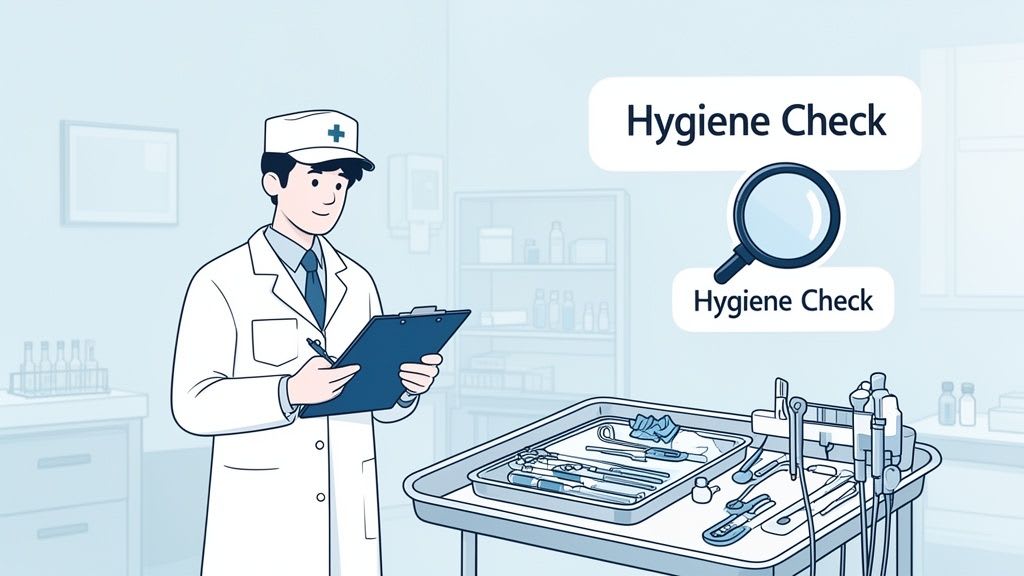
These official inspectors scrutinize operations to identify and eliminate risks before they can affect a patient. Their checks include:
Sterilisation Protocols: Verifying that all reusable instruments are sterilised in a validated autoclave.
Medical Supplies: Ensuring every filler, thread, and vial is within its expiration date.
Emergency Readiness: Confirming a fully-stocked emergency crash cart is on-site and ready for immediate use.
This rigorous oversight is fundamental to Switzerland’s disciplined approach to medical aesthetics and is a level of protection that simply does not exist in unregulated "medical tourism" hubs. The market's strength encourages clinics to invest in top-tier facilities, as detailed in this analysis of the Swiss medical aesthetics market.
Your Legal Safety Net: Liability and Insurance
In Switzerland, patient protection is woven into the legal and financial fabric of the medical system. This creates a solid safety net that holds practitioners accountable, a stark contrast to environments where patients may unknowingly sign away their legal rights.
Your Legal Safety Net
Mandatory Insurance: Every practicing doctor in Switzerland MUST carry professional liability insurance (Berufshaftpflichtversicherung). This is not optional.
Financial Protection: This insurance is your personal guarantee. It ensures that in the unlikely event of a complication, there is a clear and direct path for recourse.
Legal Accountability: You are never left to fend for yourself. This non-negotiable rule makes practitioners legally answerable for the quality of care they provide.
When you choose a provider in Switzerland, you are automatically protected by this legal umbrella. It is a fundamental part of the Swiss standard of care that safeguards your rights by law. Learn more about what to look for in our guide on how to select the right beauty clinic.
Frequently Asked Questions
Let's address common questions about the strict standards governing aesthetic medicine in Switzerland, grounded in Swiss medical law.
Can beauticians inject Botox in Switzerland?
No. In Switzerland, botulinum toxin is a prescription drug. Only qualified medical doctors can prescribe and administer it. A licensed nurse may perform the injection, but only under the direct, on-site supervision of the prescribing doctor. This ensures a medical expert with a deep understanding of facial anatomy and potential risks oversees every step, protecting patients from unqualified practitioners.
Why is Swiss Botox more expensive?
The price reflects a comprehensive safety system. The higher cost is due to high labor costs for skilled professionals, mandatory professional liability insurance (Berufshaftpflichtversicherung), and the exclusive use of Swissmedic-approved products. This strict sourcing prevents the use of cheap, counterfeit, or "grey market" products, guaranteeing authenticity and safety. You are paying for uncompromising quality control.
What if I have a complication?
You are never left alone. The Swiss healthcare system is designed for seamless support. Emergency rooms and hospitals work directly with local specialists to manage any aesthetic-related complications. Your treating physician has a legal duty of care to manage any issues or ensure you receive urgent medical attention. This integrated network guarantees you receive expert help without delay.
Explore More
This article is for informational purposes only and does not replace professional medical advice.