
As a medical professional in aesthetics, I often see the incredible results that modern treatments can offer. But I also see the other side—what happens when things go wrong. It's easy to view aesthetic procedures as a simple beauty upgrade, but the moment a needle, laser, or device goes beneath your skin, it becomes a medical act. Here in Switzerland, our standards for patient safety are among the highest in the world. Understanding why medical supervision matters in aesthetic treatments isn't just a good idea; it's the most critical step you can take to protect your health.
### Quick Take: Why Medical Supervision Matters
Medical supervision ensures that aesthetic procedures are performed by licensed professionals capable of managing complications like vascular occlusion or infection. It guarantees the use of FDA/CE-approved products and strict adherence to sterile protocols, significantly reducing the risk of permanent damage.
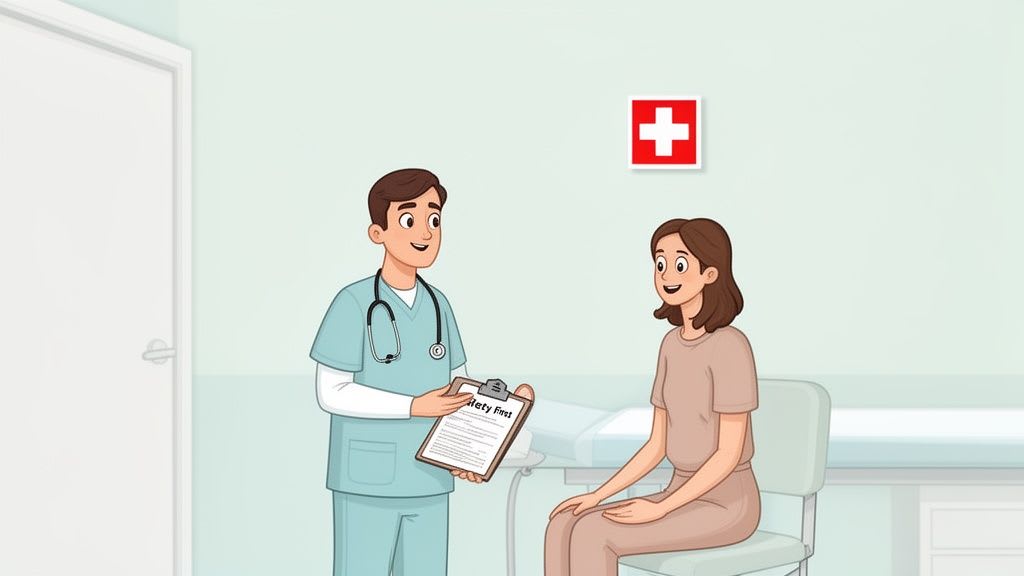
"Cosmetic" vs. "Medical Aesthetic": A Critical Distinction
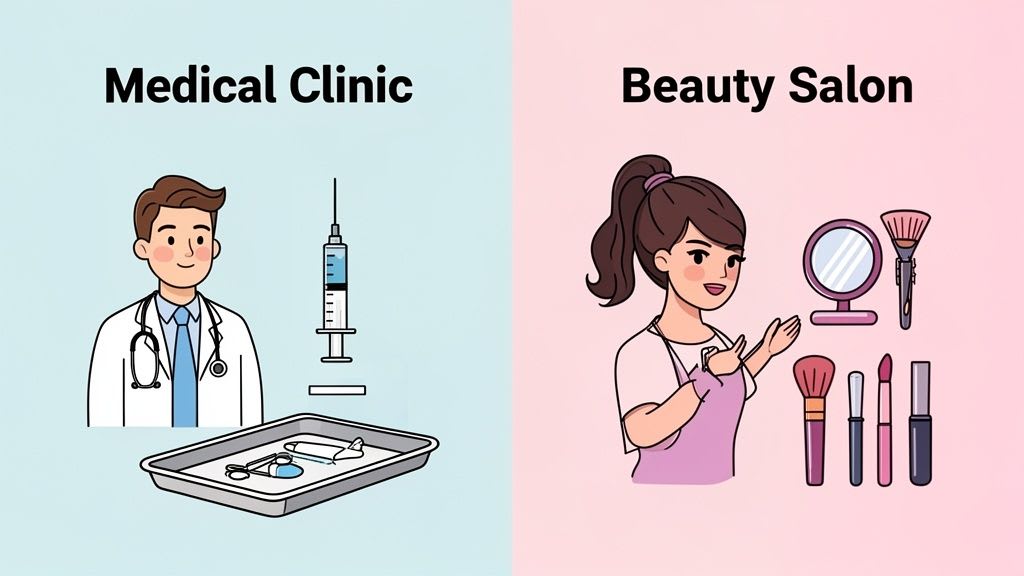
In Switzerland, we draw a very clear line between a cosmetic service and a medical aesthetic procedure. One is about surface-level enhancement, while the other involves altering living tissue. Confusing the two can have serious consequences for your health.
A cosmetic treatment, like a standard facial or makeup application, is performed by a beautician. These services are wonderful for grooming and relaxation, but they are strictly non-invasive and do not break the skin's barrier.
The Medical Reality of Aesthetic Procedures
On the other hand, medical aesthetic treatments are invasive procedures. This includes injectables like dermal fillers, botulinum toxin, and advanced laser therapies that penetrate the skin. These are not beauty treatments; they are medical acts that carry real risks.
They require a profound understanding of human anatomy, pharmacology, and emergency medicine.
A qualified medical doctor operates under a legal and ethical duty of care that includes:
A thorough medical assessment to ensure you are a suitable candidate.
Obtaining informed consent by explaining all potential risks and benefits.
The ability to manage complications immediately and effectively.
This medical framework is a cornerstone of the Swiss healthcare system, designed to protect you. A non-medical provider is not trained, equipped, or legally permitted to handle these critical responsibilities.
Real-World Risks: What We See in the Clinic
In my practice, I've seen how safe and effective aesthetic treatments are when performed correctly. But I've also consulted with patients who have suffered permanent damage from unqualified practitioners. When you choose a medical professional, you're not just paying for a procedure; you're investing in the expertise to prevent and manage complications.
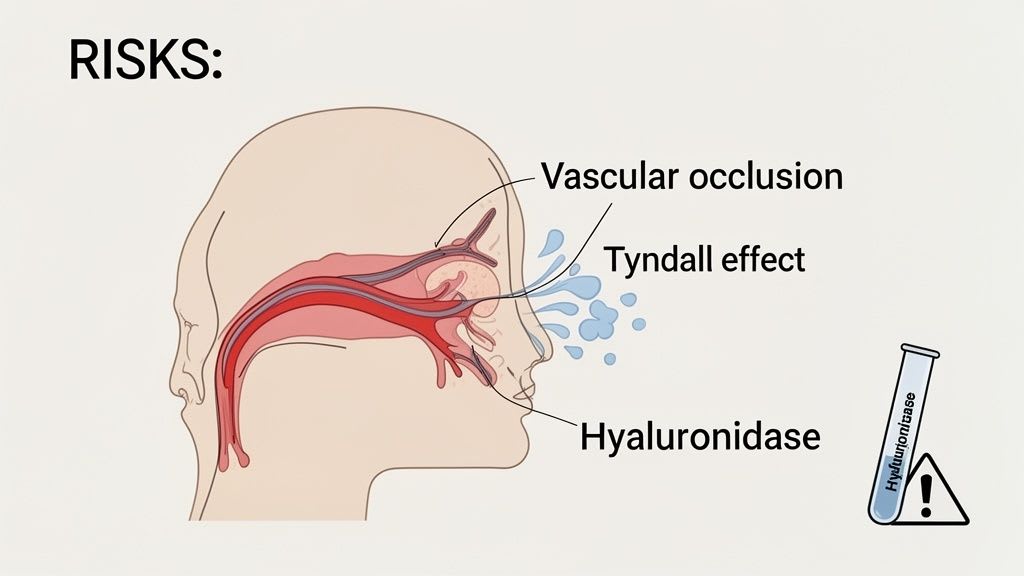
One of the most urgent emergencies is Vascular Occlusion. This occurs when filler is mistakenly injected into a blood vessel, blocking blood flow. If not treated within hours, this leads to Necrosis—the death of skin tissue—causing permanent scarring and disfigurement.
We also see the Tyndall Effect, where filler injected too superficially creates a persistent blue-grey discoloration under the skin. While not as dangerous, it looks unnatural and requires a medical professional to dissolve the product. Other risks include severe infections from non-sterile equipment and allergic reactions.
### Doctor's Note
Safety Tip: Always ask your provider to show you the unopened box of the product before injection to verify the lot number and expiration date.
The Emergency "Antidote" Only Doctors Can Legally Use
In the event of a vascular occlusion from a hyaluronic acid filler, there is one critical emergency medication: Hyaluronidase. This enzyme instantly dissolves the filler, restoring blood flow and preventing tissue death.
Here is the crucial point: in Switzerland, only a medical doctor can legally prescribe and administer Hyaluronidase. A beautician or non-medical injector cannot legally possess or use this sight-saving, tissue-preserving drug. This fact alone makes choosing a medical professional non-negotiable.
When you are in a medical clinic, you have the reassurance that if the unthinkable happens, the team has the training, tools, and legal authority to act immediately. To understand the procedure better, you can learn more about dermal fillers and their safe application.
Medically Supervised Clinic vs. Unregulated Beauty Salon: A Comparison
The environment where you receive treatment is just as important as the person performing it. The difference in safety protocols between a medical clinic and a beauty salon is vast. This table breaks down the critical distinctions.
| Feature | Medically Supervised Clinic | Unregulated Beauty Salon |
|---|---|---|
| Hygiene Standards | Follows medical-grade sterilisation protocols. Uses aseptic techniques and single-use sterile equipment. | Basic cleaning standards can vary, creating a high risk of infection and cross-contamination. |
| Product Quality | Exclusively uses Swissmedic/CE-certified products from legitimate pharmaceutical suppliers. | High risk of using counterfeit, expired, or illegally imported products with unknown ingredients. |
| Complication Management | Has emergency protocols and immediate legal access to prescription drugs like Hyaluronidase. | No legal access to emergency medications. Cannot diagnose or medically treat complications. |
| Legal Liability | The practitioner is a licensed doctor, carries professional malpractice insurance, and is legally accountable. | Often uninsured for invasive acts, with little to no legal recourse or accountability if you are harmed. |
This table clearly shows that the safety net provided by a medical clinic is comprehensive. It covers everything from product authenticity to emergency preparedness—protections you simply do not have in an unregulated setting. For more guidance, see our full guide on how to select the right beauty clinic.
The Swiss Standard: How Regulation Protects You
Patient safety is the foundation of the Swiss healthcare system, and this extends fully to aesthetic medicine. These regulations are not about bureaucracy; they are a robust framework designed to protect you.
Swissmedic & CE Marking: Your Guarantee of Quality
Every legitimate medical product used in a Swiss clinic, from fillers to lasers, must have Swissmedic approval or a CE certification. This guarantees the product has been rigorously tested for safety, quality, and efficacy. When you are in a medical clinic, you can be confident that the products are authentic, traceable, and legally approved for use in Switzerland. The Swiss aesthetic market is significant, with skincare devices alone valued at over USD 104 million in 2022, making this oversight essential. Read the full research about the Swiss skincare device market.
MedReg: The Official Practitioner Registry
Beyond products, the practitioner's qualifications are paramount. The Swiss government provides a simple tool for this: the MedReg registry. This is a public, official database of every licensed medical professional in the country. A quick search allows you to confirm your practitioner is a qualified doctor with the legal right to practice medicine in Switzerland.
Your Safety Checklist for Choosing a Clinic
Taking an active role in verifying a clinic's credentials is the most responsible thing you can do for your health. A true medical professional will always welcome your questions.
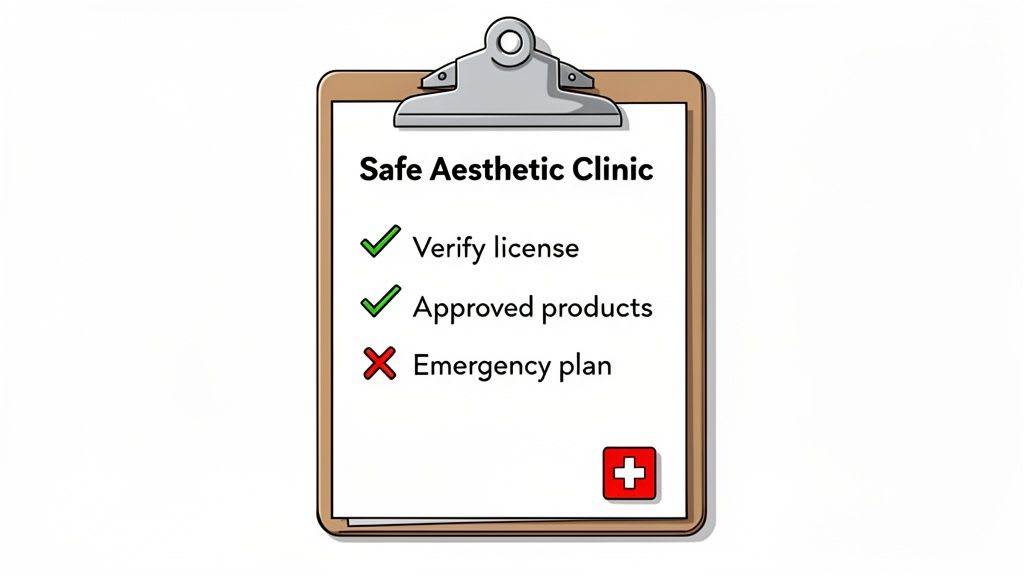
Use this checklist during your research and consultation:
Verify Credentials: Check the MedReg registry online to confirm your provider is a licensed doctor. This is non-negotiable.
Ask About Emergency Plans: Ask directly, "What is your protocol for managing a complication like a vascular occlusion?" A professional clinic will have a clear, immediate plan.
Confirm Product Authenticity: Insist on seeing the original, sealed packaging of any injectable product. Verify it is Swissmedic-approved or CE-marked.
* Assess the Environment: The clinic must be impeccably clean and professional, meeting the standards of any medical facility. Trust your instincts.
Your consultation is the ideal time to cover these points. Understanding what to expect during a first aesthetic consultation will help you make an informed and safe decision.
Frequently Asked Questions
Navigating the world of aesthetic treatments can be confusing. Here are direct answers to some of the most critical safety questions we hear.
Is it illegal for beauticians to inject lip fillers?
Yes, it is illegal in Switzerland. Injecting any substance, including dermal fillers, is classified as a medical act. It can only be legally performed by a qualified medical doctor. A beautician offering these services is breaking the law and putting patients at extreme risk.
What is the biggest risk of non-medical injections?
Blindness and necrosis (tissue death) are the most catastrophic risks. If an untrained person injects filler into a blood vessel in the face, it can block blood flow to the eyes or skin. This can cause permanent blindness or kill the skin tissue, leading to irreversible scarring and disfigurement.
How can I check if my practitioner is qualified?
Use the official MedReg registry. This is a public database managed by the Swiss Federal Office of Public Health. You can search for the practitioner's name to confirm they hold a valid medical license to practice in Switzerland. It is the only definitive way to verify their credentials.
Explore More
This article is for informational purposes only and does not replace professional medical advice.