
A chemical peel can reveal smoother, more radiant skin by clearing away damaged outer layers, but the “before and after” results depend entirely on the treatment’s depth and a medically supervised healing process. The change is not instant. Think of it as a controlled renewal where fresh, healthier skin gradually replaces the old—a journey that must be overseen by a qualified medical professional to be safe and effective.
How a Chemical Peel Uncovers Healthier Skin
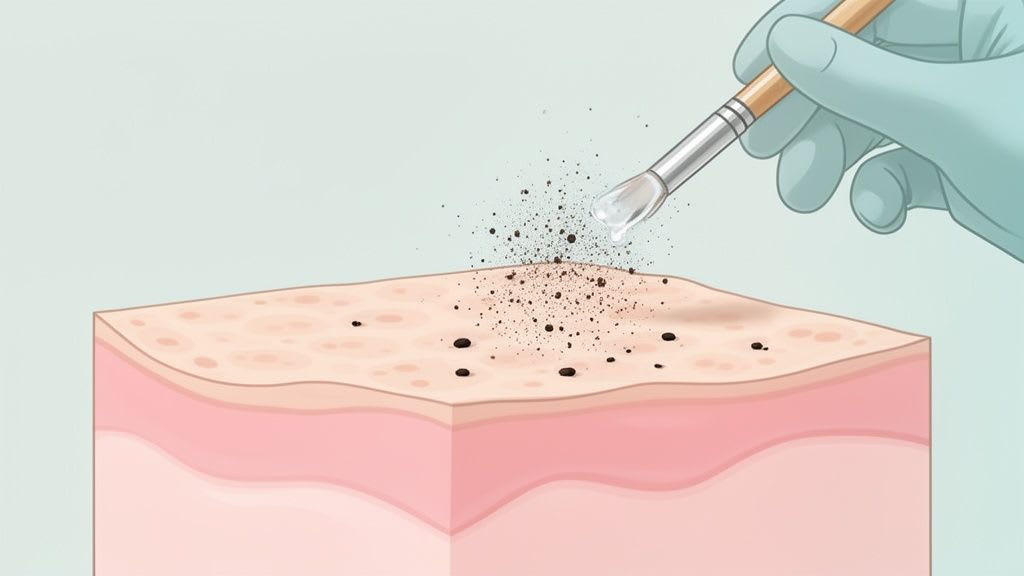
Imagine your skin’s surface is a canvas that has collected dust, fine scratches, and discolouration over time. A chemical peel is a professional medical procedure to restore that canvas. In a certified Swiss clinic, a specialist applies a specific chemical solution carefully chosen for your skin type and concerns. This solution works by dissolving the bonds that hold old, damaged skin cells together on the surface.
The Process of Controlled Skin Renewal
This deliberate removal of the skin’s outermost layers is known as chemexfoliation. It is not about harshly stripping the skin. Instead, it is a precise and medically guided process that signals to your body that it is time to heal and repair. By removing the dull, compromised surface, the treatment stimulates natural cell turnover.
This stimulation prompts the skin to generate new, undamaged cells. The result is a complexion that appears brighter, feels smoother, and has a more even tone. This is the fundamental mechanism that creates noticeable chemical peeling before and after results.
Common Skin Concerns Addressed by Peels
Because it works by renewing the skin, a chemical peel can address a range of aesthetic concerns. Qualified practitioners in Switzerland often use them to target:
Dullness and Lack of Radiance: Removing the layer of dead cells immediately reveals the fresh, vibrant skin underneath.
Fine Lines and Wrinkles: The treatment encourages the production of new collagen, the protein that gives skin its firmness, which helps soften fine lines.
Uneven Pigmentation: It can reduce the appearance of sunspots, age spots, and marks left by acne (post-inflammatory hyperpigmentation).
Acne and Acne Scars: Peels can help clear congested pores, reduce certain bacteria, and smooth the texture of superficial acne scarring.
Understanding how peels work is the first step in exploring the full range of skin rejuvenation options available. It explains how one type of treatment can address multiple issues by renewing the skin’s surface.
Visualizing Your Chemical Peel Before and After Journey
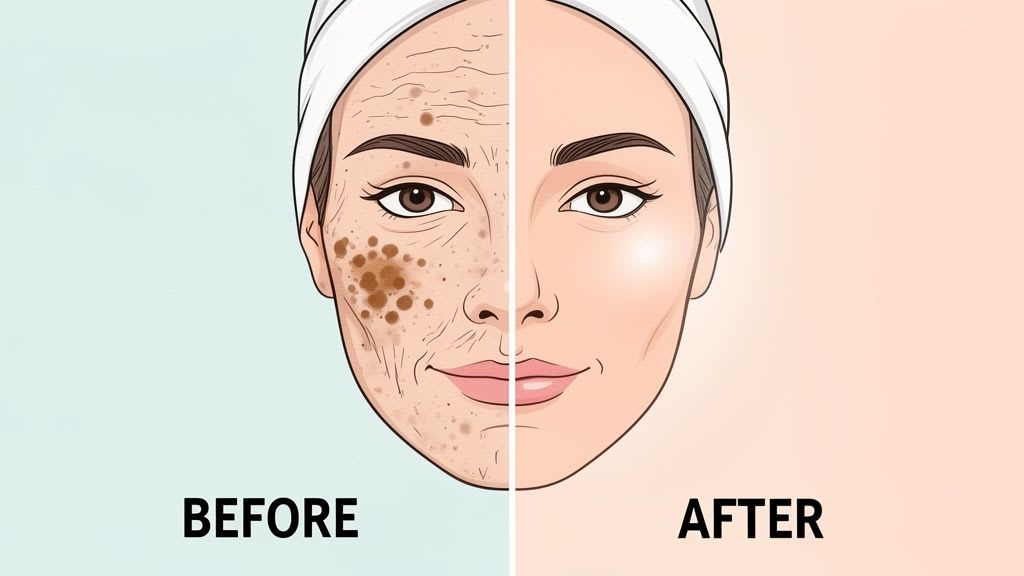
While before and after pictures can be compelling, they don't always show the journey between the two snapshots. The process involves gradual, steady improvement, not an overnight transformation.
Your "before" skin is the baseline—it’s what brings you into the clinic. This could be fine lines, sun damage, or a general lack of vibrancy. During your consultation, a Swiss specialist uses this starting point to develop your treatment plan.
The "after" is the result of that carefully controlled renewal. This result unfolds over the days and weeks that follow as your skin heals and rebuilds itself.
The Biological Process Behind the Results
Every visible improvement post-peel is the direct result of a specific biological process.
Brighter, More Radiant Skin: The dull, tired look is often a layer of old, dead skin cells. The peel lifts this layer away, revealing the fresh, new skin underneath which reflects light more effectively, creating a healthy glow.
Smoother Skin Texture: The skin registers the chemical solution as a controlled injury that needs healing. This activates the body's natural repair mechanisms, including producing new collagen. As the collagen supply is replenished, the skin becomes firmer and smoother.
Faded Pigmentation: For issues like sunspots, the peel works by removing the upper layers of skin where the excess pigment (melanin) has settled. As these pigmented layers shed, the discolouration lifts and fades.
The final result is a collaboration between the peel itself, your body’s unique healing ability, and—just as importantly—how well you follow your aftercare instructions.
Setting Realistic Expectations for Your Results
The depth of your peel is the biggest factor in determining the recovery timeline and the significance of your results. A series of lighter, superficial peels, for instance, can gradually boost skin's radiance over a few months. In contrast, a single medium-depth peel will deliver a more noticeable change after a week or two of dedicated downtime.
It’s also crucial to understand the difference between the immediate healing phase and the long-term outcome.
The Healing Phase (First 1-7+ days): Immediately after the peel, your skin will likely be red, feel tight, and will soon start to flake or peel. This is a necessary and temporary stage of the renewal process.
The Initial Reveal (Weeks 1-4): Once the peeling subsides, you will see the initial results. Your complexion will look noticeably clearer, brighter, and smoother.
The Full Effect (Months 1-3): Collagen remodelling takes time. The full benefits, especially for skin texture, firmness, and fine lines, will continue to develop for several months as your skin rebuilds its deeper support structures.
Your dedication to aftercare, particularly protecting your skin from the sun in the Swiss climate, is non-negotiable to safeguard your new, sensitive skin and ensure your results last.
Matching Peel Depth to Your Goals: A Swiss Perspective
The term “chemical peel” covers a family of treatments, and the key difference between them is depth—how deeply the solution penetrates the skin. Matching the right peel depth to your goals is a critical step. In Swiss clinics, peels are generally categorised into three levels: superficial, medium, and deep. Understanding these categories will help you have a productive conversation with your specialist.
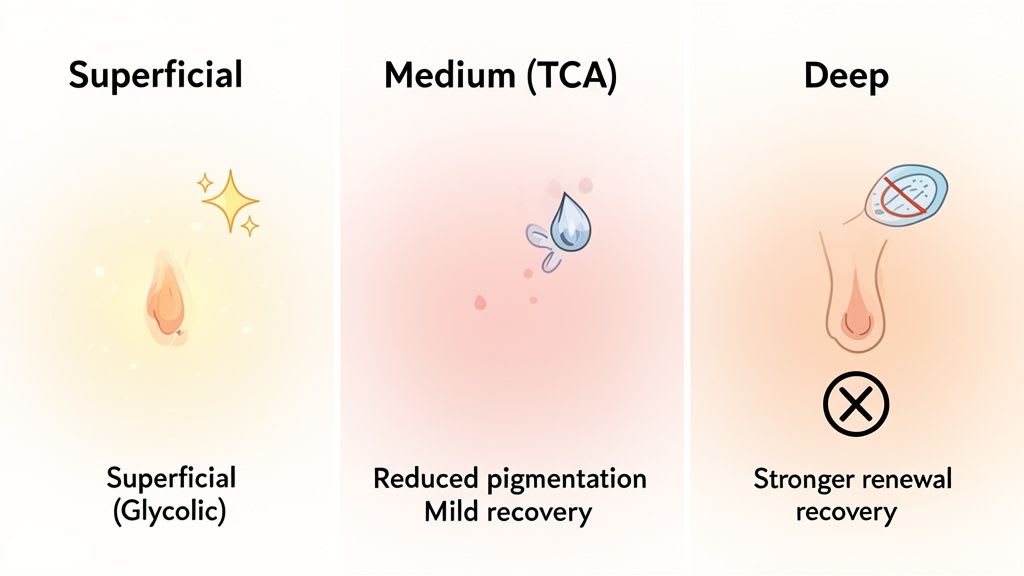
Superficial Peels: The "Lunchtime" Refresh
Superficial peels work exclusively on the epidermis, the outermost layer of your skin. They provide powerful exfoliation that gives your skin an immediate boost without significant downtime.
Active Ingredients: These peels typically use Alpha-Hydroxy Acids (AHAs), like Glycolic or Lactic Acid, or Beta-Hydroxy Acids (BHAs) such as Salicylic Acid.
What They Target: They are suitable for addressing minor issues like dullness, rough texture, and slight unevenness in skin tone.
The 'After' Result: You can expect a brighter, visibly refreshed complexion. The effect is often subtle and builds over time, which is why a series of 3 to 6 peels is often recommended. Recovery usually involves only minor redness that fades within hours.
These are sometimes called "lunchtime peels" because it is often possible for someone working in Zürich or Geneva to have a treatment and return to their daily activities shortly after.
Medium-Depth Peels: For More Noticeable Correction
When you need to address issues that lie deeper, a medium-depth peel is often the recommended solution. This treatment reaches the upper part of the dermis, allowing it to correct more stubborn concerns, but it requires a period of social downtime.
Active Ingredients: The standard for this category is Trichloroacetic Acid (TCA), often in concentrations of 15% to 35%. It is sometimes combined with other acids for a customised effect.
What They Target: This is a common choice for moderate sun damage, persistent pigmentation, fine lines, and shallow acne scars.
The 'After' Result: The results are more pronounced. Your skin will be red and feel tight initially, followed by several days of significant peeling. After about a week, the new skin revealed is typically smoother, firmer, and more evenly toned.
To understand the process more thoroughly, our detailed guide can help you learn more about TCA peels and what to expect.
Deep Peels: A Complete Skin Reset
Deep peels are the most intensive type available, penetrating into the lower layers of the dermis to trigger major skin resurfacing. These are significant medical procedures.
A deep peel, which typically uses a substance called phenol, can address severe wrinkles, significant sun damage, and some precancerous growths. However, the recovery is lengthy and requires careful medical management.
In modern Swiss aesthetic practice, deep phenol peels have become less common. This is because advanced laser technologies can often deliver similar or even superior results with a higher degree of control and a more predictable safety profile. A qualified dermatologist will discuss all options with you, from peels to lasers, to determine the safest and most effective path for your skin.
To help you visualise the options, here is a simple breakdown of what to expect from each type of peel commonly offered in Swiss clinics.
Comparing Chemical Peel Types in Swiss Clinics
| Peel Type | Primary Target | Typical 'After' Result | Recovery Time | Average Cost per Session (CHF) |
|---|---|---|---|---|
| Superficial | Dullness, rough texture, minor discolouration | Brighter, smoother skin with a healthy glow | A few hours of mild redness | 150 - 300 |
| Medium | Sun damage, fine lines, acne scars, pigmentation | Noticeably smoother, firmer, and more even-toned skin | 5 - 7 days of peeling and redness | 400 - 800 |
| Deep | Deep wrinkles, severe sun damage, scars | Dramatic skin resurfacing, significantly smoother skin | 2+ weeks of intensive recovery | 2,500+ |
This table is a guide. A one-on-one consultation at a verified Swiss clinic is necessary for a specialist to create a safe, effective, and personalised treatment plan.
The Patient Journey: From Preparation to Post-Treatment Care
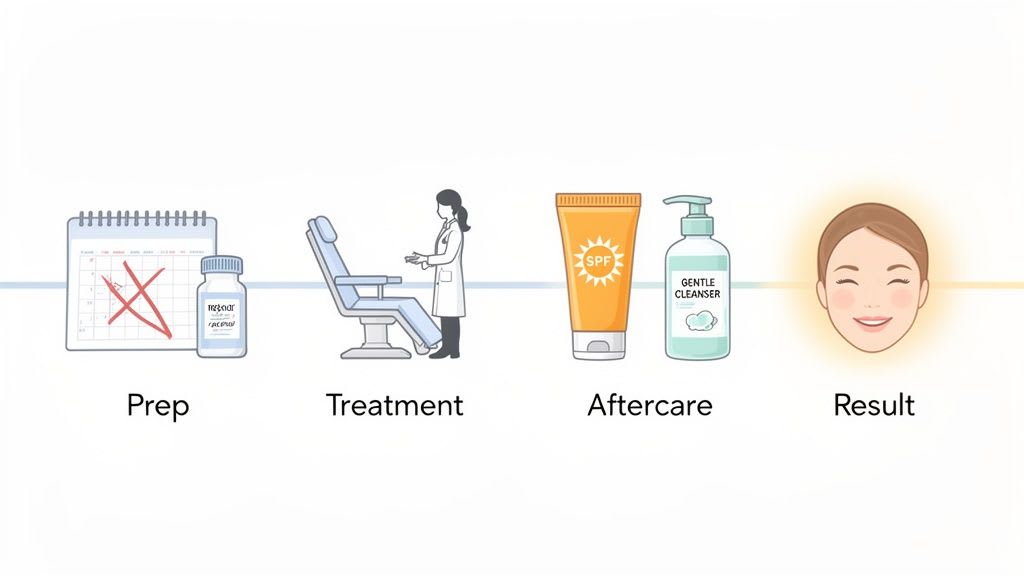
Achieving excellent chemical peeling before and after results is a partnership between you and your practitioner. A successful outcome depends as much on how you prepare your skin beforehand and care for it afterwards as it does on the treatment itself.
Following your specialist's guidance is essential to protect your investment and ensure a smooth, complication-free healing process.
Pre-Treatment Preparation: The Swiss Approach
In the weeks leading up to your peel, your Swiss dermatologist will likely provide a specific pre-treatment plan. The goal is to get your skin into its best possible condition, ensuring it responds predictably to the peel and heals well.
This preparation phase often involves:
Pausing Active Ingredients: You will likely be asked to stop using certain skincare products, especially retinoids (like tretinoin) and exfoliating acids (AHAs/BHAs), for at least one week before your appointment. This prevents over-exfoliation and reduces skin sensitivity.
Avoiding Sun Exposure: This is non-negotiable. Your practitioner will insist on diligent sunscreen use in the run-up to your peel to avoid any inflammation or complications.
Post-Peel Aftercare: Protecting Your New Skin
After the peel, your skin enters its most important phase: regeneration. It is vulnerable and requires gentle, dedicated care to heal correctly. Your commitment here shapes the final outcome.
Your commitment to aftercare directly influences the quality of your final result. Diligent care prevents complications like infection or hyperpigmentation and ensures your skin stabilises beautifully to reveal its smoothest, most radiant state.
Swiss specialists are particularly meticulous about aftercare protocols. Your aftercare routine is non-negotiable and will always include these core pillars:
- Strict Sun Avoidance and Protection: Your new skin is incredibly susceptible to UV damage. You must wear a broad-spectrum, high-SPF sunscreen (SPF 50+) every day, even when it is cloudy. Reapply it often and consider wearing a wide-brimmed hat.
- Gentle Cleansing: Use only a mild, soap-free cleanser with lukewarm water. Do not rub the skin. Gently pat your face dry with a soft, clean towel.
- Specialised Moisturisers: Your practitioner will recommend specific hydrating and barrier-repair creams. These are designed to soothe the skin, reduce tightness, and support the healing process.
By strictly following these protocols, you work with your practitioner to ensure your chemical peeling before and after journey is safe, effective, and delivers the healthy, revitalised skin you desire.
What to Expect: Risks, Recovery, and Realistic Results
Any reputable aesthetic specialist in Switzerland will tell you that an honest conversation about a treatment’s limitations is as important as discussing its benefits. While chemical peeling before and after photos can be compelling, it’s crucial to remember this is a medical procedure. Knowing what to expect during recovery and understanding potential risks is essential.
After your peel, you will experience some temporary side effects. These are normal and indicate that the treatment is working to kickstart skin renewal.
The Normal "Downtime" Phase
For a short period, your skin may look worse before it looks better. This is a necessary phase. Common effects are temporary and will resolve as new skin emerges.
Redness and Sensitivity: Your skin may look and feel like it has a sunburn. This is expected.
Tightness: It is common to feel tightness as the top layer of skin prepares to shed.
Peeling and Flaking: Depending on the peel's depth, you can expect anything from light flaking to more significant peeling for several days.
Rare but Important Complications to Know
Serious issues are unlikely, especially given the high standards of medical care in Switzerland, but it is vital to be aware of the possibilities. A qualified practitioner will review these with you and evaluate your personal risk profile.
The most critical step for your safety is to choose a board-certified (FMH) dermatologist or a clinic with verified medical credentials, like those on BeautyGuide.ch. A detailed consultation is non-negotiable to ensure a peel is right for you and that you understand the entire process.
In rare instances, risks can include temporary or permanent changes in skin colour (hyperpigmentation or hypopigmentation). Infection and scarring are also possible, though very uncommon. These risks are minimised when a specialist carefully selects the right peel for you and when you follow pre- and post-care instructions precisely.
For instance, medium-depth peels can deliver significant results but demand an expert’s touch. Case studies from leading Swiss clinics show that treatments like TCA peels can achieve a remarkable reduction in certain types of wrinkles. You can explore a case study and learn more about anti-aging results from chemical peels in Basel. This level of improvement highlights why you should only trust a specialist who can balance treatment intensity with your safety.
Finding the Right Chemical Peel Specialist in Switzerland
Choosing who performs your chemical peel is the most critical decision in this process. Your safety and the quality of your results—the chemical peeling before and after images you envision—depend entirely on the skill of your practitioner. In Switzerland, this means focusing on verified medical credentials.
Your search should start and end with a qualified medical professional. The gold standard to look for is an FMH (Foederatio Medicorum Helveticorum) title in dermatology. This signifies that the specialist has completed Switzerland's demanding medical training.
Making the Most of Your Consultation
Once you have shortlisted a clinic, the consultation is where you determine if they are the right partner for your skin. Whether in Zürich, Geneva, or Bern, a proper consultation should be a collaborative discussion, not a sales pitch. This is your time to ask direct questions.
What peel do you recommend for me, and why? A good specialist will clearly explain their reasoning and connect it to your specific skin goals.
What are the realistic outcomes for my skin? They should provide an honest, transparent assessment based on your skin type and concerns.
Can you provide a full cost breakdown? This should include the treatment itself and any essential aftercare products. Transparency is a hallmark of a professional clinic.
In Switzerland, chemical peels are a staple of aesthetic dermatology. Our data at BeautyGuide shows that a series of superficial peels, which typically cost between CHF 150-300 per session, can lead to significant improvements in skin brightness after several treatments. You can explore more on the effectiveness and cost of chemical peels in Switzerland.
Prioritise proven expertise. A slightly higher fee for a board-certified dermatologist is a worthwhile investment for the peace of mind that comes from knowing you are in safe, experienced hands.
Platforms like BeautyGuide.ch can serve as a neutral guide, helping you find specialists and clinics with appropriate credentials. For more general advice on vetting a practice, our article on how to select the right beauty clinic provides a useful framework. The goal is to empower you to find a trusted expert for your journey to healthier skin.
Your Chemical Peel Questions, Answered
It is normal to have questions before undergoing a treatment like a chemical peel. Here are answers to some of the most common queries regarding the "before and after" journey.
How Long Will My Chemical Peel Results Last?
The longevity of your results depends on the depth of the peel and how you care for your skin afterwards.
Superficial Peels: The glow and smoother feel typically last for one to two months. They are often performed in a series to maintain the effect.
Medium Peels: These address texture, sun spots, and fine lines. You can expect these more noticeable improvements to last from six months to a year or longer.
* Deep Peels: The results from this intensive treatment can last for several years.
Regardless of the peel chosen, the best way to preserve your results is with consistent, daily use of a high-SPF sunscreen. Adhering to the skincare plan provided by your specialist is key to protecting your new skin.
A chemical peel provides a skin reset, but maintaining the result depends on your daily habits. Sunscreen is not just a recommendation; it is an insurance policy on your investment.
Does It Hurt to Get a Chemical Peel?
The sensation during a peel relates to its strength, but most people find it tolerable.
For a light, superficial peel, you might feel a tingling or mild stinging sensation. With a medium-depth peel, the sensation is more intense—often described as a strong wave of heat.
This is temporary. Your practitioner monitors you and your skin throughout the process. Swiss clinics are adept at managing comfort, often using cooling fans to make the process easier. The active sensation only lasts for a few minutes before the peel is neutralised and your skin begins to calm down.
When Is the Best Time of Year for a Peel in Switzerland?
Most skin experts across Switzerland agree that the ideal time to book a peel is during the autumn and winter months. The reason is simple: the sun is less intense, and we are exposed to lower levels of UV radiation.
This is advantageous when you have fresh, vulnerable skin that needs to heal. Protecting your skin from the sun after a peel is non-negotiable to avoid complications like post-inflammatory hyperpigmentation (dark spots). If you have a peel during sunnier months, you must be incredibly strict about avoiding sun exposure and applying protection constantly.
Explore More
This article is for informational purposes only and does not replace professional medical advice.