
Quick Definition: The "Frosting" Effect
TCA (Trichloroacetic Acid) is a medium-depth peel that works by coagulating skin proteins. The signature sign of a working TCA peel is 'Frosting'—where the skin turns white immediately upon application, signaling the acid has penetrated the dermis. This is a controlled chemical injury designed to stimulate profound skin regeneration and must be managed by a medical professional.
A TCA peel is a medically supervised procedure that uses trichloroacetic acid to induce a controlled chemical burn, forcing the skin's natural regenerative processes into high gear. This is not a gentle facial; its mechanism is protein coagulation, which causes damaged outer skin layers to peel away, revealing healthier, regenerated skin. The primary clinical goals are to address significant sun damage, smooth textural irregularities like acne scars, and correct pigmentation issues.
Percentage Matters: The Difference Between Glow and Burn
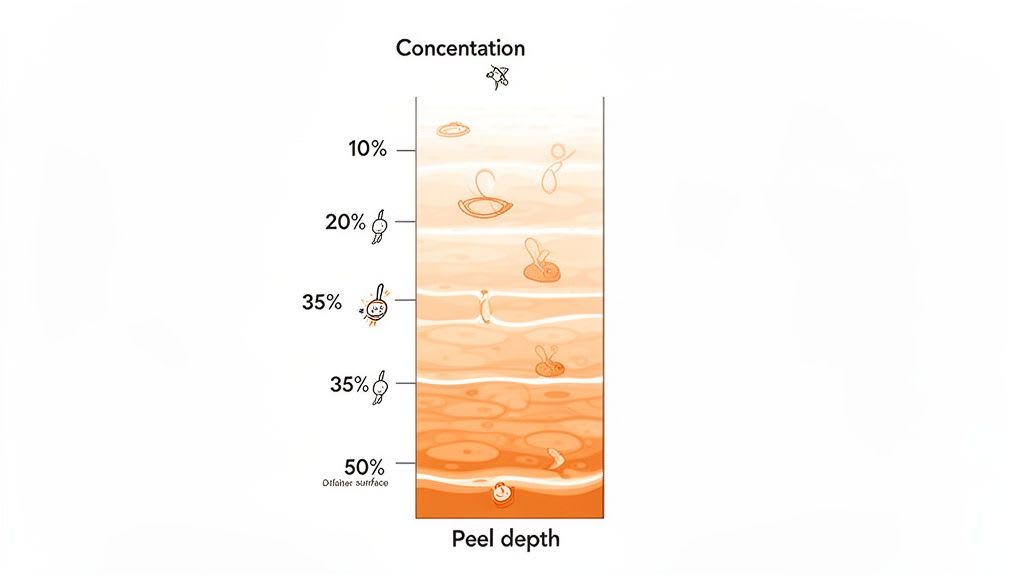
In the context of a TCA peel, the concentration percentage is the single most critical factor. It dictates the depth of the chemical injury, the intensity of the procedure, the required downtime, and the potential for complications. In Switzerland, the use of these acids is strictly regulated, with higher concentrations reserved exclusively for physicians trained in dermatology and plastic surgery.
10-15% (Superficial): This is the lightest concentration, often referred to as a "lunchtime peel." It works on the outermost layer of the epidermis to address very fine lines and dullness. While effective for a minor refresh, it is not a corrective treatment for significant damage. This level may be performed by trained aestheticians under medical supervision in a clinical setting.
20-35% (Medium-Depth): This is the standard range for a true medical-grade TCA peel. It penetrates through the epidermis into the papillary dermis, triggering significant peeling. This concentration is highly effective for moderate wrinkles, actinic keratosis (precancerous sun spots), and atrophic acne scars. This is a physician-only procedure in Switzerland.
80-100% (TCA CROSS): These exceptionally high concentrations are never used for a full-face peel. They are applied focally, using a sharp instrument to place a tiny drop of acid directly into deep, "icepick" acne scars. This technique, known as Chemical Reconstruction of Skin Scars (CROSS), is a highly specialized procedure performed only by experienced dermatologists.
Attempting a medium-depth peel outside a medical setting is exceptionally dangerous. The line between a therapeutic peel and an uncontrolled chemical burn is thin and is managed solely by the practitioner's expertise. To understand how TCA compares to other treatments, you can explore the broader category of chemical peels in our comprehensive guide.
The Medical Peel Process and Patient Experience
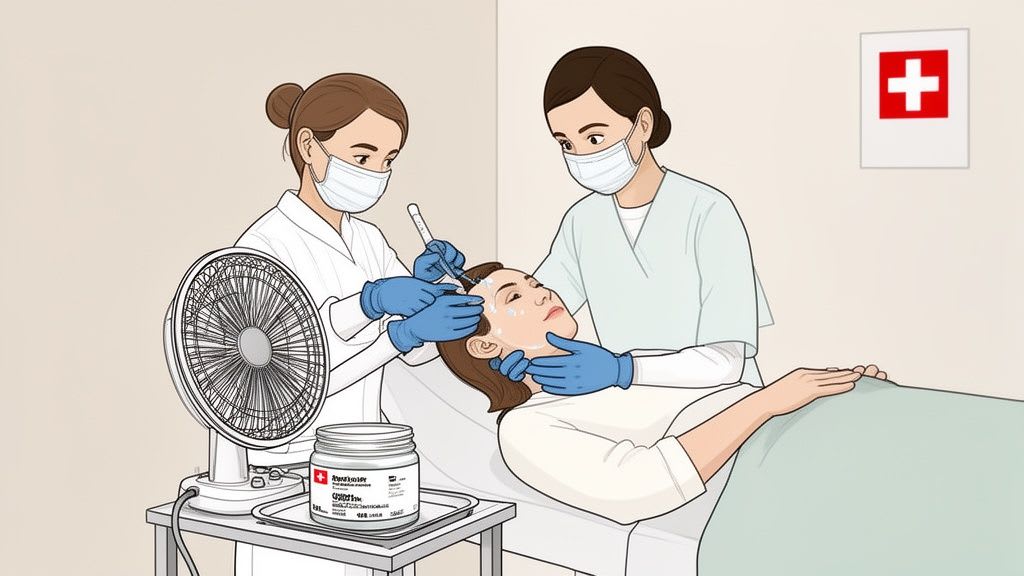
A TCA peel performed in a Swiss clinic follows a strict medical protocol. The procedure begins with a thorough degreasing of the skin to ensure the acid penetrates evenly. The physician then applies the TCA solution in controlled layers.
The patient will experience an immediate and intense burning sensation, which typically lasts for 2 to 5 minutes. A cooling fan is directed at the face to manage this discomfort. The key clinical endpoint your physician watches for is the "frosting" — the whitening of the skin that indicates the acid has reached the desired dermal depth. Once the correct level of frost is achieved across the treatment area, the acid may be neutralized, and a thick, soothing occlusive balm is applied to protect the skin and begin the healing process.
This is a serious, results-driven procedure that should only ever be performed in a proper clinical setting. In Switzerland, a pre-peel consultation is mandatory. A consultation typically starts around CHF 100, with the peel itself costing between CHF 300 and CHF 350 per session. You can explore a directory of verified clinics offering chemical peels in Zurich to learn more about local options.
Recovery: A Day-by-Day Reality
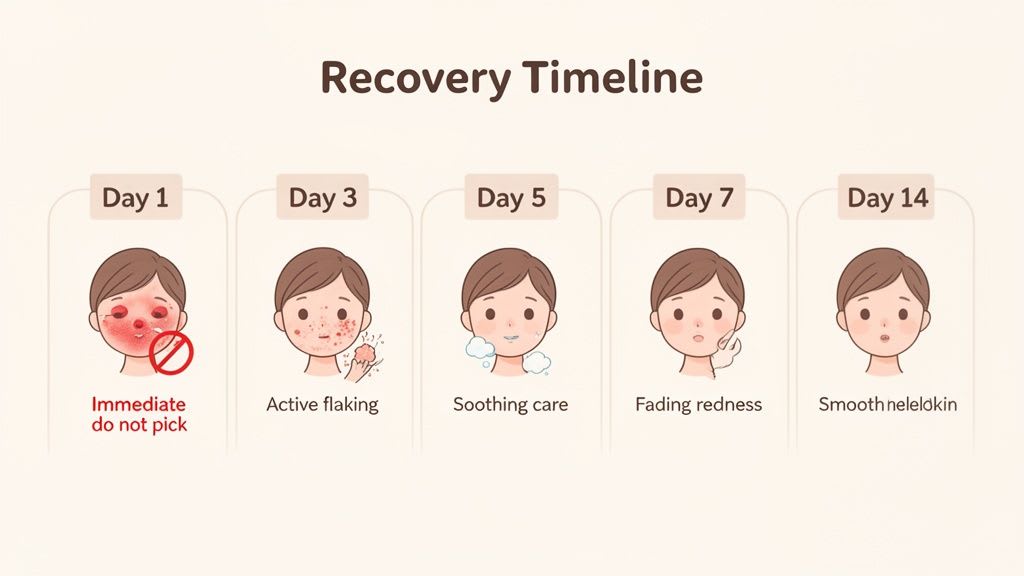
The healing phase after a medium-depth TCA peel is predictable but visually dramatic. Understanding this timeline is crucial for planning the necessary social downtime and ensuring a safe recovery. Adherence to your physician's aftercare protocol is non-negotiable.
Day 1: The skin feels extremely tight and appears red or dark, similar to a severe sunburn. The "frosting" subsides, but the skin is inflamed and tender.
Day 2-3: The skin darkens significantly to a brown or bronze colour and develops a tight, leathery, or plastic-like texture. This is the coagulated protein forming a natural biological dressing that will soon shed.
Day 4-7: "Sheet peeling" begins, typically starting around the mouth and nose. Large sections of the darkened skin will begin to lift and flake away. It is critically important not to pick, pull, or assist this process, as it can lead to permanent scarring and infection.
* Day 8-10: Most of the peeling is complete. The newly revealed skin is pink, smooth, and extremely sensitive. Strict sun avoidance and application of a high-SPF (50+) sunscreen are mandatory to protect this vulnerable new skin.
Swiss clinical protocols emphasize patient safety through meticulous follow-up. Research highlights how a series of carefully spaced treatments allows for complete healing, maximizing both safety and results. You can read a case report on Swiss TCA protocols to understand the medical approach.
A Critical Warning for Darker Skin Tones (Fitzpatrick IV-VI)
Critical Warning: Risk of Post-Inflammatory Hyperpigmentation (PIH)
For individuals with olive, brown, or black skin (Fitzpatrick skin types IV, V, and VI), a TCA peel carries a high risk of causing Post-Inflammatory Hyperpigmentation (PIH). The controlled injury of the peel can trigger an overproduction of melanin during the healing process, leading to dark patches that can be more difficult to treat than the original concern. A responsible physician in Switzerland will always mandate a pre-treatment regimen with tyrosinase inhibitors (such as hydroquinone or azelaic acid) for several weeks to suppress melanocyte activity and mitigate this risk. This is a non-negotiable safety step.
How to Choose a Qualified Provider in Switzerland
A TCA chemical peel is a medical procedure. The most important decision is choosing your provider. In Switzerland, where medical standards are exceptionally high, your search must focus on physicians with an FMH (Foederatio Medicorum Helveticorum) specialisation in either dermatology or plastic, reconstructive, and aesthetic surgery. This is the Swiss gold standard, guaranteeing extensive, board-certified training.
Verify any doctor's credentials through the official MedReg register before scheduling a consultation. During the consultation, ask direct questions about their experience with TCA peels, specifically for your skin type and concerns. A qualified physician will welcome this diligence. Understanding the importance of this is crucial, and you can learn more about why medical supervision in aesthetic treatments is paramount.
Switzerland’s reputation for medical excellence drives the aesthetic market in hubs like Zurich and Geneva. To understand the broader context, you can explore the European market analysis.
Frequently Asked Questions (FAQ)
Does TCA peeling hurt?
Yes. Patients report an intense burning and stinging sensation for the 2-5 minutes the acid is active on the skin. A cooling fan is a standard tool used during the procedure to manage the discomfort, but you should expect a period of significant, controlled pain.
Can I peel off the dead skin sheets?
NEVER. This is the single most important rule of aftercare. Manually peeling, picking, or scrubbing the shedding skin will disrupt the healing process and can directly cause permanent scarring, infection, and post-inflammatory hyperpigmentation (PIH). You must allow the skin to shed on its own schedule.
TCA vs. Phenol?
These are entirely different classes of treatment. TCA is a medium-depth peel used for moderate sun damage, wrinkles, and acne scars, with a recovery of 7-10 days. Phenol is a deep, aggressive, surgical-level peel that penetrates to the deep dermis. It is reserved for severe, deep-set wrinkles and photodamage, requires cardiac monitoring during the procedure, and involves a much longer and more complex recovery period.
Explore More
This article is for informational purposes only and does not replace professional medical advice.