
Do you feel your cheeks have lost their youthful fullness? Perhaps the area under your eyes appears hollow, or the lines around your nose and mouth seem more pronounced. If these changes are a concern, an endoscopic cheek lift is a specialised surgical procedure designed to address them.
This technique focuses on lifting and restoring volume to the midface with a minimally invasive approach. The goal is not to alter your fundamental appearance, but to reposition tissues affected by gravity and time, resulting in a refreshed and natural look.
Understanding the Endoscopic Cheek Lift
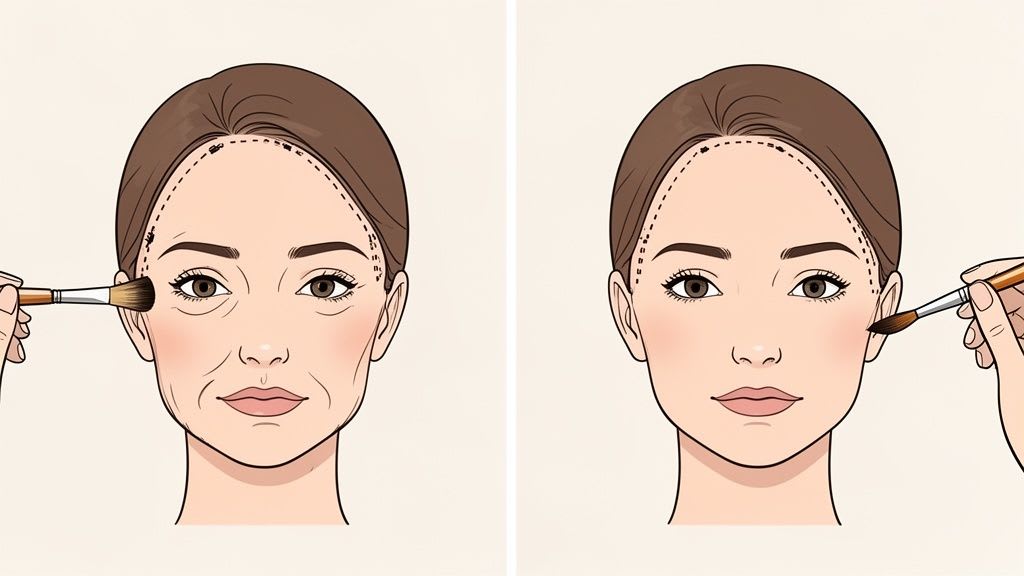
An endoscopic cheek lift is a surgical procedure that targets the central third of the face—from the lower eyelids down to the corners of the mouth. This area is often one of the first to show visible signs of ageing.
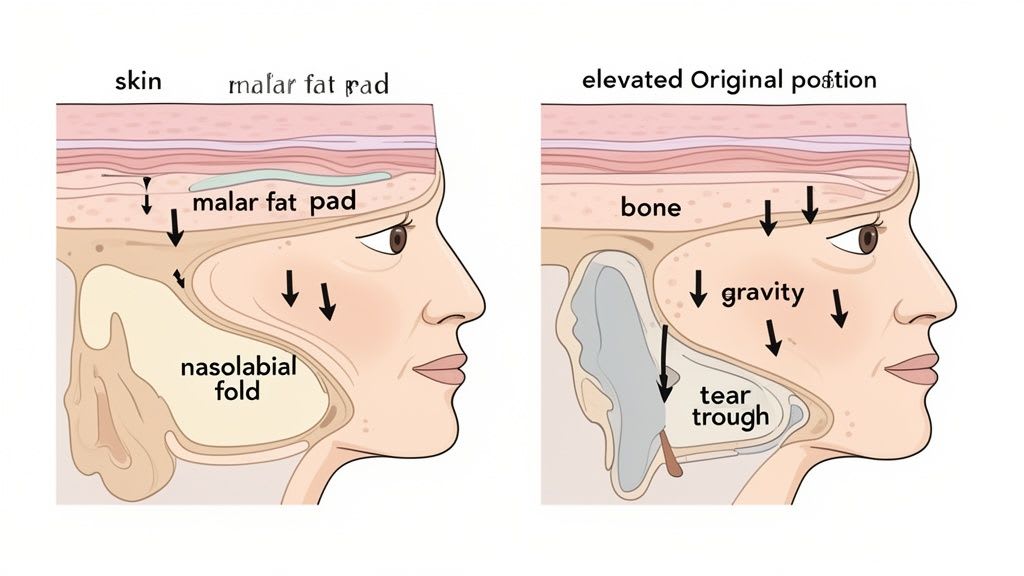
As we age, the natural fat pads in our cheeks, known as malar fat pads, can begin to descend. A combination of gravity and reduced skin elasticity causes them to droop, leading to several common concerns:
Cheeks that appear flattened or hollow
A tired or sunken look under the eyes
Deeper nasolabial folds (the lines running from the nose to the mouth)
Unlike a traditional facelift, which typically addresses the lower face and jawline, an endoscopic cheek lift focuses specifically on rejuvenating the midface. The objective is to reposition the underlying soft tissues back to their original, more youthful location. This method restores structural support from within, creating a vertical lift without a "pulled" appearance.
For a comparison with other lifting techniques, you can learn more about the mini face lift in our detailed guide.
The Minimally Invasive Advantage
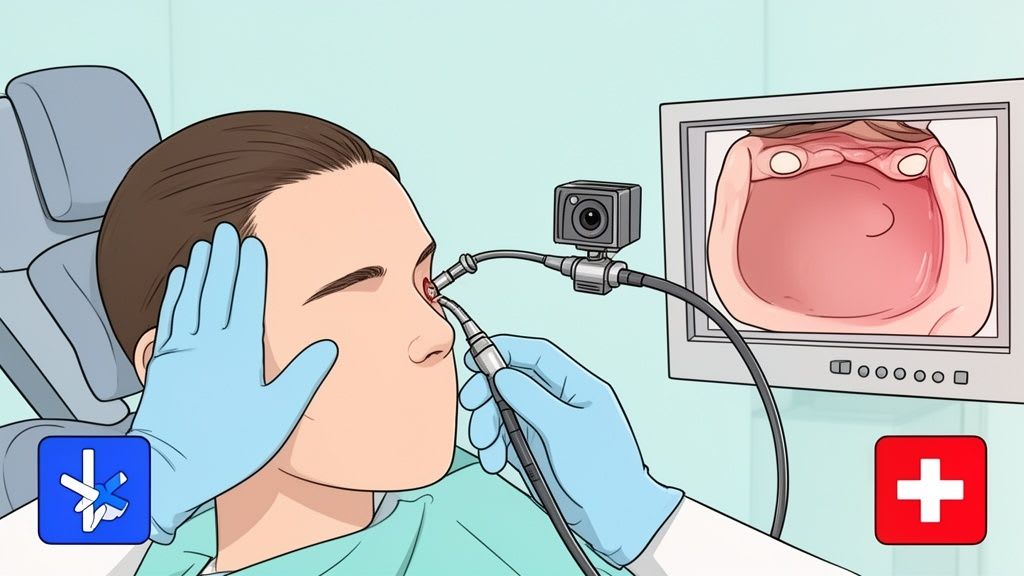
A significant advantage of this procedure is its discreet nature—a key consideration for many patients in Switzerland. The surgery is performed using an endoscope, a thin tube equipped with a tiny camera and light at its tip.
This technology allows the surgeon to operate through very small incisions, which are strategically placed to make scarring virtually unnoticeable.
The objective is restoration, not alteration. By repositioning the patient's own natural tissue, the endoscopic cheek lift aims to reverse the effects of time, revealing a more rested version of oneself without obvious signs of surgery.
The incisions are typically made in two inconspicuous locations:
Just inside the temporal hairline
Inside the mouth, along the upper gum line
Through these small openings, the surgeon gains a clear, magnified view of the facial structures on a monitor. This precision allows for the gentle release of the descended cheek tissues, which are then lifted and secured in a higher, more youthful position.
The result is a refreshed midface that looks natural. This emphasis on subtle, elegant outcomes with minimal downtime and scarring aligns with the high standards expected from clinics in Switzerland.
Why Our Facial Contours Change Over Time
To understand the effectiveness of an endoscopic cheek lift, it is helpful to review the facial ageing process. A youthful face is often defined by high, full cheeks and a smooth transition from the lower eyelids downwards. This contour is provided by the malar fat pads, which are located on the cheekbones.
Over time, several factors contribute to changes. Gravity exerts a constant downward pull. Concurrently, the skin's production of collagen and elastin—proteins responsible for firmness and elasticity—declines. This loss of structural support causes the malar fat pads to descend.
This gradual descent is a primary cause of many common signs of midface ageing.
The Ripple Effect of Descending Tissues
Once these crucial fat pads begin to move, it creates a domino effect. The formerly full, convex cheek curve starts to flatten and may appear hollow. This single change can lead to a host of related concerns:
Flattened Cheeks: The most direct result is the loss of youthful prominence in the cheeks, which can make the facial structure appear less defined.
Hollows Under the Eyes: As the cheek tissue drops, it can create a depression beneath the eyes. This hollowness, known as the tear trough, can cast shadows and contribute to a tired appearance.
Deeper Smile Lines: The displaced tissue often settles above the mouth, deepening the nasolabial folds.
It is important to understand that these changes are primarily due to the displacement of existing volume, not a loss of volume itself. This distinction is central to the principle of the procedure.
A common misconception is that a cheek lift adds volume like a filler. In reality, its function is repositioning. It carefully lifts and secures the patient's own natural cheek tissue back to its original location high on the cheekbone.
This is why the results appear so natural. The procedure restores the patient's own anatomy, addressing the root cause of midface ageing—tissue descent—rather than masking the symptoms.
A Long-Term Structural Solution
By focusing on repositioning rather than filling, the endoscopic technique offers a durable result. It rebuilds the underlying architecture of the midface, contributing to the longevity of the rejuvenation. Indeed, a large 35-year clinical study on endoscopic facial rejuvenation, encompassing 824 procedures, reported an average rejuvenation effect of 18 years. You can review the full study on endoscopic facial rejuvenation and its longevity on oaepublish.com.
For Swiss patients who prioritise enduring quality and authentic outcomes, this long-term effectiveness is a significant factor. Understanding the facial ageing process helps clarify whether concerns like sagging and hollowness are well-suited for correction with an endoscopic cheek lift. This knowledge facilitates a more informed discussion with a qualified Swiss surgeon and helps set realistic expectations for the outcome.
Is an Endoscopic Cheek Lift Right for You?
Deciding on any cosmetic surgery is a significant step, and the endoscopic cheek lift is no exception. A successful, natural-looking result depends on ensuring this specific procedure is the appropriate match for an individual's aesthetic goals and anatomical needs.
This procedure is designed to address a specific set of concerns related to midface ageing. It is not a comprehensive solution for all facial ageing but a targeted technique for individuals who observe these initial signs and may not yet require a full facelift.
Profile of a Suitable Candidate
While each patient is unique, a suitable candidate for an endoscopic cheek lift typically fits a certain profile. Generally, this procedure is effective for patients in their late 30s to 50s who are beginning to notice the distinct signs of midface ageing.
Key characteristics of a suitable candidate include:
Good Skin Elasticity: The skin must have sufficient elasticity to conform smoothly over the newly elevated tissues. This is crucial for a natural finish.
Noticeable Midface Sagging: The primary concern should be the descent of the malar fat pads, which causes flattened cheeks, hollows under the eyes (tear troughs), and deeper smile lines (nasolabial folds).
Good Overall Health: As with any surgery, being in good physical health is essential. It is also preferable to be a non-smoker, as smoking can impair healing and increase risks.
Realistic Expectations: The candidate should understand that the goal is a refreshed and restored appearance, not a complete transformation.
In Switzerland, patient safety and the achievement of natural outcomes are paramount. A thorough consultation with an FMH-certified surgeon is a critical step to ensure a patient's anatomy and goals align with what this procedure can realistically achieve.
When This Procedure Might Not Be the Best Fit
It is equally important to recognise when this technique may not be the optimal choice. An endoscopic cheek lift is designed to lift descended tissue, but not to remove a significant amount of excess skin.
Here are a few indicators that an alternative procedure might be more suitable:
Significant Skin Laxity: For individuals with considerable loose skin in the lower face and jowl area, a traditional facelift or a mini-lift would likely be more effective.
Volume Loss is the Main Issue: If cheek flatness is primarily due to a loss of fat rather than sagging, other treatments may be more appropriate. You can learn more about cheek fillers in our article, which offer a non-surgical method to restore volume.
Certain Medical Conditions: The surgeon will conduct a careful review of the patient's medical history to identify any health issues that could complicate surgery or anaesthesia.
Ultimately, a one-on-one consultation is the only way to determine candidacy for an endoscopic cheek lift. A qualified plastic surgeon in Switzerland will perform a comprehensive facial analysis, listen to your concerns, and review your medical background. This expert evaluation is necessary to receive a professional recommendation tailored to your unique facial structure.
What Happens During the Surgery? A Step-by-Step Look
Understanding the surgical process can help manage expectations and reduce anxiety. An endoscopic cheek lift is a precise procedure that combines a surgeon's anatomical expertise with advanced technology. Here is a general overview of what the process involves at a reputable Swiss clinic.
Final Preparations and Anaesthesia
The day begins with a final consultation with your FMH-certified surgeon to review the surgical plan and address any remaining questions. The surgeon will make precise markings on your face to map the vectors for the lift, ensuring a balanced and personalised result.
You will then be brought to the operating suite, where a specialist anaesthetist will administer anaesthesia to ensure you remain comfortable throughout the procedure. This is typically general anaesthesia, although in some cases, local anaesthesia with deep sedation may be an option.
The 'Keyhole' Technique
The elegance of this procedure lies in its minimally invasive nature. Unlike a traditional facelift, it involves a few very small incisions placed in discreet locations.
The surgeon will typically make incisions of about 1-2 centimetres in two strategic areas:
In the Hairline: Located in the temple area, where they are easily concealed by hair during and after healing.
Inside the Mouth: Small access points may also be made on the inside of the upper lip, along the gum line, leaving no external scars.
These small portals are sufficient for introducing the specialised surgical instruments.
Visualisation with the Endoscope
The key instrument is the endoscope—a slender probe with a high-definition camera and light source. When inserted through an incision, it transmits a live, magnified video feed of the internal facial structures to a monitor.
This technology provides the surgeon with a detailed view of the delicate muscles, fat pads, and tissues, allowing for precise navigation around important nerves and blood vessels.
Guided by this clear image, the surgeon carefully releases the malar fat pads from the underlying bone. This is done with meticulous care to ensure the tissue is fully mobilised for a smooth, tension-free lift.
Lifting and Anchoring for Lasting Results
Once the tissues are released, the lift is performed. The surgeon elevates the entire midface structure as a single unit, repositioning it vertically to its former location. This unified lift is what creates a refreshed, natural contour, avoiding a "pulled" or "wind-swept" look.
The repositioned tissue must be securely anchored. Using strong, internal sutures, the surgeon affixes the tissue to deeper, stable structures in the temple area. This robust fixation is essential for ensuring the results are long-lasting.
Finally, the small incisions are closed with fine sutures. Because they are minimal and well-hidden, the resulting scars are typically negligible, consistent with the Swiss standard of achieving aesthetic improvements without obvious signs of intervention.
Your Recovery and Aftercare Journey
A successful outcome from an endoscopic cheek lift depends as much on post-operative care as it does on the surgeon's skill. Understanding the recovery process helps ensure a smooth experience and supports the best possible result. Your Swiss clinic will provide a detailed, personalised aftercare plan.
Following the procedure, you will rest in a recovery room as the anaesthesia wears off. Most patients can return home the same day, though arrangements must be made for someone to accompany them.
The First 48 to 72 Hours
The initial days are dedicated to rest. During this time, the body's healing process begins, and some swelling and bruising around the cheeks are expected. This is a normal part of recovery, and your surgeon will provide instructions on how to manage it.
Key actions during this period include:
Keep Your Head Elevated: Sleeping with your head propped up on two or three pillows helps to reduce swelling.
Use Cold Compresses: Gently applying cold compresses to the area can alleviate swelling and provide comfort.
Take Your Medication: Pain medication will be prescribed to manage discomfort. It is important to take it as directed.
Rest: Avoid all strenuous activities, including household chores and errands. Your body requires its energy for healing.
Due to incisions often being made inside the mouth, a soft-food diet (soups, yoghurts, smoothies) is recommended to avoid strain on the healing sites.
A Note on Sensation: It is common to feel a distinct tightness across the midface. This indicates that the tissues are securely held in their newly elevated position. The sensation will gradually subside as you heal.
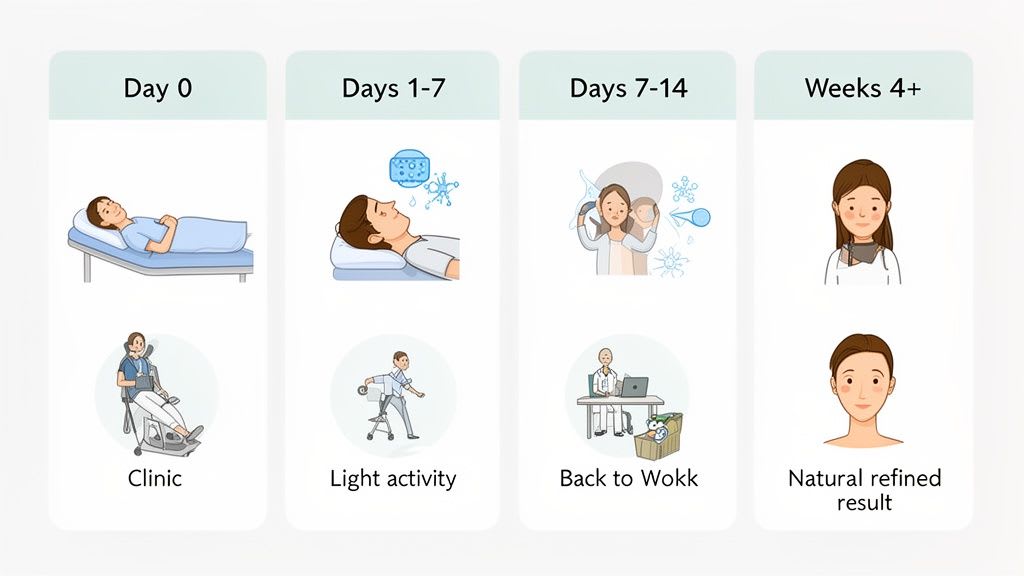
Weeks One and Two: Returning to Normal Activities
By the end of the first week, you will likely feel significantly better. Swelling and bruising typically peak around the third or fourth day and then begin to fade. You will already see a noticeable lift in your cheeks, though the final appearance is still obscured by initial puffiness.
Most people feel comfortable returning to work and social activities within 10 to 14 days, once the most visible signs of surgery have resolved. However, strenuous activity remains restricted.
A general timeline for the first two weeks:
- First Follow-Up (5-7 days): A visit to your surgeon to monitor healing. Any external stitches may be removed at this time.
- Light Activity (End of Week 1): Gentle walks are encouraged to promote circulation and aid recovery.
- Return to Office Work (10-14 days): Individuals with sedentary jobs can typically resume work.
- Avoid Strenuous Exercise (3-4 weeks): Heavy lifting, intense cardio, and other demanding physical activities should be avoided to allow for proper healing.
Long-Term Healing and Final Results
Patience is key during the final phase of recovery. While most obvious swelling subsides within a few weeks, a very subtle, residual amount may persist for 3 to 6 months before fully resolving.
During this period, the final, refined results become apparent. The contours of your cheeks will soften and appear completely natural as the tissues settle into their new position. Adhering to your Swiss surgeon's advice and attending all follow-up appointments is the most effective way to ensure a smooth recovery and a rejuvenated appearance that lasts for years.
Finding the Right Surgeon in Switzerland for Your Cheek Lift
Choosing a surgeon is the most critical decision in this process. Switzerland has exceptionally high medical standards, offering access to highly skilled professionals. The key is to find a surgeon whose expertise, experience, and aesthetic approach align with your goals.
This is not a decision to be based on price. It is an investment in your safety and the quality of your final result.
Verifying Credentials with MedReg and FMH
Before scheduling a consultation, it is essential to verify a surgeon's qualifications. In Switzerland, the gold standard for a plastic surgeon's credentials is the FMH (Foederatio Medicorum Helveticorum) specialist title.
A surgeon holding the title "Specialist in Plastic, Reconstructive and Aesthetic Surgery (FMH)" has completed years of rigorous, specialised training. This title confirms that they meet Switzerland's demanding standards for surgical skill and ethical practice. It should be considered a non-negotiable requirement.
The Swiss government provides an official online register, MedReg, to simplify verification.
What is MedReg? It is a public, searchable database of all medical professionals licensed to practice in Switzerland.
How to use it: By entering a surgeon's name, you can instantly confirm their license and official specialist titles.
This simple check provides assurance that your surgeon is fully qualified and recognised to perform a complex procedure like an endoscopic cheek lift.
Maximising Your Consultation
A consultation should be approached as an interview where you evaluate if the surgeon is the right partner for your journey. A reputable surgeon will welcome your questions and provide transparent answers.
Be prepared for your meeting. Key questions to ask include:
- Specific Endoscopic Experience: Ask, "How many endoscopic cheek lifts do you perform annually?" and "What percentage of your practice is dedicated to endoscopic facial surgery?" This technique is a sub-speciality; you want a surgeon who performs it regularly.
- Review Their Work: Request to see a portfolio of before-and-after photos, focusing on patients with a similar starting point to you in terms of age, facial structure, and concerns. This helps assess if their aesthetic outcomes match your expectations.
- Clinic Safety and Accreditation: Inquire about the surgical facility. Is it a fully accredited operating theatre? What are the safety protocols? Premier Swiss clinics maintain high safety standards and will readily provide this information.
Pay close attention to the surgeon's communication style. They should be clear and confident, explaining the procedure, its limitations, and potential risks without using overly technical jargon. You should leave the consultation feeling informed and empowered.
A Realistic Look at Costs in Switzerland
It is important to be direct about costs. Switzerland is a premium location for medical care, which is reflected in the pricing. The country's aesthetic surgery sector attracts significant international interest. For more general information on this trend, you can find insights into Swiss cosmetic surgery trends on Medigence.com.
An endoscopic cheek lift performed at a leading clinic will have associated costs that reflect the surgeon's expertise, the quality of the facility, the highly trained staff, and the advanced technology used. A detailed cost breakdown should be provided during your consultation.
Your final choice should be based on verified expertise and a steadfast commitment to safety. By using official resources like MedReg and asking pertinent questions, you can confidently select a surgeon capable of delivering the natural-looking results you seek.
Your Questions Answered: What to Expect with an Endoscopic Cheek Lift
Embarking on any cosmetic procedure naturally brings questions. Here are answers to some of the most common inquiries from patients in Switzerland considering an endoscopic cheek lift.
How Painful Is the Recovery?
Most patients report that the discomfort is manageable. You will be prescribed pain relief medication, and the sensation is often described more as tightness across the cheeks than as sharp pain.
This feeling of tightness typically subsides within the first week. Adhering to your surgeon's aftercare instructions is the best way to ensure comfort and promote healing.
Will I Have Visible Scars?
This is a key benefit of the endoscopic technique. The incisions are very small and strategically hidden, either within the hairline at the temples or inside the mouth along the upper gum line.
After healing, these marks are typically imperceptible. This focus on a minimal-scarring result is a primary reason for the procedure's popularity in Switzerland.
How Is This Different from Getting Fillers?
This is an excellent question, as both treatments address the mid-face but operate on different principles. Dermal fillers are injectable gels that add temporary volume to the cheeks, with results typically lasting 12 to 24 months.
In contrast, an endoscopic cheek lift is a surgical procedure that addresses the underlying cause of sagging. It does not add volume but physically lifts and repositions your own* natural cheek tissue to its original location. It is a long-term, structural solution, while fillers provide a temporary enhancement.
For a deeper understanding of how surgical costs are determined, our guide on understanding facelift costs in Switzerland offers valuable information.
When Will I See the Final, Finished Look?
You will notice an immediate lift, but the final result will be temporarily obscured by swelling, which is normal. The majority of this swelling resolves within the first four to six weeks.
The true, refined results gradually emerge over the following 3 to 6 months. This is the time required for all residual swelling to disappear and for the tissues to settle completely into their new, elevated position. The outcome is a soft, natural, and refreshed appearance.
Explore More
This article is for informational purposes only and does not replace professional medical advice.