
Seeing is believing, especially when considering a significant aesthetic procedure like a hair transplant. The decision to pursue hair restoration is often driven by the desire for tangible, visible change. This is precisely why hair transplant before and after pictures are an essential resource for prospective patients in Switzerland. They offer a realistic preview of what modern surgical techniques can achieve, transforming areas of thinning or baldness into natural-looking, denser hairlines. However, not all photo galleries are created equal. The quality, honesty, and detail provided alongside these images are critical for setting correct expectations that align with Swiss medical standards.
To begin your journey into hair restoration, it's essential to grasp the fundamentals of what a hair transplant is and how it works. Once you understand the process, you can more effectively evaluate the results shown in patient case studies. This curated listicle moves beyond simple photo comparisons. We will analyse verified results from leading Swiss and international clinics, providing a framework for how to critically assess before and after photos. You will learn to identify key details, such as the surgical technique used (FUE or FUT), the number of grafts transplanted, and the timeline for growth.
Our goal is to equip you with the knowledge to distinguish between high-quality, medically sound documentation and potentially misleading marketing materials. We will examine specific examples, highlighting signs of professional photography, consistent lighting, and honest representation of healing and final outcomes. This guide provides the tools you need to interpret hair transplant before and after pictures with confidence, helping you make a more informed decision on your path to hair restoration in Switzerland.
1. SWISS HAIR LIFE (Lucerne, Geneva, Zurich)
For individuals in Switzerland researching hair restoration, the SWISS HAIR LIFE clinic profile on BeautyGuide serves as an excellent starting point. It functions as a centralised, transparent hub of information, making it our featured choice for those who value verified details and a clear overview of what a clinic offers before committing to a consultation. It provides a robust collection of hair transplant before and after pictures, integrated with essential decision-making tools.
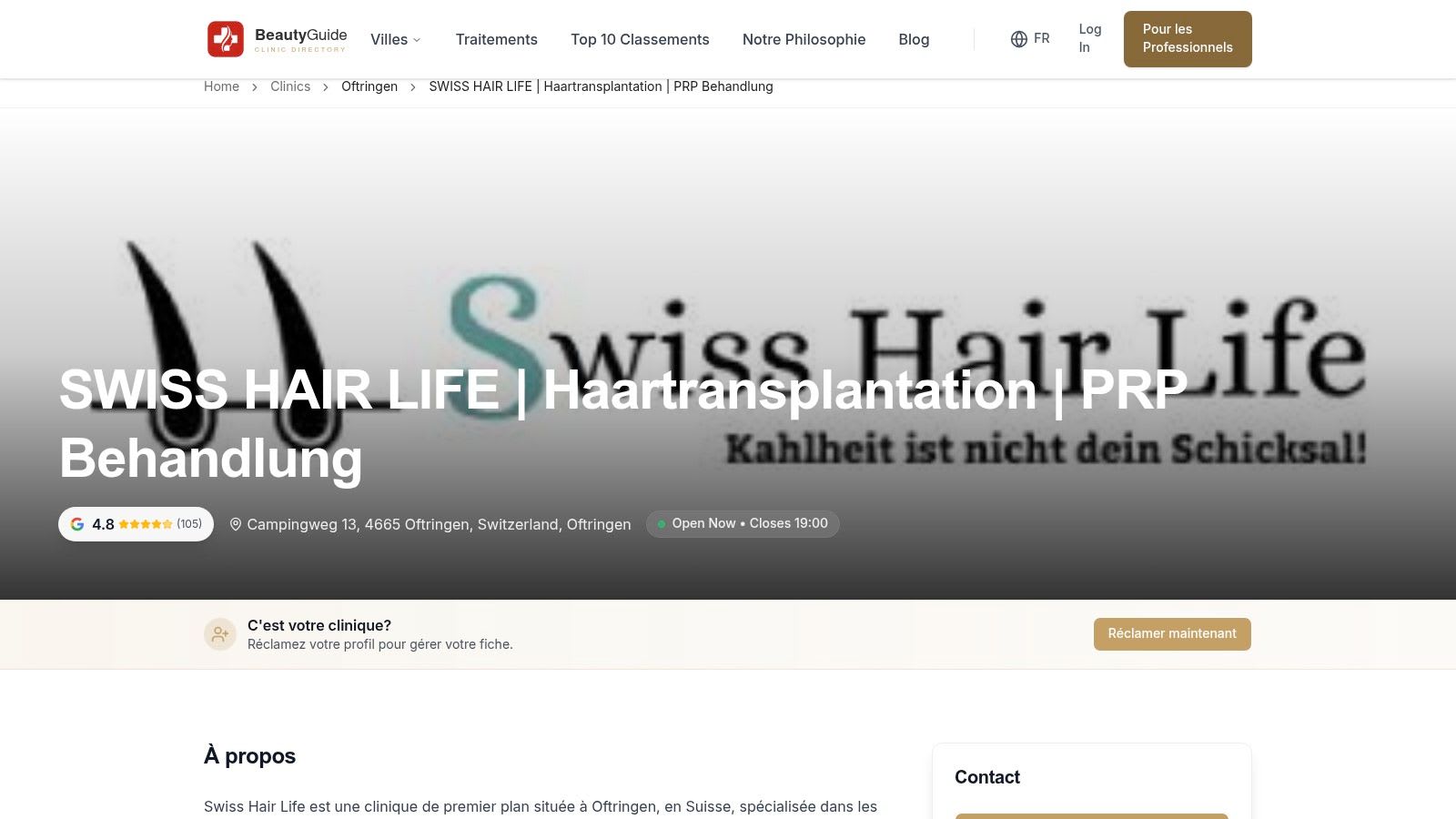
This platform consolidates crucial information into a single, easy-to-navigate page. Its structure is designed to help patients move from initial curiosity to informed inquiry efficiently, addressing key questions about results, cost, and clinic credibility in one place.
Strategic Analysis: A Trust-First Approach
The primary strength of this profile lies in its foundation of trust, built through its listing on BeautyGuide. The platform independently verifies clinic credentials where applicable, such as specialist registrations with FMH (Swiss Medical Association) or MedReg. This initial check provides a layer of safety and assurance that is often missing when browsing standalone clinic websites.
Key Insight: Combining verified credentials with patient-facing tools like photo galleries and reviews creates a powerful, high-trust environment. Patients can evaluate aesthetic outcomes while being reassured of the clinic’s professional standing.
This approach directly addresses a common patient concern: how to find a reputable specialist. By front-loading the verification aspect, the profile allows users to focus on what matters most to them - the results.
Actionable Takeaways for Your Search
- Analyse the Gallery Holistically: Don't just look at the final "after" shot. Use the SWISS HAIR LIFE gallery to study the progression of results. Look for details on the number of grafts and the timeline, which are often included. This gives you a more realistic understanding of the hair transplant journey.
- Cross-Reference with Reviews: Read patient reviews alongside the before-and-after photos. Does patient feedback on their experience align with the visual results presented? This provides a more complete picture of patient satisfaction.
- Use the Integrated Approach as a Benchmark: SWISS HAIR LIFE combines surgical hair transplantation with PRP (Platelet-Rich Plasma) therapy. Use this as a point of comparison when evaluating other clinics. Ask potential providers about their approach to supporting graft survival and promoting healing post-surgery.
- Leverage Practical Information: The profile lists prices, specialist languages, and clinic locations. Use this data to filter and compare options without having to visit multiple websites or make numerous phone calls.
The profile is not a substitute for a medical consultation; individual results and costs will always depend on a personalised assessment. However, as a tool for initial research and shortlisting, the SWISS HAIR LIFE profile on BeautyGuide is an exceptionally well-rounded and reliable resource for anyone considering hair restoration in Switzerland.
Website: https://beautyguide.ch/fr/clinic/swiss-hair-life-haartransplantation-prp-behandlung
2. Dr. Lars Heitmann (FUE Hair Transplant Specialist, Zurich)
For prospective patients in Switzerland who value meticulous documentation and conservative, patient-first approaches, the website for Dr. Lars Heitmann in Zurich offers a masterclass in transparency. His practice focuses exclusively on Follicular Unit Extraction (FUE), and the "Results & Videos" section serves as a detailed educational resource rather than just a simple gallery. This platform is ideal for those who want to understand the why and how behind the hair transplant before and after pictures, not just the final outcome.
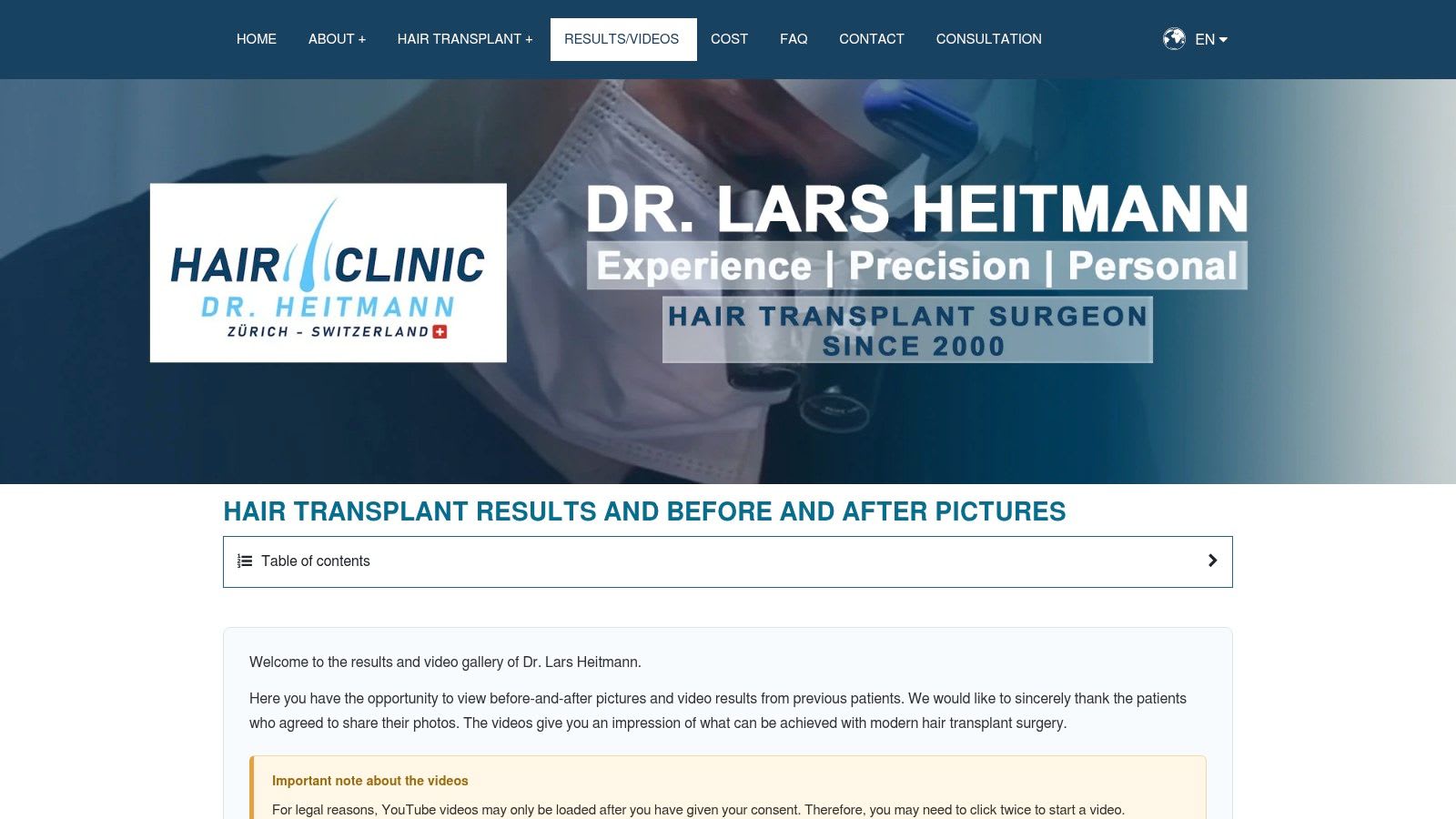
Unlike websites with vast, filterable grids, Dr. Heitmann's site presents individual case studies. Each case is a deep dive, often including high-resolution photos, detailed timelines, and specific graft counts. This approach helps you see the progression from pre-op consultation to the final result, typically shown 12 months or more after the procedure. The inclusion of complex repair work (correcting procedures done elsewhere) is a significant point of difference, showcasing a high level of skill and providing reassurance to patients with challenging cases.
Strategic Analysis: The Power of Video Walkthroughs
The most compelling feature is the use of video. Dr. Heitmann personally walks through many cases, explaining his surgical plan, pointing out details on the patient's scalp, and discussing donor area management. This narrative format provides context that static images alone cannot convey.
Key Takeaway: By explaining the strategic decisions behind each transplant, such as hairline design and density planning, the videos educate patients on what constitutes a high-quality, natural-looking result. This empowers you to ask more informed questions during your own consultation.
Practical Tips for Using the Website
Focus on the Case Details: Pay close attention to the graft numbers provided and compare them to the area of coverage achieved. This helps you develop a realistic understanding of what a certain number of grafts can accomplish.
Watch the Repair Work Videos: Even if you are not seeking a repair, these videos demonstrate an advanced understanding of hair characteristics and donor preservation, which are critical factors for any successful primary procedure.
Note the Timelines: Observe how results mature over 6, 9, and 12+ months. This will help you set realistic expectations for your own recovery and growth timeline.
Access to this content is completely free, with no registration required. However, pricing is not listed publicly, as it depends on a personal consultation. This aligns with the Swiss medical standard of creating a bespoke treatment plan. The website is available in both English and German, catering well to the Swiss and international communities in Switzerland.
Website: https://www.fue-haartransplantation.ch/en/results-videos/
3. Hattingen Hair (Schaffhausen, CH)
For patients considering all modern surgical options, the website for Hattingen Hair, with its Swiss practice in Schaffhausen, serves as an important educational portal. The clinic is well-regarded for its expertise in both Follicular Unit Extraction (FUE) and Follicular Unit Transplantation (FUT or strip surgery). This dual specialisation makes their site a valuable resource for anyone in Switzerland wanting to compare the fundamental techniques directly, particularly those researching the potential for large sessions to address extensive hair loss, an area where FUT is a strong option.
While the site provides selected case photos, it is not structured as a vast, filterable gallery of hair transplant before and after pictures. This is partly due to regional advertising laws that govern how medical results can be presented publicly. Instead, the platform prioritises deep dives into the procedures themselves. You will find detailed explanations of FUT versus FUE, discussions on donor area management, and transparent information regarding scarring, which is a critical consideration for any prospective patient. This approach positions the website as a centre for learning, not just for viewing results.
Strategic Analysis: The Power of Technique Transparency
The most significant feature of the Hattingen Hair website is its direct and honest comparison of FUT and FUE. The team openly discusses the pros and cons of each, including the linear scar associated with FUT and the different donor management realities of FUE. This level of transparency is crucial for patients who need to make a well-informed decision based on their specific hair loss pattern, donor characteristics, and future goals.
Key Takeaway: By providing clear educational content on both major surgical methods, the site empowers you to understand which technique might be better suited for your situation. This knowledge is essential for a productive consultation, allowing you to discuss not just the outcome but the surgical path to get there.
Practical Tips for Using the Website
Study the FUT vs. FUE Sections: Read the detailed explanations to understand the key differences in donor harvesting, scarring, and typical graft yields. This is vital if you are considering a large session or have extensive hair loss.
Look for Information on "Dense Packing": The clinic discusses its approach to achieving high density. Understanding this concept helps you evaluate the quality of hairline design in before-and-after photos you see elsewhere.
Evaluate Scar Management Photos: The site's willingness to show and discuss scarring is a mark of transparency. Pay attention to how they manage donor sites to minimise visible signs of surgery.
Access to the educational content is free and does not require registration. Pricing is provided only after a personal consultation, consistent with Swiss medical practice where treatment plans are individualised. The primary language of the site is German, so using a browser's translation feature may be helpful for non-German speakers. For those looking to support their surgical results, adjunctive therapies like PRP can be a useful topic to explore with your physician; you can learn more about PRP's role in hair restoration here.
Website: https://www.hattingenhair.com/
4. Hasson & Wong (Global Benchmark, Canada)
While not based in Switzerland, the website for Vancouver's Hasson & Wong clinic serves as an essential global benchmark for evaluating hair transplant before and after pictures. For any prospective patient in Switzerland, their extensive photo archive provides a crucial educational tool. The sheer volume and standardisation of their results gallery make it an invaluable resource for calibrating your expectations on density, hairline design, and what is achievable across different hair types and levels of hair loss.
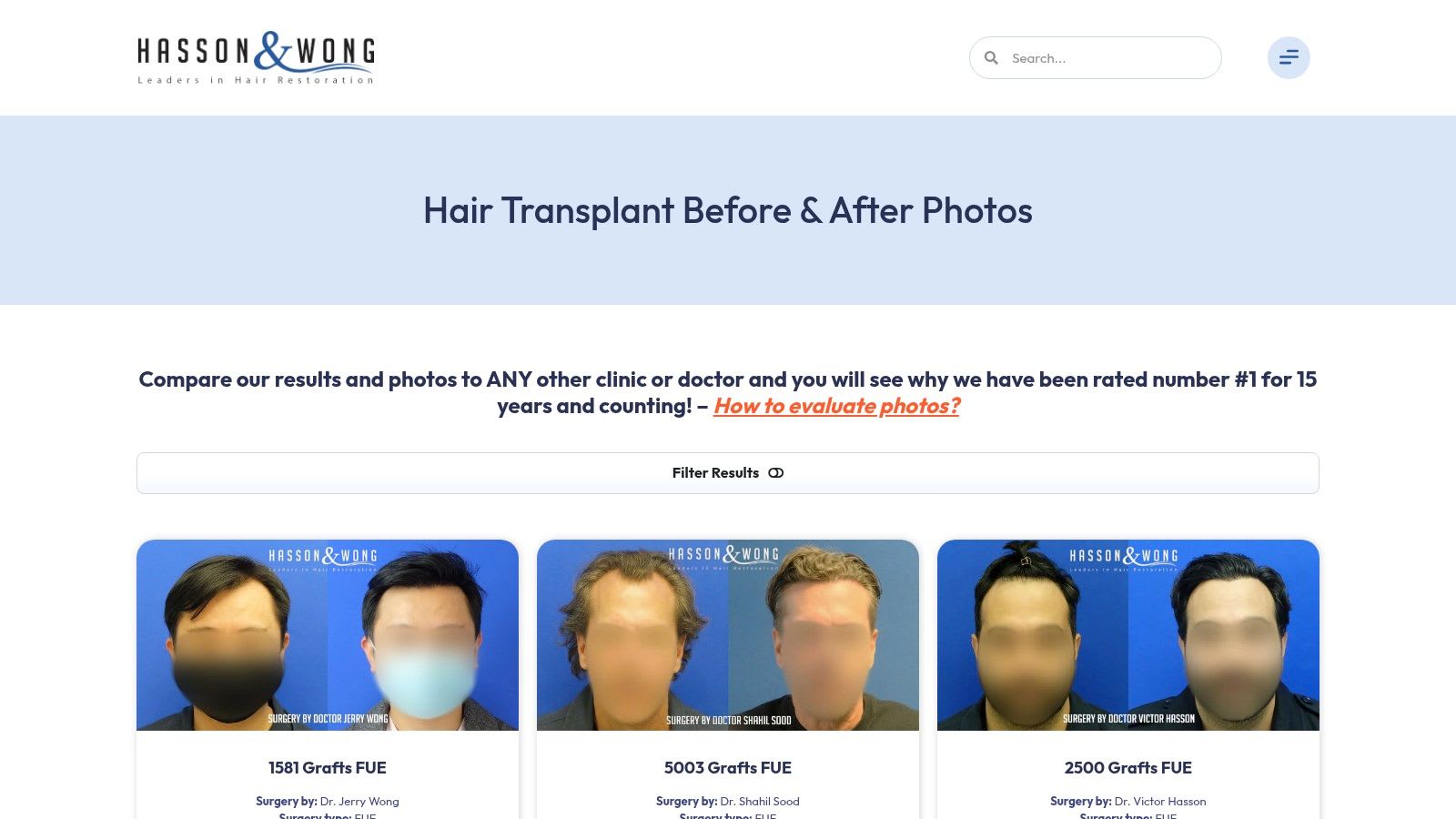
The "Hair Transplant Photos" section is organised with a strong focus on clarity and comparison. Patients are categorised by their Norwood Scale classification, hair colour, age, and the technique used (FUT, FUE, or combination). This structured approach allows you to find cases that closely mirror your own situation. Each case includes multiple high-definition photos from standardised angles (front, top, side, back), often with "before/after" sliders for direct comparison. Details like graft count and procedure type are consistently provided, offering a transparent look at the work performed.
Strategic Analysis: The Power of a Standardised Archive
The most significant feature of the Hasson & Wong gallery is its consistency. By presenting thousands of cases photographed under similar lighting and from the same angles over many years, they have created a library that allows for true "apples-to-apples" comparisons. This systematic documentation removes many of the variables that can make it difficult to assess results on other websites.
Key Takeaway: Using this gallery as a reference point helps you develop a critical eye. You can learn what 3,000 grafts should look like on a Norwood 4 patient or how a new hairline should be designed to appear natural. This knowledge is directly transferable when evaluating the portfolios of Swiss clinics.
Practical Tips for Using the Website
Filter by Your Characteristics: Use the filters to find patients with a similar age, hair colour, and degree of hair loss to your own. This provides the most realistic preview of your potential outcome.
Study the Hairline Designs: Pay close attention to how hairlines are constructed. Note the soft, irregular leading edge and the gradual increase in density, which are hallmarks of high-quality work.
Analyse Repair Cases: The gallery includes numerous complex cases repairing poor work from other clinics. These examples showcase advanced skills in donor management and aesthetic correction, which are important indicators of a clinic's expertise.
Access to the photo gallery is free and requires no registration. As a Canadian clinic, its primary value for a Swiss resident is educational. The site functions as a master reference to better inform your discussions with local, FMH-accredited specialists in Zurich, Geneva, or your home canton. It is not an encouragement to seek treatment abroad, as this involves different regulatory environments and follow-up care challenges.
Website: https://hassonandwong.com/hair-transplant-photos/
5. Bernstein Medical (Global Benchmark, USA)
While located in the US, the website for Bernstein Medical in New York is an exceptional international resource for patient education, primarily due to its highly organised and searchable photo gallery. For Swiss patients conducting initial research, this platform serves as an invaluable tool for understanding different hair loss patterns and the potential results of a transplant. It is one of the most structured databases of hair transplant before and after pictures available online, making it perfect for detailed comparison.
The gallery contains over 1,200 photos from more than 220 patients, but its real power lies in the search filters. You can narrow down results by Norwood or Ludwig classification (the medical scales for male and female pattern baldness), the number of sessions, hair characteristics (like colour and texture), and the specific area treated (e.g., hairline, crown). This level of detail allows you to find cases that closely match your own situation, providing a more realistic preview of what might be achievable. The site also features dedicated galleries for female patients, complex repair work, and even eyebrow transplants.
Strategic Analysis: The Power of Granular Filtering
The ability to filter results by specific patient attributes is the website's defining feature. Instead of scrolling through hundreds of random cases, you can immediately find examples that are relevant to you. This targeted approach transforms a simple gallery into a powerful research instrument.
Key Takeaway: By allowing users to match cases to their own hair loss pattern and characteristics, the platform helps set realistic expectations. It demonstrates that results are not one-size-fits-all and depend heavily on individual factors, a crucial lesson before any consultation.
Practical Tips for Using the Website
Use the Filters to Find Your "Twin": Start by selecting your approximate Norwood/Ludwig class, hair colour, and the area you wish to address. This will give you the most relevant visual examples.
Study the Repair Cases: The "Corrective Surgery" section is particularly insightful. It shows how the clinic addresses poor results from other practices, highlighting the importance of choosing a skilled surgeon from the start.
Compare Session Counts: Pay attention to cases that required one versus multiple sessions to achieve the final look. This helps you understand the commitment and potential cost involved in treating extensive hair loss.
Access to the gallery is free and does not require registration. As it is a US-based clinic, pricing is not applicable to the Swiss market. However, the site's educational value in visualising outcomes is universal and can better prepare you for discussions with a Swiss-based, FMH-certified specialist. It is intended for educational use, not as a promotion of medical tourism.
Website: https://www.bernsteinmedical.com/hair-transplant-photos/
6. Harley Street Hair Clinic (Global Benchmark, UK)
While not based in Switzerland, the Harley Street Hair Clinic in London provides an exceptional international benchmark for how clinics can present hair transplant before and after pictures. Its "Patients' Gallery" is a valuable educational resource for anyone researching FUE procedures, offering a transparent look into the entire treatment journey. This platform is particularly useful for understanding the staged progression of hair growth and the artistry involved in creating natural-looking hairlines.
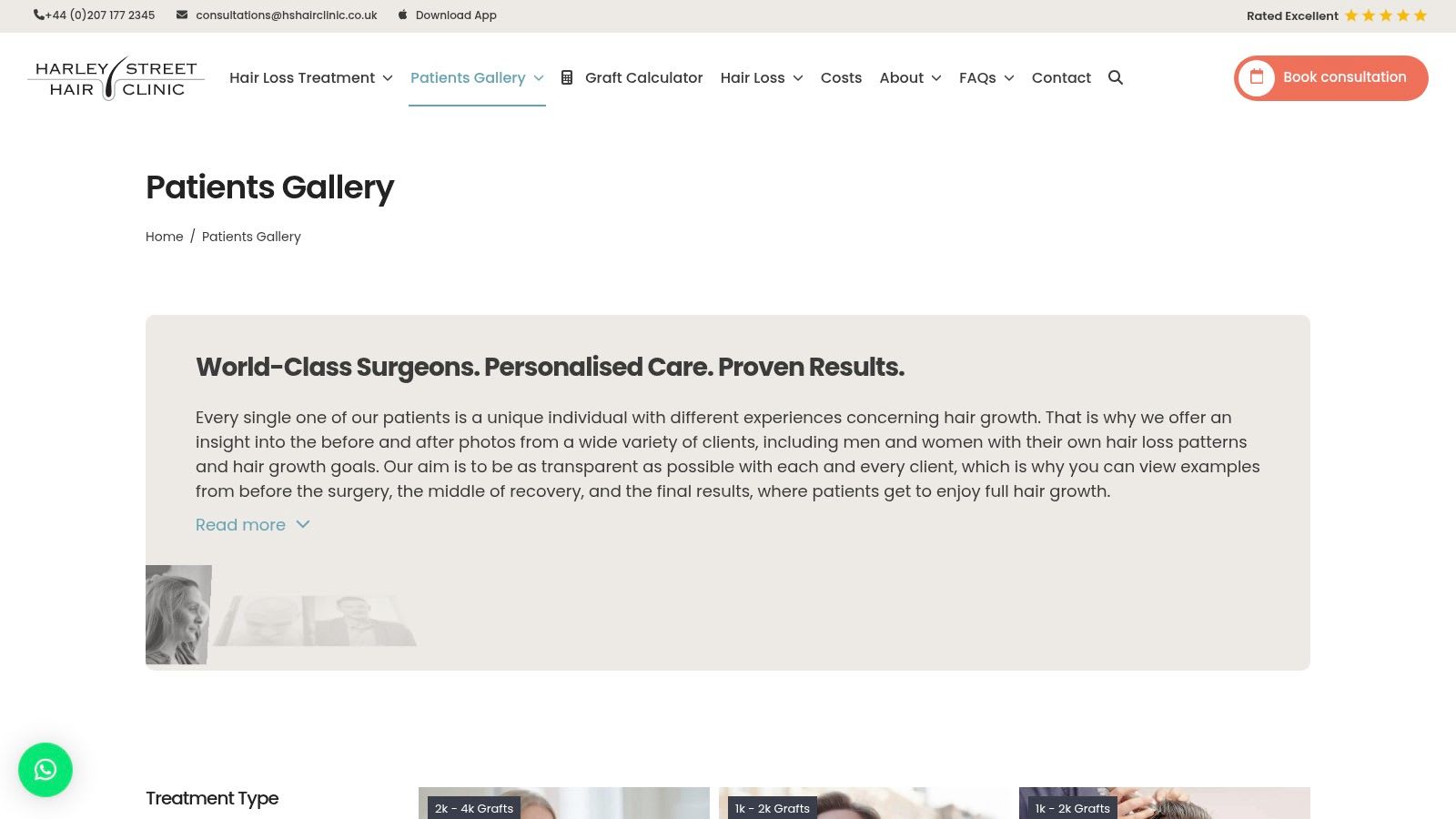
The clinic organises its results into detailed, narrative-driven case studies. Each profile often includes high-quality photos from multiple angles, showing the patient before the procedure, immediately after, and at various stages of recovery and growth (e.g., 6 months, 12 months). This detailed timeline helps set realistic expectations, demonstrating the "ugly duckling" phase and the gradual maturation of the final result. The gallery also showcases a wide variety of cases, including scalp, beard, and eyebrow transplants, which provides insight into different applications of the FUE technique.
Strategic Analysis: The Power of Staged Progression
The most powerful element of this gallery is its commitment to showing the interim stages of recovery. By documenting the journey from day one to the final outcome, the clinic demystifies the process and builds trust. Patients can see the initial redness, the shedding of transplanted hairs, and the slow emergence of new growth, which provides critical context that a simple before-and-after shot cannot.
Key Takeaway: Documenting the entire timeline, including the recovery phases, is a sign of a confident and transparent clinic. It educates patients about what to expect post-procedure and helps them mentally prepare for the months of gradual growth, which is a standard part of any hair transplant.
Practical Tips for Using the Website
Study the Timelines: Focus on the photos labelled "immediately post-op," "3 months," and "6 months." This will give you a clear, visual understanding of the recovery process and help manage your own expectations.
Analyse Hairline Design: Compare the pre-op hairlines with the final results. Note how the clinic creates soft, irregular hairlines that look natural rather than stark and artificial. This is a key marker of high-quality work.
Watch the Patient Videos: Many case studies include video testimonials where patients discuss their experience and results. These videos offer an authentic perspective on the procedure's impact and the clinic's standard of care.
Access to the gallery is free and requires no registration. As a UK-based clinic, its use for Swiss patients is strictly educational, helping refine aesthetic goals and develop questions before consulting with a qualified FMH-certified surgeon in Switzerland. It should not be interpreted as an endorsement of medical travel.
Website: https://www.hshairclinic.co.uk/patients-gallery
7. Eugenix Hair Sciences (Global Benchmark, India)
For prospective patients, particularly those with advanced hair loss (Norwood class 5-7), the Eugenix Hair Sciences website from India serves as a critical international benchmark. While based outside of Switzerland, its extensive results gallery is an invaluable educational tool for understanding the potential of high-volume FUE and DHI procedures. The platform is especially useful for seeing hair transplant before and after pictures of cases that require a large number of grafts, offering a glimpse into what is surgically possible for significant restoration.
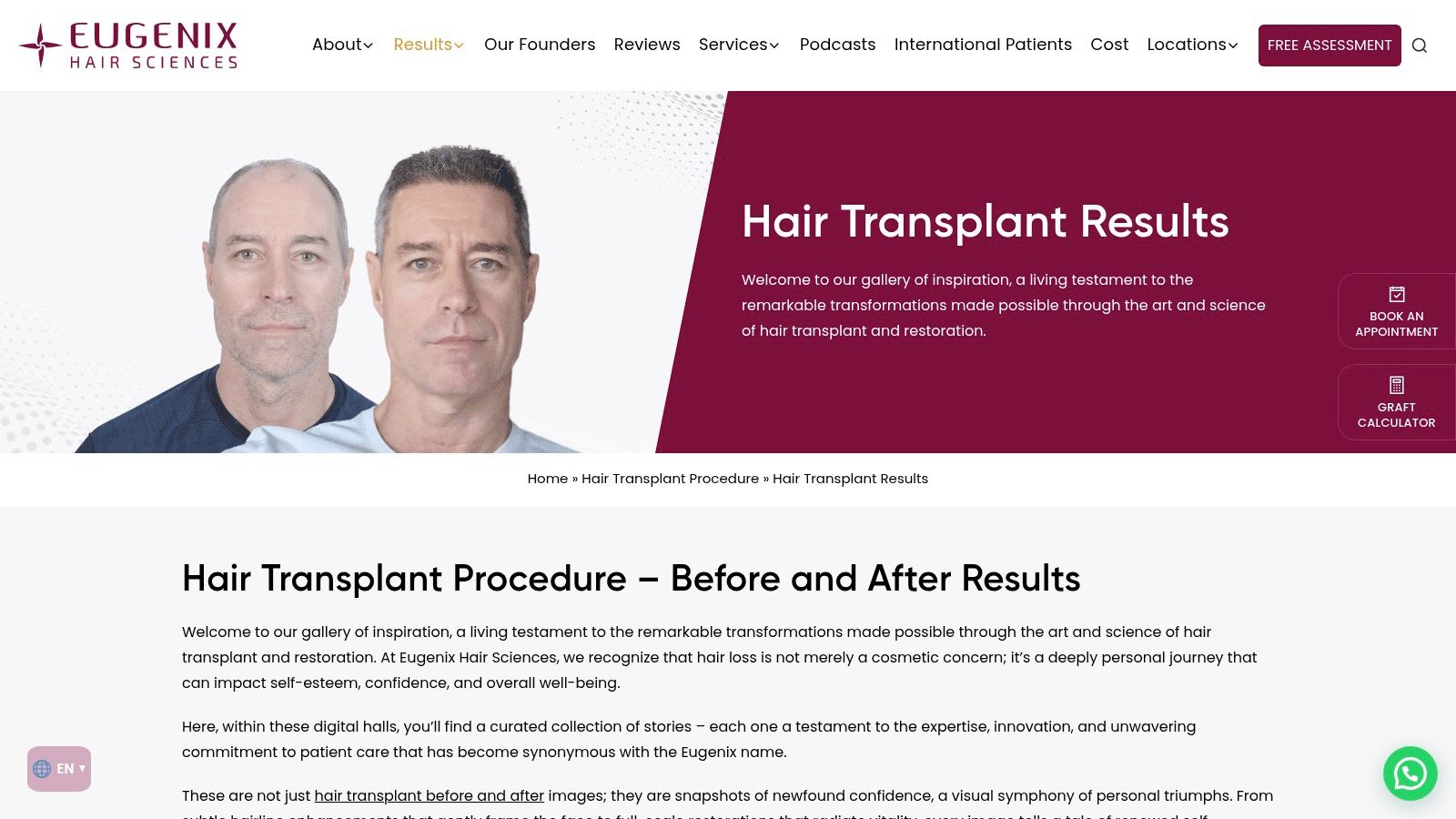
The primary strength of the Eugenix gallery is its sheer volume and diversity. It features a vast collection of cases organised by Norwood scale, hair type (including Afro-textured and Asian hair), and procedure type. Each case typically includes clear pre-operative photos, post-operative shots showing graft placement, and follow-up images at various intervals (e.g., 6, 9, 12 months). The consistent reporting of graft counts alongside visual results helps patients calibrate their expectations about the relationship between graft numbers and final density.
Strategic Analysis: Benchmarking Large-Scale Restorations
The most compelling aspect of the gallery is its focus on high Norwood-class transformations. Many clinics showcase results for minor to moderate hair loss, but Eugenix provides a substantial library of patients who have achieved full or significant coverage from a state of advanced baldness. This is a powerful educational resource for anyone in Switzerland who has been told their hair loss is too extensive for a transplant.
Key Takeaway: By studying these advanced cases, you can better understand the strategic importance of donor management and long-term planning. The results demonstrate how a skilled team can maximise a finite donor area to achieve coverage over a large surface, a key consideration for anyone with significant hair loss.
Practical Tips for Using the Website
Filter by Norwood Scale: Use the gallery filters to find cases that match your specific level of hair loss. This provides a more realistic preview of potential outcomes for your situation.
Analyse Graft Count vs. Coverage: Pay close attention to the number of grafts used to cover a specific area. This data helps you understand the density that can be achieved and informs discussions with your Swiss physician.
Review Different Hair Types: If you have curly, wavy, or Afro-textured hair, the dedicated sections for these hair types show how surgical techniques are adapted to achieve natural-looking results.
Access to the gallery is free. It is included here for educational purposes only. As an Indian clinic, it represents a medical tourism option, which comes with its own set of logistical, follow-up care, and regulatory considerations that are distinct from undergoing treatment under Swiss medical standards. This is not an endorsement of medical travel.
Website: https://eugenixhairsciences.com/hair-transplant-procedure/hair-transplant-results/
Comparative Overview of Hair Transplant Resources
| Clinic / Resource | Key Focus | Best For Swiss Patients To... | Location | Key Strengths |
|---|---|---|---|---|
| SWISS HAIR LIFE | Verified Swiss Clinic | Research local options & results | Lucerne, Geneva, Zurich | Integrated info hub (photos, reviews, pricing); FMH-verified specialists |
| Dr. Lars Heitmann | Detailed Case Studies | Understand FUE planning & see repair work | Zurich, CH | Video walkthroughs, focus on donor preservation, high transparency |
| Hattingen Hair | FUT vs. FUE Education | Compare major surgical techniques for extensive loss | Schaffhausen, CH | Deep procedural education, transparency on scarring, large session expertise |
| Hasson & Wong | Global Photo Benchmark | Develop a critical eye for density & hairline design | Canada (Global Benchmark) | Standardised, high-volume gallery; excellent filtering by hair type |
| Bernstein Medical | Searchable Case Database | Find visual "twins" for specific hair loss patterns | USA (Global Benchmark) | Granular search filters (Norwood, hair type); extensive repair work gallery |
| Harley Street Clinic | Documenting the Journey | Learn about the recovery timeline & growth stages | UK (Global Benchmark) | Staged photos from post-op to 12 months; strong hairline examples |
| Eugenix Hair Sciences | Advanced Hair Loss Cases | See possibilities for high Norwood-class restoration | India (Global Benchmark) | Massive gallery of large-scale transformations; diverse hair types shown |
Final Thoughts
Navigating the world of hair restoration can feel overwhelming, but as this guide has demonstrated, a well-documented gallery of hair transplant before and after pictures is your most powerful educational resource. These images move beyond marketing claims, offering a transparent look into what is truly achievable with modern techniques like FUE and FUT. Throughout this article, we’ve analysed cases from esteemed Swiss clinics and leading international specialists, focusing not just on the final results, but on the crucial details that lead to them.
The key takeaway is to approach these visual records with a critical and educated eye. A compelling "after" photo is the product of meticulous planning, surgical skill, and patient-specific factors. As we've seen, the most trustworthy clinics provide comprehensive documentation, including clear, consistent lighting, multiple angles, and details on graft counts, techniques used, and the timeline for recovery and growth. This level of transparency is a hallmark of quality and patient-centred care, a standard rigorously upheld within the Swiss medical community.
Your Actionable Path Forward
Making an informed decision requires more than just admiring impressive results. It involves a systematic approach to your own research and consultation process. Here are the most important steps to take as you move forward:
Revisit the Examples with a Critical Eye: Go back through the featured cases. Don't just look at the density; analyse the hairline design, the naturalness of the hair direction, and how well the donor area was preserved. These are the markers of true expertise.
Practise Your Photo-Vetting Skills: Scrutinise every gallery you review. Look for the signs of quality we discussed: consistent lighting, high-resolution images, and views from the front, top, and back. Be wary of photos with strategic shadows, overly styled hair, or missing timeline details.
Verify Authenticity: In an age of digital manipulation, ensuring the images you're reviewing are genuine is paramount. It's beneficial to develop an understanding of what makes a photograph trustworthy. As you examine various before and after galleries, it's crucial to understand how to ensure their authenticity. Learn more about how to check if a photo is real to make informed decisions.
Prioritise Swiss Medical Standards: When evaluating clinics, especially those in Switzerland, look for practitioners with FMH (Swiss Medical Association) credentials. This is a crucial indicator of adherence to the country’s high standards for medical training, ethics, and patient safety.
From Pictures to Personalised Consultation
The ultimate goal of reviewing hair transplant before and after pictures is to find a clinic and a surgeon whose aesthetic philosophy and technical results align with your personal goals. The images help you create a shortlist of potential providers whose work you admire. However, no photograph can replace a direct, one-on-one consultation with a qualified specialist in Switzerland.
This next step is where your journey becomes truly personalised. During a consultation, a physician can assess your unique pattern of hair loss, evaluate your donor hair capacity, and discuss your expectations. This is your opportunity to ask detailed questions, reference the results you've admired, and collaborate on a treatment plan that is realistic and tailored specifically to you.
Your search for a solution to hair loss has brought you here, and by focusing on verified results and expert qualifications, you are already on the right path. Use the knowledge gained from this guide to confidently compare clinics, engage in meaningful consultations, and take the next step toward achieving a natural-looking result that restores not just your hair, but your confidence as well.
Explore More
This article is for informational purposes only and does not replace professional medical advice.