
If you've ever felt your skin looked dull, congested, or not as bright as it could be, you’re not alone. In Swiss aesthetic medicine, one of the most reliable and effective treatments is the hydroxy acid peel. This is not a harsh, old-fashioned "peel," but a controlled, professional exfoliation that signals your skin to renew itself.
An Introduction to Hydroxy Acid Peels in Switzerland
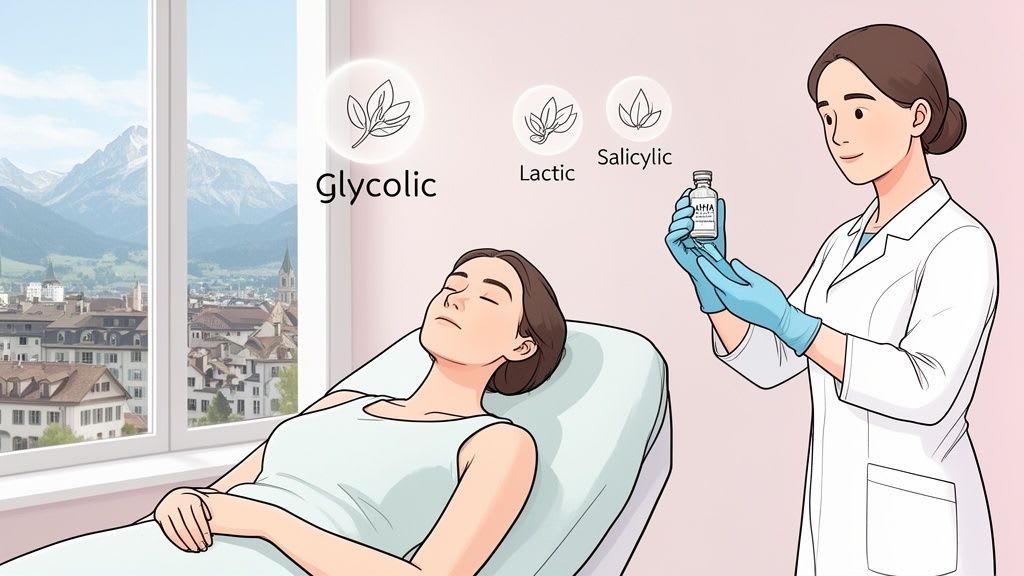
Think of a hydroxy acid peel as a guided reset for your complexion. These treatments are a cornerstone in clinics across Switzerland because they are effective. They use specific acids to precisely target skin concerns—whether that’s texture, pigmentation, or breakouts—all with high standards of care and manageable downtime.
The first step in understanding these peels is to know the two main families of acids involved: Alpha Hydroxy Acids (AHAs) and Beta Hydroxy Acids (BHAs). Each has a distinct function.
Alpha Hydroxy Acids (AHAs): The Surface Polishers
Alpha Hydroxy Acids, or AHAs, are water-soluble. This means they work on the skin's surface. They can be thought of as expert polishers, gently dissolving the bonds that hold dead, dull skin cells together. This allows the fresh, radiant skin underneath to become visible.
In a professional setting, you'll most often encounter these key AHAs:
Glycolic Acid: A well-regarded AHA. Its small molecular size allows it to penetrate effectively, making it suitable for addressing fine lines, sun damage, and general texture issues.
Lactic Acid: A gentler option, lactic acid is also known for its hydrating properties. This makes it an ideal choice for individuals with drier or more sensitive skin.
Mandelic Acid: With its larger molecule, mandelic acid works more slowly and is less likely to cause irritation. It is often used for treating pigmentation and gently evening out skin tone.
Because they focus on the epidermis (the outermost skin layer), AHAs are a primary choice for anyone looking to boost skin radiance and smooth a rough surface.
Beta Hydroxy Acids (BHAs): The Pore Specialists
Beta Hydroxy Acids, or BHAs, function differently. They are oil-soluble. This unique property allows them to penetrate through oil and get inside pores to clear out sebum, dead skin, and debris that cause blockages.
The most well-known and widely used BHA in dermatology is salicylic acid. Its ability to exfoliate inside the pore lining not only clears existing congestion but also helps reduce inflammation. It is a standard for treating acne-prone and oily skin.
This targeted approach aligns with the Swiss preference for treatments that are both effective and meticulously tailored. Whether you're dealing with sun damage from days on the slopes or persistent adult acne, there is a hydroxy acid peel that provides a scientifically-backed solution.
For instance, fruit acid peels, which are a type of AHA peel, are a staple in Swiss clinics for addressing concerns from acne to pigmentation and wrinkles. A standard treatment plan might involve 3-6 sessions spaced every 2-4 weeks. Patients often appreciate them because visible skin regeneration can be seen within 7-10 days—a timeline that suits many lifestyles. If you are interested, you can learn more about fruit acid peel protocols and pricing in Zürich to get a better idea.
How Peels Renew Your Skin
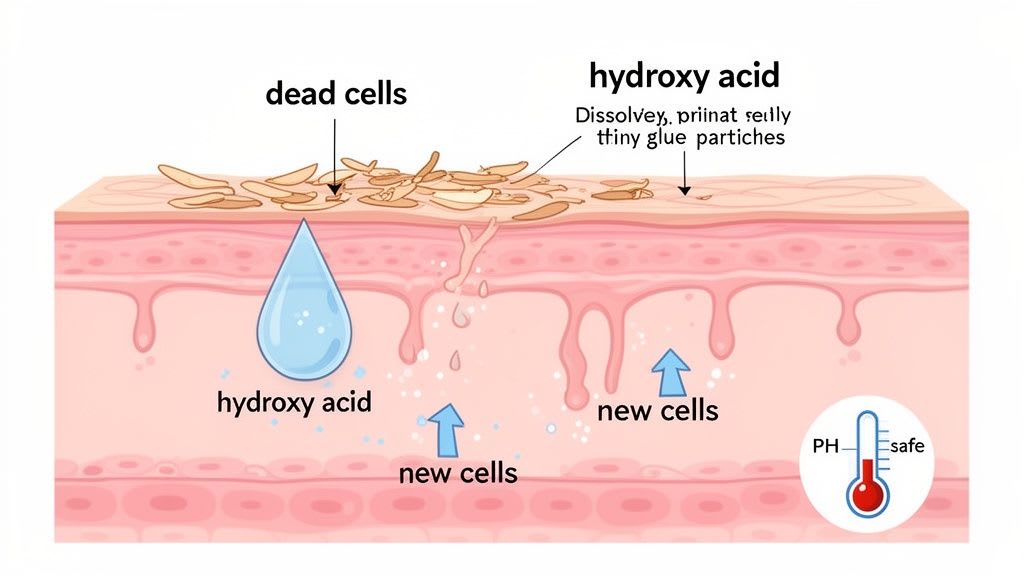
To understand why a professional peel is effective, one must look at the microscopic process. It's a fascinating process that works with your skin's natural biology, not against it. Your skin constantly sheds old cells and creates new ones, but this turnover slows down with age, leaving a dull-looking surface.
A hydroxy acid peel gives this process a well-timed stimulus. The acids work by dissolving the tiny bonds—the microscopic "glue"—that hold dead cells together. This allows that old, congested layer to lift away cleanly, revealing the fresher, more vibrant skin underneath.
This is more than just a surface-level polish. This controlled exfoliation sends a signal deep into the skin, encouraging it to speed up new cell production and restore a more youthful renewal cycle.
Why pH and Concentration Are Critical
The main difference between a medical-grade peel and an over-the-counter product lies in two key factors: acid concentration and pH. A trained practitioner knows how to balance these two variables to achieve effective results without compromising skin health.
Here's a simple way to understand it:
Concentration is the amount of acid in the peel solution. A higher percentage usually means stronger action.
pH is the acidity level. The lower the pH, the more active and "free" the acid is, which dramatically increases its exfoliating power.
In a Swiss clinic, practitioners can use a combination of higher concentrations and lower pH levels that are not safe for at-home use. This is where expertise is crucial. They can select the precise strength needed for your skin concerns, delivering a level of change that over-the-counter products, with their high, safety-buffered pH, cannot approach.
A professional peel is like a targeted workout for your skin, led by a specialist who knows exactly how much intensity to apply for maximum benefit without causing injury. It’s a calculated medical treatment, not just a cosmetic one.
More Than Skin Deep: Triggering Collagen and Hydration
The benefits extend much deeper than the top layer. The controlled "injury" from the peel triggers the skin's natural healing response in the dermis below. This activates the fibroblast cells, which are the skin's factories for producing collagen and elastin—the proteins that give skin its firmness and elasticity.
With a series of treatments, this process builds upon itself, leading to plumper, more resilient skin and a softening of fine lines.
Additionally, many hydroxy acids (especially AHAs) are also humectants, meaning they attract water. By clearing away the barrier of dead cells, the peel not only allows these acids to penetrate but also helps the skin hold on to moisture more effectively.
This multi-action approach is a cornerstone of many modern skin rejuvenation plans. The combination of exfoliation, regeneration, and deep hydration leads to a complexion that’s not just clearer, but fundamentally healthier. It’s a great example of the Swiss aesthetic philosophy in action: achieving natural-looking results by supporting the skin’s own biological processes.
Choosing Your Peel: AHA vs BHA Explained
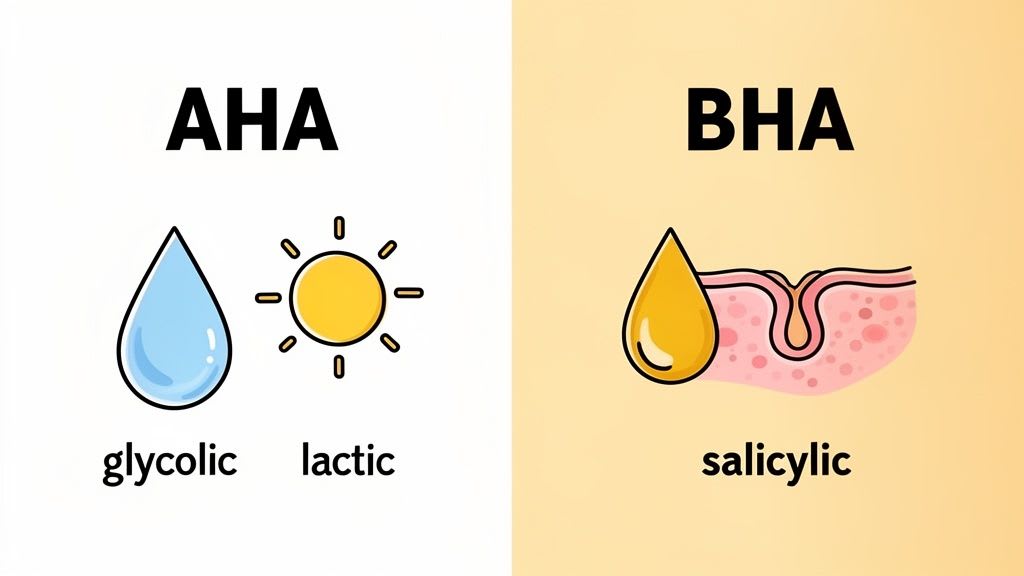
During a consultation, one of the first discussion points will likely be whether an AHA or a BHA peel is right for you. These are the two main families of hydroxy acids, and while they both exfoliate, they work in very different ways. The goal is not to find the “best” acid, but to find the best acid for your skin.
The key difference comes down to a simple property: AHAs are water-soluble, and BHAs are oil-soluble. This distinction guides a practitioner in a Swiss aesthetic clinic in choosing one over the other.
Alpha Hydroxy Acids (AHAs): The Surface Experts
AHAs perform their best work on the surface of the skin. Because they are drawn to water, they are experts at dissolving the cellular "glue" that holds dead, dull skin cells together. Think of them as high-end polishers, revealing the brighter, fresher skin underneath.
This makes AHA peels the go-to choice for:
Dry or Dehydrated Skin: Certain AHAs, like lactic acid, are also humectants. They not only exfoliate but also help the skin retain moisture.
Sun Damage and Discolouration: By accelerating cell turnover, AHAs help shed surface cells that hold pigment, resulting in a more even skin tone.
Fine Lines and Rough Texture: The exfoliating action smooths the skin's surface, softening the appearance of fine lines and creating a more refined texture.
Some of the most trusted AHAs you’ll encounter in Swiss clinics are glycolic acid, mandelic acid, and Lactic Acid for Skin, each chosen for their reliable and predictable results.
Beta Hydroxy Acids (BHAs): The Pore Professionals
This is where oil-solubility becomes a game-changer. BHAs, most famously salicylic acid, can travel through the skin's natural oils and get deep inside the pore lining. They don't just work on the surface; they perform a deep clean from within.
This unique ability makes BHA peels the standard for:
Oily and Acne-Prone Skin: BHAs get to the source of the problem, dissolving the mixture of oil and dead skin that clogs pores and leads to blackheads and pimples.
Enlarged Pores: By clearing out debris, BHAs can help pores appear visibly smaller.
Redness and Inflammation: Salicylic acid has natural anti-inflammatory properties that can soothe the redness associated with breakouts.
To make the choice clearer, here is a simple breakdown of how these two acid families compare.
AHA vs BHA: A Quick Comparison for Patients
| Feature | Alpha Hydroxy Acids (AHAs) | Beta Hydroxy Acids (BHAs) |
|---|---|---|
| Solubility | Water-soluble (work on the skin's surface) | Oil-soluble (penetrate deep into pores) |
| Primary Target | Surface texture, fine lines, and discolouration | Pore congestion, blackheads, and acne |
| Best For | Dry, sun-damaged, or mature skin | Oily, combination, and acne-prone skin |
| Key Examples | Glycolic Acid, Lactic Acid, Mandelic Acid | Salicylic Acid |
| Extra Benefit | Can boost hydration (humectant properties) | Anti-inflammatory properties |
Ultimately, your practitioner will choose the acid that best matches your primary concerns. For patients with combination skin, many Swiss practitioners use advanced formulations that blend both. A peel might combine glycolic acid to brighten the surface with salicylic acid to clear out a congested T-zone. This personalised approach, upholding Switzerland's high standards of care, ensures your skin gets exactly what it needs.
What a Hydroxy Acid Peel Can Do for Your Skin
What can you realistically expect from a hydroxy acid peel? In a professional Swiss setting, the goal is not a dramatic, overnight transformation. It’s about making smart, progressive changes that enhance skin health and restore its natural vitality.
Think of it as a reset. A professionally chosen peel accelerates the skin’s own renewal cycle to target some of the most persistent concerns. The results are visible and aligned with the Swiss appreciation for authentic, healthy-looking skin.
Softening Fine Lines and Addressing Signs of Ageing
One of the most common reasons people seek out a peel is to address the early signs of ageing. An AHA peel, often with glycolic acid, is excellent for this. It immediately smooths the surface, making fine lines less noticeable. More importantly, the peel sends a signal to the skin to produce more collagen, which over time, leads to a firmer, more resilient complexion.
Fading Hyperpigmentation and Sun Damage
Years in the sun can leave marks in the form of sun spots, uneven tone, or stubborn melasma. Hydroxy acid peels are excellent at managing this. They work by encouraging the shedding of old, discoloured cells from the skin's surface. As these pigmented cells are cleared away, fresh, evenly-toned new skin is revealed, creating a brighter and more uniform complexion.
Restoring Skin Texture and Radiance
If your skin feels rough, dull, or lacklustre, this is where peels truly excel. The exfoliation process physically smooths the skin’s surface, creating a more refined texture that reflects light beautifully. This is how a peel delivers that sought-after "glow"—by revealing the healthy, vibrant skin that was hidden underneath.
At its core, a hydroxy acid peel works by improving your skin’s fundamental health. The visible benefits—smoother texture, even tone, and fewer lines—are all direct results of a more efficient and revitalised skin cycle.
Clearing Up Acne and Congestion
For anyone struggling with breakouts and clogged pores, a BHA peel containing salicylic acid can be transformative. It’s uniquely effective because it:
Deep Cleans Pores: Salicylic acid is oil-soluble, meaning it can get inside the pore to dissolve the mixture of oil, dead skin, and debris that causes blackheads and pimples.
Calms Inflammation: It also has natural anti-inflammatory properties, which helps reduce the redness and soreness associated with active breakouts.
Prevents Future Breakouts: By keeping pores clear, a series of peels can help break the acne cycle and reduce the frequency of future blemishes.
These peels are part of a wider world of skin treatments, including options like a facial spa for men. To get a better sense of what these peels can achieve, you can review a gallery of chemical peeling before and after results.
Finding a Qualified Clinic in Switzerland
Deciding on a hydroxy acid peel is an important step, and your safety must come first. In Switzerland, medical standards are incredibly high, and choosing the right practitioner is the single most important part of the process. A peel’s success rests entirely on the skill and experience of the person applying it.
Finding a qualified professional is about more than locating a clinic with a nice website. It's about verifying their credentials. This is a medical procedure, not just a spa facial, and it demands a deep understanding of skin biology and chemistry.
Verify Medical Credentials
In Switzerland, specific titles and registers act as a safeguard, helping you confirm a practitioner is properly qualified.
Here’s what you should look for:
FMH Specialist Title: The Swiss Medical Association (FMH) is the professional organisation for physicians in the country. A doctor holding an FMH title in dermatology and venereology (Dermatologie und Venerologie) or plastic, reconstructive, and aesthetic surgery (Plastische, Rekonstruktive und Ästhetische Chirurgie) has completed years of rigorous, specialised postgraduate training. It is a gold standard of qualification.
MedReg Register: Every physician, dentist, and pharmacist practising in Switzerland must be listed in the official MedReg register. This public database, run by the Federal Office of Public Health (FOPH), allows you to confirm your chosen provider has a valid Swiss medical licence.
These credentials are your assurance that the practitioner meets Switzerland's strict national standards.
Questions to Ask During Your Consultation
Your consultation is your time to interview the practitioner. It should be a conversation where you can ask anything and have your concerns taken seriously.
A reputable expert will welcome your questions and provide clear, transparent answers. If you ever feel rushed, dismissed, or pressured, that is a significant red flag. Trust your instincts and consider a second opinion.
It’s a good idea to bring a list of questions with you. This keeps you focused and ensures you cover all critical points. For even more detailed advice, you can check our complete guide on how to select the right beauty clinic.
Your Consultation Checklist
Whether you're in Basel, Bern, Lausanne, or any other Swiss city, use these questions to guide the conversation with a potential provider:
- Experience and Specialisation:
"Do you have extensive experience treating my specific skin type and concerns, such as sensitive skin, melasma, or cystic acne?"
"Could you show me anonymised before-and-after photos of your patients who have a similar skin profile to mine?"
- Treatment Protocol:
"What does the full treatment plan look like? How many sessions will I need, and how far apart will they be?"
"What pre-treatment preparation is required? What products should I stop using and for how long?"
- Downtime and Aftercare:
"What are the exact aftercare instructions? Which products are safe to use, and which should I avoid?"
"If I have a question or a concern during my recovery, especially after hours, who can I contact?"
Insisting on a clinic that upholds Switzerland’s rigorous standards ensures your hydroxy acid peel is not only effective but, most importantly, safe.
Your Treatment Journey: From Preparation to Recovery
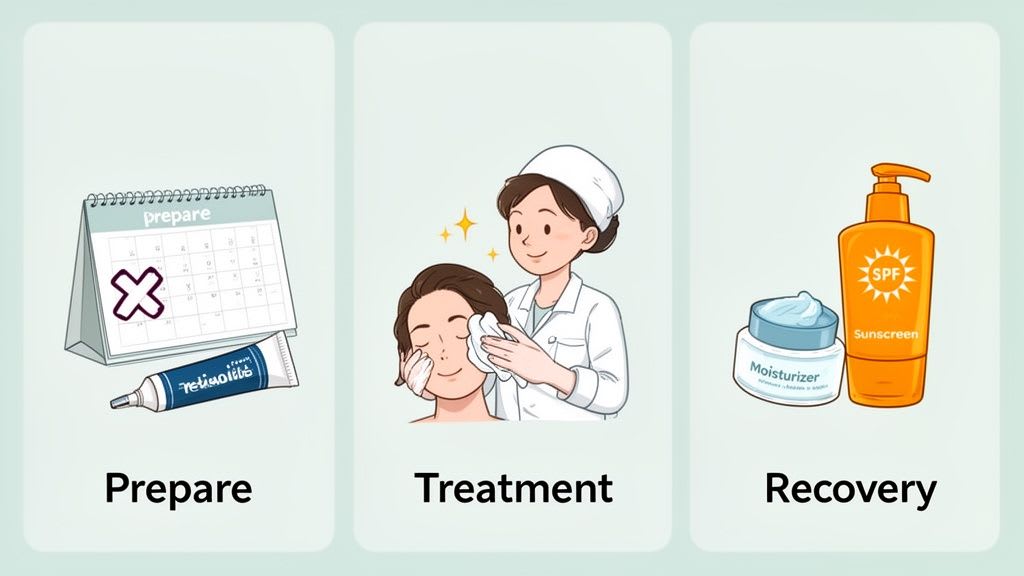
Knowing exactly what to expect before, during, and after a hydroxy acid peel makes the entire experience more comfortable. Based on experience in Swiss clinics, a successful result is a partnership—it depends as much on your preparation and aftercare as it does on the treatment itself.
Your practitioner will provide a detailed plan, but let's walk through the general journey so you feel prepared.
Preparing for Your Peel
This phase is like priming a canvas before painting. Your preparation starts about one to two weeks before your appointment. The goal is simple: to get your skin into a calm, healthy, and resilient state.
Your specific instructions will come from your practitioner, but they almost always include:
Pausing Active Ingredients: You will be asked to stop using products with retinoids (like retinol), other exfoliating acids, and certain potent acne medications. This is crucial to prevent over-sensitising the skin.Avoiding Sun Exposure: This is very important. You need to limit your time in the sun and be diligent with a high-SPF, broad-spectrum sunscreen. Sun-exposed skin is more sensitive and can lead to complications.
Postponing Other Treatments: Hold off on any waxing, threading, or other facial procedures on the area to be treated.
Following this pre-peel advice means your skin arrives ready, which significantly lowers the risk of irritation and helps the peel work more effectively.
The Day of Your Treatment
The appointment for the peel itself is often quick, usually taking less than an hour. When you arrive at your clinic, whether in Geneva or Zürich, you will find the process is highly structured for your safety and comfort.
What does it feel like? Most people describe a warm, tingling, or light stinging sensation. This is normal and indicates the acid is active. The practitioner will monitor you and your skin's response closely the entire time.
Here's what a typical treatment day looks like:
- Cleansing: First, your skin is thoroughly cleansed to remove all traces of makeup, oil, and daily grime.
- Application: Your practitioner then carefully applies the hydroxy acid solution. They work methodically, leaving it on for a precise amount of time based on the peel's strength and your skin's reaction.
- Neutralisation: Once the time is up, a neutralising solution or cool water is applied to stop the acid's activity completely.
- Final Touches: To finish, a soothing, hydrating moisturiser and a high-SPF sunscreen are applied to protect your fresh skin.
Recovery and Aftercare
Now for the crucial part: recovery. This is when your skin does the real work of renewal, and what you do in the days following the peel will directly shape your final results. The most intense period of peeling usually occurs around days three and four.
Your aftercare plan will be built on three simple but vital principles:
Gentle Cleansing: Use only a mild, non-abrasive cleanser with lukewarm water. Do not scrub, and avoid using washcloths for a few days.
Deep Hydration: Apply the moisturiser your practitioner recommends whenever your skin feels tight or dry. This is key to supporting your skin's healing barrier.
Sun Protection: This is non-negotiable. You must apply a broad-spectrum SPF 30 or higher every single day to shield your vulnerable new skin from UV damage, which could otherwise cause hyperpigmentation.
It is very important to let your skin peel naturally. Do not pick, pull, or scrub at any flaking skin. This can cause scarring or discolouration. Be patient, and within about one to two weeks, the peeling will subside, revealing a noticeably smoother and brighter complexion.
Your Questions About Hydroxy Acid Peels, Answered
Here, we will walk through some of the most common questions from patients in Switzerland considering a hydroxy acid peel. This is a starting point to help you feel informed, but it is no substitute for a one-on-one consultation where your specific skin goals can be discussed.
What Does a Hydroxy Acid Peel Feel Like?
Most people describe the feeling as an active tingling, itching, or a noticeable warmth as the solution works on their skin. It is a clear sign that the acid is doing its job.
This sensation is temporary and lasts only for the few minutes the peel is applied. Your practitioner will be with you, monitoring your comfort the entire time. Once the peel is neutralised, any discomfort stops almost instantly.
How Long Does it Take to Recover?
Recovery time depends on the strength and depth of the peel, but for the vast majority of superficial to medium-depth treatments, it is very straightforward. You can return to your normal routine immediately, but your skin will go through a visible renewal process.
Here’s a typical timeline:
Initial Redness: For the first day or two, expect your skin to look slightly flushed, similar to a mild sunburn.
Flaking and Peeling: Around day 3 or 4, your skin will start to feel tight and then begin to flake. This is the most active phase of the peeling process.
Full Recovery: Within 7 to 10 days, most of the visible peeling is finished, revealing fresh, smooth skin.
It is absolutely crucial to let the skin shed naturally. Do not pick or pull at any flaking skin, as this can cause scarring or post-inflammatory hyperpigmentation.
When Will I See the Final Results?
You will notice a brighter, more radiant glow as soon as the initial redness subsides. The most noticeable change comes after the peeling is complete, usually within one to two weeks.
For deeper concerns like fine lines or acne scars, the benefits continue to build. The peel stimulates new collagen, so you will see improvements developing over several weeks. These results become more pronounced with each treatment in a recommended series.
The best results are built over time. While a single peel provides a fantastic refresh, a planned series of treatments is what delivers more profound and lasting change. This thoughtful approach, recommended by your Swiss medical professional, ensures the natural-looking results that are the hallmark of high-quality aesthetic care in Switzerland.
Explore More
This article is for informational purposes only and does not replace professional medical advice.