
A thread lift is a minimally invasive technique designed to lift and tighten sagging skin without requiring surgical intervention. The procedure uses special, dissolvable sutures placed just beneath the skin's surface. These threads provide an immediate physical lift while also stimulating your body’s natural collagen production for longer-term rejuvenation.
How Does a Thread Lift Work?
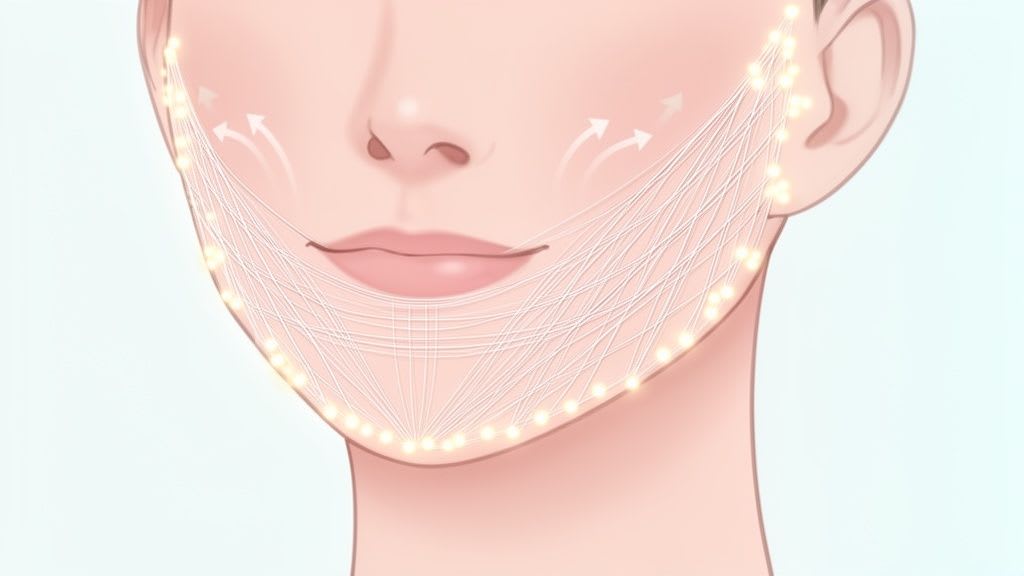
As we age, the supportive structure of our skin can weaken, much like a tent frame losing tension. A thread lift creates a new, internal support system. Your practitioner carefully inserts fine sutures under the skin, creating a mesh-like structure that gently pulls tissues back into a more youthful position. The procedure is performed without a scalpel, which allows for minimal recovery time.
This treatment is effective due to its dual action: it delivers immediate, visible results, plus benefits that continue to develop over time.
The Immediate Lift and The Long-Term Boost
First, you experience a mechanical lift. The threads themselves are often designed with tiny barbs or cones. Once placed in the fatty layer beneath the skin, they act as a scaffold, physically holding the skin in a higher, tighter position. This is what visibly softens jowls or lifts sagging cheeks right after your appointment.
The secondary effect is biostimulation. Your body naturally recognises the threads and initiates a healing response. This process signals your system to start producing fresh collagen and elastin—the proteins responsible for youthful skin firmness and elasticity.
As the threads safely dissolve over the following months, they leave behind a new matrix of your own collagen. This means your skin isn't just being held up; it's actively rebuilding itself from the inside out. The result is skin that appears and feels thicker, smoother, and more resilient, long after the threads have disappeared.
In Switzerland, thread lifts are a popular option for patients seeking a visible anti-ageing solution without the extensive downtime of surgery. The procedure is often called the "MINT lift" (Minimally Invasive Nonsurgical Thread) because it provides instant tightening for the cheeks, jawline, and neck.
What Are the Different Types of Threads?
Not all threads are the same, and a qualified practitioner in Switzerland will select the appropriate type based on your specific needs, skin quality, and aesthetic goals. The three main materials are:
PDO (Polydioxanone): These are the most common threads used and have a long history of safe use as medical sutures. They dissolve completely in about 6-9 months and are excellent for stimulating collagen production and providing a moderate lift. You can learn more about PDO threads and how they are used in our dedicated guide.
PLLA (Poly-L-Lactic Acid): This material is also found in biostimulatory dermal fillers. PLLA threads are powerful collagen stimulators. They take longer to dissolve, around 12-18 months, giving your body more time to build a supportive framework of new tissue for a result that combines both lift and volume.
PCL (Polycaprolactone): These are the longest-lasting threads available, taking up to two years to dissolve. Because they remain in the body longer, they provide an extended period of collagen stimulation, making them a suitable choice for those seeking more durable results.
How Thread Lifts Compare to Other Anti-Ageing Treatments
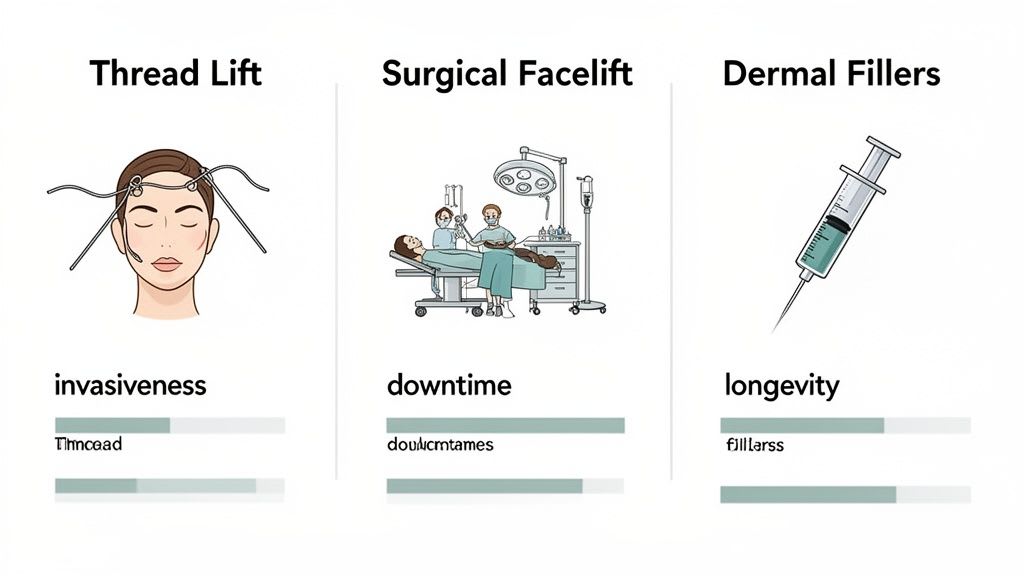
The range of anti-ageing options can be overwhelming. To determine if a thread lift is right for you, it is helpful to understand its place among other treatments. The main difference between procedures lies in their primary function: lifting sagging skin, restoring lost volume, or surgically removing excess tissue.
A thread lift occupies a middle ground. It offers a more significant mechanical lift than can be achieved with injectables alone, yet it is far less invasive than a full surgical facelift. The procedure repositions existing tissue and encourages the body to build new collagen.
Thread Lifts vs Surgical Facelifts
This is a common comparison. The choice between a thread lift and a surgical facelift depends on the degree of skin laxity, patient expectations, and desired recovery and longevity.
A surgical facelift remains the gold standard for addressing significant sagging, especially around the jowls and neck. It is an invasive procedure where a surgeon repositions the deep muscle layers (the SMAS), trims excess skin, and re-drapes the remaining tissue for a powerful, long-lasting result.
A key distinction is that surgery physically removes skin, which a thread lift cannot do. This makes a facelift the most effective option for individuals with more advanced signs of ageing who require a major correction. This, of course, involves general anaesthesia, a higher cost, and considerable downtime.
A lift with thread, on the other hand, is well-suited for someone with mild to moderate sagging. It provides an immediate physical lift but does not remove any skin. The results are typically natural-looking, creating a rested appearance. The recovery usually involves only a few days of social downtime. This article on Facelift Vs Thread Lift offers a detailed breakdown of the differences in result duration.
For those interested in surgical options that are less intensive than a full facelift, you can learn about the mini facelift in our comprehensive guide.
Thread Lifts vs Dermal Fillers and Botulinum Toxin
Injectables like fillers and botulinum toxin are mainstays in aesthetic medicine, but they function differently from a thread lift.
Dermal Fillers: These products focus on restoring lost volume. Using substances like hyaluronic acid, they "re-inflate" areas that have become hollow over time, such as the cheeks or temples. While adding volume can create a subtle lift, fillers do not physically pull up sagging skin.
Botulinum Toxin: This is a muscle relaxant used to smooth dynamic wrinkles caused by facial expressions, such as crow's feet or frown lines. It does not address skin laxity or volume loss.
Experienced Swiss practitioners often combine these treatments. A thread lift might be used to lift the lower face and jawline, while fillers add volume to the cheeks for a balanced and comprehensive rejuvenation.
Treatment Comparison: Thread Lifts vs Other Options
This table provides a straightforward comparison of popular facial rejuvenation treatments.
| Treatment Feature | Lift with Thread | Surgical Facelift | Dermal Fillers |
|---|---|---|---|
| Primary Goal | Lifts and repositions sagging tissue | Removes excess skin and tightens deep tissue | Restores lost volume and fills wrinkles |
| Invasiveness | Minimally invasive (needles/cannulas) | Highly invasive (incisions and surgery) | Minimally invasive (injections) |
| Anaesthesia | Local anaesthesia | General anaesthesia or deep sedation | Topical numbing cream or local anaesthetic |
| Recovery Time | 1-3 days of social downtime | 2-4 weeks of significant recovery | None to 1 day |
| Best for | Mild to moderate skin laxity | Significant skin sagging and jowling | Volume loss, deep folds, and contouring |
| Results Last | Approximately 12-18 months | Up to 10 years or more | 6-24 months, depending on the product |
The most suitable path is highly individual and depends on your unique facial structure, skin condition, and aesthetic goals. The crucial first step is a consultation with a qualified medical expert in Switzerland who can assess your needs and help create a safe and effective treatment plan.
Determining If You Are a Good Candidate for a Thread Lift
A thread lift can produce excellent results, but it is not the right choice for every patient. A positive outcome depends on determining suitability for the procedure.
While only a qualified Swiss practitioner can provide a definitive assessment, understanding the general criteria will help you set realistic expectations.
The best results are often seen in men and women, typically in their late 30s to early 50s. At this age, the initial signs of skin laxity may be noticeable, but the skin likely retains enough elasticity to respond well to the lift.
The Ideal Candidate Profile
A thread lift is a tool for precise, subtle repositioning, not a complete overhaul. The best candidates are those looking to address mild to moderate sagging of the skin, gently reversing the effects of time and gravity.
You are likely an excellent candidate if you have:
Mild to Moderate Skin Laxity: You notice some sagging, particularly around the jawline or cheeks, but it is not yet severe. Your skin still has good elasticity.
Good Overall Skin Quality: Your skin is in relatively good condition—not overly thin, fragile, or heavily sun-damaged. Thicker, healthier skin provides better coverage for the threads and a more natural-looking finish.
Realistic Expectations: You understand this is not a surgical facelift. You are seeking a refreshed, revitalised appearance.
Specific Target Areas: You have distinct concerns that this treatment addresses well, such as early jowls, sagging cheeks, a looser neck, or drooping eyebrows.
Here is a simple self-assessment: stand before a mirror and use your fingers to gently pull your skin upwards into a desired position. If this small lift reflects the result you are hoping for, a thread lift could be a suitable match.
Who Is Not a Suitable Candidate
It is equally important to know when a thread lift is not the appropriate path. A reputable practitioner in Switzerland will be transparent about the procedure’s limitations and will guide you toward a more suitable option if necessary.
This treatment may not be for you if you have:
Significant Skin Sagging: If you have a large amount of loose, excess skin, threads will not have the strength to provide the necessary support for a good, lasting result. In this scenario, a surgical procedure like a facelift is almost always the more effective solution.
Very Thin or Fragile Skin: Extremely thin skin may not adequately conceal the threads, potentially making them visible or palpable.
Certain Medical Conditions: This procedure is generally not recommended for individuals with autoimmune diseases, a history of keloid scarring, active skin infections in the treatment area, or blood-clotting disorders.
Unrealistic Expectations: If you are hoping for the dramatic, long-term results that only surgery can provide, a thread lift will likely not meet your expectations.
Ultimately, the final decision rests on a professional medical opinion. A consultation with a verified expert, such as those found through platforms like BeautyGuide.ch, ensures you receive a personalised assessment and an honest recommendation based on your unique anatomy and aesthetic goals.
Your Thread Lift Procedure Step by Step
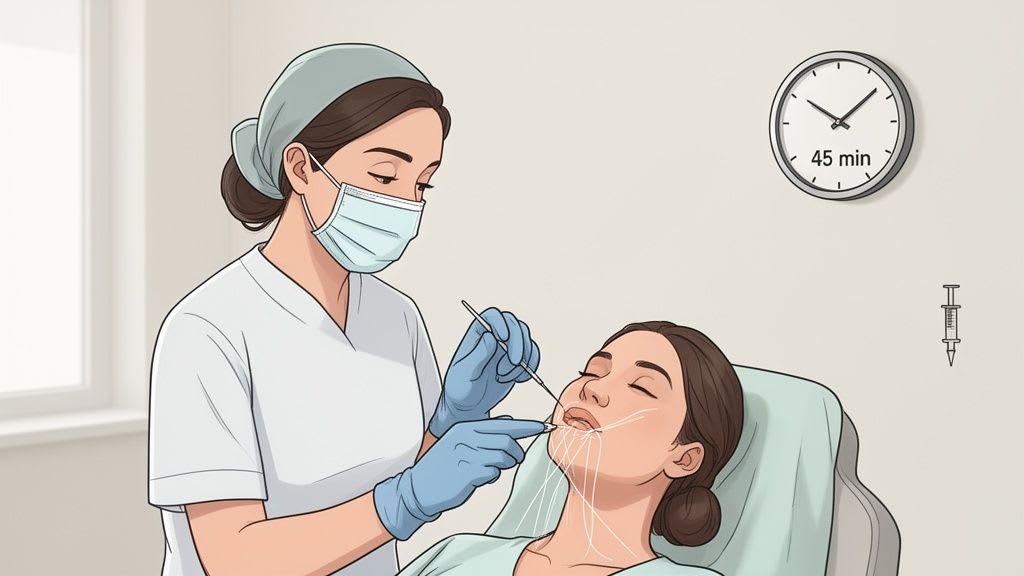
Knowing what to expect on the day of your lift with thread treatment can make the experience more comfortable. It is a precise, well-established procedure, and Swiss clinics prioritise patient comfort and safety.
The procedure is relatively quick, often referred to as a "lunchtime lift," as most appointments are completed in under an hour. This efficiency has made it a popular choice for busy individuals in cities like Geneva and Zurich.
Preparation and Anaesthesia
The appointment will begin with a final discussion of your goals. Once you and your practitioner are aligned, your face will be thoroughly cleansed and disinfected. This is a standard and critical step to create a sterile field and minimise infection risk.
Next, your doctor will use a medical marking pen to draw the entry and exit points for the threads on your skin. These markings serve as a blueprint, guiding the exact path each thread will take to achieve the desired contour and lift.
To ensure the procedure is comfortable, you will receive a local anaesthetic. This involves a few small injections to completely numb the treatment area. You may feel a brief sting, but the skin will become numb quickly. From that point on, you should not feel any pain, though you may feel a sensation of pressure or pulling as the threads are placed.
The Insertion Process
Once the anaesthetic is effective, the main part of the procedure begins. The practitioner uses a fine, specialised tool—either a hollow needle or a blunt-tipped cannula—to guide the threads into place just beneath the skin's surface, in the subdermal fatty layer.
This is not surgery. No scalpels are used, and no incisions are made. The threads are inserted through tiny entry points that are so small they typically heal without leaving a mark.
The practitioner gently advances the cannula along the pre-planned pathways. As it is withdrawn, the thread is left behind. The tiny barbs or cones on the thread immediately anchor onto the surrounding tissue, allowing your practitioner to gently reposition the skin for an instant, visible lift.
This technique requires both medical knowledge and artistic skill. The practitioner’s expertise lies in placing the threads at the correct depth and with the appropriate tension to create a result that is both effective and natural-looking.
In a Swiss clinical setting, this is performed with great precision. For instance, you can see how Swiss experts approach this procedure and its minimal downtime on kiermeir-aesthetics.ch. They use atraumatic needles to place barbed threads, lifting the jawline, cheeks, and smile lines without any incisions. A typical treatment might involve two to four threads per cheek for a tauter look, or just one per side for a subtle brow lift. These threads then dissolve over the following months, stimulating the body's own long-term firming response.
Navigating Your Recovery and Aftercare
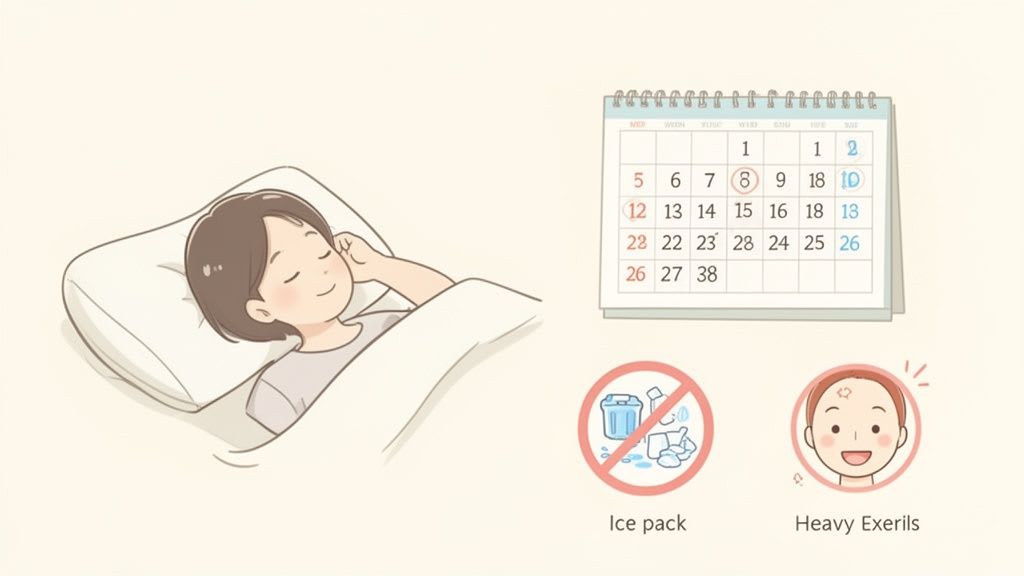
A significant advantage of a lift with thread is its minimal disruption to daily life. Most people return to their usual routines quickly, especially compared to surgery. However, achieving lasting results depends on proper aftercare in the days and weeks following the procedure.
Your practitioner in Switzerland will provide a detailed list of instructions. Understanding the general recovery timeline will help you know what is normal and provide peace of mind as you heal.
Immediately after your treatment, expect some mild swelling, bruising, and a feeling of tightness where the threads were placed. This is a normal part of your body's response and usually begins to fade within a few days.
The First 24 to 48 Hours
These first two days are about allowing the threads to settle without disturbance. Your primary responsibility is to be gentle with yourself and avoid putting pressure on the treated areas.
Sleep on your back with your head elevated. Using two pillows can help reduce swelling and prevent you from accidentally rolling onto your face during the night.
Keep your hands off your face. Be delicate when washing your skin, and avoid any intense scrubbing or exfoliating products for a short period.
Minimise exaggerated facial movements. As much as possible, try to avoid large smiles, laughs, or wide yawns. This allows the threads to anchor themselves firmly.
You will likely feel a slight pulling or tightness, which indicates the threads are performing their function. This sensation typically subsides within the first week. If needed, paracetamol is usually recommended for any discomfort, as anti-inflammatory medications like ibuprofen can sometimes increase bruising.
The First Two Weeks After Treatment
Once the initial swelling subsides, you can gradually return to your normal life, with a few key exceptions. Patience during this phase is crucial for a successful long-term outcome.
Your practitioner will provide a list of activities to avoid while your skin is healing.
No strenuous exercise: For at least one to two weeks, avoid heavy lifting, high-impact cardio, or any activity that causes strain. This prevents sudden movements that could disturb the threads.
Postpone other facial treatments: Wait at least two to three weeks before booking any dental work, facials, or massages. Any procedure involving pressure or significant manipulation of your face should be avoided.
Avoid saunas and steam rooms: The intense heat can increase swelling, so it is best to avoid these for a couple of weeks.
It is vital to distinguish between normal healing and a potential complication. Mild discomfort, some swelling, and bruising are expected. However, if you experience severe pain, significant swelling, signs of infection (such as fever or discharge), or if a thread becomes visible through the skin, you must contact your clinic immediately.
By following this straightforward aftercare advice, you support your body’s healing process, minimise risks, and help ensure your thread lift delivers the refreshed results you desire.
Understanding Costs and Choosing a Clinic in Switzerland
When considering a procedure like a thread lift, it is important to understand the financial investment and, crucially, how to find a safe, highly-skilled practitioner. Switzerland is known for its high medical standards, which are reflected in the quality of care and associated costs.
What Influences the Cost of a Thread Lift?
There is no standard price for a thread lift. It is a customised treatment, so the final cost is tailored to your specific anatomy and goals.
Your doctor will consider several key factors when preparing your quote:
The number of threads needed: This is the most significant factor. A subtle brow lift will require fewer threads than a more comprehensive treatment to redefine the jawline and lift the mid-face.
The type of threads used: More advanced or longer-lasting threads, such as PCL or specialised PLLA threads, may have a higher cost than standard PDO threads.
The areas being treated: Treating multiple zones—like the neck, jowls, and cheeks—will represent a larger investment than focusing on a single area.
The clinic’s location and the doctor’s expertise: Prices may vary between major cities like Geneva and Zurich and smaller towns. A doctor’s reputation and specialised experience also influence their pricing.
In Switzerland, pricing reflects the country's high standards. For example, some clinics may offer targeted thread lifts starting around CHF 1,200 for a smaller area. Other clinics might price per zone, with starting points near CHF 1,000. For a more comprehensive lift addressing the brows, mid-face, and neck, the cost could be closer to CHF 4,000.
How to Choose a Qualified Clinic and Practitioner
In Switzerland, patient safety is paramount. When it comes to a procedure like this, your choice of provider should never be based on finding the lowest price. The quality of your result and your safety depend entirely on the skill and experience of the person performing the treatment.
Your primary priority is to find a medical doctor with proven expertise in aesthetic medicine and a deep understanding of facial anatomy. A low price is no substitute for professional competence.
As you research, focus on clinics that are transparent about their doctors' qualifications. Here is a checklist of what to look for:
FMH Specialisation: Ensure the doctor holds a relevant FMH (Foederatio Medicorum Helveticorum) title. Look for specialists in dermatology or plastic, reconstructive, and aesthetic surgery, as this signifies the highest standard of specialised training in Switzerland.
MedReg Registration: A quick check of the Swiss Medical Professions Register (MedReg) will confirm the doctor is officially licensed to practise medicine in Switzerland. This is a non-negotiable requirement.
Specific Experience: Do not hesitate to ask how many thread lift procedures the doctor has performed. You want someone who performs this treatment regularly. Experience is key to achieving natural results and minimising risks.
The Consultation: A quality clinic will insist on a detailed consultation. This is your opportunity to speak with the doctor, ask all your questions, and ensure you feel comfortable with the proposed treatment plan.
Knowing the different types of facilities, such as a specialised dermatology clinic, can help you narrow your search. Platforms like BeautyGuide.ch curate lists of clinics with verified doctors, allowing you to focus on finding the right fit.
For a complete checklist on what to look for in a provider, check out our guide on how to select the right beauty clinic. Taking the time to make an informed choice is the single most important step toward a safe procedure and a result you will be happy with.
Answering Your Questions About a Lift with Thread
Let's address some of the most common questions patients in Switzerland have about thread lifts. Clear information is the best way to feel confident about your decision.
Is a Lift with Thread Painful?
The procedure itself should not be painful. Your doctor will use a local anaesthetic to ensure the treatment area is completely numb before they begin.
You may feel some unusual sensations, such as pressure or a slight pulling as the threads are guided into place, but there should not be any sharp pain.
Afterwards, it is normal to experience mild soreness for a few days, similar to a muscle ache. This is a part of the healing process and can be managed with simple pain relief like paracetamol if needed.
How Long Do the Results of a Thread Lift Last?
You will notice an immediate lift right after your appointment. The full effect develops over the next few months as your body produces new collagen in response to the threads.
Generally, you can expect the results to last between 12 to 18 months. The duration for you personally will depend on several factors:
Your age and skin condition
Your lifestyle habits (such as sun exposure and smoking)
The type and number of threads used by your practitioner
Many doctors in Switzerland suggest a smaller maintenance treatment at a later date to extend the lifting and firming effects.
A thread lift offers a significant but temporary improvement. It is an excellent option for people who want a noticeable result without the permanence, cost, or downtime of a full surgical facelift.
What Are the Potential Risks and Side Effects?
When performed by a skilled and qualified medical professional, thread lifts have a high safety profile. The most common side effects are minor and resolve on their own.
These can include:
Bruising or swelling at the insertion points
A feeling of tenderness or tightness in the area
Slight skin puckering or dimpling, which usually smooths out as the tissues settle
Serious complications, such as infection or thread migration, are rare. The most effective way to minimise risks is to choose an experienced, FMH-certified doctor who performs these procedures regularly.
Can Thread Lifts Be Combined with Other Treatments?
Yes. In fact, combining treatments is often how the most natural and comprehensive results are achieved. A lift with thread works well as part of a broader facial rejuvenation plan, allowing your doctor to address different signs of ageing simultaneously.
For instance, threads are frequently paired with:
Dermal fillers to restore lost volume to the cheeks or temples.
* Botulinum toxin to soften dynamic wrinkles like crow's feet or forehead lines.
Your doctor will develop the best approach for you. Sometimes treatments can be done on the same day, while other times it is better to space them out to allow each one to settle for the most balanced and harmonious outcome.
This article is for informational purposes only and does not replace professional medical advice.