
Microneedling with radiofrequency is a serious clinical treatment that goes far deeper than a standard facial. This isn't a relaxing spa visit; it is a "controlled trauma" procedure designed to remodel deep tissue. By combining tiny needles with heat energy, it works from the inside out to rebuild and remodel your skin’s very structure.
Mechanism of Action: The Dual-Action Advantage
RF Microneedling combines two modalities: physical needling (to trigger a healing response) and Radiofrequency heat (to 'shrink-wrap' existing collagen and melt fat at deeper depths). It is significantly more intense than a standard Dermapen.
This dual-action approach is what makes it so powerful for tackling tougher concerns like skin laxity, deep-set wrinkles, and even stubborn acne scars—things that traditional microneedling often can't fully resolve.
How It Works: Needles and Heat in Harmony
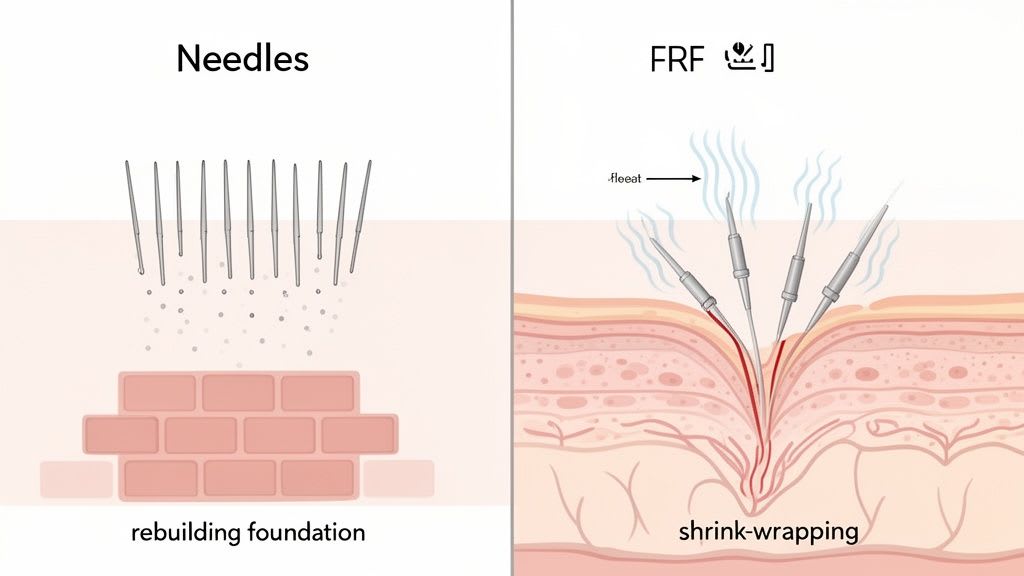
So, what’s actually happening under your skin? Think of it like a two-step renovation project. First, the microneedles create tiny, controlled injuries deep in the dermis. This signals your body to kickstart its natural healing process, producing fresh, new collagen to rebuild the skin’s foundation.
At the exact same moment, the tips of these needles deliver a pulse of radiofrequency energy, gently heating the deeper tissue. This heat causes the existing collagen fibres to immediately contract and tighten—like shrink-wrapping the skin from within.
It’s this one-two punch that delivers such noticeable results for tightening and smoothing. While the needling rebuilds, the heat provides that instant firming effect. You can learn more about the science of heat-based treatments in our guide to RF skin tightening.
From Zurich to Geneva, this procedure has become a go-to for patients seeking real, structural skin improvements without going under the knife. It's no surprise that Switzerland is a major part of Europe's RF microneedling market, which was valued at USD 603.77 million in 2024 and continues to see significant growth.
The Needle Debate: Insulated vs. Non-Insulated Needles
As a technician, one of the most critical decisions I make is choosing the right tool for the job. Not all RF microneedling devices are the same, and the type of needle used—insulated or non-insulated—can make a world of difference for your results and, crucially, your safety. This isn't a minor detail; it's a technical choice based on your skin type, concerns, and ethnic background.
Insulated Needles: Precision Safety for All Skin Tones
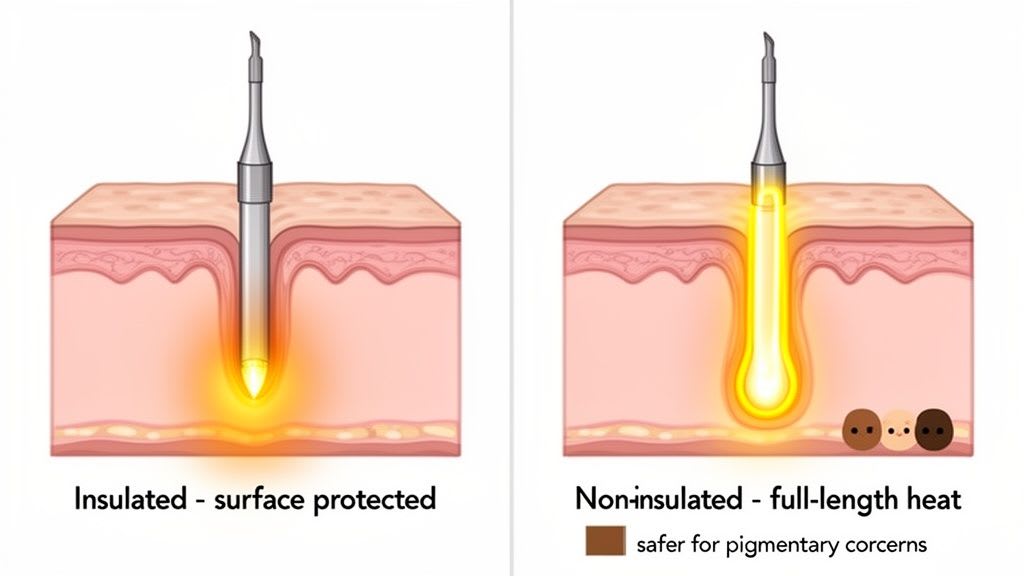
Think of an insulated needle as a smart delivery system. It’s coated along its entire shaft, except for the very tip. This design ensures that the radiofrequency heat is released only at the deepest point of penetration, bypassing the surface layers of your skin.
This precision is vital. By concentrating the heat deep down, these needles are safer for darker skin tones or anyone prone to melasma or hyperpigmentation. The risk of surface burns or post-inflammatory hyperpigmentation (PIH) is dramatically reduced.
Non-Insulated Needles: Aggressive Tightening, Higher Risk
A non-insulated needle is a different beast entirely. It emits radiofrequency energy along its entire length as it enters the skin. This creates a much broader column of heat, leading to more aggressive tissue coagulation from the surface right down to the tip.
For the right candidate (typically lighter skin tones without pigmentation issues), this can produce powerful skin tightening. However, it's a trade-off. The risk of surface damage and pigmentation is significantly higher. It’s a more aggressive approach that demands careful patient selection and a highly experienced provider.
For context on how this differs from the original technique, you can read our guide on traditional microneedling.
What Does It Actually Feel Like? The Pain Reality Check
Let's be blunt: this is not a gentle, spa-like facial. Having performed thousands of these treatments, I can tell you that patient honesty is key. Unlike standard microneedling, which feels like sandpaper being moved across your skin, RF microneedling feels like a 'hot stapler' or a series of sharp 'elastic band snaps' deep in the skin.
The combination of the physical needles and the thermal energy makes it quite uncomfortable if you’re not properly prepared. This is why patient comfort and safety are paramount in reputable Swiss clinics.
Do not accept this treatment without numbing cream (applied for 45+ mins). This is not an optional add-on; it is a mandatory safety step to make the procedure tolerable and allow the technician to perform the treatment at the correct, effective depths.
With proper numbing, the sensation is significantly reduced and entirely manageable. This allows your practitioner to focus on delivering the energy precisely where it's needed to get you the best results. It’s about creating controlled trauma to stimulate healing, not putting you through an ordeal. To see the outcomes, take a look at our gallery of microneedling before and after photos from clinics across Switzerland.
RF Microneedling vs. Standard Pen: Which is Right for You?
Choosing between RF microneedling and a classic microneedling pen comes down to one question: are you trying to improve the surface, or remodel the foundation? Both are excellent tools, but they are built for different jobs. Standard microneedling is a brilliant surface perfector for texture, pores, and that healthy glow.
Microneedling with radiofrequency, however, is the powerhouse for structural problems. By adding controlled heat deep within the skin, it tackles skin laxity, deeper wrinkles, and stubborn, indented acne scars. For those of us in Switzerland searching on platforms like BeautyGuide, this technology offers a serious solution for concerns like acne scarring, which is incredibly common. In fact, tackling scars is a major reason people seek out this treatment, accounting for 39.3% of its applications worldwide. If you're interested in the science behind it, you can read the full research on fractional RF applications to see just how effective it is.
Comparison Table: RF vs. Standard Microneedling
| Feature | RF Microneedling | Standard Pen Microneedling |
|---|---|---|
| Best For | Sagging skin, deep acne scars | Surface texture, glow |
| Downtime | 3-5 days (Redness/Swelling) | 24-48 hours |
| Depth | Up to 4mm-7mm | Max 2.5mm |
| Cost | $$$ (High) | $ (Low) |
The Risk of Unwanted Facial Fat Loss
While radiofrequency microneedling works wonders for skin tightening, that power needs a skilled hand. One of the most serious risks with an inexperienced provider is the accidental and permanent loss of facial fat. Every trustworthy Swiss clinic should be transparent about this.
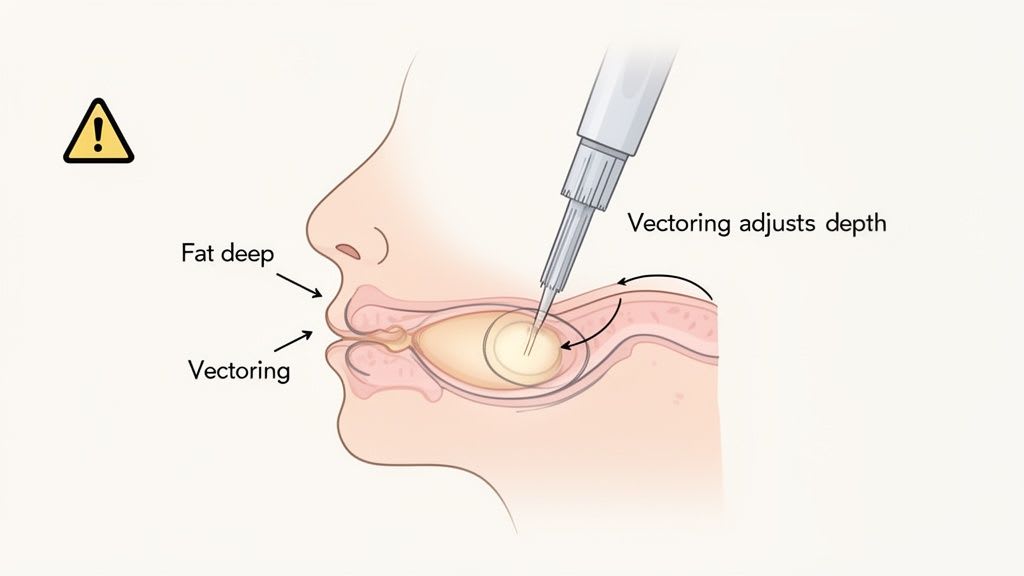
The heat generated by the device is potent enough to destroy the delicate fat pads that give our faces youthful volume, particularly under the eyes and across the cheeks. If the needles go too deep or the energy is too high for a specific area, the result can be a hollowed, gaunt look that can make you appear older.
Critical Warning: The Risk of Facial Fat Loss
If the needles are set too deep (3mm+) on the face, high heat can permanently melt facial fat pads, leading to a gaunt/aged look. Ensure your provider understands 'Vectoring' and safe depths for cheeks vs. jowls.
An experienced practitioner knows facial anatomy inside and out. They use a precise technique called 'vectoring', constantly adjusting needle depth and energy for each part of the face. The settings for sculpting a jawline are completely different from those used on the fragile skin around the cheeks. This expertise is your single best protection against a bad outcome.
What to Expect: Your Recovery and Results Timeline
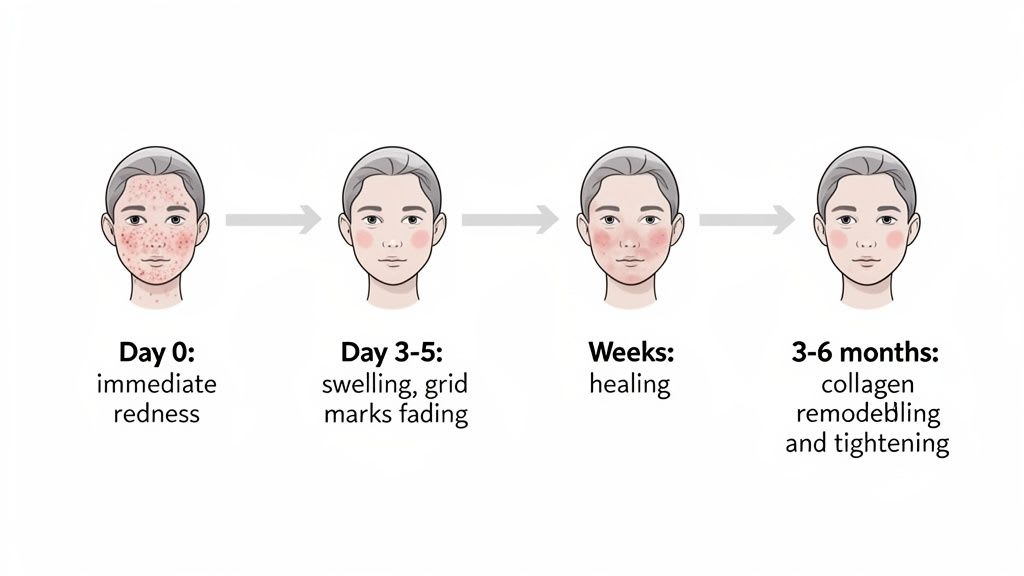
Knowing what to expect after your treatment is key to a smooth recovery. Right after the session, your skin will feel warm, tight, and look quite red—like a moderate sunburn. This is completely normal; it's the desired inflammatory response kicking in.
Over the next 3 to 5 days, the redness will calm down, though some minor swelling might persist. Following your clinic’s aftercare advice is non-negotiable. This means gentle cleansing, lots of hydration, and zero sun exposure. Your skin is vulnerable, and protecting it is your top priority.
While you might notice an initial plumping effect from the heat-induced contraction, the real magic happens deep within the skin over time. The microneedling with radiofrequency has triggered a collagen rebuilding process that unfolds gradually. You will see the most significant and lasting results emerge over the next 3 to 6 months.
This timeline is backed by solid clinical evidence. Research confirms that side effects are almost always minor and temporary, especially in a controlled medical environment that meets Switzerland's high standards. You can read more about the findings on RF microneedling safety to put your mind at ease.
Frequently Asked Questions About RF Microneedling
Let's tackle some of the most common questions Swiss patients have about microneedling with radiofrequency. Getting clear, straightforward answers is the best way to feel confident as you explore your options.
How many sessions do I need?
For optimal, lasting results, a series of treatments is required. Most protocols recommend a course of usually 3 sessions spaced 4-6 weeks apart. This schedule is designed to align with your skin's natural collagen production cycle, allowing each treatment to build upon the last. A qualified Swiss provider will create a personalized plan based on your specific skin concerns and goals.
Does it work for acne scars?
Yes, it is the Gold Standard for deep 'Icepick' and 'Boxcar' scars. The dual-action mechanism is uniquely effective for these scar types. The needles physically break up the fibrous scar tissue that pulls the skin down, while the radiofrequency energy stimulates a robust collagen remodelling response from below, helping to lift and smooth the indented area.
What are grid marks?
Grid marks are temporary stamp marks from the device tip; usually fade in 2-4 weeks but can be permanent if settings are too high. After treatment, you may see a faint, grid-like pattern of tiny dots on your skin. This is a normal part of the initial healing process. However, if the energy settings are too aggressive for your skin type, there is a risk of these marks becoming permanent. This underscores the importance of choosing a medically qualified, experienced professional from a trusted platform like BeautyGuide.
Explore More
This article is for informational purposes only and does not replace professional medical advice.