
The first step in any skin journey is figuring out what you want to improve. Whether you're dealing with a dull complexion, stubborn pigmentation, fine lines, or a loss of firmness, there's a treatment path that’s right for you. This overview is designed to simplify complex technology and help you make sense of your choices.
How to choose your treatment path:
1. Surface Texture (Dullness/Pores): Chemical Peels or Microdermabrasion.
2. Pigment/Redness (Color): IPL or Laser (BBL/Moxie).
3. Wrinkles/Scarring (Structure): Microneedling or CO2 Laser.
4. Volume Loss (Sagging): Fillers or Ultrasound (HIFU/Ultherapy).
Diving into the world of aesthetic medicine can feel overwhelming, but think of this guide as your personal roadmap to the treatments available in Swiss clinics. We’ll break down the main categories of skin rejuvenation, connecting your goals with the procedures that deliver results. Consider this your pre-consultation, giving you the confidence to have a productive conversation with an FMH-certified dermatologist, whether you're in Zürich, Geneva, or anywhere in between.
For more context on the importance of professional medical guidance, you might find our guide on medical vs. non-medical aesthetic treatments helpful.
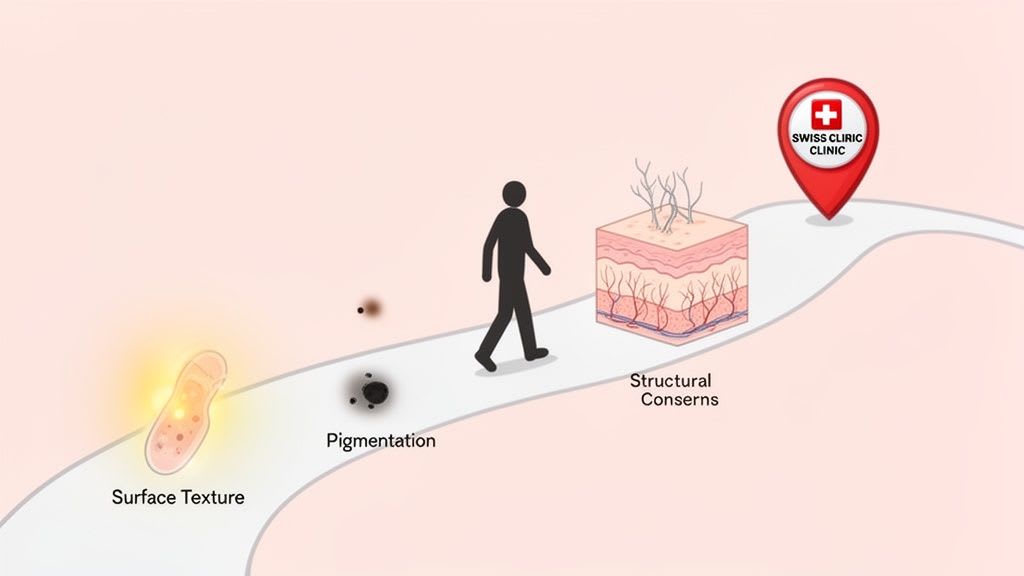
Category 1: "The Glow Getters" for Surface Renewal
Think of this category as the ultimate spring clean for your skin's surface. These treatments focus on the epidermis—your skin's outermost layer—to tackle concerns like dullness, clogged pores, and rough texture. The goal is to polish the surface, revealing the brighter, more radiant skin underneath.
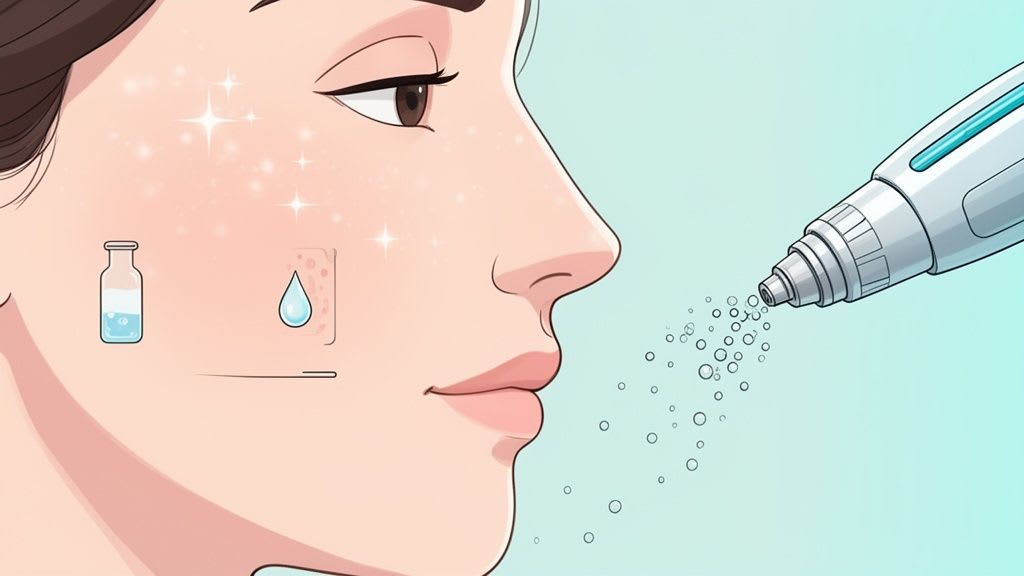
Common Surface Treatments
Chemical Peels: These use carefully selected acids for controlled exfoliation, improving overall brightness and clarity. If you're curious about how they work, you can explore our guide on what to expect from chemical peels.
Hydrafacial/DiamondGlow: This is a multi-step process combining physical exfoliation with an infusion of nourishing serums, giving your skin an instant, visible boost perfect for an immediate event.
Best For: These treatments are an excellent entry point for beginners or for regular maintenance. They deliver immediate results for surface-level concerns with little to no downtime.
Category 2: "The Collagen Builders" for Texture and Firmness
While the "Glow Getters" polish your skin's surface, this next group works on a deeper level. We call them the "Collagen Builders" because they get right down into the dermis to rebuild your skin’s fundamental support structure.
The concept is quite brilliant: these treatments create tiny, controlled micro-injuries that signal your body to kickstart its natural healing process. This response unleashes a wave of fresh, healthy collagen—the very protein that keeps skin firm, smooth, and resilient.
If you're dealing with more structural issues like fine lines, acne scars, or the first hints of sagging, this is where you should be looking. They’re fantastic for building long-term skin health and are a cornerstone of preventive aesthetic trends in Switzerland.
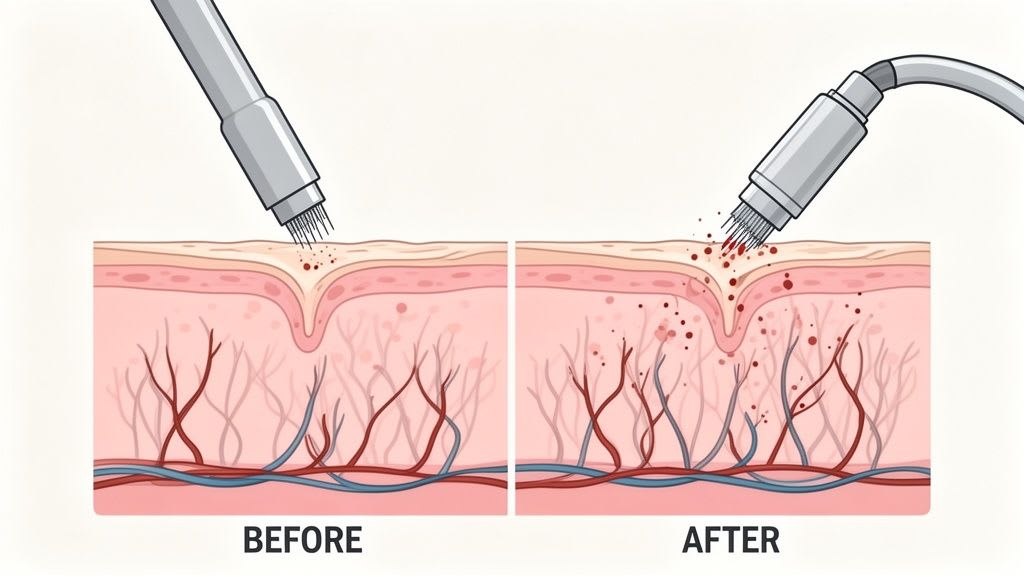
Key Collagen-Inducing Treatments
Microneedling: Using a device with ultra-fine needles, this procedure creates minuscule punctures in the skin. It’s a highly effective way to mechanically stimulate collagen for better texture.
Radiofrequency (RF): Instead of needles, RF devices deliver gentle, controlled heat deep into the skin. This thermal energy makes existing collagen fibres contract for an immediate tightening effect and triggers new collagen production over the following months.
Best For: These treatments are ideal for improving acne scars and fine lines, and for long-term prevention. Curious to learn more? Our guide explains how collagen therapy can benefit your skin in greater detail.
Category 3: "The Heavy Lifters" for Deep Resurfacing
When superficial treatments won’t cut it for deeper wrinkles, significant sun damage, or severe textural issues, it’s time to bring in the "big guns." These are powerful tools for comprehensive skin renewal, demanding the expertise and precision that are hallmarks of top Swiss clinics.
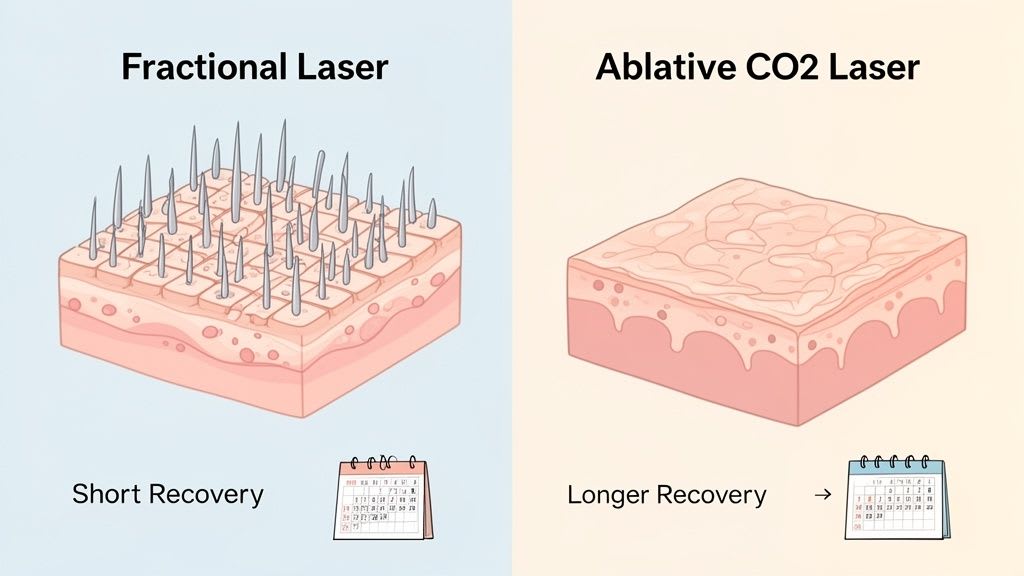
Understanding Laser Resurfacing Options
Fractional Laser (e.g., Fraxel, Halo): These hybrid lasers create thousands of microscopic treatment zones in the skin, leaving the surrounding tissue untouched. This fractional approach triggers a powerful collagen-building response, tackling sun damage and texture with a more manageable recovery.
CO2 Laser: This is the gold standard for full skin resurfacing. A CO2 laser works by vaporising the outer layer of skin in the targeted area, forcing your body to generate a completely new, smoother surface. It delivers the most dramatic improvements for deep wrinkles and scars.
Warning: The biggest trade-off is downtime. A fractional laser may require a few days of social downtime (1-5 days), while a fully ablative CO2 laser is a serious commitment, often requiring up to two weeks of dedicated at-home recovery. Laser photorejuvenation is a game-changer for many patients, with data on non-invasive aesthetic treatments here.
Why Doctors Combine Treatments: The "Stacking" Trend
Walk into any top-tier dermatology clinic in Switzerland, and you'll likely see a more integrated approach to skincare. Instead of relying on one technique, experienced doctors often "stack" treatments together for more comprehensive results.
This isn't about doing more for the sake of it; it's about getting smarter, multi-layered results by tackling different issues at once. For instance, a specialist might use BBL (for color correction of redness and sunspots) and then immediately follow up with a light fractional laser like Moxie (for texture) in the same session. One handles colour, the other refines the surface.
This approach can yield faster, more comprehensive results but requires expert assessment to be performed safely and effectively. This is why choosing an experienced, FMH-listed specialist in Switzerland is so crucial. They have the skill to create a personalised plan that addresses your skin's unique needs from all angles.
Frequently Asked Questions (FAQ)
Exploring aesthetic medicine naturally brings up practical questions. Here are straightforward answers to some of the most common queries from patients in Switzerland.
Which treatment has zero downtime?
For a genuine "lunchtime" treatment with no recovery time, options like a Hydrafacial or a very mild Lactic Acid peel are ideal. They provide an immediate boost of radiance and hydration without redness or peeling, allowing you to return to your day immediately, whether you're in Bern or Lugano.
Can I do laser in the summer?
Generally, no. Most qualified dermatologists in Switzerland will strongly advise against laser resurfacing during the summer. Sun exposure on freshly treated skin significantly increases the risk of complications like hyperpigmentation (dark spots) and even burns. If a treatment is unavoidable, it requires strict sun avoidance and diligent use of high-SPF sunscreen. It is always safest to schedule these procedures for the autumn and winter months.
What is best for dark skin?
For darker skin tones (Fitzpatrick types IV-VI), safety is paramount to avoid unwanted pigmentation changes. The best approach is to use technologies that are "colour-blind" and do not target melanin.
Microneedling and Radiofrequency (RF) are excellent, safe choices as they stimulate collagen deep beneath the skin's surface.
If a laser is used, it must be a specific wavelength. The Nd:YAG laser (1064nm) is designed to be used safely and effectively on darker skin.
It is crucial to find a physician with proven experience in treating a wide range of skin tones to ensure your treatment is both effective and safe.
This article is for informational purposes only and does not replace professional medical advice.