A Guide to Swiss Plastic Surgery: Standards, Procedures, and Patient Care 2026
When considering Swiss craftsmanship, precision watches or fine chocolate often come to mind. That same commitment to quality, safety, and precision is the bedrock of plastic surgery in Switzerland. This reputation is earned through demanding medical training, strict government regulation, and a cultural focus on delivering natural, elegant results.
Why Switzerland Is a Leader in Plastic Surgery
It is no accident that Switzerland is considered a world leader in aesthetic medicine. The country has cultivated a unique environment where patient well-being and outstanding results are the top priorities. The Swiss approach is built on a profound respect for medical science, a deep-seated culture of discretion, and a philosophy that places the patient at the centre of all care.
From the initial consultation to the final follow-up appointment, the entire patient experience is designed to be safe, transparent, and reassuring. This guide will help you understand this process with confidence.
The Foundations of Swiss Aesthetic Excellence
What makes the Swiss standard so high? It comes down to a few core principles that work in unison to ensure the best possible care. Understanding these is the first step toward making a smart, informed choice.
Unyielding Medical Standards: The Swiss healthcare system is overseen by powerful regulatory bodies that enforce incredibly strict rules for safety, hygiene, and a surgeon’s qualifications. There is no room for cutting corners.
A Focus on Natural-Looking Results: In Switzerland, the goal is enhancement, not complete alteration. Surgeons are known for their skill in delivering subtle, harmonious results that complement a patient’s natural features, steering clear of an "overdone" appearance.
A Drive for Innovation: Swiss clinics consistently invest in the latest technology and refine their surgical techniques. This means patients have access to safe, effective, and often less invasive procedures.
These are the pillars that uphold Switzerland's reputation for excellence. The table below breaks them down.
Core Pillars of Swiss Plastic Surgery
| Pillar | What It Means for Patients |
|---|---|
| Rigorous Regulation & Credentials | Your surgeon is guaranteed to have completed extensive, specialised training, and the clinic meets the highest safety and hygiene standards. |
| Natural Aesthetic Philosophy | Your results are designed to look like a refreshed, enhanced version of you—not like you’ve had work done. |
| Advanced Technology & Techniques | You benefit from the latest medical advancements, often leading to less invasive procedures, reduced scarring, and faster recovery times. |
| Uncompromising Patient Safety | From the initial consultation to aftercare, every step is meticulously planned to minimise risks and ensure your well-being. |
| Culture of Discretion | Your privacy is deeply respected, with clinics providing a confidential and professional environment. |
These elements combine to create a uniquely safe and reliable environment for anyone considering aesthetic procedures.
This guide serves as a starting point for connecting with vetted, highly qualified specialists. On BeautyGuide.ch, we help you explore clinics and surgeons who meet Switzerland's demanding medical criteria, so you can begin your journey with complete peace of mind.
Throughout this article, we will delve deeper into every facet of Swiss plastic surgery. We will break down which qualifications to look for, cover the most common procedures, and provide a realistic picture of what to expect from the first meeting to your full recovery. Our aim is to provide you with the knowledge you need to choose the right clinic and surgeon—one who understands your goals and puts your safety first.
What Makes Swiss Medical Standards World-Class?
The esteemed reputation of Swiss plastic surgery is not a coincidence. It is built on a foundation of rigorous, patient-first regulations designed to ensure every practitioner is exceptionally qualified and every procedure is as safe as possible. Understanding this system is the best way to start your journey with confidence.
This entire ecosystem is overseen by a few key organisations. They work in concert to regulate everything from the tools used in surgery to the qualifications of the person holding the scalpel.
The Guardians of Swiss Healthcare
Two major bodies form the backbone of Switzerland's medical oversight. Each has a clear, distinct role in patient protection.
Swissmedic (Swiss Agency for Therapeutic Products): Think of Swissmedic as the meticulous gatekeeper for every medical product used in the country. They test, approve, and monitor everything from breast implants and dermal fillers to complex laser systems. If a product has Swissmedic approval, it has passed some of the world's toughest safety and quality checks.
FOPH (Federal Office of Public Health): The FOPH is the architect of the system. It sets the overarching health policies and legal frameworks for all of Swiss healthcare. This includes essential laws governing how clinics operate and, crucially, the qualifications a professional needs to practise medicine.
Together, these institutions create a secure, highly regulated environment, giving patients peace of mind when they walk into any Swiss clinic for treatment.
The FMH Specialist Title: Your Assurance of Expertise
In Switzerland, there is a significant difference between a doctor who performs cosmetic procedures and a true specialist. The most important credential to look for is the FMH Specialist title.
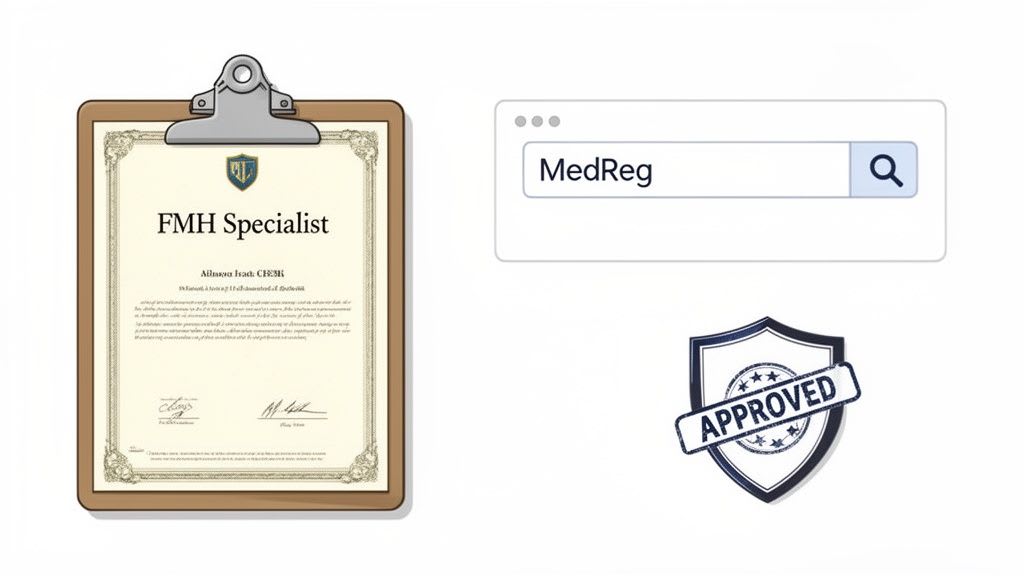
The FMH (Foederatio Medicorum Helveticorum) is the Swiss Medical Association. When a doctor holds the title "Specialist in Plastic, Reconstructive and Aesthetic Surgery (FMH)," it is not just a label—it is a legally protected guarantee of extensive, dedicated training. It means the surgeon has:
Completed a minimum of six years of intensive, supervised surgical training after finishing medical school.
Passed a comprehensive national board exam that tests both practical skills and deep theoretical knowledge.
Committed to ongoing professional development to stay current with the latest, safest techniques.
Choosing a surgeon with an FMH specialist title is the single most critical decision for your safety and results. It separates genuine, board-certified experts from other doctors who might offer aesthetic services without the same specialised training. To understand this better, you can learn more about how Swiss medical standards protect aesthetic patients in our detailed article.
How to Verify Your Surgeon’s Credentials with MedReg
The Swiss medical system values transparency. To empower patients, the government maintains a public database called MedReg. This online directory, run by the FOPH, allows anyone to easily and quickly verify the credentials of any medical professional in Switzerland.
It is a straightforward tool that provides undeniable proof of a surgeon’s qualifications and official standing.
Using MedReg is simple:
- Go to the official MedReg website.
- Type the surgeon's full name into the search field.
- Check their profile to confirm they hold the "Specialist in Plastic, Reconstructive and Aesthetic Surgery (FMH)" title.
This simple check allows you to move forward with complete confidence, knowing that your chosen surgeon meets Switzerland's highest standards. When you insist on a practitioner with verified FMH credentials, you are investing in proven expertise and your own safety.
What Are the Most Popular Procedures in Swiss Clinics?
If there is one defining characteristic of aesthetic medicine in Switzerland, it is a deep appreciation for subtlety. The goal is not to create a dramatic, obvious change but to enhance a person’s natural features in a way that feels harmonious and authentic. This philosophy is the common thread running through every treatment, from major surgical procedures to the most delicate injectable work.
The demand for these refined cosmetic treatments remains strong. For instance, one leading Geneva clinic reported that procedures for men increased by 18% in 2023, with a particular focus on gynecomastia correction and hair restoration. While trends evolve, breast augmentation remains the most frequently requested surgery in Switzerland. Here, patients almost always opt for modern, natural-profile implants that align perfectly with the national preference for discretion. You can get more insights on these Swiss aesthetic trends from Clinique de la Croix d'Or.
Foundational Surgical Procedures
Some surgical procedures are perennial favourites because they deliver profound, lasting results. Swiss surgeons approach these cornerstone treatments with incredibly detailed planning and advanced techniques designed to minimise scarring and speed up recovery.
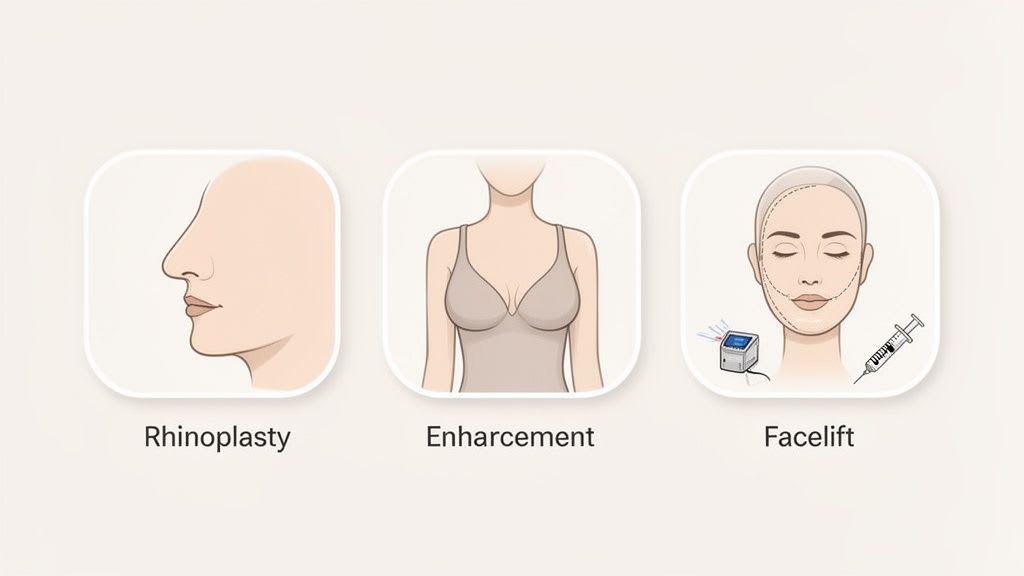
Breast Augmentation: The focus here is usually on restoring lost volume after pregnancy or weight loss, or improving symmetry. The surgeon’s art lies in helping you select an implant size, shape, and placement that looks natural for your body.
Rhinoplasty (Nose Reshaping): This is a procedure of millimetres. The Swiss approach is all about refining the nose to bring the entire face into better harmony, all while ensuring—or even improving—proper breathing function.
Facelift (Rhytidectomy): Modern facelifts in Switzerland involve sophisticated techniques, like the deep plane facelift, which lift and reposition the underlying facial tissues. The result is genuinely refreshed and authentic, not "pulled."
In Switzerland, the most successful plastic surgery is the kind no one notices. The aim is for a result so natural that friends and family simply comment on how fantastic and well-rested you look.
Advanced Non-Surgical Treatments
The world of non-surgical aesthetics is expanding at a dizzying pace, offering excellent results with little to no downtime. Swiss clinics are at the forefront, embracing high-quality products and state-of-the-art technology to achieve sophisticated outcomes.
It is also common to combine these treatments to address multiple signs of ageing at once or to finely sculpt facial features with pinpoint accuracy.
Injectables and Skin Rejuvenation
Injectables require a profound knowledge of facial anatomy and a true artist's eye. In Switzerland, you can be confident they are only administered by qualified medical professionals who prioritise your safety and results.
Neuromodulators (Botulinum Toxin): Used to soften "dynamic" wrinkles like crow's feet and frown lines by gently relaxing the underlying muscles. The key to the Swiss technique is preserving natural facial expressions.
Dermal Fillers (Hyaluronic Acid): These are excellent for restoring youthful volume to areas like the cheeks and temples, sharpening a jawline, or adding subtle shape to the lips. The goal is always restoration, never over-inflation.
Laser Skin Rejuvenation: From pigmentation and fine lines to uneven skin texture, advanced laser and light-based devices can achieve remarkable improvements. Every treatment is tailored to your specific skin type and aesthetic goals.
Of course, the best candidate for any procedure is someone in good health with a clear and realistic understanding of what is possible. An in-depth consultation with an FMH-certified specialist is a non-negotiable first step. To get a sense of the possibilities, you can explore our full guide on aesthetic treatments in Switzerland.
Body Contouring Technologies
Beyond surgery like liposuction, Swiss clinics offer a suite of non-invasive and minimally invasive technologies for shaping the body. These treatments are ideal for people who are already near their ideal weight but have stubborn pockets of fat that are resistant to diet and exercise.
Popular methods include cryolipolysis (fat freezing), radiofrequency, and ultrasound technologies, all designed to target and reduce fat cells without a single incision. While the results are more subtle than liposuction, they are a fantastic alternative with virtually no downtime. Each technology works differently, so a skilled practitioner will guide you to the best choice for the area you wish to treat.
Your Journey: From First Meeting to Final Result
Taking the step towards plastic surgery in Switzerland means entering a process built around you. It is a clear, well-defined path designed for your safety and confidence, from the very first conversation to your final follow-up appointment. Knowing what to expect makes the entire experience less daunting.
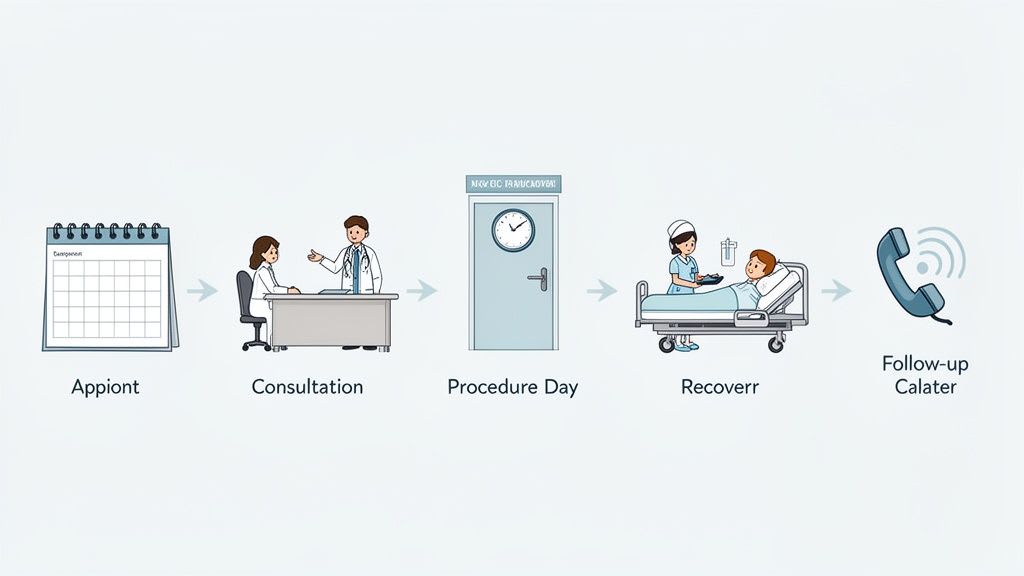
Understanding this flow helps you prepare, manage your expectations, and feel in control. This is the thorough, patient-first approach for which Swiss clinics are known.
The All-Important First Consultation
Think of the initial consultation as the cornerstone of your entire journey. It’s not just a chat; it is a detailed medical assessment where you and your surgeon build a connection, align on your goals, and honestly evaluate if the procedure is right for you.
A reputable Swiss surgeon will take their time. They will want to understand your motivations, perform a proper physical examination, and walk you through the procedures—including benefits and risks. This is your opportunity to see if you feel heard, respected, and comfortable with them.
A productive consultation should feel like a genuine dialogue, not a sales pitch. The surgeon's role is to educate you and provide their honest medical opinion, even if that means recommending against surgery.
To get the most out of it, come prepared with questions. This is your chance to get all the information you need to make a clear-headed decision.
Questions You Should Ask Your Surgeon:
Credentials and Experience: "Do you hold the FMH specialist title? How many of these specific procedures have you performed?"
Procedural Details: "Could you explain the technique you plan to use and why you believe it is the best option for me?"
Risks and Complications: "What are the potential risks involved with this surgery, and how does your clinic manage them if they occur?"
Anaesthesia and Facility: "What type of anaesthesia will be used, and is the operation performed in a fully accredited facility?"
Recovery and Aftercare: "What does the recovery realistically look like, week by week? What kind of support will I receive from you after the surgery?"
Getting Ready: From Prep to Procedure Day
Once you decide to move forward, the pre-operative phase begins. You will receive a set of personalised instructions based on your health and the specific procedure you're having. Following these closely is crucial for a safe and smooth operation.
You will likely be asked to:
Stop taking certain medications or supplements (like aspirin or fish oil) that can increase bleeding.
Arrange for a friend or family member to take you home and assist you for the first day or two.
Follow strict fasting rules—no food or drink—for a set number of hours before your procedure.
When you arrive on the day, the clinic's team will be there to welcome you and get you settled. The anaesthetist will meet with you to review your medical history and explain the plan, ensuring you are safe and comfortable. This meticulous planning is central to the Swiss plastic surgery experience and helps minimise stress on the day.
The Swiss Approach to Recovery and Aftercare
The period after your surgery is when the Swiss dedication to quality care truly comes into focus. Recovery is not an afterthought; it is a critical part of your treatment plan, managed carefully to help you heal well, avoid complications, and be satisfied with your final result.
Your surgeon will provide a detailed aftercare guide covering everything from pain management to wound care and when you can resume normal activities. You will also have a clear schedule for follow-up visits to monitor your healing. This close attention is the signature of excellent medical care, ensuring any potential issues are caught early and giving you peace of mind as you recover.
How to Choose the Right Clinic and Surgeon
Selecting the right surgeon and clinic is, without a doubt, the single most important decision you will make on your aesthetic journey. This choice shapes not just the quality of your results, but also your safety and peace of mind. In Switzerland, there is a clear path to vetting professionals, helping you move forward with confidence.
It is about more than browsing a few websites. It takes a discerning eye and an understanding of what truly signals excellence in Swiss plastic surgery. By taking a few deliberate steps, you can learn to identify the practitioners who live up to the country's world-class standards.
Start with the Non-Negotiables: Credentials
Before you even consider before-and-after photos, you must check credentials. This is the absolute foundation of a safe and successful procedure.
Insist on the FMH Specialist Title: As mentioned, the title "Specialist in Plastic, Reconstructive and Aesthetic Surgery (FMH)" is the gold standard in Switzerland. It is not just a label; it is a legal guarantee of years of rigorous, specialised training. Do not consider anyone without it.
Check the MedReg Database: Do not just take their word for it. You can independently confirm a surgeon's qualifications using the official MedReg register. A quick search provides definitive proof.
Completing this simple check first means you are only considering the most qualified surgeons from the start. It sets a high bar for both safety and skill.
Look for Specialised Experience and a Consistent Track Record
Once you have confirmed qualifications, it's time to examine the surgeon’s specific area of expertise. A surgeon might be a master of facelifts but perform rhinoplasties less frequently. You want someone whose daily work aligns with your specific goals.
Spend time carefully reviewing their before-and-after galleries. Do the results look consistent across different patients? Do they reflect the subtle, natural-looking aesthetic Switzerland is known for? A strong gallery will not just showcase one or two dramatic cases; it will demonstrate an ability to tailor results beautifully to different individuals.
The aim here is to find a surgeon whose artistic eye and technical skill create results that you genuinely admire. Look for balance and refinement, not just a drastic change.
Get a Feel for the Clinic and its Team
The clinic itself is a huge part of the experience. A top-tier facility, whether in Zürich, Geneva, or elsewhere, should have modern medical technology and be properly accredited for surgery. Pay attention to the atmosphere—it should feel professional, immaculate, and welcoming. A supportive team that listens and makes you feel at ease is just as important as the surgeon.
Something many people do not consider is the well-being of the medical team. A landmark Swiss study revealed that 29% of plastic surgeons reported symptoms of burnout, a rate much higher than in the general population. This highlights why a well-managed, supportive clinic environment matters. A surgeon's ability to focus is directly tied to the quality of your care. You can read more in the nationwide study on surgeon well-being published on PMC.
How BeautyGuide.ch Makes Your Search Easier
Trying to find and verify all this information on your own can feel overwhelming. That’s where BeautyGuide.ch comes in. We have designed our platform to do the heavy lifting for you.
We provide transparent, curated listings built on a foundation of trust. We have already verified the essential credentials, so you can explore verified Swiss aesthetic clinics and focus on what is truly important: finding the right surgeon to help you achieve your personal aesthetic goals.
Understanding Costs and Financing Your Procedure
Let's discuss the financial aspect—it’s a crucial step in planning your aesthetic journey. In Switzerland, the price of plastic surgery is a direct reflection of your investment in exceptional medical standards, top-tier technology, and an unwavering commitment to patient safety.
Costs can vary, but understanding what goes into the final price will help you plan with clarity and confidence. A final quote is always tailored to you and is only provided after a proper medical consultation, ensuring the price matches the exact care you need.
What Determines the Final Cost?
Several factors come together to determine the overall cost of any procedure. Think of it less as a single price and more as a combination of elements, each essential for delivering the world-class results Switzerland is known for.
The Surgeon’s Expertise: A significant part of the cost is tied to the skill and specialisation of your FMH-certified surgeon. You are paying for years of dedicated training, a deep understanding of aesthetics, and a proven history of successful outcomes.
Complexity of the Procedure: It is logical that a more intricate or time-consuming surgery, like a sophisticated rhinoplasty or a deep plane facelift, will cost more than a simpler one. It requires more of the surgeon's time, focus, and resources.
Clinic and Anaesthesia Fees: The price also includes the use of the accredited surgical facility, all the advanced equipment, and the dedicated care of a qualified anaesthetist. Their role is to keep you completely safe and comfortable from start to finish.
Clinic Location: You might see some price differences depending on location. Operating costs in major hubs like Geneva and Zürich can be higher than in smaller towns, and this can influence final pricing.
Will Insurance Cover Plastic Surgery in Switzerland?
This is a common question, and the answer hinges on one key distinction: is the surgery aesthetic or reconstructive? Swiss mandatory health insurance, the Grundversicherung, does not pay for procedures done purely for cosmetic reasons.
Insurance coverage only comes into play when there is a clear, documented medical need. For instance, breast reconstruction following a mastectomy or eyelid surgery to correct impaired vision could qualify. However, this always requires a formal medical assessment and pre-approval from your insurance provider.
For most aesthetic treatments, you should plan to cover the costs yourself. Recognising this, many leading Swiss clinics can provide information on financing options or payment plans to make the investment more manageable. It is best to bring this up during your consultation—the clinic will provide a transparent, detailed breakdown of all costs involved in your personal treatment plan.
Your Top Questions About Plastic Surgery in Switzerland
It is completely normal to have many questions when considering aesthetic procedures. Let's address some of the most common ones for patients considering plastic surgery in Switzerland, so you can feel confident and informed.
Is Plastic Surgery Safe in Switzerland?
Yes, Switzerland is widely considered one of the safest places in the world for plastic surgery. This is a direct result of incredibly high medical standards, strict government oversight from agencies like Swissmedic, and the rigorous training surgeons must complete to earn the protected FMH specialist title.
The most important step you can take to ensure your safety is to confirm your surgeon holds this qualification. A quick search of their name in the public MedReg register is all it takes for peace of mind.
Will I Find English-Speaking Surgeons in Switzerland?
Yes. Top aesthetic clinics, especially in international hubs like Zürich, Geneva, and Lausanne, cater to a diverse clientele. You will find that surgeons and their entire teams are almost always fluent in English, which allows for a smooth and stress-free experience from consultation to recovery.
When you browse clinics on platforms like BeautyGuide.ch, you can usually see the languages spoken in the profile, making it easy to find a practitioner you can communicate with comfortably.
Why Is Swiss Plastic Surgery More Expensive?
The price of treatment in Switzerland directly mirrors the country's world-class healthcare system and overall high standard of living.
Think of the cost not just as a fee for a procedure, but as an all-inclusive investment in your safety and the quality of your result. It covers the surgeon’s extensive FMH training, the use of leading-edge medical technology and materials, care in accredited facilities, and comprehensive support before and after your surgery.
In short, the price reflects a deep-rooted commitment to medical excellence you can trust.
What Exactly Is an FMH-Certified Plastic Surgeon?
This is a critical point. In Switzerland, the title "Specialist in Plastic, Reconstructive and Aesthetic Surgery (FMH)" is legally protected. It is not just a name; it is your guarantee that a doctor has completed years of specialised postgraduate training and passed a demanding federal board exam.
Be aware that generic terms like "cosmetic surgeon" are not protected and do not signal the same level of proven expertise. For your own safety and the best possible outcome, always insist on an FMH-certified plastic surgeon. It remains the gold standard and your most reliable seal of quality.
This article is for informational purposes only and does not replace professional medical advice.