Viewing compelling tattoo removal before and after photos can be highly motivating. However, it's crucial to understand that these images showcase the final outcome of a gradual, medical process. The journey involves advanced lasers breaking down tattoo ink, with your body's immune system responsible for clearing it away.
A successful result depends on several factors: the right laser technology, the expertise of the medical professional operating it, and the specific characteristics of your tattoo and skin. In Switzerland, patient safety and realistic expectations are paramount.
Interpreting Before and After Photos with a Medical Eye
When you browse a gallery of before and after images, you are observing the culmination of a carefully managed treatment plan, not an instant transformation. To truly appreciate these results, it's helpful to understand the science at play beneath the skin.
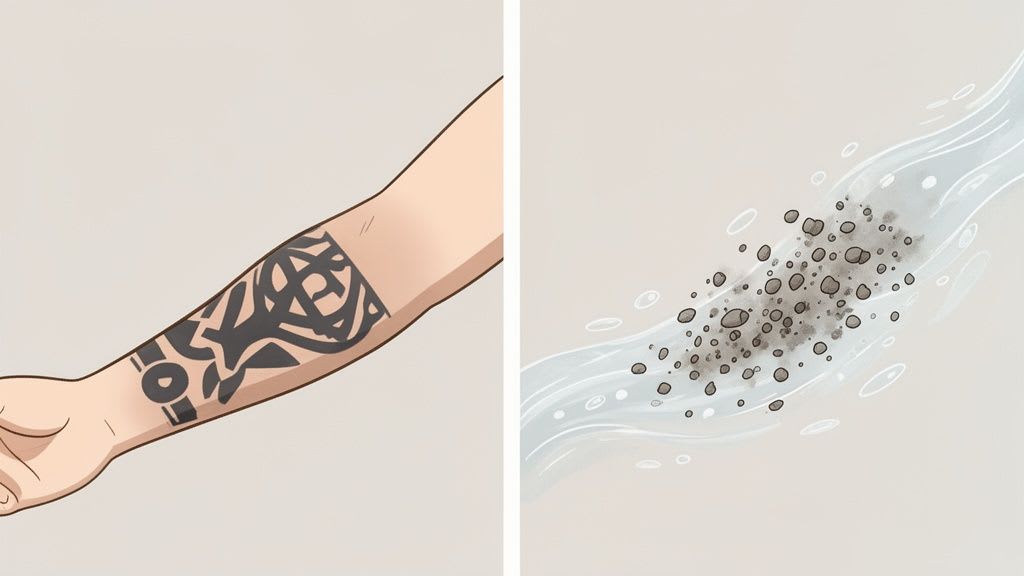
Think of tattoo ink in your skin as a large rock. A single laser session acts like a powerful force, shattering it into smaller pebbles. Your body’s immune system then functions as a clean-up crew, gradually clearing away these tiny ink particles in the weeks following treatment. Each subsequent session breaks the "rock" down further, and the clear "after" photo represents the state once this clean-up process is complete.
What Is Actually Depicted in These Images?
A high-quality before and after gallery demonstrates what is achievable when technology, expertise, and patient biology align. These are not overnight changes but the product of a medically supervised plan.
Here's what contributes to a successful result:
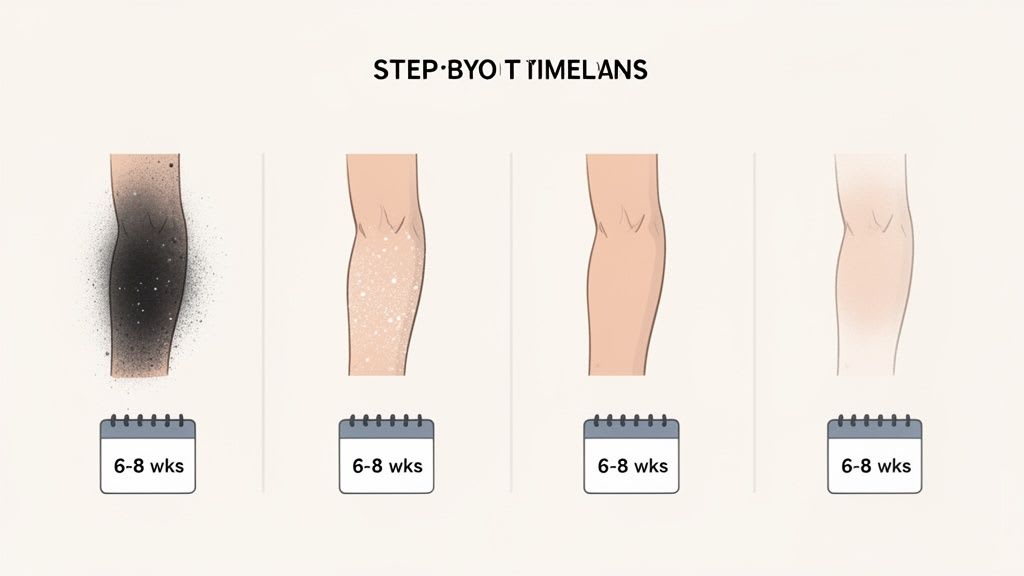
A Series of Treatments: The final "after" photograph is typically taken 6-8 weeks after the final session in a series. It is never the outcome of a single visit.
The Healing Phase: The interval between sessions is critical. This is when your body is actively working to flush out the shattered ink fragments, a vital part of the process.
The Right Technology: The quality of the laser is paramount. Reputable Swiss clinics invest in state-of-the-art systems that can target ink with high precision, safeguarding the surrounding skin.
Factors That Shape Your Personal Outcome
Tattoo removal is an increasingly common procedure in Switzerland, from Zürich to Geneva. Since the Swiss regulatory body, Swissmedic, authorised picosecond laser technology, it has become the gold standard for treatment. For standard black ink tattoos, it is common to see 75-95% ink clearance over 6-10 sessions.
A study from a leading Swiss university hospital's dermatology department indicated that 82% of participants with tattoos smaller than 10 cm² achieved complete fading with this technology. While these figures are promising, they do not represent a guarantee for every individual.
The most important principle is that your tattoo removal journey is unique. While before and after photos serve as a useful guide, your personal results will depend on your tattoo's age, colours, and depth, as well as your specific skin type.
Understanding this allows you to view a clinic’s gallery with a more informed perspective. You can appreciate the excellent results while recognising they are achieved through a gradual, medically supervised process. The best first step is always a consultation with a qualified specialist who can assess your tattoo and provide a realistic forecast of what to expect.
The Science of How Modern Lasers Remove Ink
When you observe impressive tattoo removal before and after photos, you are seeing the application of advanced medical science. The core principle is known as selective photothermolysis. In simpler terms, the laser emits a highly specific wavelength of light that is absorbed only by the tattoo ink pigment, leaving the surrounding skin tissue unharmed.
Imagine the ink particles in your skin as being too large for your body's immune system to remove. The laser delivers an ultra-fast pulse of energy that strikes these large ink particles, shattering them into microscopic fragments. Once broken down into a fine "dust," your body's natural clearance mechanism—the lymphatic system—can identify them as foreign matter and eliminate them.
This is a cumulative process. Each session breaks down more ink, allowing your body to clear a greater volume. This steady, session-by-session cycle of fragmentation and removal is what leads to the clear skin seen in "after" images.
Nanosecond vs. Picosecond Lasers: The Swiss Standard
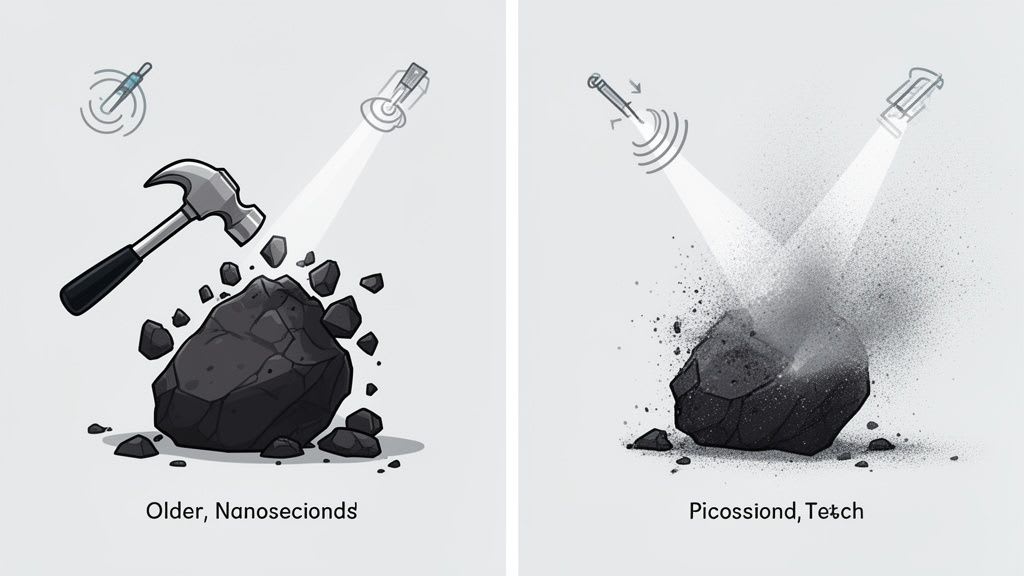
The evolution of laser technology has fundamentally improved tattoo removal outcomes. For many years, the industry standard was nanosecond lasers, which deliver energy pulses measured in billionths of a second. This can be likened to using a hammer to break a large rock into smaller pebbles—effective, but a relatively blunt force.
Today, leading dermatology clinics in Switzerland have transitioned to superior picosecond laser technology. These state-of-the-art devices fire energy pulses in picoseconds—trillionths of a second. This is 1,000 times faster than their nanosecond predecessors.
This incredibly short pulse duration creates a powerful photoacoustic effect. Instead of a photothermal (heat) impact, it generates a shockwave that pulverises the ink into a much finer, dust-like consistency.
What does this technological advancement mean for Swiss patients?
Greater Efficiency: Your body's immune system can clear these minuscule dust-like particles more easily, often resulting in fewer sessions required for complete removal.
Improved Efficacy on Resistant Inks: Picosecond lasers are highly effective at breaking down stubborn ink colours, such as blues and greens, which were a significant challenge for older laser technologies.
Enhanced Safety Profile: Because the energy is delivered so rapidly, there is minimal heat transfer to the surrounding skin. This significantly reduces the risk of side effects like blistering or changes in skin texture.
Why Different Colours Require Different Laser Wavelengths
Not all tattoo inks are identical, and an effective laser treatment must be precisely tuned to the target pigment. The key principle is that different ink colours absorb different wavelengths of light. A laser wavelength that is effective on black ink will pass harmlessly over red or green ink.
This is why a single, one-size-fits-all laser is inadequate for a multicoloured tattoo. Any reputable Swiss clinic will have invested in an advanced, multi-wavelength laser system that allows the specialist to switch settings to target a full spectrum of colours.
Here is a brief overview of this in practice:
1064nm Wavelength: This is the workhorse for tattoo removal, highly effective at targeting and shattering black and dark blue inks.
532nm Wavelength: This wavelength is specifically absorbed by warmer pigments, making it the standard for clearing red, orange, and yellow inks.
755nm or 694nm Wavelengths: These are specialist wavelengths essential for addressing challenging green and light blue inks, which are notoriously stubborn.
A properly trained specialist in a well-equipped clinic will carefully assess your tattoo’s unique colour composition and select the appropriate wavelength for each treatment stage. To learn more about how these tools are used, please see our detailed guide on laser tattoo removal in Switzerland. This ability to customise treatment is what differentiates an acceptable result from the complete clearance seen in the best before and after photos.
Key Factors Determining Your Tattoo Removal Success
Have you ever wondered why one person's tattoo seems to vanish after six sessions, while another's requires ten or more? This variation is not random. The outcome of your tattoo removal is highly individual, dependent on a specific set of factors related to you and your ink. Understanding these from the outset is key to setting realistic expectations for your own tattoo removal before and after results.
The laser is the tool that shatters the ink, but your body is the system that removes it. The efficiency of this process depends on the tattoo's characteristics, its location, and the strength of your immune system. A top-tier Swiss specialist will analyze all these variables to create a personalised treatment plan.
Ink Colour and Density
Not all inks are created equal. The colour palette of your tattoo is perhaps the single most significant factor in determining the complexity of the removal process. Different pigments absorb different wavelengths of laser light, so a multicoloured tattoo often requires a more sophisticated approach using a multi-wavelength laser system.
Black and Dark Blue: These are generally the easiest to treat. They absorb the standard 1064nm laser wavelength effectively, allowing for an efficient removal process.
Reds and Oranges: These warm tones respond best to a 532nm wavelength. They are highly treatable but may require more sessions than simple black ink.
Greens and Light Blues: These colours have historically been the most resistant to removal and require specific wavelengths like 755nm or 694nm. These are typically available only on the advanced laser systems found in highly specialised Swiss clinics.
Modern technology has significantly improved outcomes for these challenging colours. The introduction of multi-wavelength picosecond lasers in Switzerland has been a game-changer. These advanced devices can successfully clear a high percentage of even stubborn red and green inks, a marked improvement over older technologies.
Tattoo Age and Location
An older tattoo often has a head start on the removal process. Over many years, your body’s immune system has already been attempting to break down the foreign ink particles, causing some degree of natural fading. This can make it quicker to remove than a newer tattoo with dense, fresh ink.
The tattoo's location on your body also plays a significant role, primarily due to blood circulation.
Tattoos located closer to the heart—such as on the neck, chest, or upper back—tend to fade faster. These areas have robust blood flow, which helps the lymphatic system clear away shattered ink particles more efficiently.
Conversely, tattoos on extremities like hands, ankles, and feet are in areas with less circulation. This can slow the clearance process, meaning you will likely need more sessions to achieve the same degree of fading.
Your Skin Type and Immune Health
Your body plays a central role in the outcome. Your skin type, classified by dermatologists using the Fitzpatrick scale, influences how the laser interacts with your skin. A skilled practitioner will carefully calibrate the laser settings to target the ink while leaving your natural skin pigment (melanin) undisturbed. This is crucial for avoiding complications like hypopigmentation or hyperpigmentation.
Ultimately, your immune system performs the clearance work. After the laser shatters the ink, it is your body's responsibility to flush out the particles. A healthy, robust immune system will perform this task more effectively. Factors like adequate sleep, good nutrition, and avoiding smoking can support this natural process and contribute positively to your results.
Grasping these factors helps explain why a "one-size-fits-all" approach is ineffective for tattoo removal. If you're exploring other ways to improve your skin's health, our guide on modern skin rejuvenation options available in Switzerland is a valuable resource. With this knowledge, you can have a more productive consultation with your specialist and proceed with confidence.
The Journey From 'Before' to 'After': Understanding the Timeline
When viewing remarkable tattoo removal before and after photos, it is easy to assume the results appeared quickly. The reality is that progressing from "before" to "after" is a journey, and understanding the timeline is the first step toward setting realistic expectations for your own outcome.
The laser is only one part of the equation. It performs the task of shattering the ink particles, but then your body’s immune system takes over. It is your body that physically clears the ink, and this natural biological process cannot be accelerated.
From Session to Session: The Critical Healing Interval
The time between your laser sessions is one of the most important components of your treatment. After a session, your body begins the work of clearing out the freshly pulverised ink. This is a healing and clearance cycle that requires adequate time.
For this reason, any experienced Swiss clinic will mandate a waiting period of 6 to 8 weeks between appointments. Attempting to shorten this interval is counterproductive. It can lead to "skin fatigue," where the skin is too stressed to heal properly, increasing the risk of side effects like hyperpigmentation. This interval is a medical necessity; it provides your skin the full window it needs to recover and allows your lymphatic system to flush out the maximum amount of ink.
What to Expect Immediately After a Session
Immediately after the laser treatment, your skin will exhibit a reaction. This is a completely normal part of the process and indicates that the treatment is working as intended.
You can expect to observe a few key signs:
Frosting: The tattoo will temporarily turn a frosty, chalky white. This is caused by the release of carbon dioxide gas from the skin and typically subsides within minutes.
Redness and Swelling: The area will appear and feel similar to a sunburn. This is your body’s natural inflammatory response initiating the healing process.
Tenderness: Your skin will be sensitive to the touch for a short period.
These immediate effects are the first step in your body's healing cascade. To better understand how your body responds to this type of controlled injury, it can be helpful to learn about the general wound healing process.
Post-Treatment Care: Your Role in the Final Result
The care you provide to your skin after leaving the clinic is as crucial as the laser treatment itself. Your aftercare routine protects your skin, prevents complications, and ultimately influences the quality of your final result.
Your specialist will provide detailed instructions, but the core protocols in Swiss clinics are straightforward and based on sound medical principles.
Keep it Clean and Dry: For the first 24 to 48 hours, avoid soaking the treated area in a bath or pool. Gentle cleansing is sufficient.
Apply Recommended Ointments: You will be given a specific antibacterial or healing ointment. Use it as directed to keep the skin moisturised and prevent infection.
Avoid Sun Exposure: This is a critical instruction. Treated skin is extremely sensitive to UV radiation, which can cause permanent pigmentation changes. Keep the area covered or use a high-SPF sunscreen consistently.
Do Not Pick or Scratch: Blisters or scabs may form. It is essential to leave them undisturbed. Picking at them is the most common cause of scarring.
Adhering to these steps diligently protects your investment in the treatment and helps ensure your own timeline leads to a successful "after" photo. This is a marathon, not a sprint, and careful attention at every stage is what leads to the clear skin you are aiming for.
Understanding the Potential Risks and Side Effects
It is normal and sensible to have questions about the potential risks of any medical procedure. Even a non-invasive treatment like laser tattoo removal has potential side effects. At BeautyGuide.ch, we believe in providing transparent information to support patient education.
Understanding these possibilities helps you make an informed decision and reinforces why the practitioner's skill is so critical for achieving excellent tattoo removal before and after results. Some reactions are a normal, temporary part of the healing process, while other, rarer risks can almost always be mitigated by choosing the right expert and technology.
Common and Temporary Side Effects
Immediately following your laser session, your skin will look and feel as though it has undergone a significant event—because it has. These reactions are a positive sign; they indicate the laser has effectively targeted the ink and your body’s healing response has been activated.
Redness and Swelling: The treated area will almost certainly appear red and feel somewhat puffy, similar to a sunburn. This is your body’s inflammatory response beginning the clearance process.
Tenderness and Itching: For a few days, the skin may feel tender or itchy. This is a normal part of the healing journey.
Blistering or Scabbing: It is not uncommon for small blisters or a thin scab to form. This is your skin’s natural way of creating a protective barrier. The golden rule is absolutely critical: do not disturb them. Picking at scabs or blisters is the leading cause of infection or scarring.
These common effects typically resolve on their own within one to two weeks. A reputable clinic will provide detailed aftercare instructions to ensure your comfort and promote optimal healing.
Less Common Risks and How to Minimise Them
More serious complications are uncommon but are a possibility, particularly if the treatment is performed by an inexperienced individual or with outdated equipment.
The single most important factor in ensuring a safe procedure and minimising risks is the expertise of your provider. Choosing a clinic led by an FMH-certified dermatologist or qualified medical professional who uses modern, well-maintained laser technology is your best defence against complications.
Here are a few of the less common risks to be aware of:
Pigmentation Changes: The laser can occasionally interact with your skin's natural pigment, melanin. This may lead to hypopigmentation (patches of lighter skin) or hyperpigmentation (darker patches). A skilled specialist in Switzerland mitigates this risk by carefully assessing your skin type on the Fitzpatrick scale and selecting laser settings that are effective for the ink but gentle on your skin.
Changes in Skin Texture: In rare cases, the skin’s texture can change, becoming slightly raised or indented. This risk is significantly higher with outdated lasers or improper technique. The advanced picosecond lasers used in top Swiss clinics are much gentler on surrounding tissue, making this far less likely.
Infection: An infection can occur if the treated area is not kept clean or if you pick at blisters or scabs. This is almost entirely preventable by strictly following the aftercare instructions provided by your clinic.
While no procedure is 100% risk-free, modern laser tattoo removal conducted in a professional Swiss medical environment is a remarkably safe treatment. Your initial consultation is the ideal opportunity to discuss any concerns. A good specialist will be happy to explain these potential side effects and give you an honest assessment based on your specific tattoo and skin.
How to Choose a Qualified Clinic in Switzerland
Choosing the right clinic is the most important decision you will make in your tattoo removal journey. Your safety, the final result, and your overall experience depend on the expertise of the person operating the laser. While tattoo renewal before and after photos are a helpful starting point, they do not verify a clinic's medical credentials.
In Switzerland, there is a high standard for medical care, and tattoo removal should be held to the same expectation. This is a medical procedure that requires a proper medical setting and a professional with verifiable qualifications.
Prioritise Medical Expertise Above All
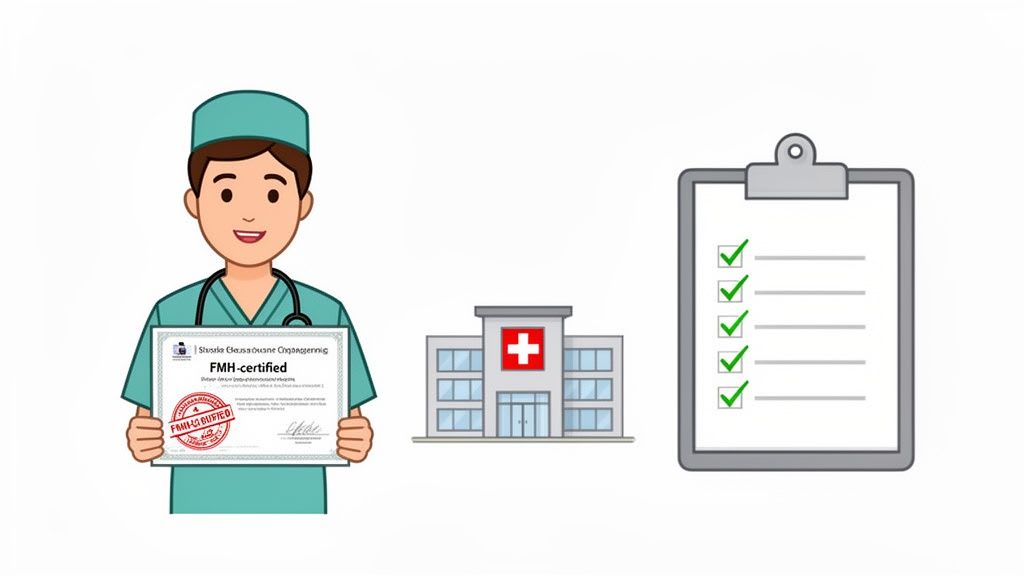
The single most crucial factor is the training and qualification of the individual operating the laser. In Switzerland, this means seeking out a clinic led by a genuine medical professional. The gold standard is a practitioner holding an FMH (Foederatio Medicorum Helveticorum) specialisation, ideally in dermatology.
An FMH-certified dermatologist has undergone years of rigorous training in skin anatomy, physiology, and the physics of laser-tissue interaction. They understand how to achieve optimal results while minimising risks. Entrusting your skin to a "technician" in a non-medical setting is an unnecessary risk.
Always verify credentials. This is non-negotiable. Platforms like BeautyGuide.ch perform this due diligence for you, confirming that listed clinics are led by medical professionals registered in the Swiss Medical Register (MedReg). Consider this your first line of defence against unqualified providers.
Your Consultation Checklist
The initial consultation is your opportunity to evaluate the clinic and ensure they adhere to Switzerland's high standards of medical care. Arrive prepared with questions. A reputable clinic will welcome your thoroughness as a sign of a well-informed patient.
Here are essential questions to ask:
Who will be performing my treatment? Insist on knowing if it is a qualified doctor or a trained practitioner working under direct medical supervision.
What specific laser technology do you use? Ask for the brand and model. Is it a modern picosecond laser (e.g., PicoWay, PicoSure) or an older nanosecond Q-switched device? Their investment in technology is a reflection of their commitment to quality care.
Can I see a portfolio of your clinic's own work? A professional clinic will be proud to show you photos of their actual patients, not just generic stock images from the laser manufacturer.
What is your protocol for pain management and aftercare? Inquire about cooling methods, topical anaesthetic creams, and the detailed aftercare instructions they provide.
Performing due diligence is vital for any aesthetic procedure. For a more comprehensive overview, our guide on how to select the right beauty clinic in Switzerland offers further advice. Choosing a clinic based on qualifications, technology, and transparency is the most reliable path to a safe and successful outcome.
Your Top Tattoo Removal Questions Answered
When considering tattoo removal, many questions naturally arise. Here, we address some of the most common concerns we hear from patients across Switzerland, providing clear answers to help you prepare for your consultation.
Is Laser Tattoo Removal Painful?
This is often the first question patients ask. Most people describe the sensation as a rapid snap of a rubber band against the skin. While it can be uncomfortable, the sensation is very brief.
To ensure patient comfort, leading Swiss clinics utilise powerful cooling devices that deliver chilled air to the skin immediately before and during the laser pulse. This significantly reduces discomfort. For particularly sensitive areas, a topical numbing cream can be applied approximately one hour before the procedure. Your specialist will discuss all pain management options with you to ensure you are comfortable.
How Much Does Tattoo Removal Cost in Switzerland?
It is important to be transparent about cost. There is no standard price, as every tattoo is unique. The final cost depends on the tattoo's size, the variety of ink colours, and the density of the ink.
As a general guideline, a single session in a major Swiss city like Zurich or Geneva can range from approximately CHF 200 to over CHF 600. A reputable clinic will not provide a price over the phone. Instead, they will conduct a thorough in-person assessment of your tattoo and provide a clear, transparent cost estimate for the complete treatment plan.
View complete tattoo removal as a medical process. The total investment covers the advanced laser technology, the specialist's medical expertise, and the series of treatments required to clear the ink safely and effectively. Choosing a qualified, medically-supervised clinic is the best way to ensure your safety and achieve the high-quality results seen in authentic tattoo removal before and after photos.
Will My Skin Look Completely Normal Afterwards?
This is a very important question. The ultimate goal of treatment is to return the skin to its original state, before the tattoo was applied. With today's advanced picosecond lasers, this is often achievable, especially for tattoos created with simple black ink.
However, a few factors can influence the final appearance:
Pre-existing scarring: The tattooing process itself can sometimes cause minor scarring in the skin. This texture may become more apparent once the ink that was obscuring it has been removed.
Resistant ink colours: Certain bright pigments, like some shades of green and blue, can be very persistent. In some cases, a very faint, shadowy remnant of the original design, often called a "ghost" image, may remain.
Individual healing: Every person's body is different. Your skin type and individual healing response will also influence the final texture and pigmentation of the treated area.
During your consultation, a qualified specialist will examine your tattoo and skin closely. They will provide a realistic assessment of the likely outcome for your specific case, ensuring you have a clear understanding of what to expect.
Explore More
This article is for informational purposes only and does not replace professional medical advice.