
Viewing buccal fat removal before and after photos reveals a distinct aesthetic shift. The procedure transforms a softer, rounder lower face into one with more definition and sculpted angles. By permanently reducing specific deep fat pockets in the cheeks, the surgery often enhances the cheekbones and creates a more defined jawline.
What Is Buccal Fat Removal?
Buccal fat removal is a specialised surgical procedure for refining facial contours, not simply a passing trend. It targets the buccal fat pad, also known as Bichat's fat pad.
This is a deep pocket of fat located in the lower cheeks, entirely separate from the superficial fat that might be lost through diet or exercise. In youth, this fat pad contributes to full, round cheeks.
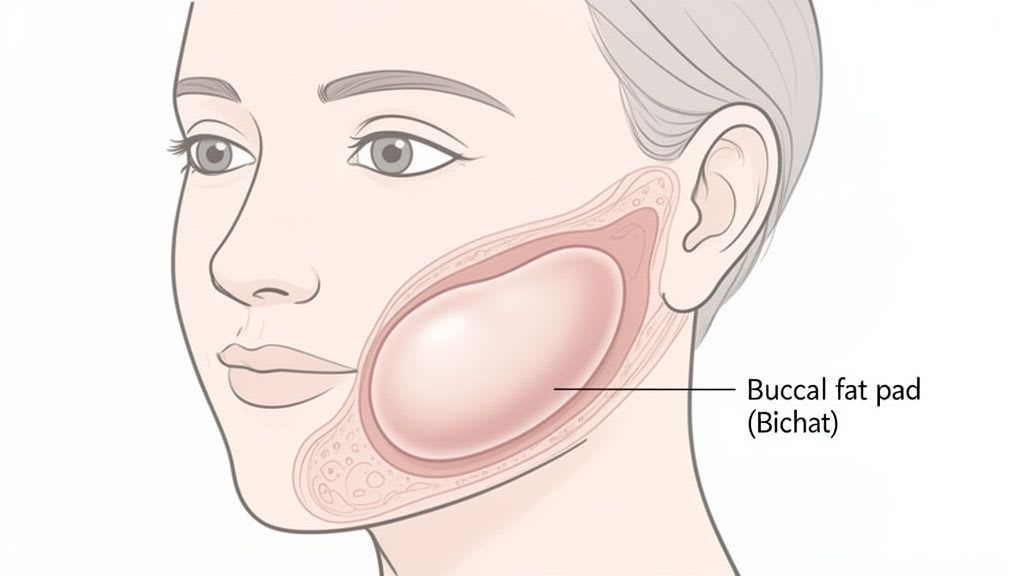
For some individuals, this roundness persists into adulthood, creating a "full cheek" appearance that remains even at a healthy, stable weight. The procedure is specifically designed to address this by carefully reducing the size of these fat pads.
The Goal of Facial Harmony
The objective of buccal fat removal is to achieve more elegant facial contours. By selectively removing the appropriate amount of deep cheek fat, a skilled surgeon can achieve several key aesthetic improvements:
Enhanced Cheekbone Definition: Removing volume below the cheekbones makes them appear higher and more prominent.
A Slimmer Lower Face: The procedure creates a gentle taper, helping to transition a rounder face shape towards a more defined V-shape or heart-shape.
Improved Jawline Visibility: When the cheeks are less full, the natural line of the jaw becomes clearer and more refined.
The desire for a more sculpted facial appearance is a notable trend, popularised by social media and celebrity culture. However, a responsible medical approach is crucial for achieving natural and lasting results.
The Swiss Approach to Facial Contouring
In Switzerland, the philosophy behind this procedure emphasises subtlety and balance. A qualified surgeon’s goal is never to create a dramatic or hollowed-out look, which is a significant risk if too much fat is removed.
Instead, leading Swiss surgeons adopt a conservative approach, always respecting the patient's unique facial structure. The aim is a natural-looking refinement that complements the individual's other features, ensuring the result is sophisticated and ages well. Understanding how Swiss doctors evaluate facial proportions is a critical first step. You can learn more about facial aesthetics and how doctors assess proportions in our guide.
Visualising The Before and After Transformation
A common misconception about buccal fat removal is that the final result is immediately visible. The "after" state reveals itself gradually over several weeks and months. Setting realistic expectations is essential, and patience is a key part of the process.
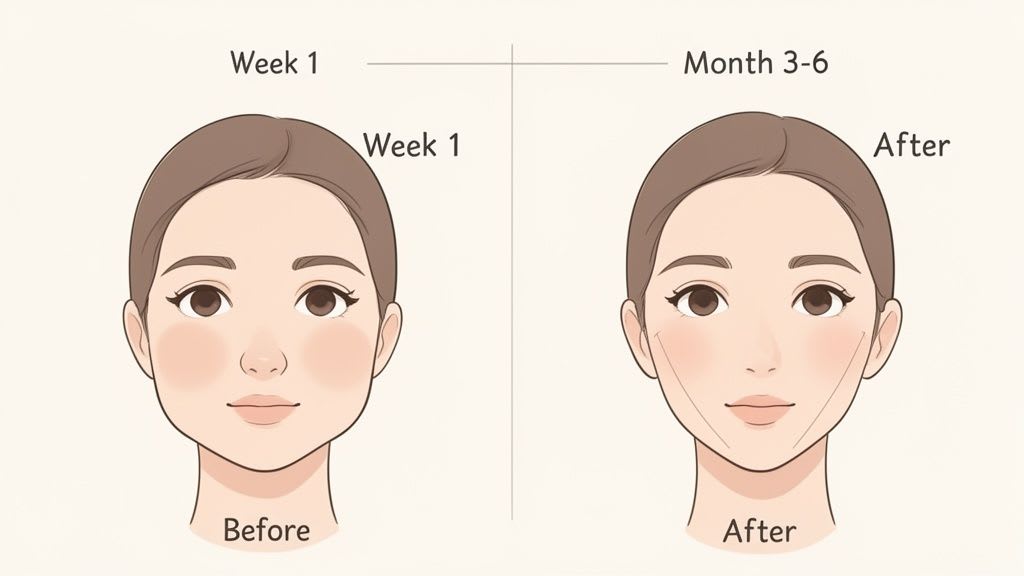
Immediately after the procedure, swelling is the first noticeable effect. This is a normal part of the body's healing response and will temporarily obscure the surgical outcome. In the first few days, the cheeks might even appear fuller than before surgery. This is an expected part of the recovery process.
The Stages of Healing and Refinement
The journey from a post-operative swollen state to the final, defined look follows a predictable timeline. Understanding what to expect at each stage can make the recovery more manageable and help you appreciate the subtle changes as they occur.
Timeline of Results After Buccal Fat Removal
| Timeframe | Expected Visual Changes | Patient Experience Notes |
|---|---|---|
| Week 1 | Significant swelling and potential mild bruising are prominent. The face will look puffier than before the procedure. | This is an acute recovery phase. The focus should be on rest and following aftercare instructions, such as a soft food diet. No visible results are apparent yet. |
| Weeks 2-4 | Swelling noticeably subsides. The first indications of a slimmer lower face and developing cheek hollows begin to appear. | The early potential of the procedure becomes visible. The changes are subtle, but a new shape starts to emerge. |
| Months 1-3 | True definition becomes more apparent. As residual swelling resolves and tissues settle, the cheek and jawline contours become much clearer. | The result looks more natural and integrated with the facial structure. The change is often noticeable but not drastic. |
| Months 3-6 | The final, fully sculpted result is now visible. The facial contours have settled completely, revealing a more refined, elegant shape. | This is considered the final outcome. The skin has adapted to the new volume, showcasing a sophisticated and permanent result. |
It is important to remember this timeline is a general guide. Individual healing rates vary, but this provides a solid framework for what to anticipate.
From Roundness to Refined Angles
The aesthetic goal, particularly within the meticulous Swiss medical approach, is not to create a drastic change but to achieve a natural-looking refinement that enhances existing features. The procedure is designed to transition the face from a softer, sometimes "heavy" appearance in the lower third to a more sculpted and balanced one.
The ultimate visual change is a subtle shift in how light and shadow play across the face. By reducing the buccal fat pad, a gentle hollow is created just beneath the cheekbone. This makes the cheekbone (zygomatic arch) appear more prominent and defines the transition down to the jawline.
This sophisticated outcome aligns with the Swiss preference for understated elegance over obvious alterations. The best results do not overtly suggest surgery; instead, they appear as a naturally more defined version of you.
Every aesthetic journey is unique. For another perspective on facial contouring, you might find it informative to learn about the results of a nose job before and after in our related article. Comparing different procedures can help illustrate the various ways balance can be achieved.
Ultimately, successful buccal fat removal outcomes are the result of a partnership between the patient and a qualified surgeon, working together to create a result that is both aesthetically pleasing and true to the individual’s character.
Are You A Good Candidate For Buccal Fat Removal?
Determining if buccal fat removal is the right procedure for you is a significant decision that requires more than observing online trends. A proper consultation with an experienced Swiss surgeon is essential. It is not a universal solution for anyone desiring a slimmer face, but rather a specific procedure for a select group of candidates.
Proper patient selection is key to a successful result. Swiss surgeons, operating under stringent medical standards, will conduct a thorough assessment of your facial anatomy, skin quality, and aesthetic goals. This careful evaluation ensures the procedure creates natural harmony, not an artificial look or one that might appear prematurely aged over time.
What Makes Someone a Strong Candidate?
In Switzerland, the philosophy is to create subtle, lasting enhancements that respect a patient's natural features. Individuals who achieve the best results from buccal fat removal typically share several key traits.
An ideal candidate is often:
An Adult at a Stable Weight: The procedure is most effective for adults whose facial structure has fully matured and who maintain a stable weight. This helps ensure the results are predictable and not affected by significant weight fluctuations.
Someone with Naturally Full, Rounded Cheeks: The primary indication for this surgery is prominent buccal fat pads that create a full-cheeked appearance, even at a healthy weight. The procedure targets this specific fat, not general facial fat.
Someone with Good Skin Elasticity: Healthy, firm skin is crucial. After the fat is removed, the skin needs sufficient elasticity to drape smoothly over the new, slimmer contours without sagging.
Looking for Refinement, Not a Radical Change: Patients with realistic expectations, who hope for a more defined and sculpted lower face rather than a complete transformation, are typically the most satisfied with their outcomes.
A critical consideration is the long-term effect. A skilled surgeon assesses not only your current facial structure but also how it is likely to age. Since the fat removal is permanent, the goal is to create a result that remains elegant for years to come.
Who Should Reconsider This Procedure?
Knowing who is not a good candidate is as important as identifying who is. A reputable Swiss clinic will be transparent about this, prioritising your safety and long-term satisfaction over performing a procedure.
Certain individuals are generally not the best candidates for this surgery. A one-on-one consultation is the only way to determine your suitability.
When to Be Cautious
If You Have a Naturally Thin or Narrow Face: If your face is already slender, removing buccal fat can result in a gaunt, hollowed look that may make you appear prematurely aged. This surgery is intended to reduce excessive roundness, not to remove volume from an already slim face.
Older Patients with Reduced Skin Elasticity: With age, the face naturally loses volume and skin loses elasticity. For older individuals who already have some skin laxity, removing buccal fat can sometimes accentuate jowls.
If Your Expectations Are Unrealistic: Patients whose goals are influenced by temporary social media trends or who expect the procedure to fundamentally alter their appearance are not suitable candidates. A thorough consultation helps align expectations with what can be realistically and tastefully achieved.
If Your Weight Fluctuates Significantly: If you are on a weight loss journey, it is advisable to wait until your weight has stabilised. Changes in overall body fat will affect your face, so it is best to assess your facial structure from a consistent baseline.
Ultimately, nothing replaces a professional assessment with an FMH-certified plastic surgeon. They possess the expertise to analyse your unique facial structure and guide you towards a decision that will ensure you are satisfied with your buccal fat removal before and after results for years to come.
The Surgical Procedure Inside a Swiss Clinic
Understanding what to expect on the day of your surgery can help alleviate any pre-procedural anxiety. In Switzerland, buccal fat removal is performed with exacting precision, where patient comfort and safety are paramount. It is a well-established outpatient procedure, meaning you will return home the same day.
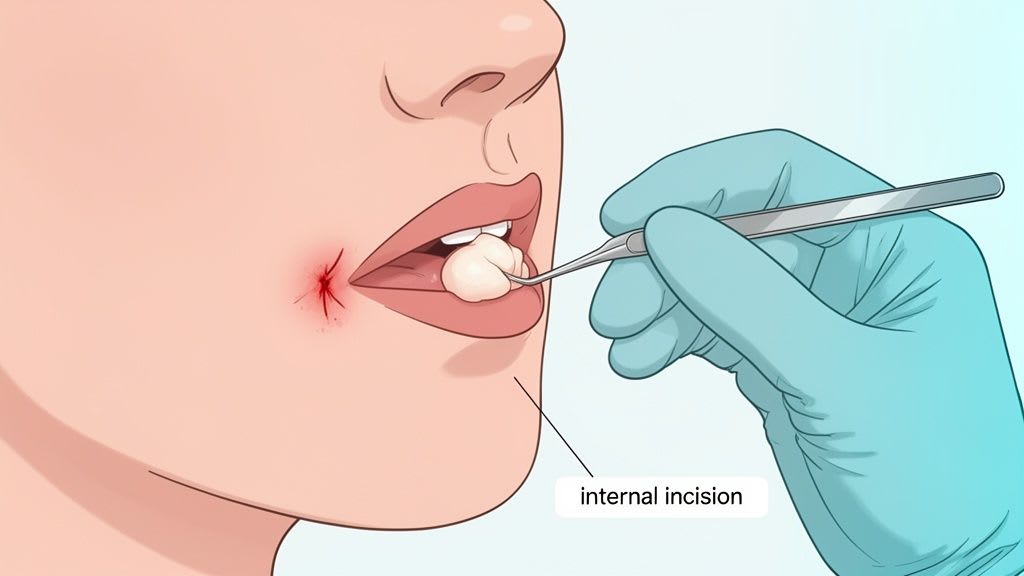
The procedure itself is relatively quick, typically completed in under 60 minutes. The focus is on a smooth, professional experience from admission to discharge, reflecting the high standards of Swiss medical care. Let's review the steps involved.
Preparation and Anaesthesia
Your comfort is the first priority. The procedure begins with a local anaesthetic to completely numb the inside of your cheeks, ensuring you will not feel any pain during the surgery.
Some patients may also be offered a mild sedative to promote relaxation. This would be discussed with your surgeon beforehand, based on your comfort level and their professional recommendation. You will remain awake but comfortable throughout the procedure.
The Incision and Fat Removal
Once the anaesthetic has taken full effect, the surgeon makes a small, strategically placed incision inside each cheek. This is a key technical point.
Because all incisions are made inside the mouth, there are no external cuts. This means you are left with no visible scars on your face. It is a clean, discreet technique common in modern facial aesthetic surgery.
Through this small opening, the surgeon gently accesses the buccal fat pad. Using specialised instruments, they will carefully remove a precise amount of fat. The exact quantity will have been determined during your consultation, based on your facial structure and aesthetic goals. This part of the procedure requires a surgeon with considerable skill and an artistic eye to ensure that the correct amount of fat is removed, avoiding a gaunt appearance.
Final Steps and Closure
After the appropriate amount of fat has been removed from both sides, the surgeon will verify symmetry. They will then close the small incisions with dissolvable stitches, which disappear on their own within one to two weeks, eliminating the need for a follow-up appointment for removal.
This procedure exemplifies Switzerland's deep expertise in aesthetic medicine. Aesthetic surgeries of the head and neck are a major specialisation for Swiss clinics. The precision and scarless approach of buccal fat removal align perfectly with this national emphasis on high-calibre facial work.
The meticulous nature of each step highlights why choosing a qualified, experienced surgeon is so critical. You can learn more about how Swiss medical standards protect aesthetic patients in our detailed article. This commitment to excellence makes the journey toward a more defined look both safe and effective. After the surgery, you will rest in a recovery area for brief observation before being discharged with clear aftercare instructions.
What to Expect During Your Recovery and Aftercare
A successful surgical outcome depends on both your surgeon’s skill and your commitment to aftercare. How well you manage your recovery directly impacts your final buccal fat removal before and after appearance. Understanding the process helps you navigate the healing period with confidence.
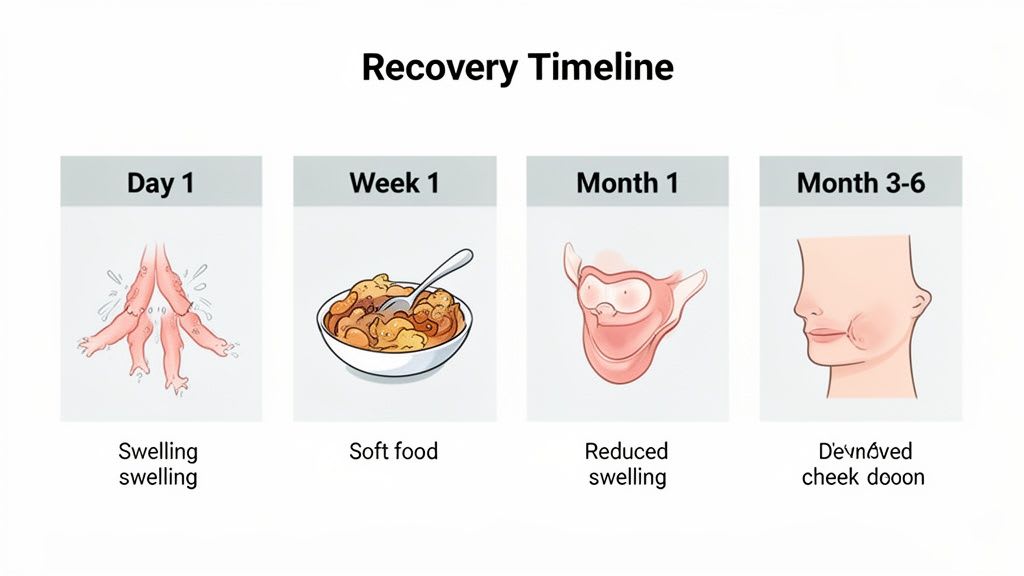
Immediately following the procedure, you will experience some swelling, soreness, and a feeling of tightness in your cheeks. This is a normal part of the body's natural healing process. Although the surgery is minimally invasive, your body needs time to recover. Any reputable Swiss clinic will provide a detailed set of instructions to guide you.
Your First Week: The Most Important Phase
The first few days are the most critical for a smooth recovery. Your surgeon will provide a clear plan that typically includes rest, specific dietary guidelines, and a special oral hygiene routine. Adhering to these instructions is the best way to minimise discomfort and prevent potential complications.
A typical Swiss aftercare plan will likely include:
A Soft Diet: For the first few days, a liquid or soft-food diet is essential to avoid putting pressure on the small incisions inside your mouth. This includes smoothies, soups, yoghurts, and other foods that require minimal chewing.
Careful Oral Hygiene: Keeping the incision sites clean is key to preventing infection. You will be given a special antiseptic mouthwash to use and instructed to rinse gently after every meal.
Rest and Reduced Activity: You will need to avoid strenuous activity, heavy lifting, and intense workouts for at least one to two weeks. Maintaining a steady blood pressure allows the delicate tissues to heal properly.
Following your aftercare instructions is a non-negotiable part of the process. Your diligence directly contributes to the quality of your final outcome and is your best assurance for a safe, smooth recovery.
The Full Recovery Timeline: Patience is Key
While the most intense part of recovery is over within the first week, the complete healing journey takes longer as the last of the swelling gradually subsides. Understanding this timeline helps you plan your work and social activities.
Getting Back to Normal:
Work: If you have a desk job, you will likely feel ready to return to work within 3 to 5 days. For more physically demanding roles, planning for a full week off is wise.
Social Life: The most significant swelling usually resolves after the first week. Most people feel comfortable in social settings after 7 to 10 days, even if minor residual swelling is present.
The Final Result: You will begin to see a difference as the initial swelling decreases, but your final, sculpted cheek contours will continue to refine over the next 3 to 6 months.
This period is an active healing process. By following the expert guidance from your Swiss clinic, you take an active role in your recovery. This collaboration is what transforms a technically excellent surgery into the elegant, natural-looking definition you desire.
How To Choose Your Surgeon In Switzerland
Selecting the right surgeon is the most critical decision you will make in this process. In Switzerland, high medical standards mean you have access to some of the world's top doctors. However, it is essential to conduct thorough research to find the one who is right for you, ensuring both your safety and the natural-looking results you desire.
The quality of your buccal fat removal before and after results depends entirely on your surgeon's skill. This procedure requires a deep, nuanced understanding of facial anatomy and an artistic sensibility.
First Things First: Qualifications and Specialisation
Your search should begin and end with surgeons who hold the highest credentials. In Switzerland, this means seeking a specialist with an FMH (Foederatio Medicorum Helveticorum) title in plastic, reconstructive, and aesthetic surgery. This is the gold standard, signifying that the surgeon has completed years of intensive, specialised training and is recognised by the Swiss Medical Association.
Beyond this, look for a surgeon who specialises in facial surgery. It is a precise sub-specialty. A surgeon who regularly performs procedures such as facelifts, eyelid surgery, and buccal fat removal will possess the delicate touch required for this work.
Your Consultation Checklist
The consultation is your opportunity to assess the surgeon and determine if they are a good fit. A true professional will welcome all your questions and provide honest, transparent answers.
Here are essential questions to ask during your consultation:
Experience: "How many buccal fat removal procedures have you performed?"
Visuals: "May I see anonymised before-and-after photos of your patients with a facial structure similar to mine?"
Technique: "What is your approach to ensuring the result looks natural and avoids an 'overdone' appearance?"
* Risks: "Can you explain the potential risks of this procedure and how they might specifically apply to me?"
A qualified surgeon will never promise perfection or dismiss your concerns. They will provide a realistic picture of what is achievable, manage your expectations, and ensure you feel completely informed and comfortable before proceeding.
Platforms like BeautyGuide.ch are designed to simplify this process. We help you connect with carefully vetted clinics and FMH-certified specialists throughout Switzerland. Using a trusted resource provides a pre-screened list of top professionals, enabling you to make a safe and informed choice.
Your Questions Answered
Here are answers to some of the most common questions from patients considering buccal fat removal. These answers reflect the high standards of care you can expect in Switzerland, providing clear and straightforward information.
Are The Results Of Buccal Fat Removal Permanent?
Yes, the results are permanent. Once the buccal fat pads are removed, those specific fat cells do not regenerate.
However, it is important to remember that the rest of your face will continue to age naturally. Significant weight fluctuations can also alter your overall facial volume, which might affect the appearance of your results over time. To maintain your sculpted contours, Swiss surgeons advise maintaining a stable, healthy weight post-procedure.
Does Buccal Fat Removal Hurt?
The surgery itself is not painful. It is performed under local anaesthesia, which completely numbs the area. Many surgeons also offer light sedation to ensure you are completely relaxed.
During recovery, it is normal to experience mild to moderate discomfort, swelling, and a sensation of tightness in your cheeks. This is a sign of healing and is easily managed with standard pain relief medication. Most of this discomfort subsides within the first week.
What Are The Potential Risks And Complications?
Buccal fat removal is considered a very safe procedure when performed by a skilled and experienced surgeon. However, like any surgery, it is not entirely without risk.
Potential issues, though rare, can include infection, bleeding, or asymmetry (where one cheek looks different from the other). There is also a small risk of injury to nearby structures, such as salivary ducts or facial nerves. A specific risk for this procedure is over-resection—removing too much fat. This can lead to a hollowed or gaunt appearance that is difficult to correct.
The consultation process in a Swiss clinic is designed to address these concerns. Your FMH-certified surgeon will meticulously assess your unique facial anatomy and discuss every potential risk as it applies to you, ensuring you have all the necessary information to make a fully informed decision. This dedication to patient safety and clear communication is a hallmark of the Swiss medical approach.
This open dialogue is key to setting realistic expectations for your buccal fat removal before and after results.
Explore More
This article is for informational purposes only and does not replace professional medical advice.