
You’re probably here because elite hair istanbul keeps appearing in your search results, your social feeds, or your inbox. The presentation is polished. The before-and-after photos are convincing. The promise sounds simple. Fly in, have the procedure, fly home with a new hairline.
That curiosity is understandable. Hair loss is emotional, visible, and often urgent for the person living with it. A clinic that looks organised, experienced, and internationally focused will naturally attract Swiss patients who want a clear solution.
My advice is direct. Don’t approach this as a question of hype, branding, or foreign versus local prestige. Approach it as a medical decision. If a clinic in Istanbul catches your attention, use that interest as a starting point to sharpen your standards, not lower them. The fundamental question isn’t whether a clinic markets itself well. Instead, consider whether its model meets the level of medical accountability, practitioner transparency, and aftercare access that a patient in Switzerland should expect.
Why Swiss Patients Look Towards Clinics Like Elite Hair Istanbul
The attraction is easy to understand. Hair transplant clinics in Istanbul have built strong visibility around convenience, procedure volume, and highly visual marketing. A name like elite hair istanbul enters the conversation because it appears established, specialised, and familiar to international patients.
That matters. People often feel overwhelmed when they first research hair restoration. They want a provider that seems to have done this many times before. They also want a process that feels efficient.
What catches a Swiss patient’s attention
Several things tend to pull patients in:
- Strong online presentation. Hair transplant providers often show organised patient journeys, multilingual communication, and extensive photo galleries.
- Clear treatment focus. A clinic dedicated to hair restoration can look more specialised than a general aesthetic practice.
- Simple decision-making. A bundled pathway feels easier than comparing multiple consultations and providers.
- Visible international reach. A clinic serving patients across borders can appear experienced with travel logistics and non-local visitors.
None of that is irrational. It’s exactly why these clinics get attention.
But attention isn’t the same as suitability. Swiss patients usually expect more than a surgical event. They expect diagnosis, planning, procedural safety, informed consent, and local follow-up. That’s the standard you should keep in your head while reading any clinic website.
Curiosity is fine. Lowering your standards isn’t
A good hair transplant can improve appearance and confidence. A poorly planned one can create long-term problems that are far harder to correct than ordinary hair loss. Hairline design, donor management, graft handling, and follow-up all matter.
Practical rule: If a clinic looks impressive online, that’s a reason to investigate further, not a reason to book faster.
If you’re still comparing local and international options, it helps to understand the cost discussion without reducing the choice to price alone. This overview of hair transplant cost can help frame the decision more realistically: https://beautyguide.ch/en/blog/hair-transplant-cost
Swiss patients should be disciplined here. Don’t ask, “Why is this clinic so popular?” Ask, “Would I accept this same structure of care if the clinic were in Zürich, Geneva, or Basel?” That question usually leads to a much clearer answer.
Understanding the High-Volume International Clinic Model
The international hair transplant market didn’t become prominent by accident. It runs on a specific operating model. If you understand that model, the appeal of elite hair istanbul makes a lot more sense.
Scale is the engine
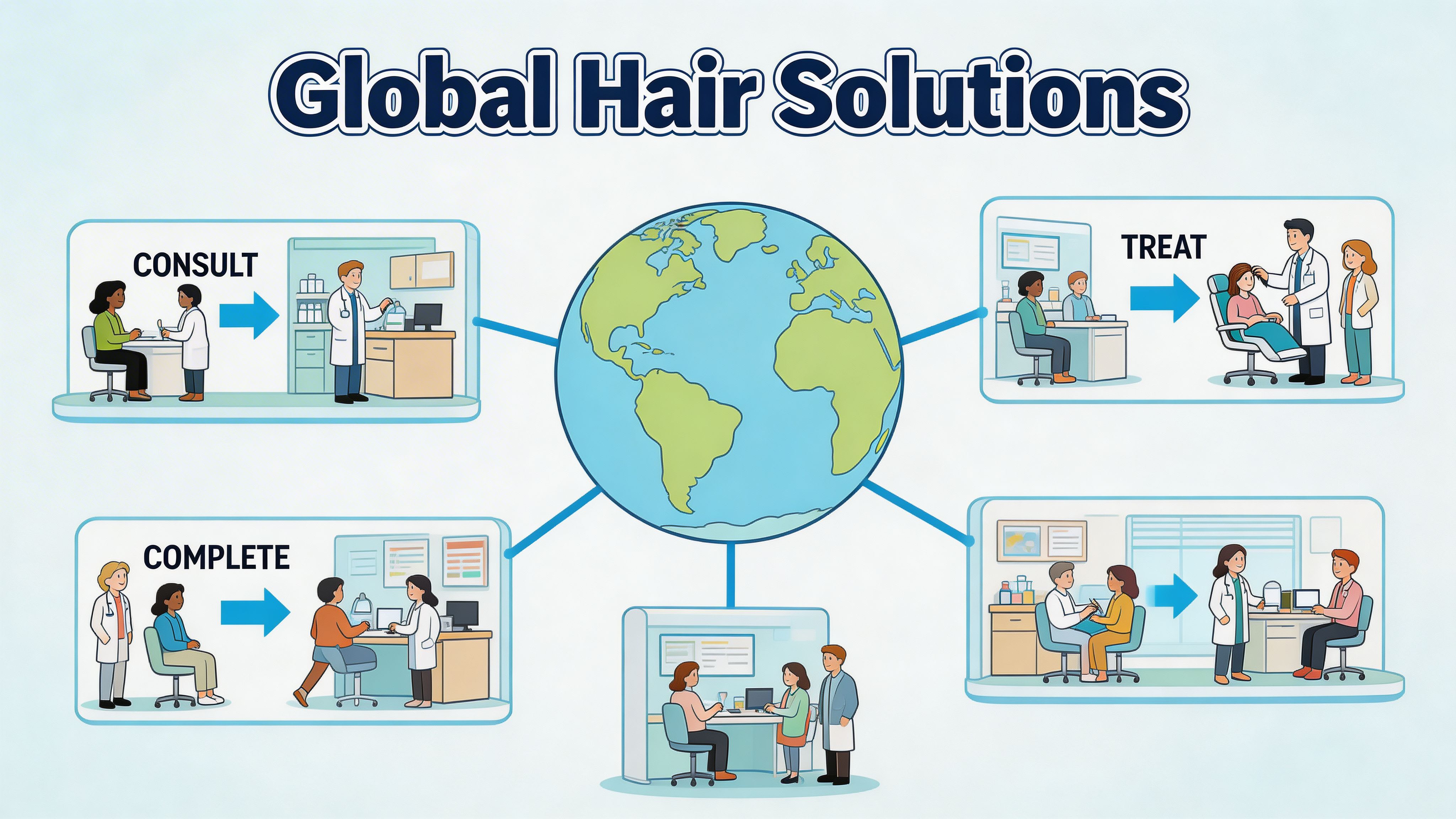
Some international clinics operate at a scale that most Swiss patients don’t encounter at home. High-volume clinics like Elithair in Istanbul report 160,000+ treatments across 65 operating rooms in 18,000 m² facilities, with TÜV Thüringen ISO-related certification and authorisation by the local Ministry of Health as described in this clinic guide: https://elithair.co.uk/hair-transplant-turkey-guide/
That scale changes everything. It shapes staffing, scheduling, communication, and patient flow.
A large operation can standardise tasks very effectively. Consultation pathways, pre-op instructions, transport arrangements, washing protocols, and post-op messaging can all be systematised. For many patients, that feels reassuring.
The strengths of this model
There are real advantages to a high-volume structure.
| Feature | What the patient experiences | What it means in practice |
|---|---|---|
| Repetition | A well-rehearsed process | Teams handle similar cases daily |
| Logistics | Fast booking and travel coordination | Administration is often highly organised |
| Specialisation | Hair restoration is the main focus | Staff may be very familiar with procedure flow |
| Standard protocols | Consistent patient journey | Less variation between one case and the next |
This is why these clinics can look efficient. They often are.
The trade-offs Swiss patients must recognise
Efficiency has a cost. Not always a financial one. Often a medical one.
A high-volume model usually depends on division of labour. Different people may handle consultation, donor preparation, extraction, implantation support, post-op washing, and remote follow-up. That isn’t automatically unsafe, but it raises a significant question. Who is medically responsible for each critical step, and how directly are they involved in your case?
That question matters more than branding.
Here’s what I tell Swiss patients to examine closely:
- Who designs the hairline. Not who approves it in theory, but who draws it and discusses age-appropriate planning with you.
- Who performs the key procedural steps. Especially extraction, channel creation, and implantation strategy.
- How much of the interaction is sales-led versus doctor-led.
- What happens if your result is technically acceptable but aesthetically disappointing.
A smooth customer journey can hide a fragmented medical journey.
At this point, many people make the wrong comparison. They compare a highly marketed foreign clinic to a modest-looking Swiss practice website. That’s superficial. The proper comparison is structure versus structure. Who examines you. Who operates. Who follows you. Who remains accountable if things don’t go to plan.
If you want a broader framework for evaluating cross-border treatment decisions, this article on choosing a beauty clinic abroad versus Switzerland is worth reading: https://beautyguide.ch/en/blog/choosing-a-beauty-clinic-abroad-vs-switzerland-risks-and-differences
The business model behind elite hair istanbul isn’t mysterious. It’s industrially organised elective medicine. That can produce consistency. It can also reduce individuality. For hair transplantation, that trade-off deserves serious scrutiny.
The Core Techniques FUE and DHI Explained
Before you compare clinics, understand the procedure names. Many patients see FUE and DHI repeated in marketing but don’t get a clear explanation of what happens.
What FUE means
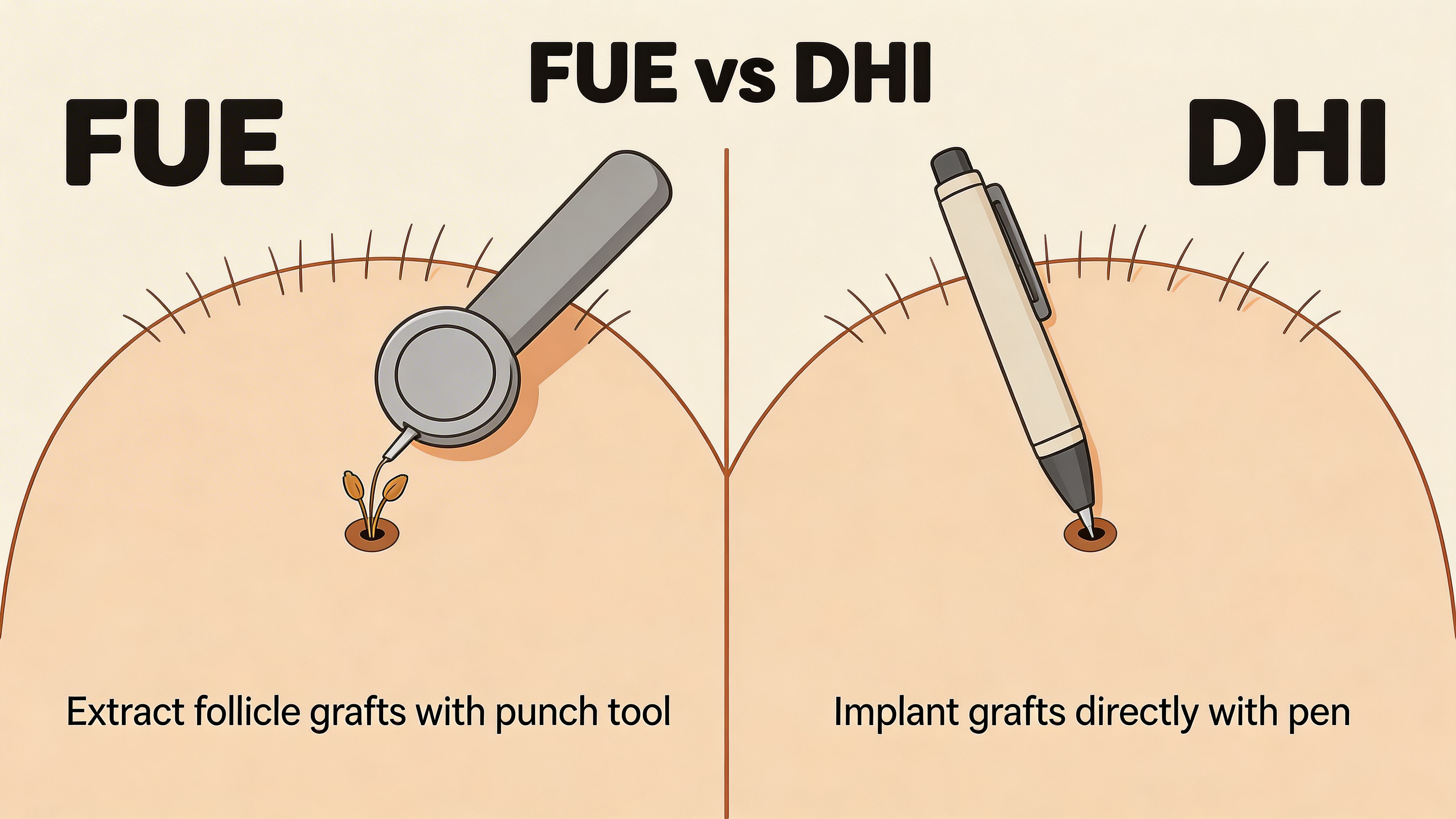
FUE stands for Follicular Unit Extraction. In simple terms, the team removes individual follicular units from the donor area, usually at the back or sides of the scalp, rather than taking a strip of scalp.
Modern FUE is widely regarded as the standard approach because it avoids a long linear scar and supports a relatively fast recovery. According to the cited review source, modern FUE and DHI are the gold standard, with recovery times of 7 to 10 days, transection rates under 5%, implantation densities of 40 to 60 grafts/cm², and 90 to 95% graft survival at 12 months reported by leading clinics: https://akakitsilosani.com/elit-hair-transplant-istanbul-reviews-discover-top-results-and-patient-success-stories/
That’s the technical claim. The practical takeaway is simpler. FUE aims to remove grafts precisely, preserve them carefully, and place them where they’ll create a natural pattern.
How DHI differs
DHI means Direct Hair Implantation. It is generally built on the same extraction logic as FUE, but the implantation phase uses a pen-like implanter device, often called a Choi pen.
Think of it this way:
- In classic FUE workflows, grafts are extracted, recipient sites are prepared, and grafts are then placed.
- In DHI workflows, implantation can be more direct and controlled during placement because the implanter pen combines handling and insertion in a more targeted way.
This doesn’t mean DHI is always “better”. That’s marketing language, not medical reasoning. It means the implantation method is different, and in the right hands it may help with precision in selected cases.
What patients should focus on
The method matters. The execution matters more.
A Swiss patient should ask these questions instead of obsessing over labels:
- Am I a suitable candidate?
- What is the treatment goal?
- Which method suits my case?
- Who performs each step?
For a plain-language overview that helps patients understand Follicular Unit Extraction (FUE) hair transplants, this external resource is useful as background reading alongside your consultation.
If a clinic sells the technique harder than it explains your candidacy, you’re hearing marketing before medicine.
What good counselling sounds like
A proper consultation shouldn’t just list FUE, DHI, MicroFUE, or other labels. It should explain:
- the donor area limits,
- the realistic density,
- whether one session is appropriate,
- how your hair may continue to thin,
- and what future reserve needs to be preserved.
That’s the standard to demand in Switzerland. Modern methods are not the differentiator anymore. Competent planning is.
The Swiss Standard for Medical and Aesthetic Procedures
Swiss patients are used to a certain level of medical structure. That expectation is justified. Hair transplantation may be elective, but it is still a medical procedure involving diagnosis, local anaesthesia, tissue handling, healing, and long-term aesthetic consequences.

Swiss care is built around accountability
The biggest difference between a high-volume international clinic model and the Swiss expectation isn’t décor, friendliness, or even technology. It’s accountability.
In Switzerland, patients should expect that the medically responsible practitioner is identifiable, credentialed, and reachable. That means you know who examined you, who approved the indication, who performed the decisive parts of treatment, and who will review you if concerns arise later.
That structure changes the whole experience.
A hair transplant done under a practitioner-led Swiss model typically places more emphasis on:
- In-person assessment before scheduling
- Clear identification of the responsible doctor
- Documented treatment planning
- Direct consent discussions
- Structured local follow-up
Those points sound basic. They are not basic. They are the core of safe elective medicine.
The role of qualifications and verification
In Switzerland, qualifications aren’t just marketing phrases. They should be verifiable through recognised systems and professional registers. For patients, that matters because cosmetic medicine attracts polished advertising, and polished advertising can easily obscure who is treating you.
When I advise patients, I tell them to strip away the brand first and identify the clinician second. Then verify the clinician.
A responsible clinic should be comfortable showing:
| What to verify | Why it matters |
|---|---|
| Medical registration | Confirms the practitioner is properly licensed |
| Relevant specialisation | Shows whether the doctor’s background aligns with surgical hair restoration and aesthetic care |
| Direct procedural role | Clarifies whether the doctor is hands-on |
| Consultation ownership | Reveals who is making the medical judgement |
Swiss patients often underestimate how protective this framework is until they need it.
Continuity of care is not a luxury
Hair transplant results are not judged on the day of surgery. They unfold over months. Healing, shedding, regrowth, density development, scar quality, and donor appearance all need time.
That is why continuity of care matters so much in Switzerland.
A local clinic can review redness, donor sensitivity, shock loss concerns, asymmetry worries, or delayed healing in person. It can adjust advice based on what your scalp looks like, not what it looks like in a phone photo sent across borders. That distinction is enormous.
Swiss standard: The procedure is only one part of treatment. The surrounding medical care is part of the product.
Patients considering elite hair istanbul often focus on the event itself. Travel. Procedure day. Hotel. Return flight. Swiss medicine focuses more broadly. Is the indication correct? Is the plan sustainable? Is there a clear local route back into care if something changes?
Swiss expectations are more conservative for good reason
Swiss clinics generally won’t impress you with urgency. That’s an advantage, not a weakness.
A careful Swiss practitioner is more likely to ask uncomfortable but necessary questions:
- Is your hair loss still progressing?
- Are your expectations realistic?
- Is the donor area strong enough?
- Are you trying to solve a medical pattern with a cosmetic fantasy?
- Would medication, observation, or a delayed procedure be wiser?
That conservative approach protects patients from overharvesting, aggressive hairlines, and poor long-term planning. It may feel slower. It is usually smarter.
The difference in mindset
A high-volume cross-border clinic often has to optimise throughput. A Swiss clinic should optimise judgement.
Those are not the same thing.
One model is built to move many patients through a standardised pathway. The other should be built to decide whether your case should proceed at all, and if so, under what constraints. As a Swiss medical advisor, I strongly favour the second model for anyone who values safety over momentum.
A Practical Checklist for Choosing Your Clinic in Switzerland
If you want a hair transplant in Switzerland, keep the screening process strict. Don’t rely on charm, branding, or before-and-after galleries alone. Use a checklist and insist on evidence.
Start with the doctor, not the clinic name
When vetting a clinic’s lead surgeon, credentials and experience are essential. A cited example often mentioned in discussions of Elit Hair is that Dr. Abdulaziz Balwi graduated in 2010 and had accumulated over a decade of specialised experience by 2023, which illustrates the kind of transparency patients should expect from any provider: https://www.flymedi.com/elit-hair/604
That’s the benchmark in principle. In Switzerland, ask for the same clarity.
- Verify FMH relevance. The clinic should clearly identify the medical specialist responsible for your care.
- Check MedReg registration. Don’t treat this as optional.
- Ask who performs the critical steps. If the answer stays vague, walk away.
Use these consultation tests
A real consultation should feel medically specific, not commercially smooth.
Ask:
- What is my diagnosis, not just my complaint?
- How is donor capacity assessed?
- How conservative is the proposed hairline?
- What happens if I continue to lose native hair?
If your consultation ends with excitement but not clarity, it wasn’t good enough.
Demand quote transparency
A Swiss clinic should give you a written quotation that is medically and financially clear. You want to know exactly what you’re paying for and what is included after the procedure.
Look for:
- Pre-operative assessment
- Procedure day details
- Medication and dressings
- Scheduled follow-up visits
- Revision policy or management of concerns
A vague package is a warning sign, even in Switzerland.
Judge the aftercare plan before you judge the gallery
Many patients do the reverse. They study photos first and follow-up later. That’s backwards.
A strong aftercare plan should explain:
| Question | What a good Swiss clinic should clarify |
|---|---|
| Who do I contact after surgery? | A named medical team or clinic pathway |
| Can I be seen quickly if needed? | Access to local in-person review |
| How many follow-ups are planned? | A structured schedule, not “message us anytime” alone |
| How are complications handled? | Clear escalation rather than vague reassurance |
If you’re comparing providers, this Swiss-focused guide is a useful companion: https://beautyguide.ch/en/blog/beste-haartransplantation-schweiz
The simplest filter
Choose the clinic that is most transparent when the questions become uncomfortable. That’s usually the clinic taking medicine seriously.
Navigating Risks and Ensuring Long-Term Aftercare
Every hair transplant carries risk. That remains true whether the clinic is in Switzerland or abroad, whether the branding is elegant or basic, and whether the technique is FUE or DHI.
The medical risks are real
Hair transplantation can involve problems such as infection, unsatisfactory growth, unnatural direction, poor density, donor depletion, prolonged redness, and disappointing design. Some issues are minor and temporary. Others require revision, camouflage, or years of compromise.
The frustrating part is that many problems aren’t obvious immediately. A result can look orderly in the first days and still develop into an unsatisfactory outcome later.
That’s why aftercare isn’t an administrative detail. It’s part of the treatment itself.
Distance creates its own risk layer
Clinics serving patients from over 70 countries face built-in logistical limits in long-term aftercare, and that geographical distance can become significant if complications or nuanced follow-up issues arise months later, as noted here: https://hairtransplantslondon.co.uk/elithair/
That point deserves plain language. If you live in Switzerland and your clinic is abroad, you may face:
- Delayed review when something doesn’t look right
- Remote reassurance instead of direct examination
- Fragmented responsibility if you seek help locally after surgery elsewhere
- Communication gaps around what is normal, what is urgent, and who should intervene
A complication is always harder to manage when the treating team is a flight away.
Aftercare lasts longer than most patients expect
Hair restoration is not over when scabs fall off. The process keeps evolving. That means you need practical scalp care, realistic monitoring, and honest guidance about what is normal at each stage.
For patients who want supportive background reading on home habits, washing, scalp comfort, and product awareness, this guide to a routine for thinning hair can help frame sensible daily care alongside medical advice.
Still, no home routine replaces access to your treating clinic.
Why Swiss follow-up wins
A local Swiss provider can see you in person when uncertainty appears. That sounds simple because it is simple. It is also one of the strongest arguments for staying local.
If healing is uneven, if density concerns emerge, or if you need revision planning later, your case remains inside the same accountable medical system. That continuity reduces confusion and often reduces regret.
Conclusion Prioritizing Safety and Quality in Switzerland
Clinics such as elite hair istanbul attract attention for understandable reasons. They present scale, specialisation, and a process that appears straightforward. For some patients, that will always be appealing.
My position is clear. Hair transplantation should not be chosen the way you choose a travel package. It should be chosen the way you choose a doctor. The quality of the consultation, the clarity of medical responsibility, the conservatism of the plan, and the reliability of aftercare matter more than polished international branding.
Swiss patients already know what good medical care feels like. It is transparent. It is regulated. It is traceable. It is local when you need it most. That matters especially in hair restoration, where results develop slowly and corrective options become harder if the first plan was wrong.
If you’re considering treatment, keep your standards high. Ask who examines you, who operates, who follows you, and who remains accountable months later. If the answers aren’t clear, keep looking.
If you want to compare qualified local options, use BeautyGuide.ch to explore verified Swiss aesthetic clinics and hair restoration providers by city, language, and medical credentials. It’s a practical way to start with safety, not marketing.
Explore More
This article is for informational purposes only and does not replace professional medical advice.